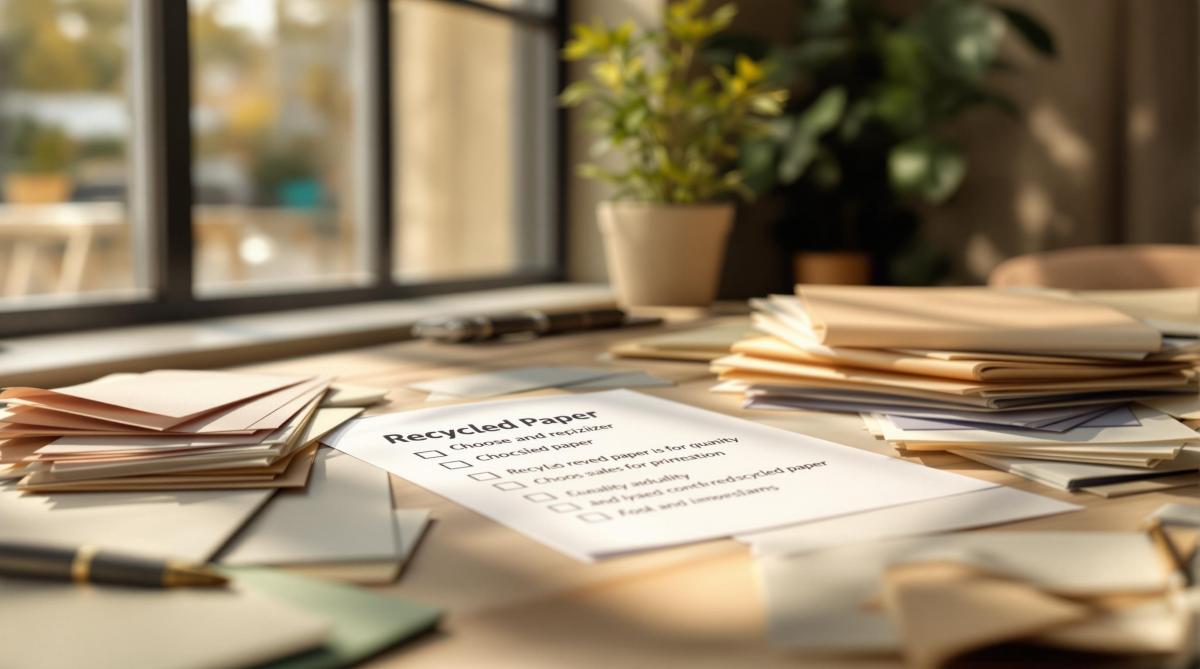
Looking for eco-friendly printing options? Recycled paper is your answer. It saves energy, water, and reduces emissions, all while meeting professional standards. Here’s a quick checklist to guide your choice:
- Content: Choose between pre-consumer (higher quality) and post-consumer (better for waste reduction) materials.
- Quality: Check brightness (80+ for standard, 90+ for high-end), opacity (90%+), and surface finish.
- Certifications: Look for FSC-certified or chlorine-free options.
- Print Compatibility: Ensure the paper works with digital, offset, or large-format printing.
- Cost: Expect a 10-30% price increase compared to standard paper, but bulk purchasing and local suppliers can help manage costs.
For best results, test the paper for print quality, durability, and equipment compatibility before large print jobs. Recycled paper isn’t just a greener choice – it’s a step toward reducing your ecological footprint.
Related video from YouTube
Types of Recycled Paper Content
Understanding the types of recycled paper helps you align your printing needs with eco-friendly practices.
Pre-Consumer vs. Post-Consumer Materials
Pre-consumer materials come from manufacturing leftovers like printer trimmings, unsold publications, and mill scraps. Since these materials require minimal reprocessing, they often result in higher-quality paper.
Post-consumer materials, on the other hand, are sourced from used paper products such as office documents, newspapers, and packaging. While paper made from post-consumer content may differ slightly in brightness or smoothness, it plays a critical role in reducing landfill waste.
Content Percentage Recommendations
The right recycled content depends on your specific project. Here’s a quick guide:
| Project Type | Recommended Recycled Content | Common Material Focus |
|---|---|---|
| Business Cards | 80–100% | Post-consumer |
| Brochures | 50–70% | Mixed content |
| Marketing Materials | 30–50% | Pre-consumer |
| High-End Publications | 10–30% | Pre-consumer |
| Packaging | 90–100% | Post-consumer |
If you’re aiming for premium print quality, paper with a higher percentage of pre-consumer material might be a better choice. Keep in mind that higher post-consumer content can impact qualities like brightness and surface texture. Balance these factors based on your project needs.
Reducing Waste Through Recycled Paper
Using recycled paper helps preserve natural resources and minimizes landfill waste. Combining pre- and post-consumer materials can strike the right balance between environmental impact and print quality.
Paper Quality Factors
Once you’ve selected recycled paper, it’s essential to check its quality to ensure professional results.
Paper Brightness and Opacity
For standard projects, go for recycled paper with a brightness level of at least 80. For high-end work, aim for a brightness of 90 or higher. Opacity should be 90% or more to avoid text or images showing through on double-sided prints.
"Brightness and opacity are critical factors in ensuring that printed materials are visually appealing and easy to read." – Mike Johnson, Printing Specialist, Miro Printing & Graphics Inc.
After checking brightness and opacity, focus on the paper’s strength and how it performs during printing.
Strength and Print Testing
Before committing to a large print job, put the paper through a series of tests. Look at:
- Color accuracy, ink absorption, and drying time to ensure the final print matches expectations.
- Tear resistance, bending, and folding strength to confirm durability.
- Compatibility with your printing equipment to avoid issues during production.
Always request sample sheets from different batches to make sure the quality stays consistent.
sbb-itb-ce53437
Required Certifications
Checking certifications helps ensure the recycled paper you choose meets environmental standards and aligns with responsible practices.
FSC Certification Standards
The FSC certification guarantees that the paper comes from responsibly managed forests, promoting ethical forestry practices.
"FSC certification is a mark of responsible forestry, ensuring that the paper you use is sourced from forests that are managed sustainably." – Forest Stewardship Council
Chlorine-Free Standards
Chlorine-free certifications show that recycled paper is made without using harmful chlorine compounds. This reduces chemical pollution and supports cleaner production methods. Choosing such paper contributes to eco-friendly bleaching processes.
Price and Supply Factors
Recycled paper offers environmental advantages, but let’s dive into how it impacts costs and supply.
Cost vs Standard Paper
Planning your printing budget is essential when considering recycled paper. Prices typically range from $0.025 to $0.065 per sheet, compared to $0.02 to $0.05 for standard paper – a 10-30% increase.
Why pay more? Here are some key benefits:
- Lower energy usage during production
- Positive brand perception, as more consumers prioritize eco-conscious businesses
- Possible tax breaks for sustainable practices
"Switching to recycled paper not only helps the environment but can also enhance your brand’s reputation among consumers who value sustainability." – Mike Johnson, Sustainability Consultant, EcoPrint Solutions
To manage costs effectively, consider these strategies:
| Strategy | Advantages |
|---|---|
| Bulk purchasing agreements | Discounts and predictable pricing |
| Partnering with local suppliers | Reduced shipping costs and quick delivery |
| Long-term contracts | Stable pricing and secure supply |
Once you’ve assessed costs, focus on building a reliable supply chain.
Supply Chain Options
Local suppliers, like Miro Printing & Graphics Inc. in Hackensack, NJ, bring benefits such as personalized service and quick turnaround times, backed by decades of experience.
When choosing suppliers, look for:
- Reliable delivery schedules
- Consistent quality control
- Capacity to handle urgent orders
For businesses with ongoing paper needs, working with multiple suppliers ensures steady availability and competitive pricing. A mix of local and regional providers can help you manage varying order sizes and delivery requirements efficiently.
Print Method Compatibility
Choosing the right recycled paper for your printing process is key to achieving high-quality results. Each printing method has specific requirements, and recycled paper must meet these to perform well.
Digital and Offset Requirements
Digital printing needs recycled paper with a smooth surface and low moisture content to avoid printing problems. Offset printing, on the other hand, is more flexible, often working well with papers that have a standard finish and moisture levels. Here’s a quick comparison:
| Requirement | Digital Printing | Offset Printing |
|---|---|---|
| Surface Texture | Smooth finish made for digital processes | Consistent finish; texture can vary |
| Moisture Content | Lower moisture to prevent issues | Standard levels work well |
| Paper Weight | Follow printer-specific recommendations | Slightly heavier paper is common |
| Coating | Coating designed for digital printing | Standard coating is sufficient |
"Using the right type of recycled paper can significantly enhance the quality of your digital prints." – Mike, Owner of Miro Printing & Graphics Inc.
For successful digital printing with recycled paper, follow these steps:
- Check your printer’s specifications for recycled paper compatibility.
- Run test prints to ensure quality meets your standards.
- Store paper in a climate-controlled space to maintain its condition.
Large Format Specifications
Large format printing has its own set of challenges. It requires recycled paper that can handle heavy ink coverage, remain durable, and maintain its shape. Look for paper specifically designed for these demands. Always consult your supplier to ensure the paper is suitable for large format projects.
Working with experienced print providers is essential when using recycled paper. Companies like Miro Printing & Graphics Inc. can guide you toward the best options for your printing needs.
Final Selection Tips
When choosing recycled paper, focus on quality, expert input, proper documentation, and storage needs. These steps will help ensure your paper meets both performance and environmental standards. Here’s what to keep in mind:
Test for Quality
Run test prints to check the paper’s print quality. Professional printers can assist with this process.
Consult Local Experts
Reach out to local professionals, such as Miro Printing & Graphics Inc., who have years of experience in selecting recycled paper.
Check Documentation
Make sure the paper includes the following:
- FSC certification
- Percentage of post-consumer content
- Brightness and opacity details
- Compatibility with your print method
Ensure Proper Storage
Verify that storage conditions will maintain the paper’s quality over time.
| Consideration | Action Required |
|---|---|
| Sample Testing | Request test prints on selected paper |
| Expert Consultation | Seek advice from print professionals |
| Documentation | Confirm certifications and specs |
| Storage | Verify suitable storage conditions |
For custom printing needs, consider scheduling a consultation with experts. They can offer tailored advice to help you achieve the best results while staying eco-conscious.
Related Blog Posts
- Recycled vs. Virgin Paper: Cost Breakdown
- Cost-Saving Tips for Sustainable Paper Choices
- How to Choose the Right Paper for Custom Prints
- Pre vs Post-Consumer Recycled Paper: Key Differences
https://app.seobotai.com/banner/banner.js?id=67d37905bca46a2e63b44f3b
 BergenCountyPrintersBlogs