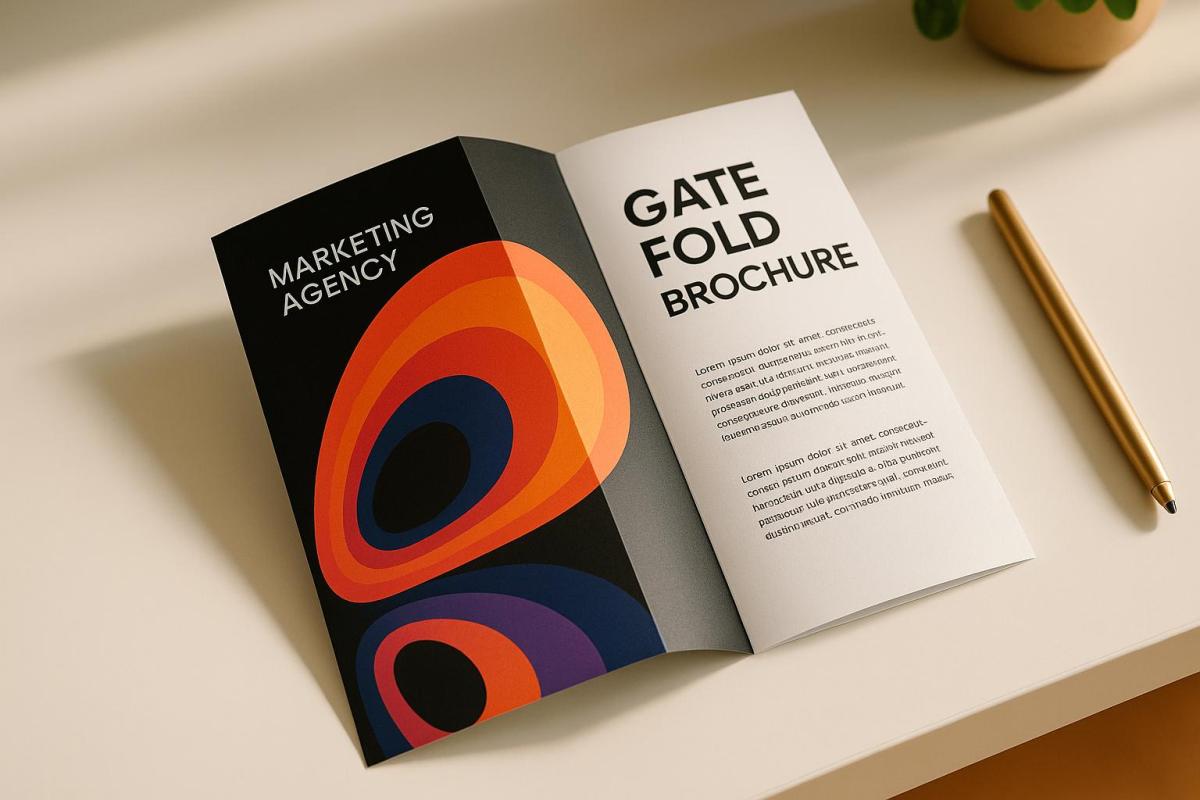
Gate fold brochures are a great way to make your marketing materials stand out. They feature two panels that fold inward, creating a unique and engaging design. Here’s what you need to know about printing them:
- Digital Printing: Best for small runs (under 100 copies), quick turnarounds, and personalized designs. It’s cost-effective for short-term needs and supports eco-friendly practices.
- Offset Printing: Ideal for larger runs (500+ copies) and projects requiring high color accuracy, sharp details, and premium finishes. It works with a wide range of paper types and offers advanced customization options.
Quick Comparison
| Feature | Digital Printing | Offset Printing |
|---|---|---|
| Best For | Small runs, quick delivery | Large runs, premium quality |
| Color Options | Standard CMYK | CMYK and Pantone |
| Turnaround Time | 1–3 days | Longer setup time |
| Paper Selection | Limited | Wide variety |
| Cost Efficiency | Short runs | Long runs |
| Customization | Variable data, last-minute tweaks | Advanced finishes, specialty inks |
Both methods have their strengths. Choose digital printing for speed and flexibility or offset printing for larger quantities and premium results. At Miro Printing & Graphics Inc., you can access both options along with expert design and finishing services to create brochures that fit your needs.
Double Gate Fold Brochure – 4 Panel Folding Example – How to fold a Closed Gatefold
1. Digital Printing
Digital printing has reshaped how gate fold brochures are produced, offering businesses of all sizes access to premium marketing materials. It’s a fast and cost-efficient solution, especially for smaller print runs.
This method shines for projects requiring fewer than 100 copies, as it skips the need for printing plates and significantly reduces setup time. At Miro Printing & Graphics Inc., digital printing is a go-to option for creating professional brochures quickly and effectively.
| Feature | Benefit | Best Use Case |
|---|---|---|
| Variable Data | Personalization options | Targeted marketing campaigns |
| Quick Setup | 24-48 hour turnaround | Time-sensitive projects |
| Cost Structure | Lower initial costs | Short runs (under 100 pieces) |
| Color Accuracy | CMYK color simulation | Standard color projects |
Design and template services range between $25 and $200.
Paper selection plays a key role in the final product:
- 70 lb text paper: A budget-friendly choice for basic applications.
- 100 lb text paper: Offers more durability and a polished, premium feel.
- Cover stocks (80-100 lb): Delivers maximum visual impact but requires extra care when folding.
"Digital printing technology has made affordable brochure printing accessible to all, democratizing the process and opening up a universe of creative possibilities." – Linemark
Digital printing also aligns with eco-conscious practices by reducing waste and energy consumption, all while maintaining impressive quality.
When it comes to finishing touches, this method supports both matte and gloss coatings. Matte finishes provide a sleek, understated look, perfect for luxury-focused brands, while gloss coatings enhance vibrancy, making images stand out. Your choice of finish should complement your brand’s identity and the message you want to convey.
Another advantage? Digital printing allows for last-minute tweaks, making it an excellent choice for businesses with evolving marketing needs. Up next, take a closer look at offset printing to see how it compares for larger-scale projects.
2. Offset Printing
Offset printing is a go-to method for producing high-quality gate fold brochures, especially for larger print runs. It stands out for its exceptional color accuracy and sharp image details, which digital printing often struggles to replicate.
One of the key advantages of offset printing is its flexibility with paper options. This process works with a wide range of stocks, from premium uncoated papers to textured finishes. Here’s why offset printing is a top choice for gate fold brochures:
| Feature | Advantage | Application |
|---|---|---|
| Color Accuracy | Pantone & CMYK precision | Brand-critical materials |
| Image Quality | Sharp gradients & details | Photo-heavy brochures |
| Volume Pricing | Lower per-unit costs | Runs of 500+ pieces |
| Paper Options | Wide stock compatibility | Premium presentations |
The type of paper you choose plays a big role in determining the final look and feel of your brochure. For gate fold designs, these paper types are highly recommended:
- Coated Papers: Deliver a smooth finish and enhance image clarity, making them ideal for vibrant visuals.
- Cover Weight Stocks: Provide durability and a premium touch, perfect for high-end marketing materials.
- Textured Papers: Offer unique finishes like linen or metallic, adding a distinctive element to your branding.
Offset printing’s precision and adaptability make it a standout choice for professional gate fold brochure projects. Its ability to reproduce accurate colors and intricate details ensures your design is executed flawlessly, outperforming digital printing in both vibrancy and sharpness.
Material Considerations
When planning your brochure, keep these factors in mind:
- High Opacity: Prevents show-through, ensuring a clean look.
- Brightness Levels: Enhances color vibrancy.
- Surface Smoothness: Affects the sharpness of printed details.
"Known for its high-quality results, offset printing offers superior color reproduction and image sharpness that will make your prints stand out from the crowd." – VSL Print
Offset printing also allows for special finishes that can elevate your brochures. While premium uncoated papers might cost nearly double that of coated options, they often justify the expense with their durability and visual appeal. To add even more impact, consider integrating these enhancements:
- UV Coating: Increases durability and adds a glossy finish.
- Embossing: Provides a tactile, raised effect.
- Foil Stamping: Adds metallic accents for a striking look.
At Miro Printing & Graphics Inc., their expertise ensures precise color registration and detailed reproduction, making them a trusted partner for sophisticated gate fold brochure projects.
sbb-itb-ce53437
3. Miro Printing & Graphics Inc. Custom Services
Miro Printing & Graphics Inc. combines technical expertise, custom design capabilities, and advanced prepress quality checks to ensure every gate fold brochure is produced to exact specifications.
To maintain top-notch quality, the production process includes several key control measures:
| Quality Control Step | Purpose | Benefit |
|---|---|---|
| Prepress Review | Verifies artwork and calibrates colors | Preserves design accuracy |
| Trapping Assessment | Prevents color misalignment | Eliminates printing gaps |
| Digital Imposition | Plans optimal layout | Increases material efficiency |
| Proof Verification | Confirms color and alignment | Ensures precision in final output |
The company offers a wide range of material options to meet diverse marketing needs, along with customizable finishing treatments such as:
- UV Coating: Adds a high-gloss protective layer.
- Aqueous Coating: Provides a durable, eco-friendly finish.
- Satin Aqueous: Creates a refined, fingerprint-resistant surface.
Factors That Influence Pricing
Several factors can affect the cost of your project, including:
| Cost Factor | Impact on Pricing | Cost-Saving Tip |
|---|---|---|
| Print Volume | Larger orders reduce per-unit costs | Order in bulk to save more |
| Paper Stock | Premium materials increase costs | Choose materials early to plan budget |
| Turnaround Time | Rush jobs come with higher fees | Schedule ahead to avoid rush charges |
| Design Complexity | Custom folds raise production costs | Opt for standard folds to save money |
Professional design services are available, typically priced between $75 and $125 per hour. Proofing stages ensure color accuracy, proper panel alignment, precise trims, and flawless folds.
Additionally, in-house bindery services allow for further customization with options like perforation, micro-perforation, and specialized folding. These tailored services work seamlessly with both digital and offset printing methods, delivering consistent, high-quality results every time.
Printing Method Comparison
Let’s break down the differences between digital printing, offset printing, and the custom services offered by Miro Printing & Graphics Inc. for gate fold brochures. Here’s how they compare based on key features:
| Feature | Digital Printing | Offset Printing | Miro Printing & Graphics Inc. Custom Services |
|---|---|---|---|
| Print Quality | High resolution, suitable for most uses | Superior detail and color precision | Tailored to meet specific project requirements |
| Color Range | Standard CMYK inks | Expanded options, including Pantone colors | A mix of CMYK and additional color capabilities |
| Minimum Order | Best for small runs (around 25–500 pieces) | Cost-efficient for larger orders (500+ pieces) | Flexible to accommodate various quantities |
| Turnaround Time | Typically 1–3 business days | Longer due to setup needs | Streamlined for faster delivery |
| Paper Options | Limited stock selection | Wide variety of types and finishes | Extensive choices for diverse needs |
| Customization | Supports variable data for personalization | Best for standardized designs | Fully customizable options available |
Key Takeaways
Recent advancements in digital printing have enhanced its quality and speed, making it a strong choice for short runs and personalized projects. However, offset printing remains unmatched for its exceptional detail and ability to handle a wider color gamut, including Pantone options. It also supports a broader range of specialty papers, making it ideal for projects that demand high-end finishes.
From a cost perspective, digital printing is more economical for smaller quantities, while offset printing becomes more cost-effective as the order size increases. For businesses looking to balance cost and quality, a hybrid approach might be worth considering.
Turnaround times also vary significantly. Digital printing boasts quick delivery, typically within 1–3 business days, while offset printing requires a longer setup period, making it better suited for high-volume orders.
Ultimately, choosing the right printing method can elevate the appeal and professionalism of gate fold brochures, ensuring they stand out in any marketing campaign.
Choosing Your Printing Method
When deciding how to print your brochures, the method you choose can make or break your project. Digital printing works best for smaller runs, tight deadlines, and projects that require personalized touches like variable data. It’s perfect for situations where you need quick proofs or last-minute changes. On the other hand, offset printing is the go-to for larger campaigns. It’s more cost-efficient at scale and offers a polished, professional look, especially when using Pantone colors, metallic inks, or premium finishes.
Here’s a quick comparison to help you match your project needs with the right printing method:
| Project Scenario | Digital Printing | Offset Printing |
|---|---|---|
| Campaign Scale | Local events, test markets | National rollouts, major launches |
| Content Type | Personalized messaging | Standardized brand materials |
| Market Timing | Rapid deployment needs | Planned distribution cycles |
| Material Impact | Standard presentation | Premium brand experience |
| Investment Level | Startup/small business budgets | Established marketing budgets |
For standard gate fold brochures – whether sized 8.5" x 11" or 8.5" x 14" – your timeline and print quantity will play a major role in determining the most cost-effective and successful approach.
At Miro, we take a detailed look at your project by evaluating:
- Print volume: How many brochures do you need?
- Timeline: Is there a tight deadline or room for planning?
- Design complexity: Are there intricate layouts or unique finishes?
- Material specifications: What type of paper or finishes are required?
- Budget: What’s your financial plan for the project?
With over 30 years of experience, Miro brings expertise to every step of the process. From layout to design, we ensure your brochures make the most of your chosen printing method, delivering results that align with your goals.
FAQs
What’s the difference between digital and offset printing for gate fold brochures?
When it comes to creating gate fold brochures, you’ve got two solid printing options: digital printing and offset printing. Each brings its own strengths to the table, depending on your project’s needs.
Digital printing is a great choice for smaller print runs. It’s fast, budget-friendly, and doesn’t require the extensive setup that offset printing does. Plus, it’s perfect for projects that need personalization, like custom designs or variable data. The trade-off? It might not deliver the same level of color accuracy as offset printing.
On the flip side, offset printing shines for larger quantities. It offers outstanding image quality, bold, vibrant colors, and works with a broader range of paper types and finishes. While the setup costs can be higher, the per-piece cost drops significantly as your order size increases. Ultimately, your decision will come down to your budget, the number of brochures you need, and the level of quality you’re aiming for.
How does the type of paper impact the quality and look of gate fold brochures?
When it comes to creating gate fold brochures, the type of paper you select can make a huge difference in both quality and appearance. Thicker paper stocks – like 100 lb or higher – offer a sturdy, premium feel that exudes professionalism and durability. On the other hand, lighter paper might feel flimsier and could affect how your audience perceives the overall quality.
The paper’s finish is just as crucial. A glossy finish can make colors pop, giving your design a bold and vibrant appeal. If you’re aiming for something more understated and elegant, a matte finish is a great choice, delivering a refined and sophisticated look. Both finishes have the power to enhance your brochure, so the right choice really depends on the tone and purpose of your design. To ensure your brochure makes a lasting impression, pair high-quality paper with professional printing services. It’s the perfect combination to make your message stand out.
What should I consider when choosing between digital and offset printing for my brochures?
When choosing between digital and offset printing for your brochures, the first thing to consider is the quantity you need. Offset printing works best for large print runs because the cost per unit drops as the volume goes up. On the flip side, digital printing is a better fit for smaller orders, thanks to its lower setup expenses and faster turnaround times.
Next, evaluate the quality and customization your project demands. Offset printing excels in delivering precise color accuracy and offers a broader range of paper types and finishes, making it ideal for premium, high-quality projects. Digital printing, however, shines when it comes to personalization – think variable text or images, which are perfect for tailored marketing campaigns.
Each method has its strengths, so weigh your budget, timeline, and design requirements carefully. If you’re looking for expert advice and top-notch printing services, reach out to Miro Printing & Graphics Inc. in Hackensack, NJ.
Related posts
- Offset vs. Digital: Paper Size Considerations
- French Fold Brochures: Design Tips
- 8 Common Folding Styles for Print Materials
- Top 5 Factors for Choosing Printing Methods
https://app.seobotai.com/banner/banner.js?id=682fc980d3b96619817dc364
 BergenCountyPrintersBlogs