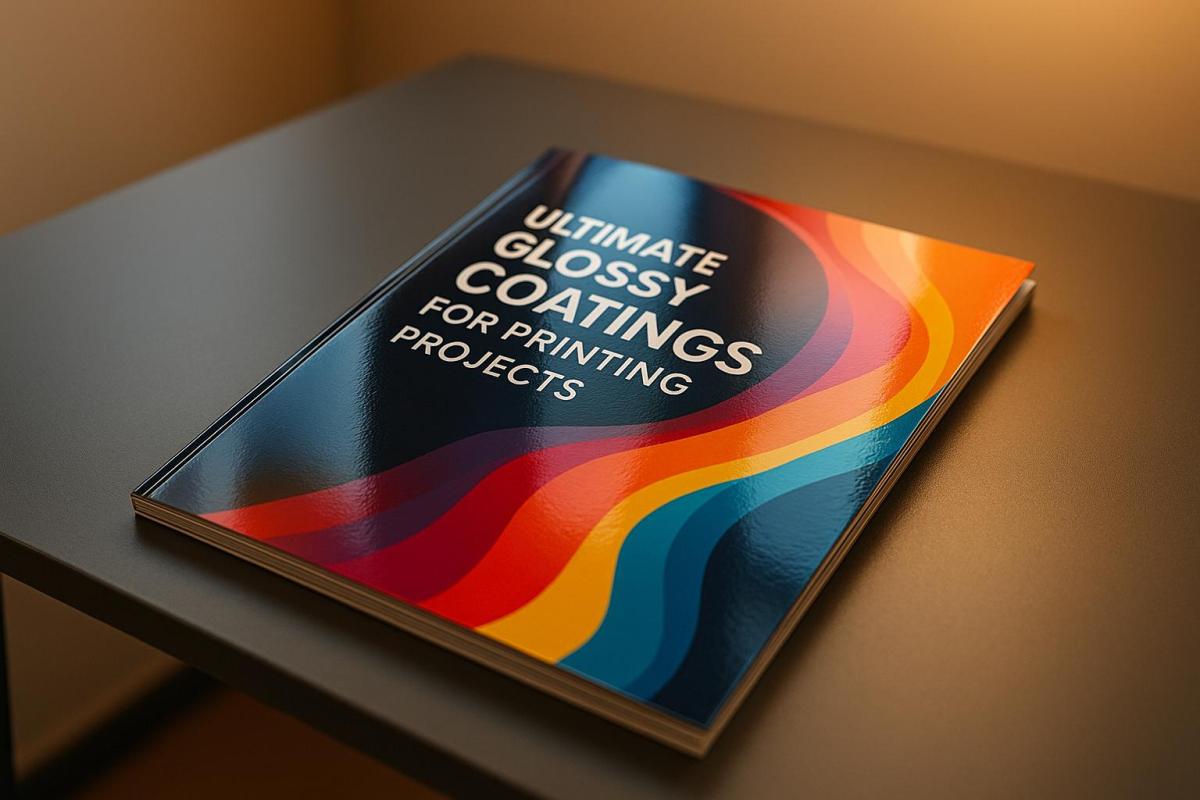
Glossy coatings can make your printed materials look sharp, vibrant, and durable. They enhance colors, protect against smudges and scratches, and give a professional polish to everything from business cards to brochures. Here’s a quick breakdown:
-
Types of Glossy Coatings:
- UV Coating: Maximum shine and durability but can crack when folded.
- Aqueous Coating: Eco-friendly, fast-drying, and flexible.
- Gloss Lamination: Superior protection and color depth, but more expensive.
-
Key Benefits:
- Makes colors pop for high-impact visuals.
- Protects against wear and tear.
- Adds a sleek, professional finish.
-
Drawbacks:
- Can show fingerprints and glare.
- Not ideal for text-heavy designs.
- Best Uses: Marketing materials, business cards, photos, catalogs, and product labels.
| Coating Type | Shine | Durability | Eco-Friendliness | Flexibility |
|---|---|---|---|---|
| UV Coating | High | High | Low | Low |
| Aqueous Coating | Moderate | Moderate | High | High |
| Gloss Lamination | High | Very High | Moderate | High |
Pro Tip: Work with a professional print shop to ensure the best results for your project. Whether you want bold, eye-catching visuals or durable, long-lasting prints, glossy coatings can help you achieve your goals.
How to Choose the Right Paper Coating: Matte, Gloss, High-Gloss
Types of Glossy Coatings
Choosing the right type of glossy coating can make a big difference in the outcome of your project. Each option has its own strengths and weaknesses, so understanding these can help you make an informed decision. Below, we’ll break down the main types of glossy coatings, their features, and the best ways to use them.
Gloss UV Coating
If you’re looking for a coating that delivers maximum shine, UV coating is the way to go. This finish creates a deep, high-gloss effect that can make your prints stand out. It’s applied and cured under UV light, which speeds up the process and fits seamlessly into many printing workflows.
UV coating is highly resistant to scratches and abrasions, making it a durable option. However, its rigidity can be a drawback – folding or bending may cause it to crack, so it’s not ideal for projects requiring flexibility. While it offers some resistance to minor spills, it’s not waterproof. For those aiming for ultra-glossy results, UV coating can achieve over 80 Gloss Units (GU), making it perfect for bold logos or accents. Additionally, UV coatings can be formulated with up to 100% solids, meaning they release no volatile compounds into the environment.
Aqueous Gloss Coating
Aqueous coating is a water-based solution that dries quickly and is a more eco-conscious choice. As Beaver Creek Printing explains:
"Aqueous coatings are fast drying, water-based, protective sealants particularly resistant to smudges and fingerprints."
This coating offers solid protection against fingerprints, rubs, and light scuffs, though it isn’t as tough as UV coating. One advantage is its flexibility – it resists cracking when folded, making it a go-to for brochures and other folded materials. Aqueous coating is typically applied as a flood coat, covering the entire surface.
The market for water-based coatings is growing, with projections estimating it will surpass $3.8 billion by 2032. While specialized drying equipment is needed for application, the benefits – like its environmental friendliness and adaptability to paper and cardboard – make it a worthwhile investment.
Gloss Lamination
Lamination involves adhering a glossy film over your prints, creating a polished finish that enhances color depth and vibrancy. Beyond aesthetics, it also provides excellent durability and protection.
"Lamination provides structure and the highest protection from moisture compared to other coating types." – NEWPRINT
Although lamination is slower to apply compared to coatings, its superior tear resistance and moisture protection make it a strong choice for high-value projects. While it is the most expensive option, its longevity and durability can offset the cost, especially for items that need to withstand wear and tear over time.
Spot Gloss vs. Full Gloss Applications
When deciding between spot gloss and full gloss, it comes down to the type of impact you want to create. Spot gloss is used to highlight specific elements, like logos or text, by applying shine selectively. This creates contrast and adds a tactile quality that works especially well on darker, matte backgrounds. It’s a favorite for business cards, luxury invitations, and packaging where subtle emphasis is key.
On the other hand, full gloss covers the entire surface, delivering a consistent shine and vibrant colors. This approach works well for materials like brochures, flyers, and promotional items that benefit from a polished, professional appearance. While spot gloss tends to be more expensive and requires precision during application, the added texture and focus it provides often justify the cost for premium projects.
| Feature | Aqueous Coating | UV Coating |
|---|---|---|
| Material | Water-based coating | UV-reactive liquid coating |
| Application Method | Flood coating only | Flood or spot coating |
| Finish | Soft, minimal glare | Extremely shiny and reflective |
| Drying Process | Dries via evaporation | Cured under UV light |
| Durability | Moderate | High |
| Environmental Impact | Eco-friendly | Less eco-friendly |
| Flexibility | Fold-friendly | May crack when folded |
Benefits and Drawbacks of Glossy Coatings
Glossy coatings can elevate the look and durability of printed materials, but they come with their own set of trade-offs. Understanding both the perks and the challenges can help you make the right choice for your project. Let’s break it down.
Advantages of Glossy Coatings
-
Enhanced Visual Impact
Glossy coatings amplify colors, increase contrast, and bring out the finer details in high-resolution images, making visuals pop . -
Polished, Professional Look
The sleek, shiny surface gives printed materials a high-end, polished appearance, making them perfect for brochures, catalogs, and other marketing tools. -
Improved Durability
The glossy finish adds a layer of protection against scratches and moisture. This makes it a smart choice for items like product labels or stickers that might be exposed to humid or wet conditions. -
Cost-Effective Options
Depending on the quality and intended use, glossy finishes can be a budget-friendly way to add a premium touch to your project.
While these advantages make glossy coatings appealing, they’re not without their limitations.
Drawbacks of Glossy Coatings
-
Glare and Reflection
Glossy surfaces reflect light, which can create glare, especially in well-lit environments. This can sometimes obscure details, depending on the viewing angle. -
Fingerprint and Smudge Magnet
The shiny surface tends to highlight fingerprints and smudges, which can be distracting. -
Ink Adhesion Issues
Writing on glossy surfaces can be tricky since the slick finish slows ink drying, increasing the risk of smudging. -
Higher Costs for Premium Options
While basic glossy finishes can be affordable, premium glossy papers and processes often come with a higher price tag. Additionally, some premium options may not align with eco-conscious goals . -
Limited Suitability for Certain Projects
Glossy finishes are not ideal for text-heavy documents or materials where readability is key, as glare and reflections can reduce legibility.
| Aspect | Advantages | Drawbacks |
|---|---|---|
| Visual Appeal | Vibrant colors and a sleek, eye-catching finish | Glare can obscure details in bright settings |
| Durability | Resists scratches and moisture | Shows fingerprints and smudges easily |
| Usability | Great for high-resolution images | Not ideal for writing or interactive uses |
| Cost | Affordable options available | Premium choices can be pricier and less eco-friendly |
| Applications | Perfect for photos, brochures, and catalogs | Unsuitable for text-heavy or readability-focused work |
Glossy coatings can be a game-changer for certain projects, but they’re not a one-size-fits-all solution. By weighing their strengths and weaknesses, you can decide if they’re the right fit for your needs.
sbb-itb-ce53437
Applications and Best Uses for Glossy Coatings
Glossy coatings are perfect when you want to create a bold visual impact. Here’s a closer look at where they shine the most.
Marketing Materials
Whether it’s flyers, brochures, or postcards, glossy coatings bring out the best in marketing materials. They amplify color vibrancy and lend a polished, professional look that grabs attention.
"The shiny surface created by a gloss coating enhances the depth and intensity of the underlying ink colors, making them appear even more vibrant and visually striking." – Color Vision Printing
Brochures stand out when paired with glossy coatings, especially those featuring high-quality photos or bold graphics. This finish enhances image depth and color intensity, making it a favorite in industries like retail and design where visual appeal is key. For example, restaurant menus with glossy finishes make food photography pop, enticing customers with vibrant, appetizing visuals.
Postcards and flyers benefit greatly, too. Their reflective surfaces catch the light, drawing attention whether they’re pinned to a bulletin board or pulled from a mailbox. Plus, the protective layer ensures your message stays sharp, even after multiple handlings.
But glossy coatings aren’t just for promotional materials; they also elevate business essentials and creative content.
Business Cards and Presentation Folders
Glossy coatings bring a premium touch to business materials, ensuring they leave a lasting impression. They enhance the visual appeal and durability of items like business cards and presentation folders, making them look sleek and professional.
Business cards with a glossy finish exude professionalism and attention to detail. The smooth, polished surface not only feels high-end but also sets your card apart from the standard matte options. Plus, the added durability ensures your contact information stays intact over time.
Presentation folders also benefit significantly. A glossy finish gives them a polished, high-quality appearance while protecting the documents inside. When presenting proposals or marketing materials, a sleek folder reinforces the quality and care you’ve put into your work.
Photographic Prints and Catalogs
Photography and glossy coatings are a natural match. The reflective surface enhances color saturation, brightness, and sharpness, making images leap off the page.
Photographic prints achieve stunning clarity and vibrant colors with a glossy finish. Whether it’s for portfolios, event photography, or art prints, this coating ensures sharp details and deep color saturation, making it the top choice for visually striking images.
Catalogs also thrive with glossy coatings. Since they often rely on product photography to drive sales, the finish helps showcase vibrant colors and maintain a crisp appearance, even after frequent handling. This is especially important in retail, where high-quality visuals can directly influence purchasing decisions.
Glossy finishes are also practical for product labels and stickers, especially in humid or wet conditions, where durability matters.
| Application | Primary Benefits | Best For |
|---|---|---|
| Marketing Materials | Vibrant colors, durability, professional look | Brochures, flyers, postcards, restaurant menus |
| Business Materials | Premium feel, strong first impression, durability | Business cards, presentation folders |
| Visual Content | Enhanced color saturation, sharp details, vibrancy | Photographic prints, catalogs, product labels |
When choosing glossy coatings, think about your target audience, budget, and competition. The coating is often the first thing people notice, so it should reflect your brand and the impression you want to leave.
Tips for Achieving the Best Results with Glossy Coatings
Creating a flawless glossy finish begins with careful preparation. From selecting the right materials to working with experienced professionals, every step plays a role in transforming your project from ordinary to extraordinary.
Preparing Artwork for Glossy Coatings
High-quality artwork is the foundation of a polished glossy finish. Use images and graphics with a resolution of at least 300 DPI to avoid pixelation, as the reflective nature of glossy coatings can make even small flaws more noticeable. Always work in CMYK color mode instead of RGB, and convert your files accordingly to minimize color discrepancies during printing. For clean edges, include a bleed of 0.125–0.25 inches and keep critical design elements at least 0.125 inches away from the trim line. Since glossy coatings can slightly tone down colors, adjust your artwork by increasing brightness, contrast, and saturation to ensure vibrant results. Before committing to production, conduct prepress checks and request a proof copy to confirm everything looks as intended.
Selecting Compatible Substrates
The choice of substrate significantly impacts the final look and durability of your print. Coated papers are often the best option for glossy finishes, as their smooth surface enhances clarity and shine. Paper weight, measured in GSM or pounds, also plays a role in how premium and sturdy the final product feels. Match the paper’s finish – such as glossy or satin – to the purpose of your project; for example, brochures and magazines often benefit from glossy or satin-coated papers. Don’t forget to consider environmental factors and ensure the substrate is compatible with your chosen printing method, whether it’s offset, digital, or screen printing. Keeping the substrate clean is equally important to avoid any defects during production.
Working with Expert Print Shops
Once your artwork and materials are ready, partnering with a skilled print shop can make all the difference. An experienced print shop will fine-tune your design and materials to achieve a professional glossy finish. Their expertise extends to formatting, paper selection, and printing techniques, ensuring high-resolution results with precise color reproduction.
"Your printer will discuss all of your project options with you, including whether or not your project will benefit from the creative elements and protection of coating or finishing."
Professional print shops also provide tailored solutions for unique projects, helping you decide between gloss, matte, or satin finishes depending on your design goals. Collaborating with experts early in the process can save time and money while ensuring your final product aligns with your vision.
At Miro Printing & Graphics Inc. in Hackensack, NJ, their seasoned team guides clients through every stage of glossy coating projects. Offering services like digital printing, offset printing, and comprehensive post-press finishing, they help bring your ideas to life with precision and care.
"Print shops help businesses share their products and messages in a noteworthy way, making them valuable partners for many industries."
It’s also essential to understand the distinction between coating and finishing. Coatings are applied during the printing process, while finishing is done afterward to protect the print and add creative elements. Knowing this difference allows you to make informed choices that best suit your project’s needs.
Conclusion
Glossy coatings can transform print projects into sleek, professional-looking materials. In this guide, we’ve covered the three main types – gloss UV coating, aqueous gloss coating, and gloss lamination – each suited to different needs and budgets.
These finishes bring several perks to the table: they boost color intensity, sharpen image quality, and create a polished, high-end feel. That said, they’re not without drawbacks. Glossy surfaces can produce glare and show fingerprints, making them less ideal for text-heavy or frequently handled items.
When used thoughtfully, glossy coatings can make a big difference in marketing materials, business cards, presentation folders, and photo prints. A common strategy is to mix finishes – for instance, pairing a glossy cover with matte interior pages – to achieve both eye-catching visuals and easy readability.
Achieving a flawless finish requires technical precision. Attention to details like paper choice and scoring techniques plays a key role in getting the best results. That’s why working with an experienced print shop is so important. A partner like Miro Printing & Graphics Inc., based in Hackensack, NJ, offers a full range of services, from digital and offset printing to in-house bindery and finishing, ensuring every detail is handled expertly.
Whether you’re designing a product catalog that showcases the vibrant depth of UV-coated colors or creating business cards with a smooth, refined texture, the right glossy finish can elevate your project. By understanding your options and collaborating with skilled professionals, you can achieve stunning, impactful results.
FAQs
What should I consider when choosing between UV coating, aqueous coating, and gloss lamination for my print project?
When choosing between UV coating, aqueous coating, and gloss lamination, it’s all about balancing durability, flexibility, and the finish you’re aiming for.
- UV coating creates a striking, high-gloss finish that makes colors pop with a glass-like shine. While it’s tough and visually stunning, it’s not the best for projects that need to bend or fold, as it can crack under pressure.
- Aqueous coating offers a more environmentally friendly option. This water-based finish resists cracking and provides a softer look with a moderate gloss level. It’s ideal for projects that need flexibility or a greener touch.
- Gloss lamination adds a thin plastic layer, making it incredibly durable and resistant to wear and tear. Though it’s not as glossy as UV coating, it’s perfect for items that need to stand up to heavy handling over time.
Go for UV coating if you want bold, eye-catching shine, aqueous coating for flexible and eco-conscious designs, and gloss lamination when durability and protection are top priorities.
How can I reduce glare and fingerprints on glossy coatings for my printing projects?
To tackle glare and fingerprints on glossy surfaces, try using anti-fingerprint coatings. These specialized coatings are designed to resist oils and smudges, helping surfaces stay cleaner and maintain a polished, professional appearance. They’re a smart way to keep those visible marks to a minimum while also boosting the durability of your prints.
Another approach is to opt for low-reflective finishes. These finishes reduce glare without sacrificing the sleek, glossy look. By combining the right coating with the appropriate finish, you can create a high-quality result that not only looks great but also stays cleaner for longer.
How can I combine glossy and matte finishes to make my printed materials more visually appealing and easy to read?
Combining glossy and matte finishes can transform the appearance and functionality of your printed materials. A glossy finish is perfect for drawing attention to vibrant elements like images, logos, or titles, giving them a sharp, eye-catching brilliance. On the other hand, a matte finish works best for text-heavy areas or intricate designs, as it reduces glare and makes reading easier.
For a dynamic and polished look, try blending these finishes thoughtfully. For instance, using a matte background with glossy accents can create a bold contrast that naturally directs attention to specific elements. This approach not only enhances the design’s aesthetic appeal but also ensures that important details remain clear and engaging.
Related posts
- Types of Paper Finishes for Printing
- Ultimate Guide to Fabric Coatings for Printing
- UV Printing vs. Lamination: Which Protects Better?
- Ultimate Guide to Textured Printing Effects
https://app.seobotai.com/banner/banner.js?id=6852442b5559d477e75d04db
 BergenCountyPrintersBlogs