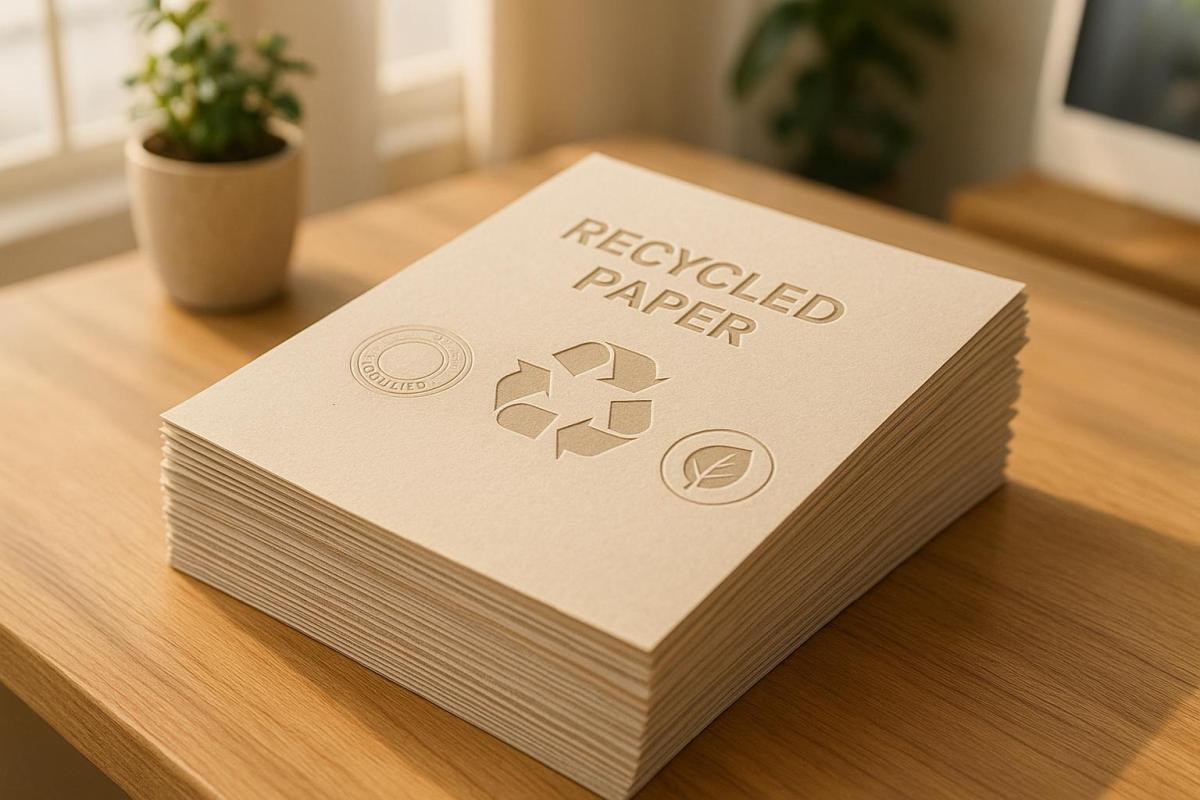
Recycled paper certifications help ensure that paper products meet specific recycled content and environmental standards. They verify eco-friendly claims and build trust with consumers who care about sustainability. Here’s a quick summary of the key certifications and their features:
- Forest Stewardship Council (FSC): Focuses on responsible forest management. Offers labels like FSC Recycled, FSC 100%, and FSC Mix.
- Recycled Claim Standard (RCS): Requires a minimum of 5% recycled content and verifies material claims.
- Global Recycled Standard (GRS): More comprehensive, requiring at least 20% recycled content (50% for labeling) and addressing chemical use and social responsibility.
- SCS Recycled Content Certification: Verifies specific recycled content claims, with a minimum of 5% recycled material.
Quick Comparison
| Certification | Minimum Recycled Content | Environmental Requirements | Social Responsibility | Chemical Restrictions | Best For |
|---|---|---|---|---|---|
| FSC | Varies by product | Yes | Yes | N/A | Forest-based products |
| RCS | 5% | No | No | No | Basic recycled claims |
| GRS | 20% (50% for labeling) | Yes | Yes | Yes | Premium sustainable products |
| SCS Recycled | 5% | Limited | No | N/A | Independent content verification |
Why it matters: Using certified recycled paper reduces waste, saves energy, and helps meet regulatory standards. It also improves brand image, as 70% of consumers are willing to pay more for sustainable products. Choose the certification that aligns with your goals, whether it’s FSC for forest stewardship or GRS for broader sustainability.
Ready to dive deeper? Keep reading to explore certification processes, benefits, and how to choose the right recycled paper for your projects.
Recycled, Post-consumer recycled, and FSC paper
Main Recycled Paper Certification Standards
When choosing recycled paper for your printing needs, it’s essential to understand the three main certifications that ensure quality and sustainability.
Forest Stewardship Council (FSC) Certification
The Forest Stewardship Council (FSC) certification is one of the most widely recognized labels for responsible forest management. It guarantees that products come from forests managed in a way that benefits the environment, society, and the economy. Globally, 56% of consumers recognize the FSC label, and among them, 77% prefer FSC-certified products.
FSC certification is built on 10 core principles, including adherence to laws, worker rights, respect for Indigenous communities, contributions to local well-being, and comprehensive management plans.
For recycled paper, FSC offers three distinct labels:
- FSC Recycled: Ensures 100% of the paper fiber is recycled, with at least 85% sourced from post-consumer waste.
- FSC 100%: All materials come from FSC-certified, responsibly managed forests.
- FSC Mix: Combines recycled material, FSC-certified material, or controlled wood.
The certification process includes a rigorous "chain of custody" system to ensure that certified materials are kept separate from non-certified ones throughout the supply chain.
"FSC certification – which are credited following compliance to the Ten FSC Principles & Criteria – ensures that products come from well-managed forests that provide environmental, social, and economic benefits."
Recycled Claim Standard (RCS) and Global Recycled Standard (GRS)
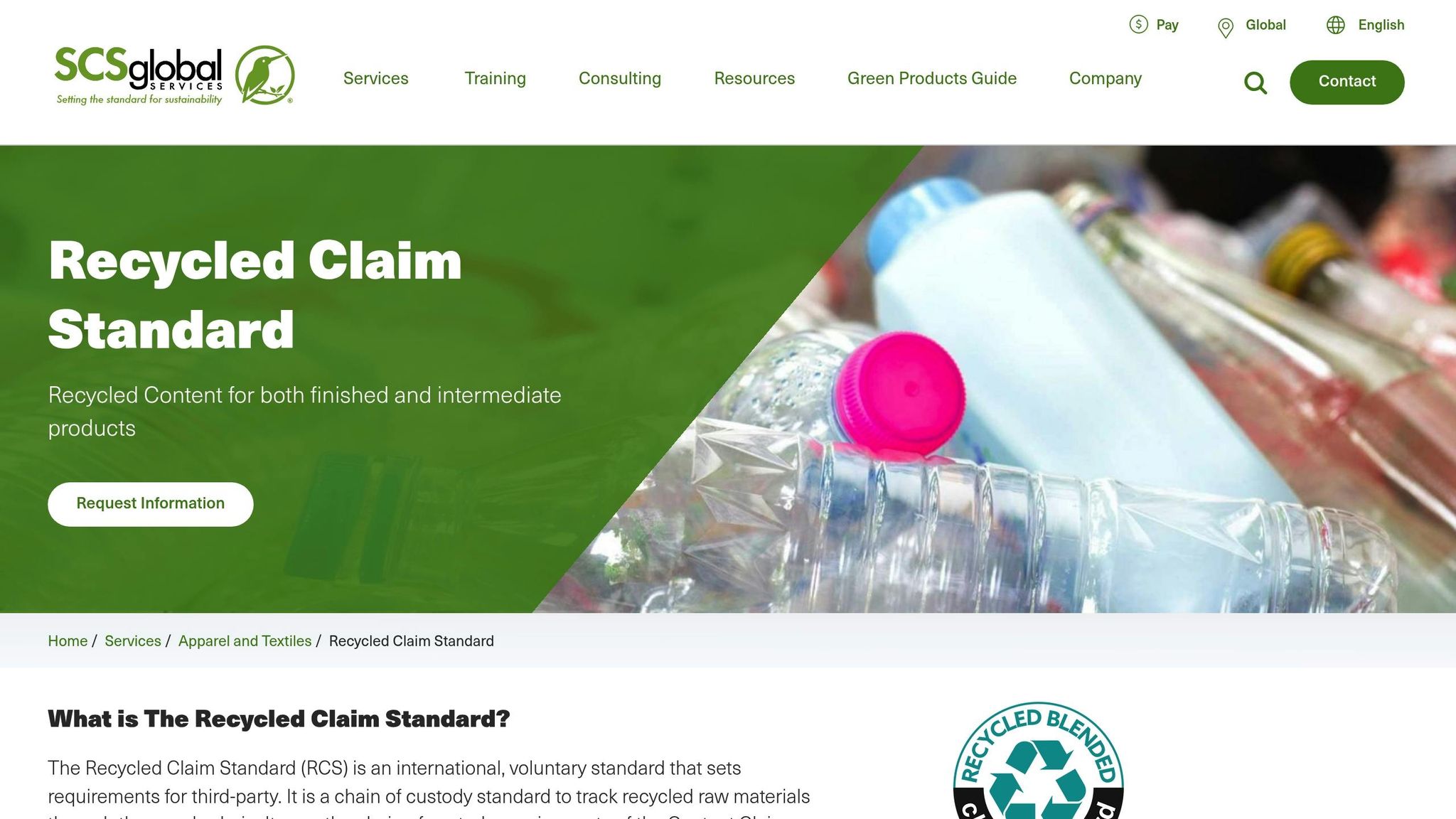
Unlike FSC, which focuses on forest management, the Recycled Claim Standard (RCS) and Global Recycled Standard (GRS) are dedicated to verifying recycled content. Both rely on third-party chain-of-custody audits to confirm compliance.
- RCS: Applies to products with at least 5% recycled material, ensuring transparency about recycled content.
- GRS: Requires a minimum of 20% recycled content (50% for labeling). It goes further by imposing stricter standards for environmental impact, chemical use, and social responsibility.
| Criteria | RCS (Recycled Claim Standard) | GRS (Global Recycled Standard) |
|---|---|---|
| Minimum Recycled Content | 5% | 20% (50% for labeling) |
| Environmental Requirements | No | Yes |
| Chemical Restrictions | No | Yes |
| Social Responsibility | No | Yes |
| Labeling Rules | Can be labeled with 5% recycled content | Must have 50% recycled content for labeling |
These standards not only define what "recycled" means but also encourage companies to reduce their environmental footprint and increase the use of recycled materials.
SCS Recycled Content Certification
SCS has been a leader in recycled content verification since 1989. Their certification confirms the percentage of recycled material in a product, whether it’s pre-consumer or post-consumer, and adheres to internationally recognized standards like ISO 14021 and ISO 17065.
Products with at least 5% recycled content can qualify for SCS certification, with the process typically taking 5–8 weeks. This certification helps businesses meet customer expectations, gain recognition in green programs, and comply with standards such as LEED. It also allows companies to stand out by showcasing their commitment to reducing reliance on virgin materials.
"Most of our customers ask us if we have this certification or not. So, that’s why we need SCS Global Services’ 100% Recycled Content Certification." – Cecil Chan, Director, Fizlestari
"It is very important for us to have certification on our PCR content because it proves that what we’re doing is actually legitimate." – Kali Kinziger, Product Manager, Placon
Certification Processes and Requirements
Obtaining recycled paper certifications involves thorough preparation, meticulous documentation, and consistent compliance monitoring. Understanding these steps is essential for manufacturers and printing service providers to navigate the certification process successfully.
Steps to Get Certified
The process begins with preparation and a detailed assessment. Companies need to evaluate their manufacturing processes, supply chain documentation, and quality controls. This includes reviewing production data, chain-of-custody procedures, material quantification methods, and mass-balance calculations.
Third-party audits play a key role in certification. Auditors assess production facilities, review documentation, and ensure compliance with environmental and social standards. These inspections confirm that companies meet the claims they make about their eco-friendly practices.
For FSC Chain of Custody certification, companies must provide extensive documentation covering chain-of-custody processes, quality controls, sourcing and production records, and FSC labeling procedures. This certification is especially important for printing service providers looking to use FSC trademarks on their materials.
SCS certification, on the other hand, requires companies to demonstrate that their products contain at least 5% recycled content, whether from pre-consumer or post-consumer sources. This involves a comprehensive evaluation of both manufacturing processes and material sourcing.
Maintaining certification is an ongoing effort. Annual surveillance audits and regular internal reviews are necessary to identify and address compliance issues. Companies should implement strong record-keeping practices and train employees to ensure adherence to certification standards. These efforts align with state-specific regulations, such as those in California.
U.S. Recycled Content Standards
In addition to certification requirements, the U.S. enforces specific recycled content standards, with California often leading the way. These regulations significantly influence compliance practices across the country.
California, for instance, sets minimum post-consumer content standards for various paper products:
- Printing paper: 30% post-consumer content
- Toilet paper: 45%
- Paper towels: 40%
- Facial tissue: 10%
- Toilet seat covers: 20%
- Paper wipers: 40%.
Products must also meet recyclability standards to qualify for "unqualified recyclable" labeling. This means that recycling facilities must be accessible to at least 60% of the consumers or communities where the product is sold.
Documentation is critical for compliance. Organizations are required to maintain detailed records that verify the recycled content and recyclability of their paper purchases. This includes vendor certifications, purchase invoices, and other compliance documents. To simplify this process, CalRecycle provides a Recycled-Content and Recyclable Paper Certification form.
These standards are particularly important given the scale of paper consumption in the U.S. The country uses around 100 million tons of paper annually. In 2012, 65% of domestic paper was recycled, with recycled paper making up 33% of the raw materials used in U.S. papermaking.
For printing providers using FSC-certified materials, maintaining chain-of-custody from the forest to the final product is essential. This includes securing Chain of Custody certification to use FSC trademarks.
Non-compliance with these standards can result in severe financial penalties. Waste-related violations can lead to fines ranging from a few hundred dollars to millions, depending on the severity of the infraction. Adhering to certification requirements and monitoring compliance is not just environmentally responsible – it’s also a smart financial decision.
Benefits of Using Certified Recycled Paper
Certified recycled paper goes beyond being an eco-friendly choice – it delivers practical advantages that align with sustainability goals, regulatory demands, and business growth.
Environmental Advantages
Switching to certified recycled paper offers measurable benefits for the planet. Landfills are the largest source of methane emissions, with decomposing paper being a major contributor. Methane is particularly harmful, trapping over 20 times more heat than carbon dioxide, making it a key driver of climate change.
Recycled paper production is resource-efficient, requiring about 26% less energy compared to virgin fiber production and generating approximately 40% less wastewater. Considering the paper industry is one of the top energy consumers, these reductions not only lower industrial energy demand but also relieve stress on local water systems and treatment facilities.
Additionally, certified recycled paper reduces the need for virgin wood fiber, helping to conserve forests. This supports biodiversity, enhances carbon sequestration, and combats forest degradation. These environmental benefits also align with emerging legal requirements, making this choice a strategic one for businesses.
Staying Compliant with Regulations
The legal landscape around recycled content is shifting, making certified recycled paper a critical tool for compliance. In the U.S., several states are introducing post-consumer recycled content (PCR) standards for packaging, including paper products. By 2025, five states will require certain containers and packaging to meet minimum recycled content levels, and Extended Producer Responsibility (EPR) programs for packaging will be in place in these states by February 2025.
Certified recycled paper helps businesses meet these PCR mandates, avoiding penalties and benefiting from incentives. Some EPR laws even include eco-modulation, which offers lower fees for using higher PCR content. Certifications provide independent verification of recycled content claims, a key factor during regulatory audits. Experts recommend that companies proactively pursue PCR certification or source materials with certified PCR while staying updated on new EPR regulations and proposals. The trend of combining recycled content standards with financial incentives makes early adoption of certified materials a smart move.
Boosting Brand Image
The benefits of certified recycled paper extend to marketing and brand perception. Using this paper sends a clear message about a company’s environmental commitment, which resonates with today’s consumers. Third-party certifications on packaging and marketing materials serve as credible proof of a brand’s sustainability efforts, helping businesses stand out in competitive markets.
Corporate sustainability reports can highlight the measurable benefits of using certified recycled paper, such as energy savings, waste reduction, and recycled content usage. These metrics not only strengthen a company’s environmental credentials but also enhance business-to-business relationships, as many large corporations now require suppliers to meet specific environmental standards.
With consumers increasingly favoring eco-conscious brands, certifications become a powerful tool for differentiation. Companies that effectively communicate their sustainability efforts through certified recycled paper are better positioned to attract environmentally conscious buyers. This choice not only supports sustainability goals but also provides a competitive edge in both the market and regulatory landscapes, reflecting the industry’s growing focus on eco-friendly practices.
sbb-itb-ce53437
Comparing Certification Standards
This section takes a closer look at the key features of recycled paper certification standards, helping you make an informed choice. By contrasting the main elements of these certifications, you can better align your selection with your sustainability goals and market demands.
RCS (Recycled Claim Standard) is considered an entry-level certification, requiring a minimum of 5% recycled content and focusing primarily on material verification. On the other hand, GRS (Global Recycled Standard) applies to products with 20–100% recycled content and incorporates broader environmental and social criteria, such as chemical management, energy efficiency, and fair labor practices. Meanwhile, FSC (Forest Stewardship Council) ensures sustainable forest management, and SCS Recycled Content focuses on verifying specific recycled content claims.
When deciding between RCS and GRS, your choice will often depend on your sustainability objectives and the expectations of your target market. GRS is widely recognized in premium markets with strict sustainability requirements, whereas RCS offers a more economical option with fewer compliance demands.
Certification Comparison Table
Here’s a quick side-by-side look at the key differences among these certifications:
| Criteria | RCS (Recycled Claim Standard) | GRS (Global Recycled Standard) | FSC Certification | SCS Recycled Content |
|---|---|---|---|---|
| Minimum Recycled Content | 5% | 20% (50% for labeling) | Varies by product | Varies by claim |
| Material Verification | Yes | Yes | Yes (chain-of-custody) | Yes |
| Environmental Requirements | No | Yes | Yes | Limited |
| Chemical Restrictions | No | Yes | N/A | N/A |
| Social Responsibility | No | Yes | Yes | No |
| Supply Chain Certification | Yes | Yes | Yes | Yes |
| Primary Focus | Recycled content tracking | Comprehensive sustainability | Forest stewardship | Content verification |
| Best For | Basic recycled content claims | Premium sustainable products | Forest-based products | Independent content verification |
Key Insights:
- GRS stands out for its rigorous requirements, addressing chemical use, energy consumption, waste reduction, and social responsibility – areas not covered by RCS.
- RCS-certified materials can be included in GRS-certified products, but the reverse is not allowed, reflecting the stricter standards of GRS.
- FSC is ideal for products derived from forest materials, ensuring responsible sourcing practices.
- SCS provides a straightforward option for verifying recycled content without additional environmental or social criteria.
As the certification landscape evolves, organizations like Textile Exchange are working toward a unified standard system, with a pilot version anticipated by 2025. This shift aims to simplify the certification process while maintaining credibility.
When choosing a certification, consider factors like your budget, market requirements, and sustainability priorities. For government contracts or large-scale projects, certifications like GRS or FSC may be necessary due to their comprehensive coverage. Smaller businesses, however, might find RCS or SCS sufficient for meeting basic recycled content claims. By understanding these distinctions, you can select the most suitable certification for your needs.
Choosing Certified Recycled Paper for Printing Projects
Selecting the right recycled paper for your printing needs involves balancing performance with environmental responsibility. Start by considering factors like paper size, weight, brightness, and material composition to ensure compatibility with your project requirements. The type of printer you’re using – whether inkjet or laser – also matters, as each technology works best with specific paper characteristics. Additionally, assess finishes and other physical properties to align with your printing equipment.
When evaluating recycled paper, check the post-consumer content. According to Federal Trade Commission guidelines, only paper made from 100% post-consumer recovered fiber can be labeled as "recycled". Opting for post-consumer recycled paper not only reduces landfill waste but also amplifies environmental benefits. For instance, using 20 cases of recycled paper saves 17 trees, 390 gallons of oil, 7,000 gallons of water, and 4,100 kWh of energy.
Decide whether coated paper, ideal for sharper images, or uncoated paper, known for its versatility, suits your project better. Also, verify the paper’s opacity if you plan to print on both sides.
Certifications can help you identify responsibly sourced paper. Look for certifications from organizations like the Forest Stewardship Council (FSC), which ensures sustainable forest management. Other certifications, such as Green Seal or Ancient Forest Friendly, provide additional environmental assurances.
Before committing to large quantities, it’s smart to test the paper. Recycled paper may require adjustments to print settings – such as speed or pressure – to achieve the best results. Buying in bulk can save money, but keep in mind that eco-friendly options might have limited stock.
Green Printing with Miro Printing & Graphics Inc.
Once you’ve chosen the right recycled paper, working with experienced professionals can make all the difference. Partnering with a full-service print shop that specializes in sustainable practices can help elevate your project. For example, Miro Printing & Graphics Inc. offers expertise in handling various recycled paper types through services like digital, offset, and large-format printing.
Their team simplifies the process of selecting and using recycled paper. Whether you need eco-friendly business cards, marketing brochures that reflect your commitment to the environment, or large banners made from sustainable materials, they understand how to optimize recycled paper for different printing methods.
Today’s recycled paper combines quality with sustainability. The printing process itself can also be more environmentally friendly. For instance, using vegetable-based inks not only produces vibrant colors but also serves as a greener alternative to petroleum-based inks.
Miro Printing & Graphics Inc. further enhances its sustainable printing services with in-house bindery and finishing capabilities. This means your project – from printing to final touches – can be completed under one roof. Located in Hackensack, NJ, they provide services across New Jersey, New York, and Connecticut, accommodating everything from custom small orders to large production runs.
The environmental benefits of recycled paper are undeniable. Its manufacturing process uses 31% less energy than virgin fiber paper and saves approximately 9,250 gallons of water per ton. When combined with professional printing expertise, recycled paper becomes a powerful tool for sustainable business communication.
Conclusion
Recycled paper certifications represent more than just a badge of sustainability – they’re a tangible way to back up your environmental commitments and earn the trust of customers who care about responsible practices. With 80% of consumers considering sustainability important and 60% willing to adjust their buying habits to reduce environmental impact, choosing certified recycled paper is a smart move that aligns business goals with environmental responsibility.
There are several certification options to explore. For instance, FSC certification emphasizes a science-based approach to managing forests, while SCS Recycled Content certification requires at least 5% recycled material. As Sarah Quirk from EcoEnclose puts it, "Certifications are an excellent way to communicate your investment in thoughtful production and products". These certifications not only provide a structured approach to sustainability but also help businesses showcase their commitment to responsible practices.
The benefits extend beyond just being environmentally conscious. Over 70% of consumers are willing to pay a premium for sustainably sourced products, and 84% report that poor environmental practices could push them away from a brand. Additionally, products marketed as sustainable are growing 2.7 times faster than their non-sustainable counterparts.
For businesses looking to adopt certified recycled paper, setting clear sustainability goals and working with experienced print providers is key. Companies like Miro Printing & Graphics Inc. can guide you through the process, from selecting the right recycled paper to optimizing printing methods – including digital, offset, and large-format printing – ensuring your projects meet both environmental standards and high-quality expectations.
FAQs
What are the main differences between FSC, RCS, GRS, and SCS recycled paper certifications, and how do I decide which one is best for my needs?
The main differences between FSC, RCS, GRS, and SCS recycled paper certifications come down to their specific focus and requirements:
- FSC (Forest Stewardship Council) emphasizes responsible sourcing of both recycled and virgin fibers, supporting sustainable forest management practices.
- RCS (Recycled Claim Standard) ensures products contain recycled materials, while GRS (Global Recycled Standard) takes it a step further, requiring at least 50% recycled content and compliance with additional social and environmental criteria.
- SCS (Scientific Certification Systems) specializes in verifying recycled content and environmental claims, often highlighting post-consumer recycled materials.
When deciding which certification to pursue, consider your sustainability goals. If your priority is high recycled content combined with social accountability, GRS might be the best fit. For straightforward verification of recycled content, RCS is a solid option. If you value responsible forest management alongside recycled content, FSC could be the right choice. Match the certification to the specific needs and values of your project.
How can using certified recycled paper benefit my business and its environmental impact?
Using certified recycled paper can have a meaningful impact on both your business and the environment. By choosing this option, you help conserve natural resources, reduce greenhouse gas emissions, and save energy and water. These actions play a direct role in addressing environmental challenges and supporting efforts to mitigate climate change.
But the benefits don’t stop there. Adopting eco-friendly practices like using recycled paper can also elevate your brand. It shows your commitment to corporate responsibility, builds trust with customers, and resonates with environmentally conscious consumers. This not only fosters stronger customer loyalty but can also give your business a competitive edge, enhancing your reputation and paving the way for long-term growth.
How can a company prepare for and maintain compliance with recycled paper certifications?
To gear up for recycled paper certification, businesses should start by crafting clear policies that emphasize the importance of recycled materials. For instance, setting a goal like using at least 50% recycled content in printing and mailing papers can serve as a practical benchmark. It’s also crucial to implement systems that track and verify the recycled content in the materials being used.
Staying compliant involves a few key practices: conducting regular audits, renewing certifications on time (usually every year), and consistently meeting certification standards. Companies should also keep thorough records of their supply chain processes and stay updated on any changes to certification requirements. These efforts help ensure that operations align with sustainability objectives and certification guidelines.
Related posts
- Cost-Saving Tips for Sustainable Paper Choices
- Pre vs Post-Consumer Recycled Paper: Key Differences
- Checklist for Choosing Recycled Paper for Printing
- 5 Myths About Recycled Paper
https://app.seobotai.com/banner/banner.js?id=6858e1bf5559d477e763e742
 BergenCountyPrintersBlogs