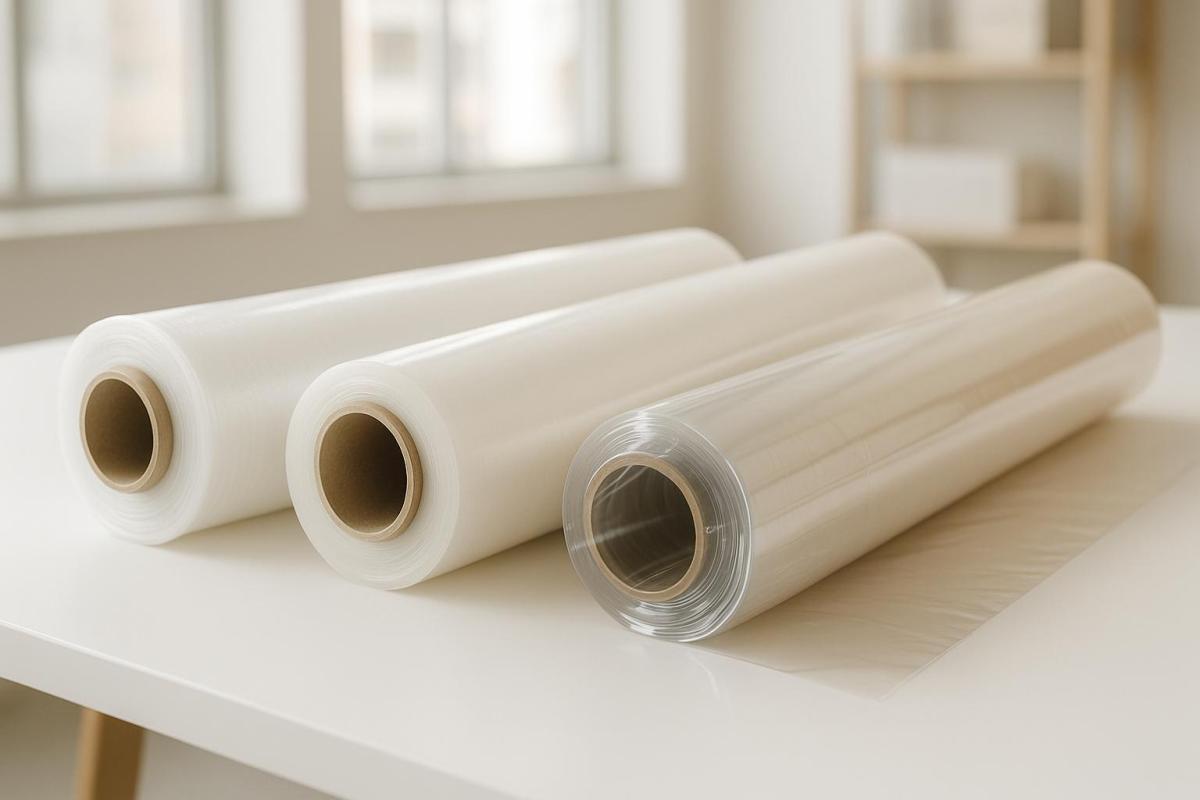
Shrink wrap films are essential for protecting and presenting printed materials. They provide a secure seal, safeguard against damage, and enhance the visual appeal of packaged items. The three primary types of shrink films – PVC (Polyvinyl Chloride), POF (Polyolefin), and PE (Polyethylene) – each serve specific needs based on clarity, durability, cost, and environmental considerations.
- PVC: Offers high clarity and durability at a moderate cost but has recycling challenges and environmental concerns.
- POF: Known for its crystal-clear finish, strong seals, and recyclable properties, making it ideal for high-end printed materials.
- PE: Durable and suitable for bundling heavier items, though it provides less clarity and requires specialized machinery.
Each type has trade-offs, so choosing the right film depends on your project’s protection, budget, and presentation needs.
Quick Comparison
| Film Type | Key Features | Cost | Best Use Cases |
|---|---|---|---|
| PVC | Clear, durable, easy to print on | $2–$4/kg | Magazines, promotional items |
| POF | High clarity, recyclable, durable | $3–$6/kg | Books, brochures, food packaging |
| PE | Flexible, supports heavy items | $1.50–$3/kg | Bundling, large-format prints |
Selecting the right shrink film ensures your printed materials are protected, visually appealing, and cost-effective.
Shrink wrap comparison
1. Polyvinyl Chloride (PVC) Shrink Film
PVC shrink film is a trusted choice for protecting and showcasing printed products. As one of the most widely produced plastics globally, PVC stands out for being clear, durable, flexible, and easy to print on, making it a go-to material for various packaging needs.
Key Properties
PVC shrink film is prized for its optical clarity, allowing printed materials to be displayed without any distortion. Its strength and durability provide excellent resistance to tears and punctures, ensuring reliable protection during handling, transportation, and storage.
What sets PVC apart is its printability – it easily accepts inks and coatings, making it perfect for printing and labeling. Its flexibility allows it to conform snugly to irregular shapes, creating a polished, shiny finish that enhances the visual appeal of packaged items. These qualities make PVC shrink film a staple for a wide range of printing applications.
Best Printing Applications
PVC shrink film excels in bundling printed materials like magazines, newspapers, and promotional items. Its clear surface ensures covers and designs remain visible while keeping the contents secure. In the signage and graphics industries, PVC’s vibrant color reproduction and ease of printing make it a popular choice for display materials, banners, and point-of-sale graphics. Additionally, the electronics sector frequently uses PVC shrink bags and centerfold PVC shrink wrap for product packaging.
Cost
When it comes to pricing, PVC shrink films are positioned between other popular options. They typically cost $2–$4 per kilogram, compared to POF ($3–$6/kg) and PE ($1.50–$3/kg). Factors like thickness, volume, and customization can influence the final cost.
Environmental Impact
PVC’s market is growing at an impressive rate of about 15% annually, far outpacing the general label market’s growth of 5%. This aligns with the domestic heat shrinkable film market, which is projected to grow by over 20%. Despite ongoing environmental concerns, PVC shrink film labels continue to gain traction in the broader label market, reflecting their strong acceptance and demand.
2. Polyolefin (POF) Shrink Film
Polyolefin (POF) shrink film is a standout material in the packaging world, known for its excellent shrinking ability and crystal-clear transparency – all without relying on chloride. Its durability and environmental advantages make it a go-to choice for demanding printing needs and set it apart from other shrink films.
Key Properties
One of POF shrink film’s most notable features is its clarity, ensuring that branding, product details, and printed designs remain sharp and visible. Its impressive tensile strength and resistance to abrasion provide reliable protection during shipping and handling. Additionally, its cross-linked structure enhances both burst strength and seal integrity, making it a highly durable option.
"Polyolefin is highly durable, offering excellent tensile strength and abrasion resistance. Its cross-linked properties enhance burst strength and seal integrity, making it ideal for various applications, including food and healthcare packaging." – US Packaging & Wrapping
The film adapts well to irregularly shaped items without sacrificing protection. Unlike PVC, POF stays soft to the touch after heat application and doesn’t emit odors during the sealing and shrinking process. It also offers reliable resistance to moisture and chemicals, shielding printed materials from oils, greases, and certain solvents. Plus, it maintains thermal stability in both hot and cold conditions.
Best Printing Applications
POF shrink film is particularly suited for food packaging, as it is FDA-approved for direct contact with food. In healthcare, its strong seals and protective properties make it an excellent choice for safeguarding printed materials. Centerfold polyolefin shrink wrap is versatile enough to package a wide range of printed products, from consumer items to industrial goods.
Cost
POF shrink film comes at a higher price point compared to PVC. Its advanced features and performance justify the cost difference. It also requires a higher shrink temperature – over 300°F compared to PVC’s lower threshold – potentially increasing energy expenses during processing.
Environmental Impact
POF stands out as an eco-conscious option. It is fully recyclable and free from harmful substances like chlorine, making it a safer choice for the environment. Unlike PVC, POF doesn’t release toxic gases when heated. Recycled POF can be transformed into other plastic products, contributing to a circular economy. Additionally, biodegradable POF made from renewable materials like natural resins or starch breaks down faster, helping reduce plastic waste and pollution.
sbb-itb-ce53437
3. Polyethylene (PE) Shrink Film
Polyethylene (PE) shrink film, crafted from either high-density polyethylene (HDPE) or low-density polyethylene (LDPE), strikes a practical balance in the world of shrink wrap materials. Known for its dependable performance, this film is a versatile pick for a variety of packaging needs. Let’s dive into its features, uses, and environmental considerations.
Key Properties
When heated, PE shrink film shrinks by 60–70% in both length and width. This level of shrinkage allows it to tightly conform to products of different shapes, creating tamper-evident seals. The film’s high transparency ensures that printed materials, such as logos, remain sharp and visible, making it an excellent choice for branding. It also supports direct printing and is available in a range of finishes, including glossy, matte, clear, or colored. Plus, it’s user-friendly and works seamlessly with standard shrink wrapping machines.
Best Printing Applications
PE shrink film is a standout choice for bundling multiple items together, simplifying handling and transportation while also enhancing shelf appeal. Its transparency ensures that individual products remain visible, which is especially useful for retail displays. Additionally, businesses have the flexibility to print logos or product details directly onto the film – or skip printing altogether, depending on their needs. This makes it a go-to option for packaging a wide array of products, including home decor, stationery, cosmetics, frozen foods, apparel, and consumer electronics.
Environmental Impact
From an environmental perspective, PE shrink film falls somewhere in the middle. While it’s not as eco-friendly as polyolefin (POF), it’s generally considered a better option than polyvinyl chloride (PVC). PE is more recyclable than PVC in many regions and requires less energy to produce, which lowers its carbon footprint. That said, it still lags behind POF in terms of environmental performance. To address these concerns, manufacturers are exploring biodegradable PE alternatives to reduce its environmental impact. This makes PE an appealing choice for companies looking to balance cost, functionality, and sustainability.
Advantages and Disadvantages
This section builds on the individual film profiles and provides a comparative overview of the key advantages and disadvantages, focusing on both performance and environmental aspects. Below is a summary table that outlines the trade-offs for each type of film:
| Film Type | Advantages | Disadvantages | Best For |
|---|---|---|---|
| Polyvinyl Chloride (PVC) | Clear appearance, becomes rigid when heated, and has a lower upfront cost | Storage challenges, production of sealing by-products, recycling difficulties, and releases toxic chemicals when burned | Non-consumable goods (being phased out) |
| Polyolefin (POF) | Excellent clarity, soft texture, strong puncture resistance, durable seals, and recyclable without harmful emissions | Higher cost compared to PVC | Books, brochures, and high-end printed materials |
| Polyethylene (PE) | Supports heavier items, widely recyclable, flexible and durable, and uses less energy during production | Requires specialized equipment, offers a lower shrink rate, and provides less clarity than POF | Bundling multiple items, large-format prints |
Breaking Down the Trade-Offs
PVC is an affordable option upfront, but its limitations – such as recycling challenges and environmental concerns – often outweigh the cost savings. POF, while more expensive, offers exceptional clarity and durability, making it ideal for applications where visual appeal is essential, such as packaging for books and brochures. PE strikes a balance, excelling in bulk packaging and bundling applications thanks to its durability and recyclability, though it requires specialized machinery for optimal use.
For printed materials like books, POF has largely taken over PVC due to its superior clarity and better environmental profile. This clarity ensures that titles, cover art, and other graphics remain highly visible, making it an excellent choice for protecting and presenting printed items.
Processing and Equipment Considerations
The type of equipment required can also influence the choice of film. Cross-linked POF stands out for its enhanced strength and seal quality, making it a go-to option for high-volume operations or packaging heavier products. On the other hand, using PE effectively often demands dedicated shrink bundling machines, which might necessitate equipment upgrades for some facilities.
Each film type has its strengths and weaknesses, but the right choice ultimately depends on balancing cost, performance, and environmental priorities for the specific application.
Conclusion
When selecting shrink wrap film, it’s important to weigh cost, performance, and environmental considerations. PVC may have the lowest upfront cost, but concerns like its environmental impact and odor issues often limit its appeal for modern applications. On the other hand, POF stands out as a top-tier option due to its excellent clarity, durability, and FDA approval for food-related uses. Its transparency makes it ideal for showcasing high-quality printed materials like brochures and books, while PE is better suited for heavy-duty tasks such as bundling or packaging multipacks.
Interestingly, research reveals that 50% of users rely on thicker film gauges than necessary, leading to unnecessary costs without added benefits. For instance, reducing film width from 12 inches to 11 inches can cut material costs by 4.2%, and trimming the cut-off from 11 inches to 10 inches can save as much as 9.1%. Small adjustments like these can significantly enhance cost efficiency when paired with a thoughtful film selection process.
For those seeking expert guidance, working with Miro Printing & Graphics Inc. can help ensure your packaging solutions meet both performance and budget needs. With their expertise in digital and offset printing, as well as post-press services, they can seamlessly align your packaging choices with your printing requirements.
FAQs
What should I consider about the environment when choosing between PVC, POF, and PE shrink wrap films for printing projects?
PVC shrink wrap film poses environmental concerns because it emits harmful chlorine compounds when heated. Polyolefin (POF) and polyethylene (PE) films are better alternatives since they are chlorine-free and recyclable.
POF stands out as a more eco-conscious option. It uses less material and is easy to recycle, making it an excellent choice for minimizing environmental impact in printing projects.
How does the clarity of shrink wrap film impact the look of printed materials?
The transparency of shrink wrap film is crucial for showcasing the visual appeal of printed materials. High-clarity films offer a clear, glossy finish that enhances colors, sharpens details, and brings designs to life, giving your products a polished and professional look.
When it comes to printing projects, choosing a shrink wrap film with superior clarity not only protects your materials but also boosts their visual impact, helping them grab attention and make a memorable impression.
How does the thickness of shrink wrap film impact costs, and how can choosing the right film size help save money?
When you choose thicker shrink wrap film, costs typically go up because more material is needed, which drives up production expenses. However, for projects where extra strength or durability isn’t a priority, switching to a thinner film can be a smart way to cut costs without sacrificing performance.
Another way to save is by selecting the right size of shrink wrap film for your project. Using film with the correct width and length can minimize waste and boost cost efficiency. In fact, properly sizing your shrink wrap can reduce material usage and lower packaging costs by up to 25%, all while delivering professional-looking results.
Related posts
- How to Choose Cost-Effective Printing Materials
- How to Choose the Right Paper for Custom Prints
- Biodegradable vs. Compostable Printing: Key Differences
- Checklist for Choosing Recycled Paper for Printing
https://app.seobotai.com/banner/banner.js?id=68841e04b716ff8d6ab59c3b
 BergenCountyPrintersBlogs