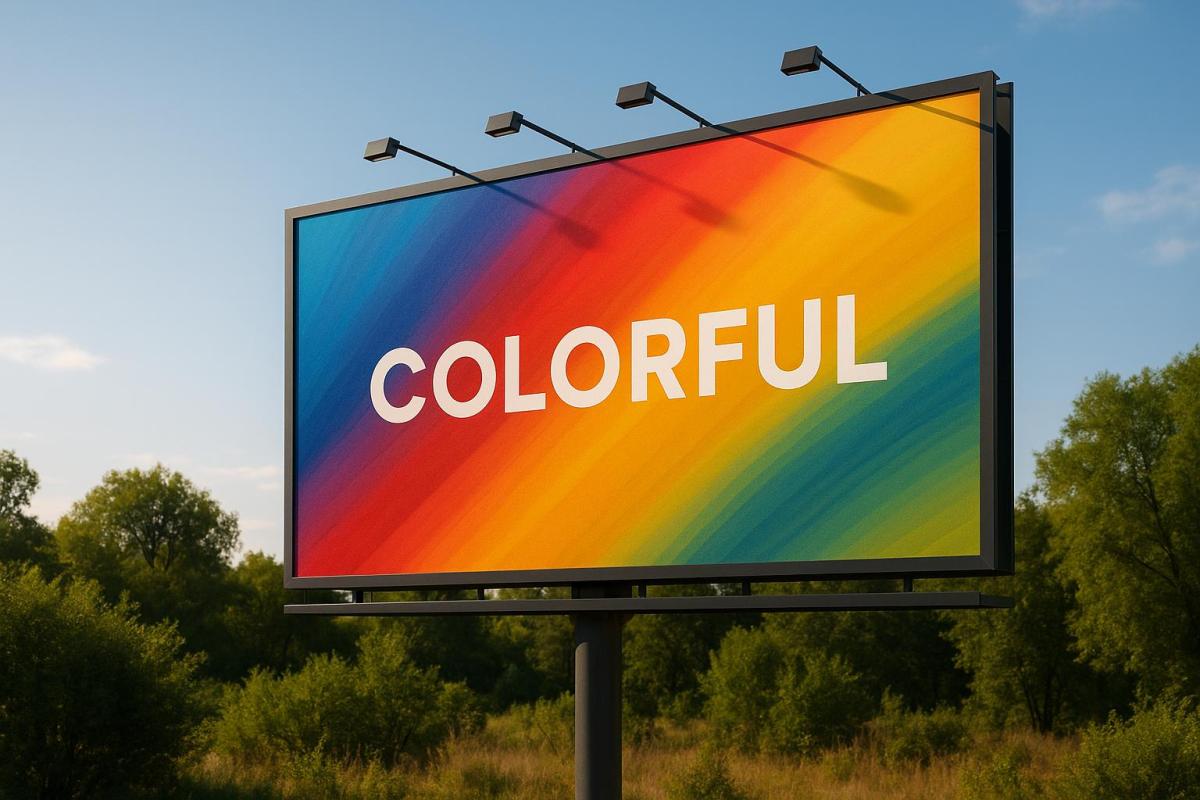
Outdoor large format printing requires materials that can handle harsh weather, resist fading, and maintain visual quality over time. Here’s a quick breakdown of the top materials and their key features:
- Vinyl: Durable, flexible, and affordable. Premium grades can last up to 10 years with proper UV protection.
- Mesh: Ideal for windy areas due to its perforated design. Slightly more expensive but reduces wind stress.
- Fabric: Lightweight and visually appealing. Best for temporary displays with modern printing methods enhancing weather resistance.
- Coroplast: Budget-friendly and lightweight. Great for short-term outdoor signage but less durable for long-term use.
- Sintra (PVC): Strong and weatherproof. Balances durability and cost for permanent displays.
- Dibond (Aluminum Composite): High-end material with excellent durability and print quality. Perfect for premium, long-lasting signage.
Quick Comparison
| Material | Lifespan | Weather Resistance | Cost Range | Best Use Case |
|---|---|---|---|---|
| Vinyl | 3–10 years | Excellent | ~$2.50/sq. ft. | General outdoor signage |
| Mesh | 2–3 years | Great for wind | ~$3.00/sq. ft. | Windy locations, building wraps |
| Fabric | Short-term | Moderate | $20–$200/banner | Events, temporary displays |
| Coroplast | 1–2 years | Good | ~$9/sign | Yard signs, short-term campaigns |
| Sintra | 3–5 years | Excellent | ~$38 for 24"x32" | Permanent outdoor signage |
| Dibond | 5–10+ years | Outstanding | ~$110 for 4’x8′ | Premium, long-lasting signage |
Choosing the right material depends on your project’s duration, location, and budget. Premium options like Dibond and Sintra offer long-term value, while vinyl and Coroplast are cost-effective for short-term needs.
1. Vinyl
Vinyl is a go-to material for outdoor large-format printing, thanks to its combination of flexibility, durability, and affordability. Its adaptability to different surfaces and weather conditions makes it ideal for everything from storefront banners to vehicle wraps and outdoor signage.
Durability
The lifespan of vinyl depends on its grade, with each level offering different levels of protection for outdoor use:
| Vinyl Grade | Outdoor Lifespan | Key Features |
|---|---|---|
| Economy Grade | Up to 3 years | Basic weather resistance |
| Standard Grade | Up to 5 years | Scratch resistance, UV protection with laminate |
| Premium Grade | Up to 7 years | Enhanced protective coatings |
| Ultra-Premium Grade | Up to 10 years | Extreme scratch and fade resistance |
Economy Grade Vinyl is a good choice for short-term campaigns, lasting up to 3 years outdoors. For more demanding applications, Standard Grade Vinyl with a laminate extends its durability to 5 years. Premium and Ultra-Premium grades push longevity further, lasting up to 7 and 10 years respectively, especially when paired with advanced protective coatings.
Weather Resistance
Vinyl is built to handle tough outdoor conditions. Its moisture resistance and ability to endure temperature swings make it a reliable option for various climates. For example, cast vinyl film resists UV rays, water, and extreme temperatures, ensuring it holds up in both hot and freezing weather. Its waterproof properties protect against rain, snow, and humidity, while its flexibility prevents cracking in cold conditions.
Strong winds? No problem. Vinyl’s durability makes it an excellent choice for outdoor installations, even in areas prone to wind stress. Plus, its moisture resistance helps prevent issues like rust, corrosion, or swelling over time.
Cost
When viewed as a long-term investment, vinyl offers excellent value. For instance, premium vinyl decals for vehicle lettering can last up to 9 years, while intermediate grades typically last 5 to 6 years. Ann Durso of signs123.com explains:
"Signs are a marketing and advertising tool and should be valued for their ROI."
Consider this: A $5,000 sign that lasts 10 years breaks down to just $500 per year – or $41.67 per month. Additionally, damaged sections of a vinyl sign can often be replaced individually, saving money compared to replacing the entire sign. Regular cleaning with mild detergent further extends its lifespan.
Print Quality
Vinyl excels in delivering vibrant colors and sharp details. Its smooth surface ensures precise ink adhesion, resulting in crisp, long-lasting graphics. Cast vinyl, in particular, is highly flexible and can conform to curved surfaces and complex shapes without compromising print quality. This makes it a popular choice for vehicle wraps, dimensional signage, and installations on irregular surfaces.
Higher-grade vinyl options also offer better fade resistance, thanks to advanced UV protection. With proper installation and routine maintenance, vinyl graphics can retain their vibrant, professional appearance for years.
2. Mesh
Mesh banners, made from 70% vinyl and 30% perforations, are designed to handle outdoor conditions with ease. Their unique composition provides better wind resistance and durability, making them a go-to choice for challenging environments.
Durability
Mesh banners are built to endure the elements. The perforations in the material let wind pass through, reducing the stress that often damages solid banners. Their elastic structure also helps minimize wrinkles, keeping them looking professional. With proper care, these banners can last 2–3 years, though factors like sunlight, wind, and rain exposure may affect their lifespan.
Weather Resistance
Thanks to their perforated design, mesh banners perform exceptionally well in windy conditions. The airflow through the fabric minimizes the risk of tearing or fluttering, which are common issues with solid banners. Additionally, the material is waterproof and resistant to various weather conditions, making it a reliable option for long-term outdoor use. Beyond wind resistance, mesh banners hold up against rain, temperature changes, and other environmental challenges. Their semi-permeable nature even allows some sound and light to pass through, making them ideal for events like concerts and stage performances. While they come at a higher cost, their ability to withstand harsh weather often justifies the investment in wind-prone areas.
Cost
Mesh banners are more expensive than standard vinyl options, but they provide excellent value in windy locations. For example, an 8 oz banner measuring 96×96 inches with grommets costs $189, with standard pricing averaging around $9 per square foot for a 5-day turnaround. Rush orders can increase the cost by up to 25%. While the upfront cost is higher, mesh banners offer a durable and long-lasting solution, balancing durability, cost, and performance.
Print Quality
Mesh banners deliver clear and sharp graphics, but there are a few trade-offs. The perforations in the material can slightly reduce color vibrancy, and prolonged exposure to sunlight may cause some fading. However, advancements in printing technology ensure that the final product still looks professional and visually appealing, making mesh banners a reliable choice for outdoor advertising.
For top-notch outdoor mesh banner printing, check out the services offered by Miro Printing & Graphics Inc., located in Hackensack, NJ. Their expertise ensures high-quality results every time.
3. Fabric
When it comes to outdoor signage, fabric offers a compelling mix of visual appeal and affordability. While materials like vinyl and mesh are known for their toughness, fabric stands out for its lightweight versatility – perfect for banners, flags, and displays where movement adds an extra layer of charm. Although it doesn’t quite match the rugged durability of vinyl or mesh in harsh conditions, modern treatments and printing advancements have significantly improved fabric’s ability to endure the outdoors.
Durability
The longevity of fabric in outdoor settings largely depends on the treatments and printing techniques applied. Polyester fabric, a popular choice for outdoor displays, is valued for its strength and flexibility. With the right treatment, it can handle outdoor conditions reasonably well, though it does require more careful placement and protection compared to sturdier vinyl materials.
One of fabric’s standout features is its flexibility. This allows it to move naturally in the wind, reducing stress points that might cause tearing in stiffer materials.
Weather Resistance
Advances in fabric sublimation printing have greatly enhanced the weather resistance of fabric signage. This technique creates UV, water, and scratch-resistant prints that hold up well under typical outdoor conditions. By using heat to transfer CMYO dyes directly into synthetic fabrics, the process bonds the dye to the material’s structure, preventing issues like fading or peeling. This added resilience makes fabric a practical and affordable option for outdoor advertising.
Cost
Fabric sublimation printing is not only durable but also cost-effective, especially for businesses that need adaptable signage. This method is particularly advantageous for short production runs or designs featuring intricate details like photographic images.
"Ultimately, your custom business signs will be cheaper, will last longer, and will be more sustainable than signs made using other printing methods." – Wallace Graphics
The cost benefits are even greater when paired with flexible fabric frame systems. These systems provide a polished, professional look and allow businesses to easily swap out printed fabrics for new campaigns without replacing the entire display structure.
Print Quality
Fabric sublimation printing delivers vibrant, integrated colors that help outdoor signs stand out. Unlike traditional printing methods where ink sits on the surface, sublimation infuses the dye directly into the material, creating a smooth, seamless finish.
"There isn’t any build-up of dye on the material being printed and once the dye bonds with it and dries, the color becomes incredibly intense and beautifully bright." – Wallace Graphics
For high-quality fabric sublimation printing tailored to outdoor needs, Miro Printing & Graphics Inc. in Hackensack, NJ, offers expert services to bring your designs to life.
4. Coroplast (Corrugated Plastic)
Coroplast is a practical option for outdoor signage, striking a balance between durability and affordability. This material combines the lightweight nature of plastic with solid structural strength, making it suitable for everything from yard signs to temporary outdoor displays. Its construction and resilience against weather make it a go-to choice for large format printing projects.
Durability
What makes Coroplast so sturdy is its unique corrugated design. It features a fluted interior sandwiched between two flat plastic sheets, giving it a toughness that outperforms materials like cardboard, foamboard, and cardstock. The fluted core not only adds strength but also keeps the material lightweight.
Genuine Coroplast comes with a 2-year warranty on digital prints, which is a significant improvement over the 12–15 month lifespan of imported versions. When mounted correctly, a 4mm Coroplast sign can even handle winds up to 35 mph. This level of durability ensures the material performs reliably, even in challenging outdoor conditions.
Weather Resistance
One standout feature of Coroplast is its ability to endure harsh weather without losing its integrity. Unlike some traditional materials, it remains unaffected by rain, heat, or cold.
"Coroplast won’t get soggy in the rain, it won’t melt in heat or become brittle in cold. You can use the material both inside and outside without any issues." – SpeedPro
This makes it a dependable choice for outdoor signage that needs to hold up through various seasons. Its waterproof nature and ease of cleaning mean minimal upkeep, even after extended exposure to the elements.
Cost
Coroplast is one of the most budget-friendly rigid substrates available, making it an excellent option for temporary signage or campaigns with tight budgets. For example, you can get four 24″x36″, 4mm signs for $90.00 ($22.50 each), and the price drops to $6.82 per sign when you order 100. Smaller formats, like 24″ W x 18″ H signs, are also economical, with 10 signs priced at $90.00 ($9.00 each). Plus, its lightweight design helps reduce shipping costs.
Made from recyclable polypropylene, Coroplast aligns with sustainability goals, adding another layer of appeal. Beyond affordability, it also delivers excellent print quality.
Print Quality
Coroplast offers a smooth, uniform surface that works beautifully with digital printing. Its flat exterior ensures vibrant colors and sharp text, giving your signage a professional finish. When paired with expert large format printing services, Coroplast can produce results that rival more expensive materials.
One detail to keep in mind: specify the flute direction when ordering Coroplast, especially if you plan to use metal stakes or attach the signs to posts. Proper planning ensures your signage functions as intended.
If you’re in the Hackensack, NJ area, Miro Printing & Graphics Inc. provides expert large format printing services to help you get the most out of Coroplast for your outdoor signage needs.
sbb-itb-ce53437
5. Sintra (Expanded PVC)
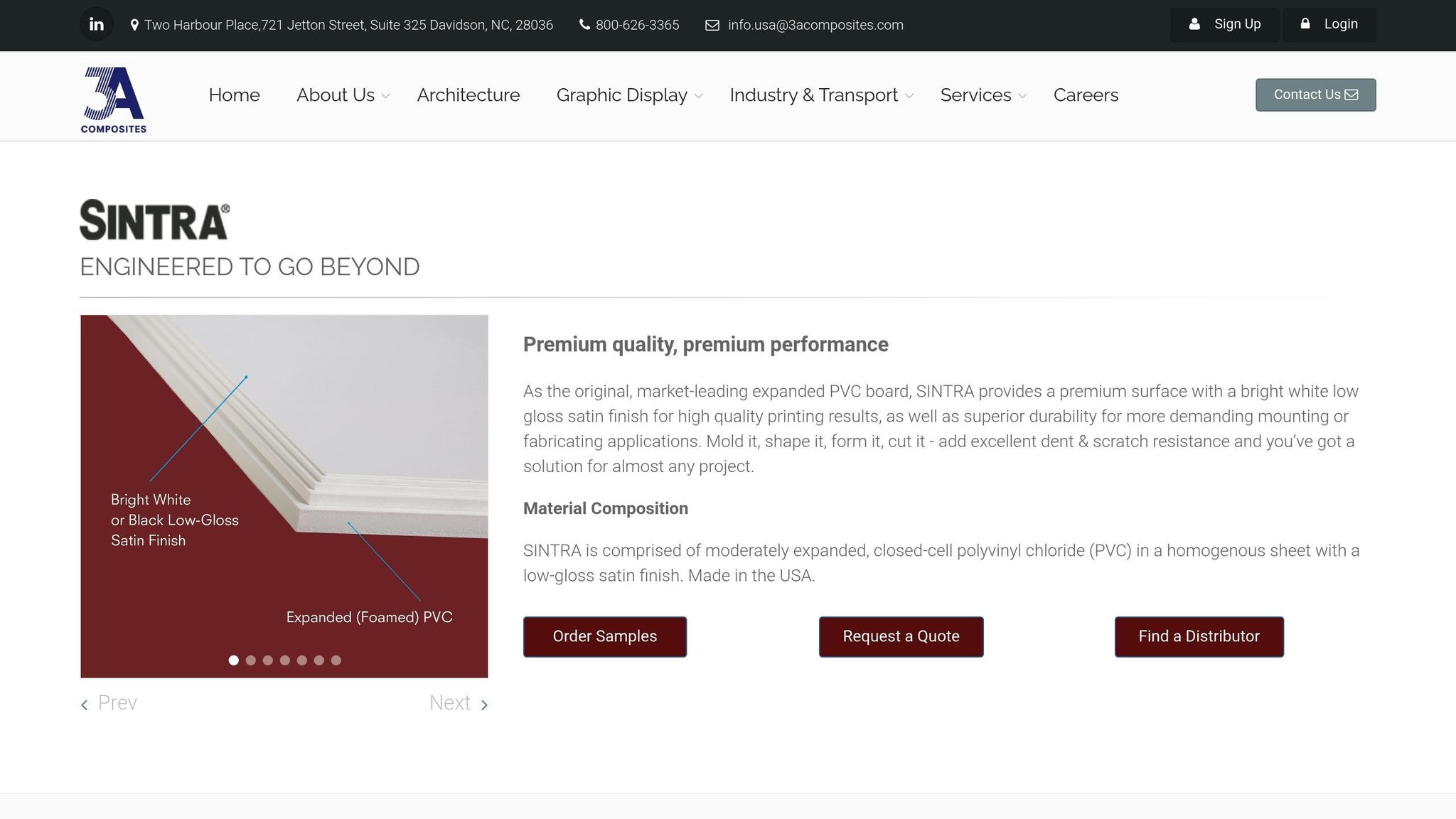
Sintra is a high-quality, expanded closed-cell PVC material known for its strength and excellent print performance, making it a popular choice for outdoor signage.
Durability
Sintra’s durability is one of its standout features. Thanks to its closed-cell PVC construction, the material is both lightweight and sturdy. It resists damage from dents, cuts, and scrapes, ensuring longevity even in demanding conditions. With over three decades as a top-tier PVC board, it’s recommended to use gauges of 10 mm or thicker for projects requiring extra structural integrity.
Weather Resistance
When it comes to standing up to the elements, Sintra excels. It resists moisture, chemicals, and UV exposure, making it impervious to rain, sun, and temperature swings. Unlike some materials, it doesn’t warp, fade, or crack under these conditions. Sintra is also resilient against extreme temperatures, prolonged sunlight, wind, water, mold, and mildew. For outdoor signage requiring added stability, a ¼″ thickness provides increased rigidity to handle harsher environments. Although Sintra is ideal for short-term outdoor use, applying a UV-resistant coating can significantly extend its lifespan for long-term projects.
Cost
Sintra offers a great balance between performance and affordability, making it a practical choice for outdoor displays. While it costs more than basic foamboard – typically used indoors – the added expense reflects its superior durability and extended lifespan. For example, a 24″ x 32″ (6 mm) sheet of expanded PVC costs approximately $38.40. Larger options include 48″ x 96″ sheets, with a 3 mm thickness available in a 6-sheet pack for $420.00, and a 6 mm thickness offered in a 3-pack for $385.00. Compared to other rigid materials with similar durability, Sintra remains a cost-effective solution.
Print Quality
Sintra’s smooth, uniform surface ensures exceptional print quality, making it ideal for professional signage. Its consistent cell structure delivers vibrant colors, sharp text, and excellent contrast, resulting in visually striking displays. Additionally, its expanded PVC composition makes it easier to cut and fabricate compared to denser plastics like polystyrene. Selecting the right thickness is key for meeting specific mounting requirements.
For businesses located in Hackensack, NJ, Miro Printing & Graphics Inc. provides expert large-format printing services, ensuring you get the most out of Sintra’s print potential for your outdoor signage needs.
6. Dibond (Aluminum Composite Panel)
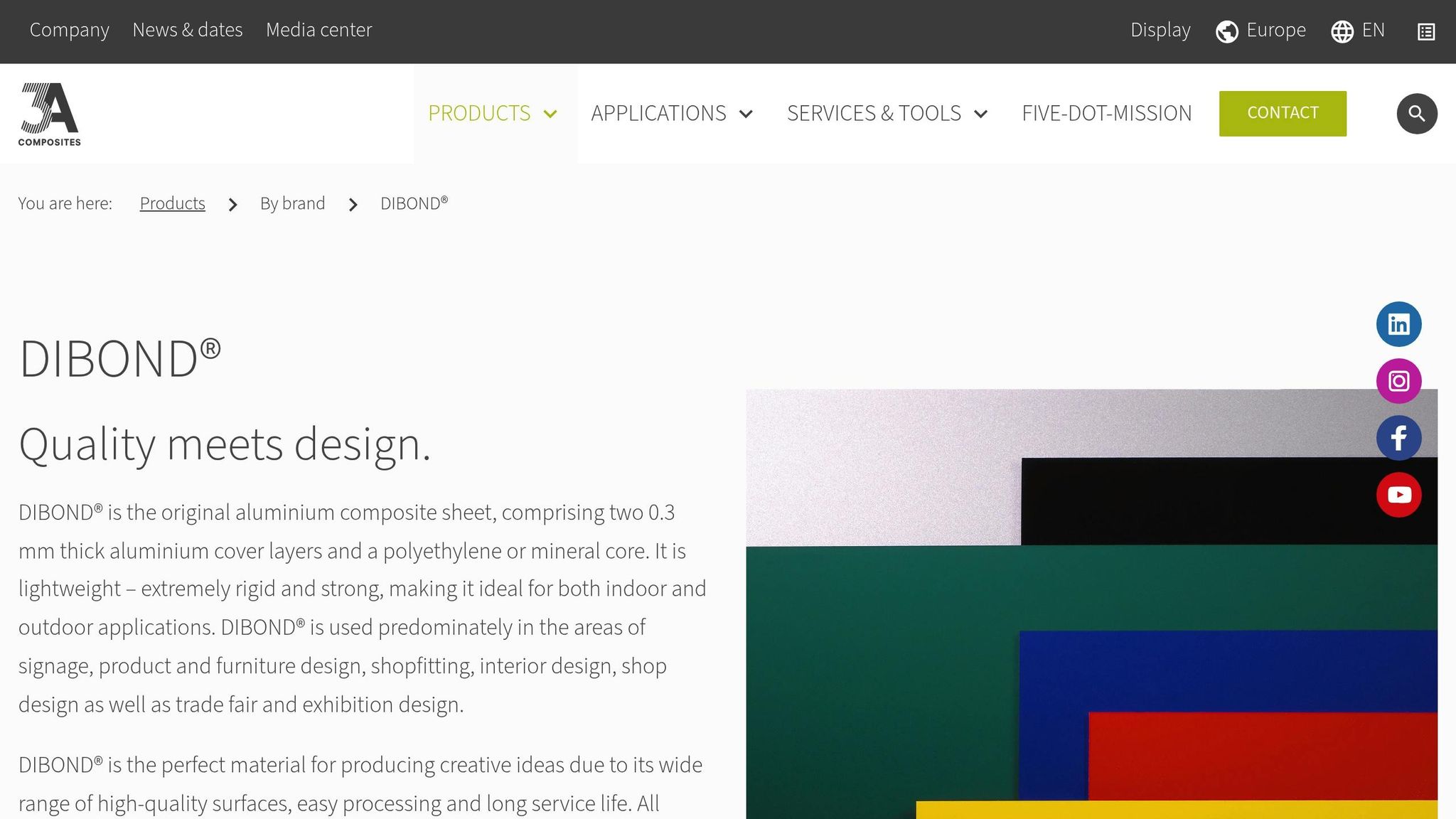
Dibond stands out as a top-tier option among rigid substrates. Its design combines two aluminum sheets bonded to a polyethylene core, resulting in a material that is lightweight yet sturdy – perfect for long-lasting outdoor signage.
Durability
Dibond’s composite structure delivers exceptional durability. It resists rust and bending, and despite being half the weight of solid aluminum, it retains impressive strength. With proper care – like cleaning with a soft cloth and mild detergent – it can last up to 10 years in moderate conditions. Reviews consistently highlight its strong build and reliability. Compared to traditional aluminum signs, Dibond offers reduced flexibility and enhanced durability, making it a dependable choice even under challenging conditions.
Weather Resistance
Dibond is built to handle tough outdoor environments. It’s waterproof, UV-stable, and its polyethylene core prevents water absorption. This makes it resistant to extreme temperatures, whether in hot summers or freezing winters. It performs particularly well in coastal and cold climates. A UV-resistant coating helps preserve colors and designs over time. With added UV lamination and proper mounting, Dibond signs can maintain their quality for 5–7 years or more, even in severe weather. While its upfront cost is higher, its ability to withstand harsh conditions makes it a worthwhile investment.
Cost
Dibond does come with a higher initial price tag, but its long lifespan and minimal maintenance needs can lead to cost savings over time. For instance, a small 4×4″ print typically costs between $4 and $6, while larger formats like 4×8 feet average around $110, depending on the design. Its lightweight nature, combined with greater rigidity than PVC or foam board, gives it a well-balanced mix of strength and usability.
Print Quality
Dibond excels in print quality, making it ideal for outdoor graphics that need to stand out. Its smooth aluminum surface ensures vibrant colors and sharp details. This consistency in surface quality helps maintain color vibrancy and detail, even in challenging environments.
As noted by Secprint:
"Dibond printing on outdoor advertising boards seamlessly combines durability with style, making it the ideal solution for businesses looking to showcase their products, services, and brand in a professional and impactful way."
Additionally, Dibond’s recyclable aluminum components make it a responsible choice for businesses prioritizing eco-friendly practices.
For businesses in Hackensack, NJ, Miro Printing & Graphics Inc. specializes in large-format printing on Dibond. Their expertise ensures that your signage projects benefit from both the material’s outstanding qualities and professional installation.
Material Comparison Chart
Based on our detailed evaluations, this chart outlines the key attributes of various materials to guide your choice for outdoor large format printing projects.
| Material | Durability | Weather Resistance | Cost Range | Print Quality | Best Use Case |
|---|---|---|---|---|---|
| Vinyl | Good – stands up well to general wear | Excellent – resists sunlight and moisture | Around $159 for a 96×96" banner (~$2.50/sq. ft.) | Excellent – vibrant colors with high resolution | General outdoor signage, especially in sheltered areas |
| Mesh | Good – lightweight and tear-resistant | Excellent – designed for windy conditions | Around $189 for a 96×96" banner (~$3.00/sq. ft.) | Good – airflow-friendly but less vibrant due to perforations | Outdoor locations with high winds, building wraps |
| Fabric | Moderate – ideal for short-term use | Fair – suited for temporary applications | $20–$200 per banner | Good – smooth surface for clear printing | Events and temporary displays |
| Coroplast | Fair – may fade or warp over time | Good – weather resistant, best for short-term use | Budget-friendly option | Fair – prone to bending or warping under pressure | Short-term yard signs, real estate postings |
| Sintra | Excellent – resists bending and warping | Excellent – weatherproof PVC construction | Medium – moderately priced compared to Coroplast | Very Good – smooth and consistent surface | Permanent outdoor signage |
| Dibond | Excellent – lifespan of 10+ years | Outstanding – waterproof and UV-stable | High – $4–$6 for smaller panels; about $110 for a 4×8′ panel | Excellent – sharp details with vibrant colors | Premium signage and architectural applications |
Key Performance Insights
The table showcases notable trade-offs across materials. Vinyl is a versatile and budget-friendly option, delivering vibrant colors and durability. Mesh, though pricier, excels in windy environments due to its perforated design. Coroplast offers the lowest upfront cost, but its tendency to fade and warp limits its use to short-term applications. On the other hand, materials like Sintra and Dibond provide extended durability, reducing the need for frequent replacements.
Print Quality Considerations
The surface of a material significantly impacts print quality. As Tray Inc. explains:
"When selecting materials for large format printing, especially for business and professional applications, it’s crucial to opt for industrial-grade options. This is because you want to guarantee durability, high quality, and extended lifespan."
Dibond’s smooth aluminum surface ensures sharp details and vibrant colors, making it an excellent choice for premium signage. Vinyl also delivers outstanding color reproduction, while mesh’s perforated structure, though practical for windy conditions, slightly reduces vibrancy.
Cost-Effectiveness Analysis
While premium materials like Dibond have a higher initial cost, their durability makes them a smart long-term investment. Similarly, mesh banners, though more expensive upfront, are ideal for environments prone to wind damage.
For businesses in Hackensack, NJ, Miro Printing & Graphics Inc. offers expert guidance to help you choose the right material for your outdoor large format printing needs, balancing quality and budget considerations.
Conclusion
Choosing the right material for outdoor large format printing is all about balancing several critical factors that can directly influence the success of your project. Key considerations include durability, cost, visual appeal, ease of installation, and even the material’s impact on the environment. For outdoor use, materials must stand up to the elements, offering protection from UV rays, moisture, and fluctuating temperatures to ensure long-term effectiveness.
The comparison chart underscores that each material has its own set of advantages and trade-offs. Depending on your project’s needs, you might prioritize affordability for short-term use or opt for a premium material designed for extended performance. These decisions require weighing both technical specifications and economic factors.
As Samantha Hawrylack, a printing expert, puts it:
"When selecting materials for large format printing, I start by identifying the project’s specific needs and target audience. Durability is essential, particularly for high-traffic or outdoor displays, so I consider material thickness and weather resistance."
This thoughtful approach ensures you get the most value out of your investment. While premium materials may come with a higher initial cost, their longevity often saves money in the long run by reducing the need for frequent replacements.
With over 30 years of experience, Miro Printing & Graphics Inc. specializes in helping clients navigate these decisions. From weather-resistant vinyl to high-quality panels for architectural projects, they offer tailored solutions that align with your budget and performance expectations. Their expertise ensures your outdoor signage not only looks great but also withstands the test of time.
Ultimately, success in outdoor printing comes down to aligning material properties with your project’s specific requirements, timeline, and budget. By understanding the strengths and limitations of each option, you can make well-informed choices that deliver maximum visual impact and a solid return on investment.
FAQs
What should I look for when selecting materials for outdoor large format printing?
When selecting materials for outdoor large-format printing, it’s essential to prioritize durability, weather resistance, and color retention. These factors ensure your prints can handle exposure to the elements. Beyond that, think about material thickness, budget, and the intended purpose of your project to make the right choice.
Here are some popular material options:
- Vinyl: A tough, weather-resistant choice, perfect for banners and signs that need to last.
- Mesh: Designed for windy locations, this material lets air flow through while keeping your design visible.
- PVC sheets: A rigid and sturdy option, ideal for outdoor displays that need to stay up long-term.
- Fabric: Lightweight and flexible, making it a great pick for temporary or portable displays.
For expert advice and top-notch results, consider working with a professional print shop like Miro Printing & Graphics Inc. Their team specializes in large-format printing and custom projects designed to meet your specific needs.
What are the long-term cost differences between materials for outdoor signage?
When deciding on materials for outdoor signage, vinyl stands out as one of the most budget-friendly options. It’s tough, holds up well against weather, and doesn’t demand much upkeep, making it a reliable choice for the long haul. If you’re dealing with windy areas, mesh banners can be a smart pick thanks to their perforated design, which allows air to pass through. However, they typically come with a higher initial price tag. On the other hand, fabric banners are better suited for indoor displays or short-term outdoor use since they’re not as resistant to severe weather conditions. For outdoor signage that needs to last, vinyl often strikes the right balance between durability and cost.
What are the most durable materials for outdoor signage in high-wind areas?
When it comes to outdoor signage in windy areas, aluminum and stainless steel stand out as top choices. Both materials offer exceptional durability, resist corrosion, and can handle harsh weather conditions without breaking a sweat.
Another smart option for large-format signage is mesh banners. Thanks to their perforated design, these banners let wind pass through easily, reducing stress on the material and extending the sign’s lifespan. Picking the right material is key to keeping your signage sturdy and looking great, even when the weather gets tough.
Related posts
- How to Choose Cost-Effective Printing Materials
- Indoor vs Outdoor Banners: Key Differences
- Substrate Selection for Digital Printing
- Applications of Coated Synthetic Fabrics in Outdoor Advertising
https://app.seobotai.com/banner/banner.js?id=6885700541261bdf48a3dc2b
 BergenCountyPrintersBlogs