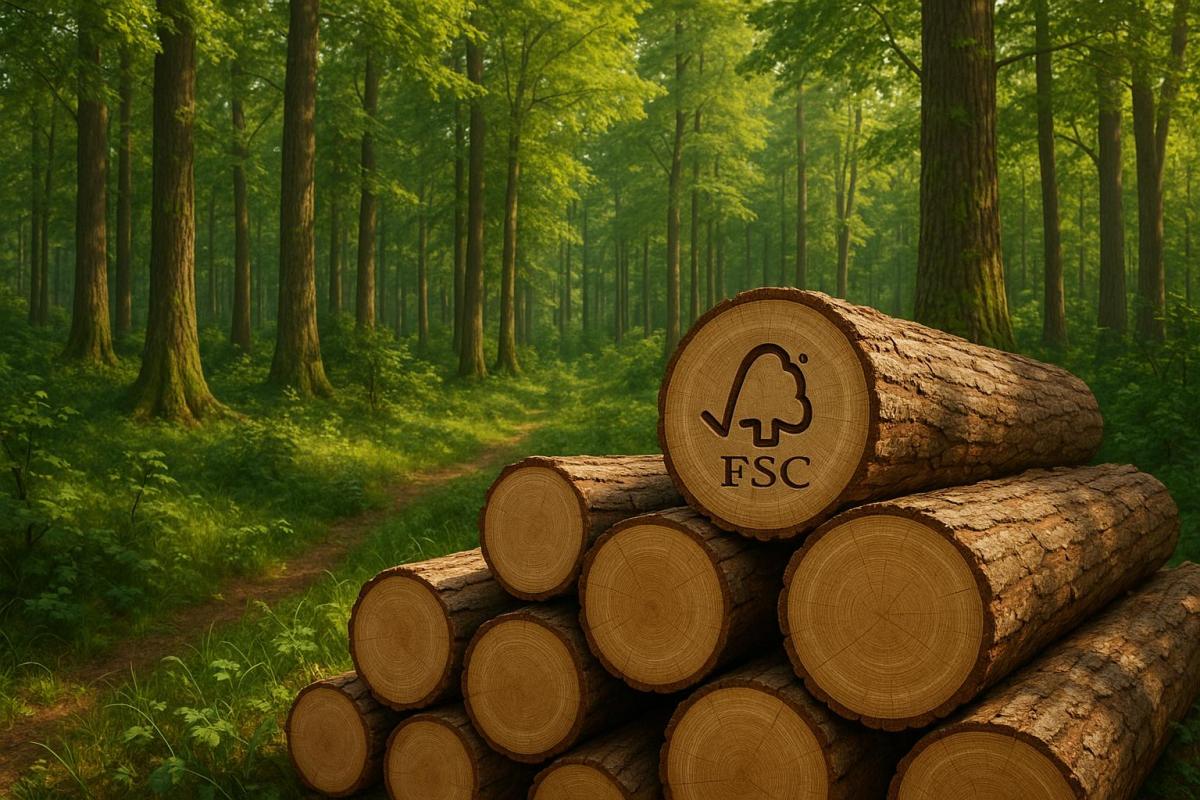
FSC certification ensures that wood-based products come from responsibly managed forests. It’s globally recognized and guarantees strict environmental, social, and economic standards through its eco-labeling system. Businesses, including print shops, can benefit by aligning with consumer demand for ethical sourcing, meeting sustainability goals, and enhancing credibility.
Key Points:
- Who Can Get Certified? Forest managers, manufacturers, and businesses handling FSC materials.
- Certification Types: Forest Management, Chain of Custody, and Controlled Wood.
- Core Principles: Cover compliance with laws, worker rights, community welfare, forest conservation, and economic viability.
- Process Overview: Apply through an FSC-accredited body, undergo audits, and maintain compliance with annual reviews.
- U.S. Costs: Start at $2,595 for small businesses; larger companies may pay $4,000–$5,000 annually.
FSC certification not only supports global forest conservation but also helps businesses meet customer expectations and improve market positioning.
What is FSC Certification? | Forest Management & Chain of Custody Explained | PQSmitra
Core Principles and Criteria of FSC Certification
FSC certification is built on 10 key principles that guide responsible forest management in environmental, social, and economic contexts. Each principle is paired with detailed criteria that forest managers and companies must meet to earn and maintain certification.
These principles are designed to work globally, while also being flexible enough to address local forest ecosystems and societal needs.
"As the pioneer of forest certification, the Forest Stewardship Council (FSC) sets the standard for responsible forest stewardship."
Forest Protection Standards
One of the standout principles, Principle 6, emphasizes conserving ecosystem services and reducing environmental harm. Studies highlight the impact of these standards: in the Douglas fir forests of western Oregon and Washington, FSC-certified practices remove and store at least 30% more carbon from the atmosphere compared to non-certified forests.
FSC standards often go beyond state regulations. For example, in western Oregon, FSC requires conservation buffers around salmon-bearing streams that are more than double the width typically mandated for private landowners. While Oregon law allows clear-cutting on areas up to 120 acres (48.6 hectares), FSC restricts such openings to an average of 40 acres (16.2 hectares).
The standards also impose strict limits on chemical use, banning hazardous substances like atrazine, which has been linked to birth defects in humans. Additionally, FSC-certified forests provide habitat protections for species such as the Cascade torrent salamander in western Oregon, even in cases where no legal protections exist.
Principle 9 focuses on preserving High Conservation Value areas. Organizations are required to use a precautionary approach to maintain and enhance these critical areas.
Worker Rights and Community Benefits
FSC certification prioritizes social responsibility by safeguarding workers and communities. Principle 2 ensures the social and economic well-being of workers. To obtain a Chain of Custody certificate, companies must comply with FSC Core Labor Requirements. Principle 3 protects the rights of Indigenous Peoples to own and manage their lands. Principle 4 emphasizes the importance of contributing to the social and economic well-being of local communities.
Companies pursuing certification must adopt policies that align with FSC labor requirements and demonstrate their implementation through self-assessments.
Economic Standards
Principle 5 is focused on maintaining long-term economic viability while delivering social and environmental benefits. Principle 7 requires organizations to have a management plan that aligns with their goals and considers the scale, intensity, and risks of their activities. Under Principle 8, organizations must monitor and assess their progress toward management objectives, allowing for adjustments as economic conditions evolve.
This economic framework benefits businesses across the supply chain. For example, print shops like Miro Printing & Graphics Inc. gain a competitive edge by showcasing their commitment to sustainability and meeting customer demands for responsibly sourced products.
Finally, Principle 10 ensures that all management activities adhere to FSC standards and organizational policies. This ensures that economic goals support, rather than conflict with, environmental and social responsibilities.
These principles provide the foundation for the certification process, which will be explored in the next section.
Types of FSC Certification
The Forest Stewardship Council (FSC) offers three main types of certification, each designed to promote responsible forest management and ensure traceability across the supply chain. Selecting the right certification depends on the nature of your operations.
Forest Management Certification
Forest Management (FM) Certification is aimed at forest owners and managers, ensuring they manage their lands in alignment with high environmental, social, and economic standards. This certification requires independent audits to verify compliance with FSC principles. The process involves assessing management plans, monitoring systems, adherence to local regulations, community engagement efforts, and worker safety protocols.
This certification focuses on the forests themselves, but companies handling certified materials later in the supply chain need a different system to maintain certification integrity during processing.
Chain of Custody Certification
Chain of Custody (CoC) Certification is essential for businesses that handle FSC-certified materials, such as manufacturers, processors, and retailers. It ensures that certified materials are tracked through every stage of the supply chain, from the forest to the final product.
"Chain of custody certification is how the Forest Stewardship Council (FSC) verifies that forest‐based materials produced according to our rigorous standards are credibly used along the product’s path from the forest to becoming finished goods."
This certification requires companies to maintain strict separation of FSC-certified materials from non-certified ones during production and distribution. Businesses must also implement management systems to document and track certified materials and comply with FSC’s core labor requirements, which include prohibiting child and forced labor, enforcing non-discrimination policies, and respecting workers’ rights to organize. Annual audits ensure ongoing compliance.
| Types of FSC CoC Certificates | Description |
|---|---|
| Single site | For businesses operating a single facility |
| Multi-site Certification | For companies managing multiple facilities under one certificate, coordinated by a "Central Office" |
| Group Certification | Allows small, independent businesses to join under one certificate with a "Group Manager" overseeing compliance |
| Project Certification | Designed for specific projects, such as new construction, renovations, or unique product production |
Controlled Wood Certification
Controlled Wood Certification is designed to manage the use of non-certified wood while ensuring it meets strict criteria. This certification helps prevent the inclusion of wood from illegal or unethical sources. Controlled Wood can be mixed with FSC-certified wood to create FSC Mix products, but companies must first hold Chain of Custody certification to sell or use Controlled Wood.
Unlike full FSC certification, Controlled Wood producers cannot use FSC trademarks to promote their operations. This certification allows manufacturers flexibility when fully certified materials are unavailable while ensuring wood does not come from unacceptable sources, such as:
- Illegally harvested wood
- Wood harvested in violation of traditional and civil rights
- Wood from forests where high conservation values are at risk
- Wood from forests converted to plantations or non-forest uses
- Wood from genetically modified trees
Together, these certification types form the backbone of FSC’s approach to sustainable forest management and maintaining integrity throughout the supply chain.
Key Standards and Certification Process
This section breaks down the standards and steps involved in achieving FSC certification, ensuring operations meet responsible and sustainable forest management practices. Knowing these standards and the certification process is crucial for businesses aiming to align with FSC requirements and verify their supply chains.
Required Standards for Certification
FSC certification is built on ten core principles designed to ensure forests provide environmental, social, and economic benefits while promoting responsible management practices. These principles and criteria apply to all forest types within a management unit seeking certification and are designed to work globally across different ecosystems and governance systems.
Here’s a summary of the ten principles:
| FSC Principle | Requirement |
|---|---|
| Principle 1: Compliance with Laws | Organizations must adhere to all applicable laws, regulations, and internationally ratified treaties, conventions, and agreements. |
| Principle 2: Workers’ Rights and Employment Conditions | Safeguard and improve the social and economic well-being of workers. |
| Principle 3: Indigenous Peoples’ Rights | Recognize and uphold the legal and customary rights of Indigenous Peoples regarding land, territories, and resources impacted by management activities. |
| Principle 4: Community Relations | Support and enhance the social and economic well-being of local communities. |
| Principle 5: Benefits from the Forest | Manage forest products and services efficiently to ensure long-term economic and social benefits. |
| Principle 6: Environmental Values and Impacts | Protect, conserve, and restore ecosystem services and environmental values while minimizing negative impacts. |
| Principle 7: Management Planning | Develop a management plan that aligns with objectives and is proportionate to the scale and risks of activities. |
| Principle 8: Monitoring and Assessment | Regularly monitor and evaluate progress, impacts, and conditions to adapt management practices as needed. |
| Principle 9: High Conservation Values | Protect and enhance areas with high conservation value using a precautionary approach. |
| Principle 10: Implementation of Management Activities | Ensure all activities align with economic, environmental, and social policies and comply with the principles collectively. |
These principles serve as the foundation for FSC certification, guiding every aspect of the process. Globally, FSC has certified 228 million hectares of forests using these standards. While the principles maintain global consistency, they are adapted locally to address regional needs and realities.
How to Get Certified: Step-by-Step Process
FSC certification is administered by independent, FSC-accredited bodies that verify compliance with FSC standards; the FSC itself does not issue the certificates. The process typically involves the following steps:
| Step | Action Required |
|---|---|
| 1 | Select an FSC-accredited certification body. |
| 2 | Submit an application for certification. |
| 3 | Undergo an evaluation of operations and systems. |
| 4 | Complete the final FSC verification process. |
| 5 | Receive certification upon meeting all requirements. |
| 6 | Participate in annual audits to maintain certification. |
The costs, timeline, and guidance vary depending on a business’s size and complexity. Certification bodies ensure evaluations are credible, adhering to FSC standards for forest management and supply chain operations. In the United States, this process is customized to align with regional guidelines and economic considerations.
FSC Certification Requirements in the United States
For U.S. businesses, the FSC US National Standard (v1.0) serves as the framework for forest management certification. There are eleven FSC-accredited certification bodies operating across the country, providing services tailored to different regions and business needs.
The cost of certification depends on company size. For businesses with annual sales between $5 million and $100 million, certification typically costs between $4,000 and $5,000. Smaller businesses – those with less than $10 million in annual revenue or fewer than 25 full-time employees – can opt for Group Certification, which starts at $2,595, about half the cost of individual certification.
In 2024, FSC updated its requirements to align with the European Deforestation Regulation (EUDR). These updates impact Forest Management, Chain of Custody, and Controlled Forest Management Certification, reflecting FSC’s commitment to meeting evolving international regulations.
Small businesses in the U.S. can also join existing group certificates by contacting a Group Manager for either Forest Management or Chain of Custody certifications. This approach offers a cost-effective and less complex path to FSC certification, making it more accessible for smaller operations.
sbb-itb-ce53437
Benefits of FSC Certification for Print Shops
FSC certification enables print shops to address the growing consumer demand for environmentally responsible practices while fostering stronger relationships with their clients.
Business and Market Advantages
For print shops, FSC certification is more than just a label – it’s a way to stand out in a crowded market. It demonstrates a commitment to sustainable forest management, giving businesses a noticeable edge. According to an IBM study, nearly 60% of consumers are willing to adjust their buying habits to minimize their environmental impact.
"FSC certification provides a competitive advantage by demonstrating a commitment to sustainability right to the source of your supply chain." – Uniprint Global
This certification not only boosts brand reputation but also opens doors to eco-conscious customers and markets that prioritize or mandate FSC-certified products. U.S. print shops, for example, have successfully enhanced their sustainability profiles by adopting FSC-certified practices, appealing to clients who value responsible sourcing.
On top of that, FSC certification promotes fair labor practices and respect for indigenous communities, aligning print shops with broader social responsibility goals. These ethical standards resonate with today’s consumers, who expect businesses to act responsibly at every level.
What FSC Certification Means for Your Clients
FSC certification doesn’t just benefit print shops – it builds trust and credibility with clients in ways that traditional marketing often can’t. Globally recognized, the FSC label inspires confidence, with 77% of consumers expressing moderate to high trust in FSC’s ability to protect forests. This trust translates into action: 62% of consumers familiar with FSC say they would choose FSC-certified products, and 80% are more likely to trust brands that offer them.
"Consumers place more trust in independent certification than Businesses and Governments" – FSC Global Consumer Recognition Study
For print shops, this trust strengthens client relationships. When clients see the FSC label on printed materials, it reassures them that their projects contribute to responsible forest management. Additionally, FSC certification helps clients avoid risks tied to illegally sourced materials by providing verified proof of responsible sourcing. Consumer preferences back this up: 78% are inclined to favor FSC-certified products, and 73% view brands displaying the FSC label more positively.
These benefits not only build loyalty but also position print shops as reliable partners for eco-conscious clients.
How Print Shops Can Get FSC Certified
Print shops, like Miro Printing & Graphics Inc., can achieve FSC Chain of Custody certification by following a structured process. This involves applying to an accredited certification body, undergoing an audit to verify responsible sourcing and record-keeping practices, and maintaining compliance through regular reviews.
"FSC certification is not just paperwork, but a real benefit – both for the printer and the planet."
The process requires careful segregation of FSC-certified materials from non-certified ones and detailed tracking of the supply chain. Whether a shop specializes in digital, offset, or large-format printing, FSC certification covers all production methods and post-press operations like binding, cutting, and finishing.
Beyond certification, adopting eco-friendly practices can further enhance a print shop’s appeal. Initiatives such as recycling paper, ink cartridges, and other consumables, or switching to environmentally friendly inks and low-VOC solvents, can significantly reduce environmental impact. Consumer data supports this approach, with 73% of people worldwide stating they would adjust their purchasing habits to reduce their ecological footprint.
Maintaining FSC certification requires ongoing adherence to established standards and regular audits. By responsibly managing materials and keeping thorough records, print shops can ensure their certification remains a valuable asset, helping them attract eco-conscious clients and stand out in a competitive industry.
Conclusion
FSC certification stands out as a benchmark for responsible forest management, shaping how print shops operate while fostering stronger client connections. By adhering to these standards, businesses can align their practices with growing demands for environmentally conscious products and services.
The business advantages are clear. Many FSC-certified companies report improved profitability, driven by the rising market demand for sustainable products. This ties directly to enhanced customer trust and a stronger reputation, as clients increasingly value eco-friendly practices.
For print shops, implementing chain of custody standards is key. This ensures that every printed item is responsibly sourced, actively supporting efforts to combat illegal logging. These standards can be seamlessly integrated into various production processes, reinforcing a commitment to sustainability at every step.
Beyond the environmental impact, FSC certification boosts a company’s public image and opens doors to partnerships with organizations that share similar values. It offers a structured way for businesses to assess and improve their environmental practices while showcasing their dedication to corporate social responsibility. In a competitive landscape, this certification helps print shops build loyalty and long-term relationships with their clients.
Choosing FSC certification is more than just a commitment to the environment – it’s a smart business move. Print shops that embrace these standards not only set themselves apart but also contribute to forest conservation, biodiversity, and community well-being on a global scale. At Miro Printing & Graphics Inc., we ensure that every project reflects our dedication to these principles and our role in promoting sustainability.
FAQs
What are the main advantages of FSC certification for print shops in building trust and improving market position?
FSC certification gives print shops a clear edge by highlighting their dedication to responsible forestry and environmentally friendly practices. It resonates with customers who care about the planet and helps establish trust and credibility in the industry.
By adhering to strict sustainability standards, FSC-certified businesses stand out from competitors, meet regulatory requirements, and appeal to clients who value green initiatives. This certification strengthens customer loyalty and positions the business as a forward-thinking leader in eco-conscious efforts.
What is FSC certification, and how does it ensure wood products are responsibly sourced?
What Is FSC Certification?
FSC certification guarantees that wood products originate from forests managed responsibly, adhering to strict environmental, social, and economic standards. This certification helps protect biodiversity, ensures sustainable practices, and safeguards the rights of workers and local communities.
To earn FSC certification, businesses need to follow these steps:
- Request an evaluation: Reach out to an FSC-accredited certification body to begin the process.
- Review current practices: Assess existing operations to identify any gaps based on FSC standards.
- Create a forest management plan: Develop a plan to address shortcomings and align with sustainability goals.
- Undergo an on-site assessment: Certification bodies conduct thorough inspections to verify compliance with FSC criteria.
This comprehensive process ensures accountability and traceability across the supply chain, giving consumers confidence that certified products contribute to responsible forest management.
How do FSC certification standards promote environmental protection and social responsibility beyond state regulations?
FSC Certification Standards: A Closer Look
FSC certification goes beyond what most state regulations require by prioritizing responsible forest management. It aims to protect ecosystems, support biodiversity, and uphold the rights of Indigenous communities. To achieve this, certified forests must meet strict criteria, such as safeguarding areas with high conservation value, maintaining essential ecosystem services, and actively preventing deforestation.
But it’s not just about the environment – social responsibility plays a key role too. FSC-certified businesses are expected to treat workers fairly, engage with local communities, and follow strict ethical standards. Transparency is non-negotiable, with companies required to adopt clear management practices and undergo regular audits. This ensures they remain accountable and committed to responsible forest stewardship over the long term.
Related posts
- Cost-Saving Tips for Sustainable Paper Choices
- Guide to Eco-Friendly Printing Substrates
- Ultimate Guide to Recycled Paper Certifications
- Types of Recycled Paper for Printing
https://app.seobotai.com/banner/banner.js?id=688966ed0e97e74a2fabe94b
 BergenCountyPrintersBlogs