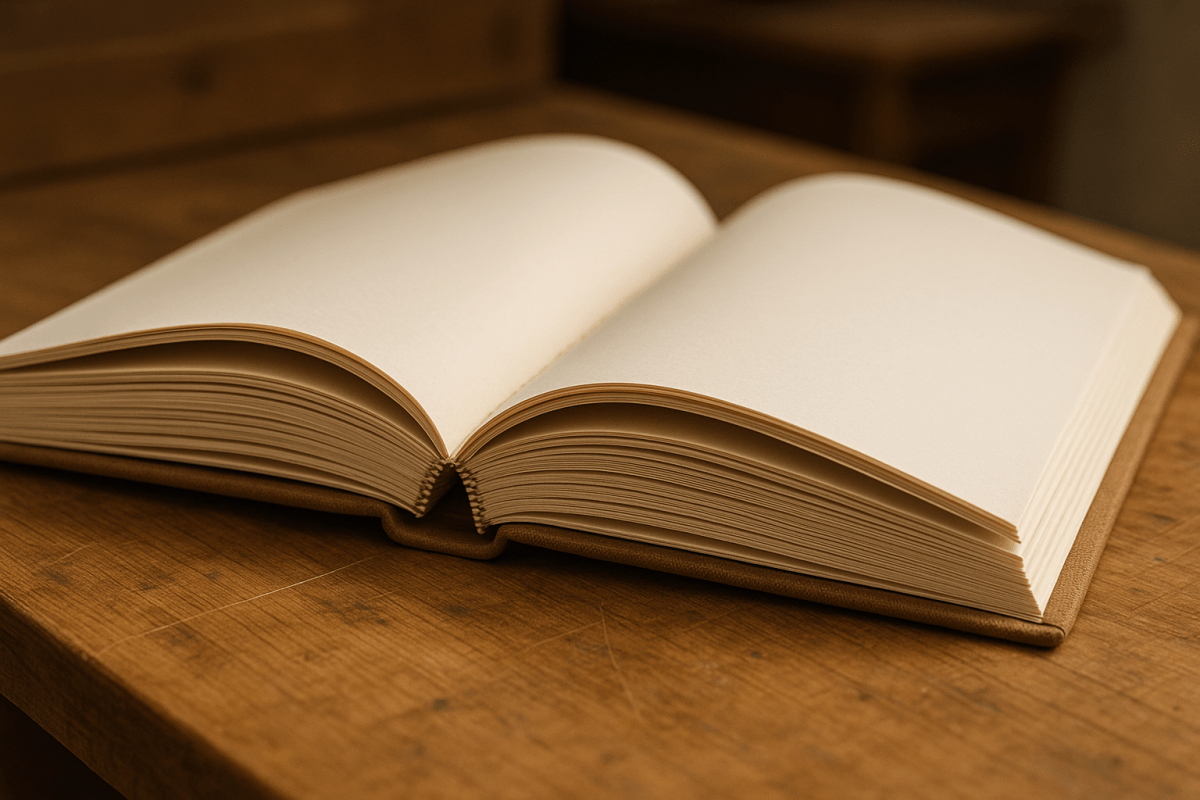
Smyth sewing is a bookbinding technique that uses thread to bind folded pages, creating strong, flexible books that can lie flat when open. It’s known for its durability, making it ideal for frequently used books like manuals, reference materials, and high-quality editions. Here’s why it stands out:
- Durability: Thread binding ensures pages stay intact, even with heavy use.
- Flat-Opening Design: Perfect for cookbooks, music sheets, or technical guides.
- Versatility: Works for hardcovers, premium paperbacks, and journals.
- Precision Process: Automated machines ensure consistent quality and efficiency.
This method is a top choice for projects requiring longevity and usability, such as academic texts, art books, and archival editions.
How Smyth Sewing Works
Step-by-Step Smyth Sewing Process
Smyth sewing is renowned for its durability and ability to lay flat, and it all starts with a meticulous process. It begins with signatures – folded sheets that typically contain 4, 8, 16, or 32 pages – arranged in the correct reading order.
The sewing happens along the natural fold of each signature. A specialized needle threaded with strong material passes through pre-punched holes, linking the signatures into a continuous chain that forms the foundation of the book block.
Once all the signatures are sewn together, the book block is reinforced for added strength. A layer of crash cloth (also called mull) is applied to the spine, and the edges are trimmed to create clean, even margins. The final steps involve attaching the sewn book block to hard covers or preparing it for soft cover binding.
Modern Machinery in Smyth Sewing
In professional binderies, automated sewing machines have replaced much of the traditional hand-sewing process, making it faster and more efficient. These machines can handle multiple signatures at once, feeding them through sewing stations with precision. They ensure consistent thread tension and spacing, which guarantees uniform quality throughout a production run.
Key features of these machines include automatic signature feeders that align each sheet perfectly before sewing. Multiple needles work in unison to create strong, reliable binding patterns. Some high-tech systems can produce thousands of books per hour while maintaining the craftsmanship that defines Smyth sewing.
To ensure quality, many machines are equipped with sensors that detect issues like missing signatures, misalignment, or thread breaks. If a problem arises, the machine stops immediately, preventing defective books from moving forward. This combination of automation and quality control ensures every book meets professional standards.
How Smyth Sewing Creates Durable Books
The durability of Smyth-sewn books comes from both the precision of the sewing process and the materials used. The thread plays a key role by distributing stress evenly across the entire book structure. When a Smyth-sewn book is opened, the force is spread through the continuous thread rather than concentrated at a single point, which prevents pages from loosening – even with frequent use.
The sewing also creates a flexible spine that allows the book to open and close naturally. Unlike adhesive binding, the thread allows slight movement between signatures, enabling the book to lie completely flat when opened.
The choice of thread is equally important. Binderies typically use polyester or cotton threads specifically designed for bookbinding. These threads are resistant to stretching, breaking, and long-term wear. The thickness of the thread is carefully matched to the book’s purpose: thicker threads are used for reference books that will endure heavy use, while thinner threads are chosen for books where a polished appearance is more important.
Benefits of Smyth Sewing
Durability and Long-Lasting Books
Smyth-sewn books are built to last. Thanks to the continuous thread that binds the pages, these books can handle years – even decades – of regular use without falling apart. This durability makes them a go-to choice for libraries, universities, and publishers that need books to withstand heavy use. Think about reference materials, textbooks, or archival documents – Smyth sewing ensures they hold up over time. Unlike glue-based binding methods that might weaken with changes in temperature or humidity, the thread in Smyth-sewn books stays strong, no matter the conditions. Plus, this sturdy construction naturally supports another major perk: books that open completely flat.
Books That Open Flat
One standout feature of Smyth-sewn books is their ability to lie perfectly flat when open. This isn’t just a nice touch – it’s a game-changer for anyone using cookbooks, manuals, or reference guides where both hands are often busy. The flexible spine allows the pages to move freely, ensuring the book stays open without needing to hold it down. This design also makes tasks like photocopying much easier. Musicians benefit from this feature in sheet music, as do technicians using repair guides or technical manuals. The flat-opening design isn’t just practical – it’s versatile, making Smyth-sewn books a great fit for all kinds of formats.
Works for Different Book Types
Smyth sewing works across a wide range of book formats, from sturdy hardcovers to sleek premium paperbacks and journals. Hardcover books, in particular, benefit from the strong connection between the text block and the rigid cover, which keeps the book intact even with added weight. For coffee table books or art publications, the thread binding evenly distributes stress, preventing sagging or separation that could damage heavy paper stock or large images. Journals and notebooks also shine with Smyth sewing, as the flat-opening design makes writing more comfortable and ensures the pages stay secure, even with frequent use. Whether it’s a hefty art book or a daily journal, Smyth sewing delivers durability and functionality across the board.
When to Use Smyth Sewing
Common Projects for Smyth Sewing
Smyth sewing is a go-to choice for projects that demand durability and the ability to lay flat when open. Think of academic texts, art books, music books, technical manuals, and architectural publications – these all benefit from the sturdy and practical design Smyth sewing provides.
This binding method is also a favorite in professional and technical fields. For example, research labs often use Smyth-sewn notebooks for documenting intellectual property and filing patents. Why? Because the binding makes tampering nearly impossible, ensuring the integrity of sensitive information.
Archival editions, library collections, and custom projects like commemorative books or family histories are also ideal candidates for Smyth sewing. When preservation and longevity are top priorities, this binding method truly shines.
These varied uses demonstrate why Smyth sewing is a smart choice for anyone seeking strength and reliability in their finished product.
Why Choose Smyth Sewing for Your Project
Smyth sewing isn’t just about durability – it’s also about delivering long-term value and a polished, professional look.
Although the upfront cost may be higher, the durability of Smyth-sewn bindings means fewer repairs and replacements, especially in high-use scenarios. This makes it a cost-effective option over time while also enhancing the overall quality of the project.
Another standout feature is its tamper-evident design, which is critical for specialized uses. Research institutions, legal firms, and companies managing sensitive documents depend on this feature to ensure the integrity of their records.
For books with a high page count, Smyth sewing is especially effective. Its thread-based construction evenly distributes the weight of thick text blocks, preventing issues like loose or falling pages that can occur with adhesive-based methods. This makes it an excellent choice for heavy-duty applications where reliability is key.
sbb-itb-ce53437
Smyth Sewing Services at Miro Printing & Graphics Inc.
Complete Bookbinding Solutions
At Miro Printing & Graphics Inc. in Hackensack, NJ, we take pride in offering a full range of bookbinding services, with a strong emphasis on the durability and precision of Smyth sewing. Our bindery is equipped to handle everything from printing to finishing, ensuring your projects are crafted to last and look professional. We seamlessly combine traditional techniques with modern technology to deliver high-quality results for clients throughout New Jersey and beyond. Our services include booklet making, collating, cutting, creasing and scoring, folding, and a variety of binding options such as perfect binding and plastic coil binding.
What makes our process stand out? Everything is done under one roof. From the moment your project is printed to the final binding and finishing touches, there’s no need to coordinate with multiple vendors. This not only ensures consistent quality but also eliminates delays, giving you faster turnaround times and a hassle-free experience.
Custom Service and Expert Help
At Miro Printing & Graphics Inc., we understand that every binding project is unique. That’s why we tailor our services to meet your specific needs, whether you’re creating an exclusive art book or producing a large batch of technical manuals. With the precision of Smyth sewing as our cornerstone, we work closely with you to bring your vision to life.
Our team considers all the details – page count, paper weight, and budget – to recommend the best binding solution for your project. We also provide expert advice on paper types, cover materials, and finishing options. This personalized guidance helps you avoid unnecessary expenses and ensures that the final product matches your expectations in both form and function.
Combined Printing and Binding Services
One of the biggest advantages of choosing Miro Printing & Graphics Inc. is our ability to handle both printing and binding in one location. Whether you need digital or offset printing, we manage the entire process, eliminating common issues like color mismatches, paper grain misalignment, or scheduling conflicts.
This integrated workflow streamlines production, giving you a single point of contact for design, printing, and binding. For time-sensitive projects, this approach is a game-changer. Our bindery team can start working on completed sections while other parts are still being printed, cutting down on production time and ensuring your project is ready when you need it.
Smyth Book Sewing
Why Smyth Sewing Is the Best Choice
Smyth sewing has earned its reputation as the top choice for library-quality bookbinding, and for good reason. Its needle-and-thread construction offers exceptional durability, making it ideal for books that need to withstand heavy use over time. Plus, this method allows books to open completely flat, making them far more practical for a variety of uses.
What sets modern Smyth sewing apart is the incorporation of advanced automation. Today’s machines come equipped with sensors to catch missed signatures, broken threads, or damaged needles. This ensures minimal errors and consistently high-quality results. With such precision, you can trust that every book produced meets the highest professional standards.
Another standout feature of Smyth sewing is its versatility. It works seamlessly with both softcover and hardcover books, offering options to suit different needs. For projects requiring extra durability, hardcover binding takes it a step further, without compromising the superior quality that Smyth sewing guarantees.
At Miro Printing & Graphics Inc., we take this method to the next level by blending traditional craftsmanship with cutting-edge technology. From the initial design to the final product, every step of your project is handled with precision and care. When durability and quality are non-negotiable, Smyth sewing is the smartest investment you can make for your publication.
FAQs
What types of books or projects benefit most from Smyth sewing, and why is it a popular choice?
Smyth sewing is an excellent option for projects that demand strength and frequent use, such as hardcover books, journals, sketchbooks, or art and photography books. One of its standout features is its ability to let books lay completely flat when opened, which is perfect for designs where usability and visual appeal are key.
This method is often chosen because it provides outstanding durability and a long lifespan when compared to other binding techniques. Smyth-sewn books hold up well against wear and tear, making them a dependable choice for high-quality publications or books meant for heavy, repeated use.
How do automated machines improve the Smyth sewing bookbinding process?
Automated machines have become indispensable in the Smyth sewing bookbinding process, significantly boosting both precision and efficiency. These machines deliver accurate, durable stitching that enhances the strength and lifespan of bound books. This is particularly important for projects like textbooks or archival materials, where durability is a top priority.
By automating the sewing process, the need for extensive manual labor is reduced, and the likelihood of errors drops significantly. The result? Faster production times and consistently high-quality outcomes. This blend of speed, accuracy, and dependability makes automated Smyth sewing a go-to solution for today’s bookbinding demands.
What are the benefits of using Smyth sewing for books that need to lay flat, and who can benefit from it?
Smyth sewing is a bookbinding method that lets books open completely flat, offering a practical and convenient design. This quality is particularly handy for books that get a lot of use or need to stay open for long periods, like cookbooks, sketchbooks, or technical manuals.
By allowing the book to lay flat, this technique not only improves readability and ease of use but also reduces wear on the binding, ensuring the book lasts longer. It’s a great option for professionals, students, artists, or anyone who appreciates durable, well-made books.
Related posts
- Top 6 Binding Methods for Professional Documents
- Ultimate Guide to Custom Binding Options
- How Binding Choices Impact Print Durability
- Japanese Stab Binding for Business Projects
https://app.seobotai.com/banner/banner.js?id=689d2cdd8204a37d5f9935d0
 BergenCountyPrintersBlogs