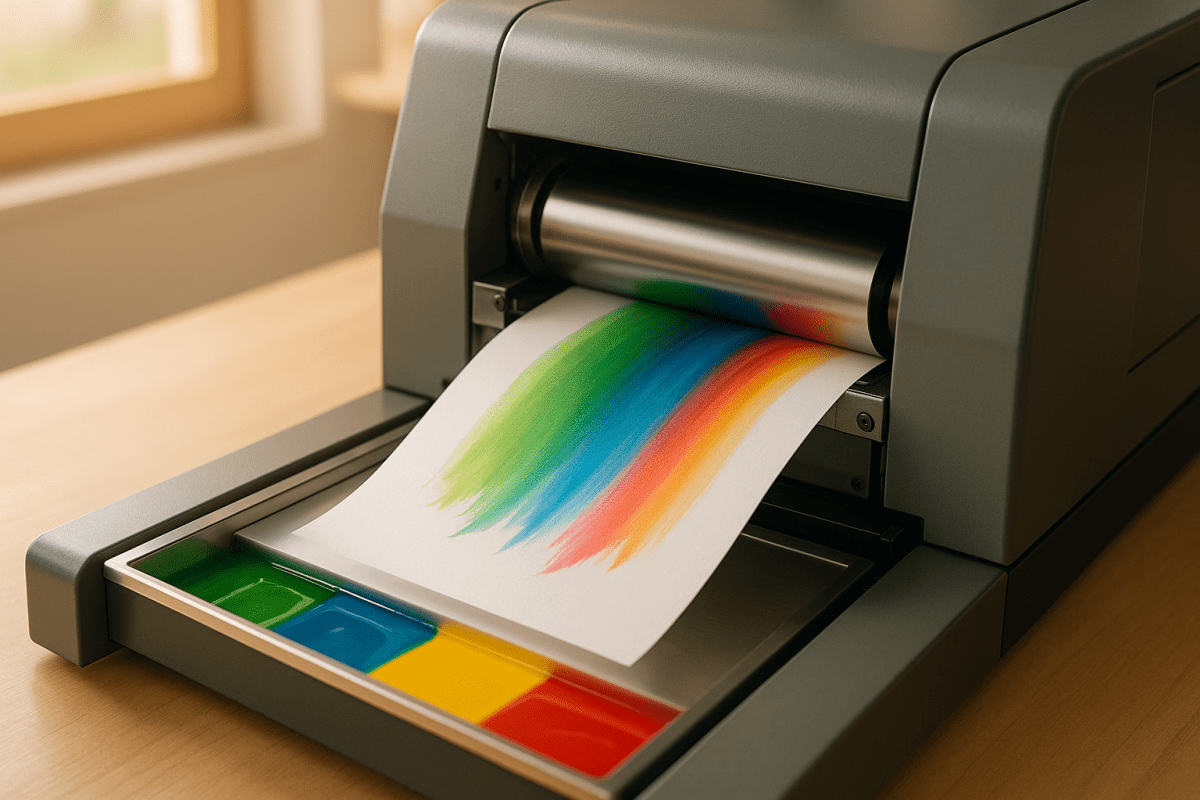
Water-based inks are transforming printing by reducing harmful emissions, improving safety, and supporting recycling efforts. These inks use water as a solvent, avoiding toxic chemicals found in conventional inks. Here’s why they matter:
- Lower VOCs: Minimal volatile organic compounds (VOCs) improve air quality and worker safety.
- Cleaner Water Use: Simplified cleanup with water reduces pollution and waste.
- Recycling-Friendly: Easier removal during recycling prevents contamination.
Switching to water-based inks can also cut costs by reducing energy use and simplifying compliance with safety standards. Their versatility makes them ideal for printing on paper, textiles, and packaging, meeting growing demands for safer, eco-conscious products. Ready to make the change? It’s a win for both your business and the planet.
Water-Based Printing, Tips and Tricks
What Are Water-Based Inks?
Water-based inks represent an evolution in printing technology by using water as the main solvent instead of chemical-based alternatives. These inks are made up of pigments or dyes suspended in water, along with eco-friendly additives that improve their performance and safety.
Unlike traditional inks, they avoid harmful components like PVC, phthalates, and high levels of VOCs (volatile organic compounds). This makes them a safer option for both workers and the environment.
When the water evaporates during the drying process, it leaves behind a durable ink layer that adheres well to different surfaces. Let’s take a closer look at their ingredients and how they differ from conventional inks.
Main Ingredients in Water-Based Inks
The composition of water-based inks is refreshingly simple. Water acts as the carrier, while pigments or dyes provide color and opacity. Additional co-solvents and additives are included to enhance their performance.
This straightforward formula reduces many of the health hazards linked to traditional printing chemicals, making these inks easier and safer to use.
How They Differ from Standard Inks
Standard solvent-based inks use organic solvents like alcohol, acetone, ethyl acetate, or toluene as their primary carriers. While these solvents evaporate during drying, they release significantly higher levels of VOCs into the air.
Water-based inks, on the other hand, dry through water evaporation. This process results in much lower VOC emissions and minimizes exposure to harmful substances in the workplace, making them a cleaner and safer alternative.
How Water-Based Inks Help the Environment
Water-based inks offer more than just a safer alternative to traditional inks – they actively address critical environmental concerns tied to air quality, water usage, and waste management. Their composition and performance make them a step forward in reducing the ecological footprint of printing.
Lower VOC Emissions
Unlike traditional inks that rely on petroleum-based solvents like ethyl acetate and toluene, which release high levels of volatile organic compounds (VOCs), water-based inks produce only minimal VOC emissions. This not only improves indoor air quality but also reduces harmful exposure for workers involved in the printing process.
Reduced Impact on Water Resources
Screen printing with water-based inks significantly lowers the risk of water pollution and cuts down on water consumption. These inks require only water for cleanup, eliminating the need for harsh chemicals and reducing disposal costs. Additionally, their ease of maintenance means less frequent cleaning, conserving water and generating less wastewater. This efficiency also supports better recycling practices, creating a ripple effect of environmental benefits.
Improved Recycling Compatibility
Water-based inks, made with natural components, are typically biodegradable and much easier to remove during the recycling process. This means less contamination of recyclable materials and a reduction in resource loss. Without toxic chemicals, heavy metals, or solvent residues, these inks align with sustainable practices and support a circular economy. As regulations like Extended Producer Responsibility (EPR) gain traction globally, the recyclability of water-based inks becomes even more relevant. By promoting resource efficiency and reducing waste, these inks play a crucial role in advancing the concept of a circular economy.
sbb-itb-ce53437
Business Benefits of Water-Based Inks
Water-based inks offer practical advantages for printers and small businesses, leading to smoother operations, simplified workflows, and cost-efficient production. Here’s how these benefits translate into real-world business value.
High-Quality Prints with Long-Lasting Results
Water-based inks produce vibrant colors and sharp details that can match, or even surpass, solvent-based alternatives. The water used in these inks helps pigments bond effectively with various materials, ensuring consistent color saturation and clarity. In textile printing, they provide a softer finish, preserving the natural feel of fabrics while delivering durable prints that can handle repeated washing and wear. This level of quality allows print shops to offer premium services, boosting customer satisfaction.
Additionally, the drying process of water-based inks is more uniform, reducing common issues like dot gain or color shifting during production. This consistency ensures reliable results across large print runs.
Cost Efficiency in Printing
Switching to water-based inks can lead to noticeable cost savings. Cleanup is easier and less expensive since water alone can clean these inks, eliminating the need for harsh chemicals. They also cure at lower temperatures, which can cut down on energy usage and reduce strain on equipment, saving money on utility bills and maintenance.
Improved workplace conditions are another plus, as these inks are less harsh on both workers and the environment. Their versatility also allows print shops to expand their service offerings, opening up new revenue opportunities.
Compatibility with a Wide Range of Materials
Water-based inks are highly versatile and work well on various substrates. For example, they perform exceptionally on uncoated papers, providing rich, even colors without issues like bleeding or feathering. In textile printing, they pair perfectly with natural fabrics like cotton and cotton blends, creating soft prints that retain the fabric’s original texture and breathability.
These inks also adhere well to packaging materials like corrugated cardboard, making them a great option for sustainable packaging solutions. In industries like food packaging or products for children, where safety is critical, water-based inks are often the preferred choice due to their ability to meet strict regulatory standards. This opens doors to additional markets for printers looking to diversify their offerings.
Local businesses, such as Miro Printing & Graphics Inc. in Hackensack, NJ, have successfully integrated water-based inks into their operations, demonstrating their commitment to high-quality and environmentally conscious printing solutions.
How to Switch to Water-Based Inks
Making the switch to water-based inks is a smart way to align with eco-conscious practices while simplifying compliance and maintaining efficient operations.
Navigating Safety and Compliance Requirements
Water-based inks make it easier for businesses to adhere to strict safety and environmental regulations. Thanks to the Toxic Substances Control Act (TSCA), they require less documentation since they contain fewer regulated chemicals.
Since 2016, more than 99% of new chemicals have been governed by an EPA Significant New Use Rule (SNUR). Water-based inks often bypass these restrictions because they lack the organic solvents that typically trigger regulatory scrutiny.
For companies producing food packaging, water-based inks can meet rigorous global food safety standards, including those established by the FDA, EU Framework, Nestlé Guidance, and Swiss Ordinance. This opens doors to new markets, especially in industries with strict requirements.
Additionally, Material Safety Data Sheet (MSDS) documentation is simpler with water-based inks. Their hazard profiles show reduced risks for both workers and the environment.
Another key advantage is their low or zero VOC (volatile organic compound) emissions. This can reduce the need for complex ventilation systems, saving on air filtration costs and potentially eliminating the need for specialized equipment.
These compliance benefits make water-based inks an obvious choice for sustainable printing. A 2015 study revealed that 84% of consumers prefer products that demonstrate responsible practices, giving your business a competitive edge.
For expert advice on transitioning to water-based inks, consider reaching out to Miro Printing & Graphics Inc. With their deep expertise in sustainable printing, they can help you refine your processes to meet both regulatory demands and performance expectations.
Conclusion: Moving Forward with Eco-Friendly Printing
Water-based inks offer a range of environmental advantages, including lower VOC emissions, reduced water pollution, and better recyclability. On top of that, they deliver high-quality prints, improve durability, and help cut costs by simplifying compliance and reducing the need for extensive ventilation systems.
Beyond the environmental perks, these inks open doors to new business opportunities, particularly in industries like food packaging, where sustainability is increasingly in demand. Making the switch involves evaluating your equipment, adjusting workflows, and training your team – steps that can enhance your brand’s reputation, streamline operations, and ensure compliance with evolving regulations.
As stricter regulations emerge and consumer interest in eco-conscious practices grows, adopting water-based inks allows you to combine strong performance with a commitment to environmental responsibility. This approach ensures consistent results while contributing to a sustainable future.
At Miro Printing & Graphics Inc., a full-service print shop in Hackensack, NJ, we’re here to help you make the transition to eco-friendly printing. By choosing water-based inks, you can create a more sustainable and profitable business that not only meets current expectations but also anticipates future demands.
FAQs
What environmental advantages do water-based inks offer over traditional inks?
Switching to water-based inks offers several environmental advantages that are hard to ignore. For starters, these inks can cut volatile organic compound (VOC) emissions by up to 90%, which means less air pollution and fewer health concerns. That’s a big win for both people and the planet.
On top of that, water-based inks are both biodegradable and compostable, so they naturally break down without leaving harmful residues behind. They also come with a smaller carbon footprint, helping to reduce greenhouse gas emissions. Incorporating these inks into your printing process isn’t just a smart move – it’s a step toward more eco-conscious practices that can make a real difference.
What steps can businesses take to transition smoothly to water-based inks in printing?
To switch to water-based inks effectively, businesses should first evaluate their existing equipment and make any needed upgrades. This might involve using higher mesh-count screens, waterproof emulsions, and fine-tuning screen flooding techniques to meet the demands of water-based printing. Managing inks carefully is also key to maintaining consistent quality throughout production.
Adopting the right tools and following best practices for curing and post-exposure will enhance reliability. Additionally, introducing gradual testing and providing staff with proper training can simplify the transition, making it easier to incorporate water-based inks into your printing process smoothly.
What industries or applications benefit the most from using water-based inks?
Water-based inks have become a popular choice in industries like screen printing and packaging for good reasons. In screen printing, they deliver bold, vibrant colors and a smooth, soft finish. Plus, they’re a more eco-friendly option compared to solvent-based inks, making them appealing to businesses looking for greener solutions.
In packaging, water-based inks stand out for companies focused on lowering their carbon footprint. These inks are less toxic and easier to recycle, aligning well with sustainability goals. They’re also a great fit for printing on textiles, paper, and other biodegradable materials, especially for businesses aiming to meet eco-conscious standards. For companies committed to environmentally responsible practices, water-based inks offer a practical, greener alternative.
Related posts
- Ultimate Guide to Recycling in Printing
- Guide to Eco-Friendly Printing Substrates
- Soy-Based Inks vs. Petroleum-Based Inks
- 10 Benefits of Waterless Printing for Textiles
https://app.seobotai.com/banner/banner.js?id=689e7ea0cce566114635528e
 BergenCountyPrintersBlogs