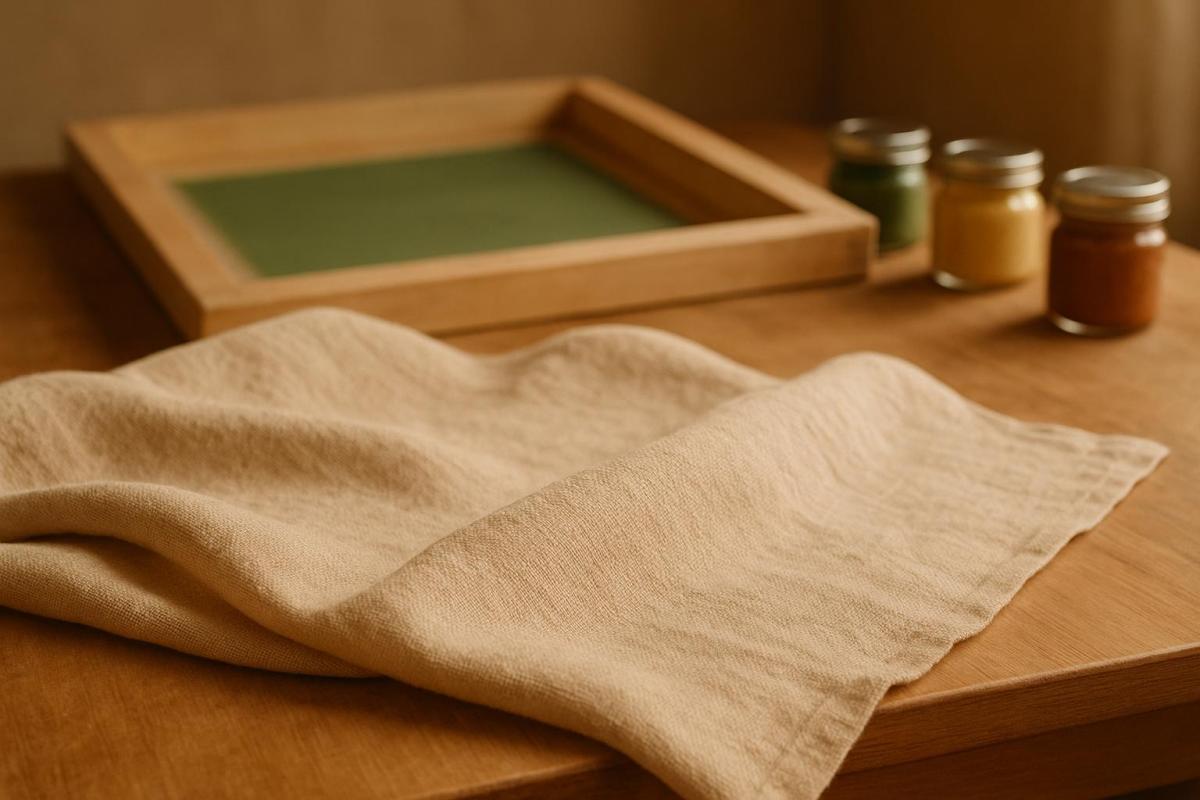
Printing on biodegradable textiles requires careful handling to maintain their eco-friendly properties while ensuring high-quality results. Here’s what you need to know:
- What are biodegradable textiles? These are fabrics like organic cotton, hemp, bamboo fibers, linen, and Tencel that decompose naturally under the right conditions, unlike synthetic materials that persist in landfills.
- Why use them? They reduce waste, meet growing consumer demand for eco-conscious products, and often deliver vibrant, durable prints due to their natural fiber structures.
- Eco-friendly printing methods: Use water-based or soy-based inks and natural dyes for minimal environmental impact. Proper preparation, like pre-washing with eco-friendly detergents, is essential.
- Key tips for printing: Maintain stable temperatures (68–72°F) and humidity (45–55%), use lower squeegee pressure, and cure at lower temperatures (280–300°F) to protect delicate fibers.
- Challenges to scale: Biodegradable textiles require gentler handling, longer processing times, and climate-controlled storage, which can increase costs. However, rising demand often supports premium pricing.
Eco Printing on 100% Hemp Fabric | Weaving Vibes
Eco-Friendly Printing Methods for Biodegradable Textiles
When it comes to printing on biodegradable textiles, it’s essential to choose methods that preserve their eco-friendly nature. One standout option is natural dyeing, which uses renewable, plant-based pigments as an alternative to synthetic dyes. These pigments are derived from plants and other renewable sources, making the process both environmentally conscious and free from harmful toxins. Let’s dive into the benefits and challenges of natural dyeing.
Natural Dyeing and Plant-Based Pigments
Natural dyeing replaces synthetic dyes with pigments sourced from nature, offering a greener approach to textile printing. This method reduces dependency on chemicals, aligning with efforts to minimize environmental impact. However, a potential drawback is the variability in color results, as natural pigments can produce inconsistent shades due to their organic origins.
For professional insights and support with sustainable printing methods, check out Miro Printing & Graphics Inc.. Based in Hackensack, NJ, they specialize in environmentally friendly printing techniques.
Materials and Tools for Biodegradable Textile Printing
Printing on biodegradable textiles requires careful selection of inks, binders, and tools to maintain the fabric’s eco-friendly qualities while achieving professional results. Below, we’ll explore environmentally conscious ink options and the essential equipment needed for sustainable textile printing.
Eco-Friendly Inks and Binders
When it comes to biodegradable textile printing, the choice of ink plays a big role in balancing sustainability with quality. Water-based inks are widely popular because they have a low environmental impact and leave fabrics feeling soft. Soy-based inks, made from renewable resources, provide vibrant colors while sticking to sustainable principles. There’s also bio-plastisol ink, which uses plant-based plasticizers to enhance durability while being energy-efficient. For binders, plant-based acrylics are a great choice – they help inks stick to the fabric without compromising its biodegradability.
Tools and Equipment for Textile Preparation
Getting the fabric ready is just as important as the printing itself. Start with pre-wash equipment that uses eco-friendly detergents to clean impurities without damaging delicate fibers. Fabric tensioning systems are key for keeping the material stable and preventing stretching during printing. To apply the ink, specialized squeegees ensure smooth, even coverage without harming the fabric. Finally, curing equipment with precise controls for temperature, airflow, and humidity ensures the ink dries properly and adheres well.
For personalized advice on choosing the best materials and tools for sustainable textile printing, check out Miro Printing & Graphics Inc.. They offer expert guidance tailored to your project needs.
sbb-itb-ce53437
Best Practices for Printing on Biodegradable Textiles
Achieving high-quality results when printing on biodegradable textiles demands careful attention to detail at every stage. Staying true to eco-friendly principles, it’s essential to preserve the integrity of these materials by focusing on fabric preparation, environmental conditions, and print settings. Here’s how to get it right.
Optimizing Textile Preparation
Start with pre-washing to eliminate natural residues and improve ink adhesion. Use an eco-friendly detergent and wash the fabric at a temperature between 85°F and 95°F. This gentle approach protects delicate fibers like hemp or organic cotton from damage while prepping them for printing.
Once washed, drying and storing the fabric properly is key. Air-dry the textiles in a clean, dust-free area to prevent contamination. Store them in sealed containers to maintain consistent moisture levels – this prevents the fibers from becoming too brittle or damp, both of which can interfere with the printing process.
Keep the fabric lightly tensioned to ensure it stays flat without overstretching. Over-tensioning can damage the fibers and create uneven surfaces for printing. A gentle press should result in a firm yet slightly pliable surface, ideal for achieving clean prints.
These preparation steps lay the groundwork for consistent and controlled printing conditions.
Controlling Printing Conditions
Once the fabric is ready, maintaining a stable environment during printing is critical. Temperature consistency is a big factor. Keep your workspace between 68°F and 72°F with a relative humidity of 45-55%. Since biodegradable textiles are more sensitive to environmental changes than synthetics, even small fluctuations can impact the outcome.
Pay attention to your water-based ink. It should have a heavy cream-like consistency that provides good surface coverage while penetrating the fibers effectively. During longer print runs, check the ink regularly to ensure it hasn’t thickened due to evaporation.
Adjust your print speed to accommodate eco-friendly inks. Running the equipment 20-30% slower than you would for synthetic materials allows the ink more time to bond with the fibers, improving adhesion and coverage.
Lower squeegee pressure by 15-20% compared to what you’d use for synthetic textiles. Excess pressure can push the ink too deeply into the fabric or damage the fibers, resulting in uneven prints or a washed-out appearance.
Curing and Drying Techniques
Use low-temperature curing to protect the fabric while ensuring proper ink adhesion. Set your curing equipment to temperatures between 280°F and 300°F – lower than what’s typically used for synthetic materials. You might need to extend the curing time slightly to ensure the ink sets fully without harming the delicate fibers.
Manage airflow carefully during drying. Instead of high-velocity fans, opt for gentle and consistent air circulation to prevent lightweight fabrics from wrinkling or fluttering. Position air sources to ensure even drying across the entire printed area.
Control humidity during curing. Proper ventilation is essential to remove excess moisture, which could lead to incomplete curing or tacky prints that attract dust.
Cool-down procedures require patience. Let the prints return to room temperature gradually rather than using rapid cooling methods. Sudden temperature shifts can cause biodegradable fibers to contract unevenly, leading to ink cracking or fabric distortion.
Finally, perform a light scratch test to verify ink adhesion. Properly cured ink should remain intact without flaking. If issues arise, tweak your temperature or timing settings rather than increasing pressure on the fabric. This ensures the final product maintains its quality and eco-friendly appeal.
Performance and Post-Print Evaluation
Once the printing process is complete, evaluating performance is a critical step to ensure consistent, eco-conscious quality. Post-print assessments help identify issues early, ensuring the durability and reliability of your printed materials.
Assessing Color Fastness and Durability
Begin wash testing within 24 hours of finishing the print. Use lukewarm water (around 85°F) and a small amount of eco-friendly detergent in a basin. Submerge a test sample for 10 minutes, gently agitating it to mimic the typical first wash cycle for printed textiles.
Test for color bleeding by pressing the wet sample against white cotton for 30 seconds. If any color transfers, it could point to poor ink adhesion or insufficient curing. Address this by adjusting the curing temperature or extending curing times.
Perform a rub test after the fabric has completely dried. Using a clean white cloth, rub the printed area with moderate pressure for 20 strokes. Minimal color transfer is expected; excessive transfer signals weak ink adhesion.
Check UV resistance if the material is intended for outdoor use. Expose test samples to direct sunlight for 48 hours and compare them to samples stored in darkness to gauge fading or discoloration.
Conduct stretch and recovery tests to evaluate how well the print holds up during wear. Stretch the printed area by 25% for 10 seconds and inspect for any cracking or ink damage. Since biodegradable textiles often behave differently than synthetic ones, this test is especially important.
Document your findings with photos and detailed notes. These records are invaluable for refining your processes and ensuring consistent quality before scaling up production.
Industrial Scalability and Challenges
Scaling up production introduces its own set of challenges beyond just print quality. Here’s what to keep in mind:
- Material availability can be unpredictable. Organic cotton and hemp textiles often face seasonal price fluctuations of 15-25%, complicating cost planning. Building relationships with multiple suppliers can help stabilize your production schedule when one source faces shortages.
- Production speed tends to slow down. Biodegradable textiles require gentler handling and longer curing times, which can reduce throughput by 20-30% compared to synthetic materials. This should be factored into timelines and pricing to maintain profitability.
- Quality control becomes more complex. Natural fiber variations mean that each batch of biodegradable textiles may react differently to the same printing conditions. Testing samples from every new batch is essential to avoid costly errors.
- Storage needs are more demanding. Biodegradable textiles are sensitive to humidity and temperature changes, which can lead to mold growth or brittleness if not stored properly. Climate-controlled storage, though more expensive, can prevent material waste.
- Operator training is vital. Handling biodegradable materials requires specialized skills beyond standard textile printing techniques. Investing in training ensures better quality and reduces waste in the long run.
- Cost analysis shows mixed outcomes. While biodegradable materials can cost 30-50% more than synthetic options, rising consumer demand often supports premium pricing. However, slower production speeds and additional handling requirements need to be carefully managed to protect profitability.
- Equipment adjustments may be necessary. Standard printing equipment might need modifications, such as adjusting pressure or conveyor speeds, to handle biodegradable materials properly. These changes can range from minor tweaks to more significant upgrades, depending on your setup.
Key Takeaways for Biodegradable Textile Printing
Printing on biodegradable textiles like organic cotton or hemp requires a more delicate touch compared to synthetic fabrics. It involves longer processing times, careful handling, and stricter environmental controls.
Pre-treatment matters. To achieve optimal ink adhesion and consistent color, biodegradable textiles need proper preparation. This step ensures that the fabric is ready to hold the ink effectively.
Eco-friendly inks and pigments are ideal. Water-based inks and plant-derived colorants work well with these sustainable materials. They not only align with the biodegradable nature of the textiles but also deliver excellent results when applied and cured under the right conditions.
Environmental factors play a big role. Maintaining stable temperature and humidity levels is crucial for consistent ink adhesion and preventing waste. Rapid quality testing can help identify and address issues early in the process.
Scaling up comes with challenges. Producing at a larger scale may take more time, and the materials can be pricier than synthetic options. However, the growing demand for sustainable products often allows for premium pricing, which can help offset these costs.
Storage and handling are critical. Climate-controlled environments are essential to prevent issues like mold growth or material degradation, protecting your investment in these high-quality textiles.
Success in biodegradable textile printing requires patience, precision, and a willingness to invest in the right tools and training. Meeting consumer expectations for sustainable manufacturing is no small task, but the rewards can be well worth the effort.
FAQs
What are the environmental advantages of using natural dyes instead of synthetic dyes for printing on biodegradable textiles?
Using natural dyes for printing on biodegradable textiles brings a range of environmental advantages. These dyes come from renewable sources like plants, minerals, and even animal byproducts, making them a more sustainable option. Unlike synthetic dyes, natural ones break down easily, avoiding the release of harmful chemicals into ecosystems or contamination of waterways.
Beyond their biodegradability, natural dyes promote eco-conscious farming methods and reduce dependence on synthetic chemicals, which can linger in the environment for years. Opting for natural dyes not only improves the eco-friendliness of biodegradable textiles but also plays a role in supporting a cleaner, healthier planet.
What are the best ways to achieve consistent colors when printing on biodegradable textiles with plant-based pigments?
When working with plant-based pigments on biodegradable textiles, achieving consistent colors starts with standardizing your methods. Precision in pigment extraction and maintaining a uniform dye concentration are essential steps. Adding eco-friendly binders can also help improve how well the color adheres and lasts over time.
Key factors like temperature, pH levels, and application techniques play a big role in the printing process. Keeping these elements in check minimizes inconsistencies and ensures the colors remain vibrant and durable. To avoid surprises, always test a small sample before moving into full-scale production to verify the color consistency.
How can I scale up production of biodegradable textiles while maintaining quality and sustainability?
Scaling up the production of biodegradable textiles while maintaining both quality and eco-friendly practices requires thoughtful strategies. Start by incorporating water recycling systems, renewable energy, and sustainable raw materials into your operations. These measures not only cut down on waste but also create a cleaner, greener production process.
When it comes to printing, consider using vegetable-based inks, water-based dyes, or sustainable digital printing methods. These options help reduce chemical waste and ensure the textiles remain aligned with eco-conscious goals. To address the higher production costs – sometimes as much as 50% more than conventional materials – boost manufacturing efficiency and raise awareness among consumers about the long-term benefits of biodegradable products. Striking a balance between innovation and sustainability is key to scaling production responsibly.
Related posts
- Fire-Resistant Fabrics for Printing: Types and Uses
- Biodegradable vs. Compostable Printing: Key Differences
- Guide to Eco-Friendly Printing Substrates
- How Water-Based Inks Improve Printing Sustainability
https://app.seobotai.com/banner/banner.js?id=68a3c2e34eebbe86def19e88
 BergenCountyPrintersBlogs