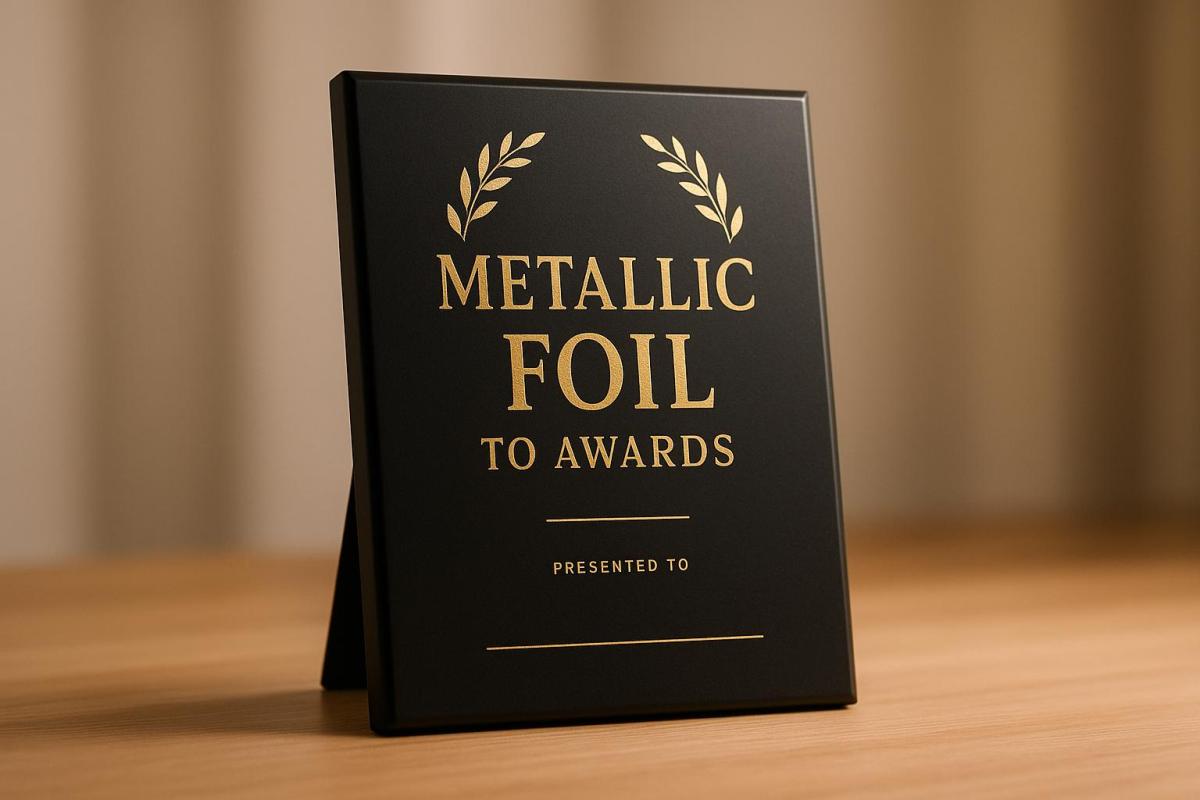
Metallic foil can transform ordinary awards into polished, professional pieces that stand out. By focusing on key design elements like logos, names, and borders, you can create an upscale look. Pairing foil with the right materials, such as matte or silk-finish paper, ensures durability and a clean finish. Hot foil stamping works best for precision, while digital foiling is ideal for smaller, customizable runs.
Key Tips:
- Highlight logos, titles, or decorative borders with foil.
- Choose foil colors (gold, silver, rose gold) to match the award’s tone.
- Use paper weights of 18pt–24pt for durability and quality.
- Opt for matte or silk-finish paper for better foil adhesion.
- Ensure clean, simple designs to let the foil shine.
For flawless results, work with professional printers who can guide you through material selection, proofing, and application methods.
HOT STAMPING CERTIFICATE- Gold Hot Stamping Red Seal- Full Colour Certificate Printing
Design Tips for Adding Metallic Foil
Smart design choices can elevate awards by emphasizing key elements without sacrificing readability or aesthetic appeal.
What to Highlight with Foil
When deciding where to apply metallic foil, focus on elements that naturally draw attention. Logos and emblems are excellent candidates since they carry strong brand recognition and add a polished touch to the design. Similarly, highlight award titles, recipient names, or standout phrases like "Certificate of Excellence" instead of covering large text blocks.
Foil also works beautifully for borders and decorative patterns, creating an elegant frame for your content. For best results, use thin metallic borders of at least 1pt for clean, precise application. Gloss metallic foil, which reflects light dramatically, enhances intricate designs and decorative elements. However, avoid pairing large foil areas with fine details – breaking up solid blocks reduces issues like dust or air pockets that can disrupt the finish.
Picking the Right Foil Color
The color of the foil you choose can significantly influence the perception of your award. Each hue carries its own unique vibe:
- Gold: Adds a timeless, premium feel.
- Silver: Offers sharp contrast, especially on dark backgrounds.
- Copper: Brings a warm, candlelit glow.
- Rose Gold: Delivers a sleek, modern aesthetic.
- Red: Creates bold, dramatic accents.
- Blue: Suggests trust and professionalism.
- Green: Evokes calm, emerald tones – ideal for environmental themes.
- Purple: Conveys luxury and sophistication.
- Black Chrome: Stands out with a refined, unique look.
- Holographic: Adds a dynamic, rainbow-like effect.
Keeping Designs Simple and Clean
When it comes to metallic foil, less is often more. Clean and uncluttered layouts allow the foil to shine without competing with other design elements. Prepare your artwork in vector format, using 100% black for foil areas, and ensure line weights are at least 1pt. Avoid gradients or gray tones, as they can result in unusable dies.
The contrast between foiled and non-foiled elements naturally creates a sense of hierarchy. Simple typography, ample white space, and carefully placed foil accents often yield the most striking results. Keep in mind that gloss metallic foils reflect light intensely, making even small applications pop, while satin metallic foils offer a softer, brushed effect reminiscent of aluminum. Choose the finish that aligns best with your design and the setting where the awards will be displayed.
Next, we’ll explore how to select the right materials for flawless foil application.
Selecting Materials for Foil Application
The secret to a striking foiled award starts with selecting the right materials. The type of paper you choose plays a crucial role in determining foil adhesion, the vibrancy of the design, and the overall polished appearance of the award.
Paper Types and Finishes
Uncoated, matte-finish papers are often the go-to choice for foil applications. Their porous surface ensures the foil bonds securely under heat and pressure, resulting in vibrant, precise foil coverage. These papers also create a noticeable contrast between the foil and the background, enhancing the design.
Silk-finish papers are another excellent option. Their subtle sheen provides a refined backdrop for metallic foils, striking a perfect balance between the bold contrast of matte finishes and the potential adhesion issues often encountered with glossy surfaces.
On the other hand, glossy or standard coated papers can pose challenges. Their smooth, sealed surface can make it harder for the foil to adhere properly, leading to patchy coverage or peeling over time. If you prefer a coated stock, look for varieties specifically designed for foil application, though they may come with a higher price tag.
For something more textured, linen or laid-finish papers can create unique visual effects. The foil settles into the paper’s grooves, leaving raised areas untouched, resulting in a sophisticated two-tone effect. However, heavily textured papers might lead to uneven foil coverage, so it’s always a good idea to test samples first.
For awards that will be handled frequently, cotton-blend papers offer both durability and a premium feel. If longevity is a priority – such as for high-end or prestigious awards – consider using museum board or conservation-grade papers for a truly lasting impression.
Why Paper Weight Matters
The weight of the paper impacts both the look and feel of the award, as well as the foil application process. 14pt to 16pt cardstock is the minimum recommended weight for a professional appearance; anything lighter might feel flimsy and detract from the award’s perceived quality.
For most awards, 18pt to 24pt cardstock is ideal. This range offers a substantial, high-quality feel without being overly cumbersome. The added thickness also helps the paper withstand the heat and pressure of foil application, ensuring a smooth and vibrant finish.
For the most prestigious awards, consider using 32pt cardstock or thicker. Ultra-thick cardstock not only exudes a premium quality but also supports stable foil application. The extra thickness allows for higher heat and pressure settings, which can enhance foil adhesion and create a more striking metallic effect.
Heavier papers (24pt or more) are also better suited for additional finishing techniques like embossing or debossing, as they resist cracking or tearing during the process. However, keep in mind that heavier papers may increase shipping costs for bulk orders.
When working with heavier papers, you’ll need higher temperatures and longer dwell times to achieve optimal foil adhesion. Lighter papers, on the other hand, require careful temperature control to prevent scorching while still ensuring a strong bond. Selecting the right weight not only enhances the durability of the award but also ensures the foil application looks polished and professional.
For expert advice and high-quality printing services, reach out to Miro Printing & Graphics Inc., a trusted full-service print shop based in Hackensack, NJ. Their team can guide you through material selection and professional foil application to achieve the perfect result.
sbb-itb-ce53437
Metallic Foil Printing Methods
Selecting the right foil application method can make a big difference in how your award project turns out. It’s not just about the foil itself – it’s about how it works with your materials and design to create a polished, unified look. Two main techniques – hot foil stamping and digital foiling – each bring their own strengths, depending on what your project requires.
Hot Foil Stamping vs. Digital Foiling
Hot foil stamping involves using heated dies to press foil onto a surface. The combination of heat and pressure transfers the foil, with curing happening instantly or within seconds for larger designs. This method is ideal for projects that demand precision and a high-quality finish.
On the other hand, digital foiling skips the need for dies entirely. Instead, it applies foil over pre-printed layers of ink, varnish, or toner. This makes it a great choice for smaller production runs or projects that require personalization, offering flexibility without compromising on style.
For expert guidance and professional foil application, reach out to Miro Printing & Graphics Inc.. They can help you choose the best method for your project.
Quality Control and Delivery
Achieving impeccable foil awards starts with thorough digital proofing and quality checks. By carefully reviewing your digital proofs, you can ensure the final product aligns perfectly with your vision. Here’s a breakdown of the essential proofing steps to guarantee flawless foil application.
Proofing and Quality Checks
Digital proofs are a key tool in the process. They display foil areas as solid black on a white background, while the print layer excludes any foil details. To get a clear production reference, request a composite file that combines both the print and foil layers.
For optimal results, design elements should extend at least 1mm beneath the foil zone. This helps account for any slight shifts during production. If your design includes areas where print and foil meet, overlap them slightly to mask any minor misalignments.
When working with foiled borders, position them at least 4mm from the edges of your design. Additionally, ensure that all foil and adjacent areas have a minimum thickness of 0.5pt. These precautions help prevent issues like misapplication or uneven finishes.
Finally, take advantage of file check services. These can identify potential problems, such as foil thickness inconsistencies or overly tight kerning, early on – saving you time and ensuring your design shines as intended.
Conclusion: Take Your Awards to the Next Level with Metallic Foil
If you’re looking to make your awards truly stand out, adding metallic foil is a game-changer. This simple yet effective enhancement transforms ordinary certificates into elegant, premium awards that recipients will cherish. The gleaming finish of metallic foil delivers a sense of prestige and value, ensuring your recognition program leaves a lasting impression.
As discussed earlier, success lies in combining thoughtful design with quality materials. Metallic foil works best when applied to key elements like recipient names, logos, or border details. Keeping the overall design clean and uncluttered amplifies the foil’s impact, creating awards that feel polished and professional. Don’t forget the importance of using the right paper – an 80 lb. cover stock or heavier adds the weight and durability that matches the upscale look of foil.
Of course, expert printing is key to achieving flawless results. Proper foil registration, material selection, and quality control are critical, and that’s where Miro Printing & Graphics Inc. excels. Their expertise ensures your awards are finished to the highest standard.
Whether you’re ordering a single certificate or preparing for a large event, metallic foil elevates your awards into timeless symbols of achievement. It’s the perfect way to enhance recipient satisfaction and make your recognition efforts unforgettable.
FAQs
What’s the difference between hot foil stamping and digital foiling, and how do I decide which one to use for my awards?
Hot foil stamping and digital foiling offer two different ways to add metallic finishes to awards, each suited to specific needs.
Hot foil stamping involves using a metal die and heat to press foil onto the surface, creating a raised, textured effect. This technique is great for larger quantities or when aiming for a luxurious, high-end appearance. However, it requires more setup time, making it less practical for smaller runs.
Digital foiling, by contrast, skips the need for a die. Instead, foil is applied through an additional printing pass, resulting in a smooth, flat finish. This method is perfect for smaller projects, quick turnarounds, or situations where personalization is key. It’s also more budget-friendly for short runs.
When deciding between the two, go with hot foil stamping for large batches and an embossed, premium aesthetic. Digital foiling is the better choice for flexibility, customization, or when you’re working on a tighter schedule.
What’s the best way to apply metallic foil to certificates for a polished, professional look?
To create a sleek and professional metallic foil finish on certificates, begin with premium-quality foil and paper specifically made for foil stamping. Pay close attention to the heat and pressure settings during the process to ensure the foil adheres evenly without any flaws. Keep the stamping plate clean by wiping it regularly with a lint-free cloth to prevent residue buildup, which can interfere with the final result. If you notice problems like over-stamping or uneven coverage, fine-tune your settings accordingly. By following these steps, you can produce certificates that stand out with a polished, professional appearance.
How do I choose the right metallic foil color to match the theme of my awards?
When choosing a metallic foil color, it’s important to think about the theme and mood you want your awards to reflect. Timeless options like gold, silver, and bronze exude elegance and celebrate achievement. If you’re aiming for something more modern or bold, holographic or brightly colored foils can add a striking, creative twist.
To make your design pop, pick foil colors that either contrast sharply with the background for better visibility or blend harmoniously for a unified look. Also, keep in mind the emotions tied to different colors – gold is often linked to success, silver suggests sophistication, and vibrant tones like red or blue can bring a sense of energy and excitement. Matching the foil color to the award’s purpose and audience will result in a design that’s both impactful and meaningful.
Related Blog Posts
- Foil Stamping vs Metallic Ink: Key Differences
- How Foil Stamping Works: Step-by-Step Guide
- 5 Design Tips for Award Certificates
- How to Choose Materials for Award Certificates
https://app.seobotai.com/banner/banner.js?id=68c88eddc8ad31793fc09a0d
 BergenCountyPrintersBlogs