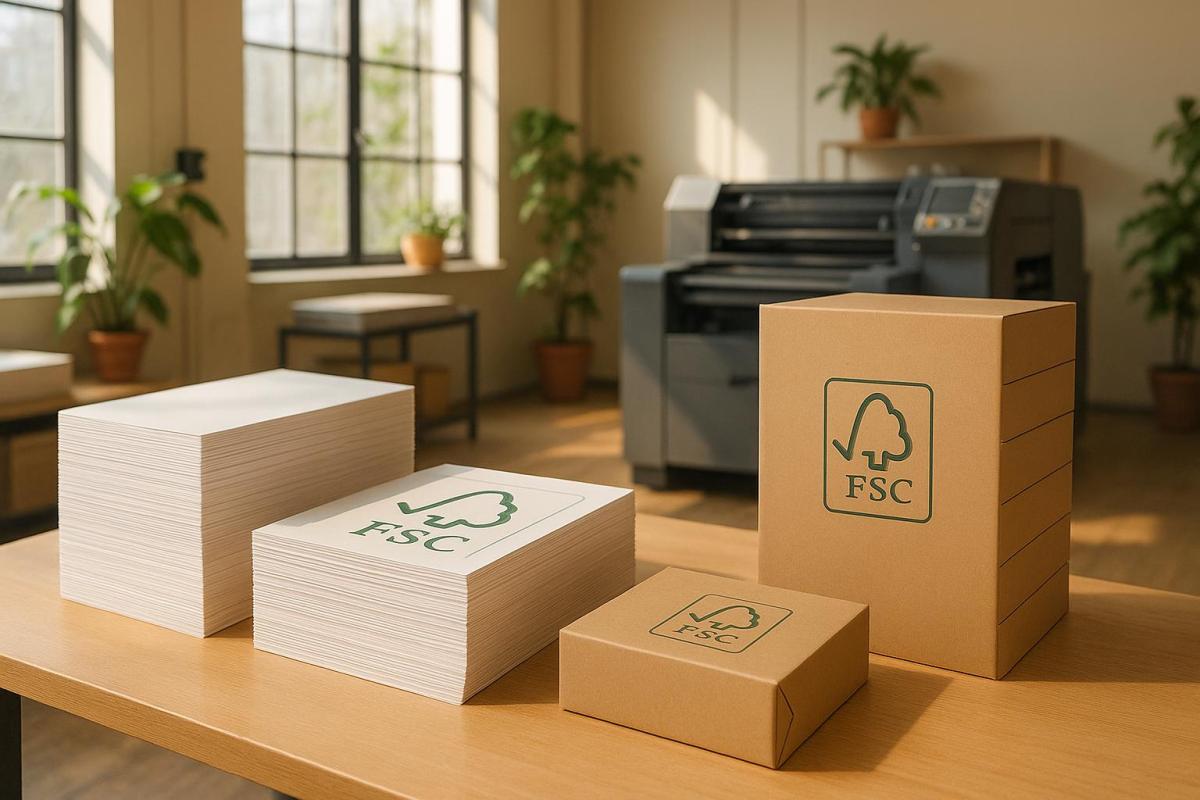
FSC certification helps printers show their commitment to responsible sourcing and forest management. It ensures materials like paper come from well-managed forests or recycled sources, aligning with growing client and market demands for eco-friendly practices. Here’s what you need to know:
- What it is: FSC certification tracks materials from forest to product, ensuring responsible sourcing.
- Why it matters: Many clients, including governments and corporations, now require FSC-certified materials for projects.
- Key labels:
- FSC 100%: All materials from certified forests.
- FSC Mix: Combines certified, recycled, and controlled sources.
- FSC Recycled: Made entirely from reclaimed or post-consumer waste.
- Chain of Custody: Certification ensures materials are tracked and separated during production.
- Getting certified: Involves audits, documentation, and staff training to meet FSC standards.
FSC certification also boosts credibility and helps printers meet client expectations. By combining it with eco-friendly practices like vegetable-based inks and energy-efficient equipment, printers can reduce their impact and attract environmentally conscious customers.
Unlocking Success for Small Printers with FSC Group Certification
Key FSC Labels and What They Mean
For printers aiming to make informed choices about material sourcing, understanding the different FSC labels is essential. These labels not only reflect specific standards but also play a role in shaping both the environmental impact and the marketability of printed products. They also align with FSC’s stringent chain-of-custody requirements.
FSC 100%, FSC Mix, and FSC Recycled
The FSC system offers three distinct labels, each with its own criteria for material sourcing and marketing:
- FSC 100%: This label guarantees that all materials used come exclusively from FSC-certified forests. It ensures that every fiber in the product originates from responsibly managed forests that meet rigorous environmental and social standards. Using FSC 100% materials enhances environmental credibility and satisfies strict sustainability expectations from clients.
- FSC Mix: This label allows for a blend of FSC-certified materials, recycled content, and controlled wood sources. It provides printers with sourcing flexibility while maintaining credible environmental standards. Products carrying this label must include a minimum percentage of FSC-certified or recycled content, which varies based on the product type.
- FSC Recycled: This label signifies that materials are sourced from reclaimed or post-consumer waste. It appeals to clients who prioritize waste reduction and circular economy principles. Often, FSC Recycled materials offer cost benefits while still meeting sustainability goals.
When sourcing materials, printers should verify the authenticity of these labels through the FSC Global Certificate Database at info.fsc.org or search.fsc.org. It’s important to ensure that the supplier’s certificate specifically covers the required materials for a project. Additionally, checking FSC codes on sales documents and packaging is crucial. Look for the FSC License Code (FSC-C######) on FSC labels and promotional materials, and the FSC Certificate Code (ACB-XXX-######) on invoices and delivery notes.
The FSC database provides detailed information about each certificate, including its issue and expiration dates, contact details, and the specific products covered under the certification. If no results appear during a search, it could mean the certificate has expired, been terminated, or suspended.
For printers, FSC certification is a must to use any FSC label on printed materials.
Printing professionals, such as those at Miro Printing & Graphics Inc., rely on these verification processes to ensure their work meets the highest sustainability and quality standards. This labeling system is directly tied to maintaining a robust FSC chain of custody, which will be discussed next.
FSC Chain of Custody Requirements for Printers
When it comes to FSC labels, understanding the chain of custody (CoC) is a must for printers. The FSC CoC certification ensures that materials labeled as FSC-certified are kept separate from non-certified ones throughout the entire production process – from the forest all the way to the finished product. For any company handling forest-based products, securing this certification is essential to back up FSC claims.
For printing businesses, CoC certification isn’t optional – it’s a requirement. This certification is what allows them to confidently label their printed products as FSC-certified, providing assurance to their customers.
The process involves strict segregation of FSC-certified materials from non-certified ones, along with meticulous tracking. These steps are non-negotiable for maintaining compliance with FSC standards.
Take, for instance, the practices at Miro Printing & Graphics Inc., where these principles are fully integrated into their operations. By adhering to FSC guidelines, they not only support sustainable resource use but also foster trust with clients who prioritize environmentally responsible choices. This strong chain of custody framework sets the stage for navigating the audits and compliance measures needed to achieve and maintain FSC certification.
How to Get and Keep FSC Certification
Securing FSC certification is just the beginning of a larger commitment to sustainable practices. Maintaining this certification requires ongoing effort, regular monitoring, and adherence to FSC standards. Below, we’ll break down the steps to obtain certification and the key measures needed to stay compliant over time.
Application and Audit Process
The path to FSC certification begins with selecting an FSC-accredited certifier. These independent organizations assess your operations to ensure they meet the Chain of Custody requirements. To start, you’ll need to prepare detailed documentation that outlines how FSC-certified materials are handled. This includes systems for separating certified from non-certified materials, tracking certified projects, and clearly identifying FSC work throughout your supply chain. For example, internal processes should mark FSC projects from the very beginning.
Certifiers will review your facility, your material handling procedures, and your team’s understanding of FSC standards. This includes compliance with FSC Core Labor Requirements and integrating FSC guidelines into client-facing processes – such as using job tickets to clearly label FSC projects.
Once you successfully pass the initial audit, you’ll receive your Chain of Custody certification, which allows you to use FSC labels on qualifying print jobs. However, maintaining this certification is an ongoing process that demands strict attention to detail and adherence to established procedures.
Compliance and Training Requirements
To retain your certification, annual on-site audits by an FSC-accredited certifier are required. These audits ensure that your operations consistently meet the Chain of Custody standards. A comprehensive documentation system is crucial – every FSC-certified project must have a complete paper trail, from start to finish, for auditors to review.
Training your staff is equally important. Your team must stay up-to-date on FSC standards and follow internal compliance processes to maintain certification. Everyone involved should understand their role in ensuring the integrity of the chain of custody.
Another critical aspect of compliance is the proper use of the FSC logo. Guidelines dictate its placement, size, and presentation on finished products. Any misuse of the logo can lead to compliance issues, and repeated violations may result in losing your FSC certification. This highlights the need for rigorous attention to detail when applying FSC standards.
For companies like Miro Printing & Graphics Inc., FSC certification is more than just a badge – it’s an integral part of their daily operations. By embedding FSC requirements into their standard procedures, they ensure ongoing compliance and sustainable practices across all projects. The key to long-term success lies in treating FSC certification as a continuous commitment, requiring regular reviews and a proactive approach to sustainable printing practices.
sbb-itb-ce53437
Benefits of FSC Certification for Printers
Earning FSC certification demonstrates a printer’s dedication to responsible sourcing while fostering trust within the market.
Building Client Confidence and Market Appeal
Displaying the FSC logo tells customers that the materials – whether wood, paper, or other products – originate from responsibly managed forests or recycled sources. This third-party validation strengthens the perception of sustainable practices and reassures clients. For printers, it’s a clear way to stand out by offering products that resonate with environmentally conscious buyers.
Strengthening Business and Environmental Efforts
FSC certification not only boosts your brand’s reputation for eco-consciousness but also helps differentiate your services in a crowded marketplace. Companies like Miro Printing & Graphics Inc. showcase their commitment to sustainability through this certification, demonstrating leadership in environmental responsibility. It also opens the door to adopting more sustainable practices in the future.
Eco-Friendly Practices Beyond FSC Certification
FSC certification is a great starting point for sustainable printing, but it’s only part of the picture. To truly reduce environmental impact and meet the growing demand for greener products, printers need to embrace additional eco-friendly practices. These go beyond certification, reflecting a deeper commitment to sustainability.
Green Printing Techniques
Switching to eco-conscious inks is a smart step. Vegetable-based inks emit fewer volatile organic compounds (VOCs) compared to petroleum-based options, making recycling easier. Meanwhile, water-based inks eliminate harsh chemical solvents while still delivering vibrant colors and high-quality prints.
Reducing waste is another key focus. Printers can optimize layouts, adopt gang printing methods, and use precise color management to cut down on material waste. Comprehensive recycling programs for paper scraps, ink cartridges, and printing plates ensure leftover materials are handled responsibly.
Investing in energy-efficient equipment is also essential. Modern digital presses and advanced curing systems are specifically designed to use less energy without sacrificing performance. Additionally, adopting waterless printing technology eliminates the need for chemical fountain solutions, improving air quality and producing sharp, consistent results.
These techniques not only reduce environmental impact but also align with the expectations of consumers who are increasingly drawn to eco-friendly products.
Meeting Consumer Demand for Green Products
Sustainability is no longer just a bonus – it’s a priority for many consumers and corporate clients. Businesses often evaluate vendors based on their environmental practices, and a growing number of customers are willing to pay more for products with a smaller ecological footprint.
Promoting the benefits of green printing can help attract this eco-conscious audience. By tracking metrics like energy consumption, waste diversion rates, and carbon footprint, printers can provide concrete evidence of their environmental efforts. This transparency builds trust and sets them apart in a competitive market.
Offering carbon-neutral printing options is another way to appeal to environmentally aware clients. By collaborating with verified carbon offset programs, printers can neutralize the emissions tied to their operations. Many clients see this as a valuable service.
Additionally, developing specialty eco-friendly product lines can make a printing business stand out. Options might include recycled paper with high post-consumer content, tree-free papers made from agricultural byproducts, or biodegradable packaging materials.
At Miro Printing & Graphics Inc., a full-service print shop in Hackensack, NJ, sustainability is woven into every aspect of our operations. By combining FSC standards with these eco-friendly strategies, we’re not just meeting expectations but leading the way in sustainable printing practices.
Conclusion
FSC certification stands out as the benchmark for responsible forest management and a powerful way to build stronger client relationships. With research showing that up to 73% of consumers worldwide are willing to adjust their purchasing habits to minimize environmental impact, FSC certification has shifted from being a choice to an essential business strategy.
In the U.S. and Canada alone, FSC has certified over 168 million acres of forestland, offering an average annual economic benefit of $4.74 per cubic meter in certified production. This certification brings together environmental responsibility and economic value.
The market advantages of FSC certification are clear. As Mike Ribaudo, Executive Vice President at Kase Printing, puts it:
"The FSC logo is a mark of trust. It ensures that wood, paper, and other forest products you’re using in your business are sourced responsibly from well-managed forests or recycled materials".
To fully integrate FSC practices, make it a point to discuss certification in every project meeting, train your team on chain-of-custody processes, and establish tracking systems to monitor materials from their origin to the final product. Additionally, reallocating resources – like moving from physical proofs to digital ones – can help manage costs effectively.
Combine FSC certification with other eco-friendly practices, such as using vegetable-based inks and energy-efficient equipment. This not only reinforces your business’s commitment to sustainability but also positions it as a forward-thinking leader ready to meet the demands of today’s eco-conscious market.
By investing in FSC certification, you enhance your reputation, minimize supply chain risks, and tap into a growing customer base that values sustainability. For printing businesses, it’s not a matter of if but when to take the leap.
At Miro Printing & Graphics Inc., we are dedicated to providing sustainable printing solutions that align with FSC standards. Choosing responsible forest management practices isn’t just about meeting current demands – it’s about securing a stronger, greener future.
FAQs
What steps does a printing company need to take to get FSC Chain of Custody certification?
To get FSC Chain of Custody certification, a printing company starts by reaching out to an FSC-accredited Certification Body (CB). This step is crucial to understand the process and specific requirements involved.
Next, the company needs to set up a management system designed to track FSC-certified materials throughout its supply chain. This system ensures proper documentation and control measures are in place to meet FSC standards.
After implementing the system, an FSC-approved CB conducts an audit to confirm compliance. If the audit is successful, the company earns the certification. This allows them to use FSC trademarks on their products, showcasing their dedication to responsible sourcing practices.
How does FSC certification help printing companies build trust and stand out in the market?
FSC certification offers printing companies a way to build trust and distinguish themselves by highlighting their dedication to responsible forest management. This appeals to clients who prioritize eco-friendly practices and care about the environment.
By adhering to FSC standards, printing businesses can strengthen their brand reputation, draw in loyal customers, and stand out in a crowded market. Moreover, having FSC certification shows a clear commitment to preserving natural resources, which can help nurture lasting client relationships and open doors to new growth opportunities.
What are some eco-friendly practices printers can adopt in addition to FSC certification to minimize their environmental impact?
Printers looking to reduce their environmental impact can take meaningful steps by combining eco-conscious practices with FSC certification. For instance, opting for soy-based or vegetable-based inks helps cut down on harmful emissions, while digital printing ensures more accurate print runs, resulting in less waste.
Beyond that, upgrading to energy-efficient equipment and choosing biodegradable or recyclable materials for projects can make a noticeable difference. These efforts not only conserve resources and reduce waste but also highlight a dedication to environmentally responsible printing practices.
Related Blog Posts
- Ultimate Guide to Recycled Paper Certifications
- Types of Recycled Paper for Printing
- FSC Certification: Standards Explained
- Checklist for Choosing Sustainable Paper Suppliers
https://app.seobotai.com/banner/banner.js?id=68d35609e3dd4bddfa4bd9c8
 BergenCountyPrintersBlogs