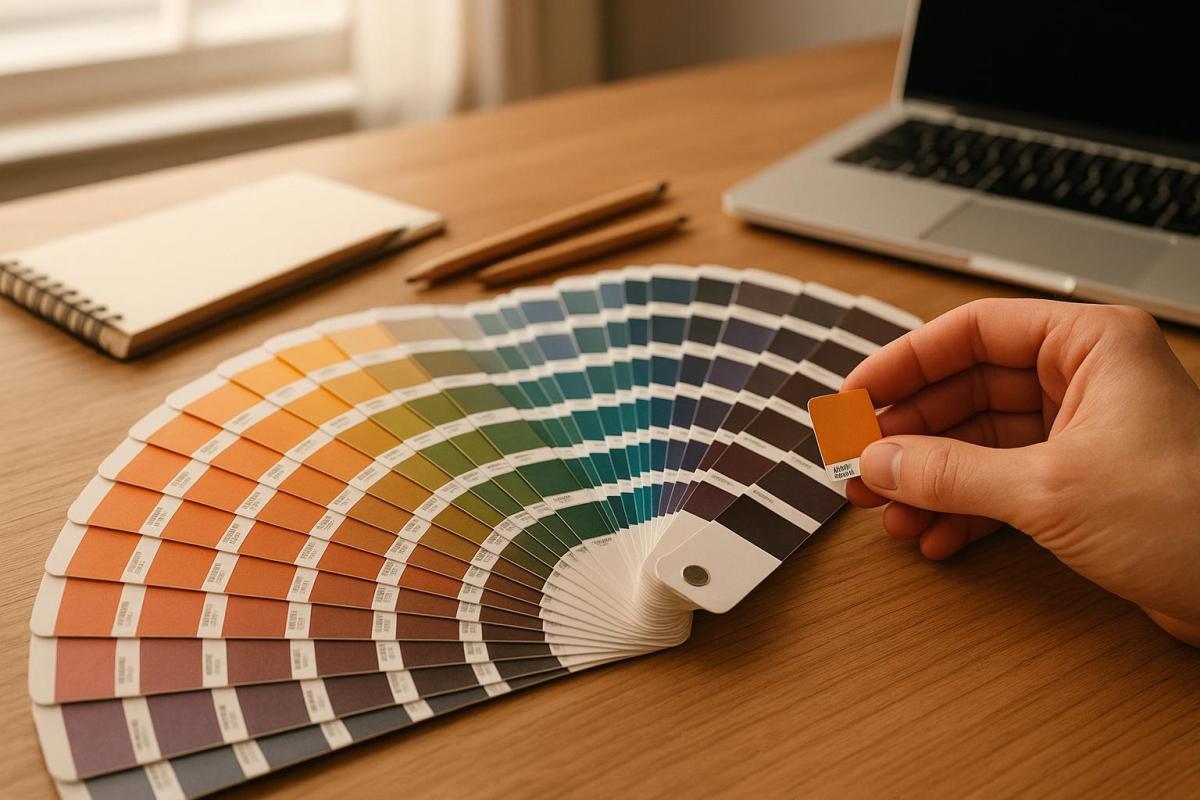
Pantone charts simplify color matching in design and printing by providing a universal system with precise codes for each color. They ensure consistent results across materials and production methods, avoiding issues like color shifts caused by lighting, monitor settings, or paper types. Here’s what you need to know:
-
Why Use Pantone Charts?
They offer reliable, physical color references, ensuring uniformity across print and digital applications, unlike RGB or CMYK, which can vary based on devices or processes. -
Types of Guides:
- Solid Coated/Uncoated: For glossy or matte papers.
- Color Bridge: Matches Pantone colors with CMYK equivalents.
- Specialty Guides: For textiles, metallics, and pastels.
-
Choosing the Right Guide:
Match your guide to the material (e.g., coated for glossy finishes, uncoated for matte). Testing colors on actual substrates is critical to avoid surprises. -
Maintaining Accuracy:
Replace guides every 12–18 months to prevent fading or outdated colors. Store guides properly to extend their lifespan. -
Collaborating with Print Shops:
Work with professionals who understand Pantone standards to achieve precise results. Always provide exact Pantone codes and request printed proofs for verification.
Pantone charts are indispensable for maintaining consistent branding and avoiding costly errors in design projects.
Pantone Formula Guides – WHEN and HOW to use them – Huge Collection Unboxed

How the Pantone Matching System (PMS) Works
The Pantone Matching System (PMS) is a spot color system that relies on pre-mixed ink formulas to create consistent, precise colors. Each shade is assigned a unique code, making it easy to match colors across different materials and processes. This eliminates the uncertainty and variation often found in other color systems.
PMS serves as a universal reference, ensuring consistent color reproduction worldwide. Each Pantone color also includes corresponding RGB, CMYK, and HEX values for digital and print applications, but the physical ink formula remains the ultimate standard.
Unlike CMYK and RGB, PMS stands out for its reliability and specific use cases. CMYK uses a subtractive process by layering Cyan, Magenta, Yellow, and Black inks to approximate colors. However, this method often leads to inconsistencies due to factors like printer type, paper quality, or environmental conditions. RGB, on the other hand, is designed for digital screens, combining red, green, and blue light to create colors. While great for web design, RGB isn’t suitable for print since what you see on a screen may not match the final printed result.
| Color Model | Primary Use | Color Consistency | Key Limitation |
|---|---|---|---|
| PMS | Spot color printing, branding | High | Limited to available Pantone colors |
| CMYK | Full-color process printing | Moderate | Some colors not reproducible |
| RGB | Digital screens, web design | Low (in print) | Unsuitable for print |
For projects where color consistency is critical – like brand logos or packaging – PMS is the go-to choice. It ensures that a color remains visually consistent across a variety of substrates, whether it’s glossy packaging or matte business cards. While finishes like gloss or matte may slightly affect how the color looks, the integrity of the shade itself remains intact.
For example, a national retailer launching a new product line might specify Pantone 185 C for all packaging. By doing so, they ensure that the color looks the same across different printers and materials, avoiding the inconsistencies that can occur with CMYK or RGB.
Types of Pantone Guides
Pantone offers several types of guides, each tailored to specific printing needs. The Formula Guide is the core of the Pantone system and comes in two versions: Solid Coated and Solid Uncoated. The Coated guide shows how colors appear on glossy or coated paper, where they tend to look more vibrant. The Uncoated version, on the other hand, reveals how the same colors appear on matte or uncoated paper, where they often look more subdued.
Color Bridge guides are especially helpful for comparing Pantone spot colors with their closest CMYK equivalents. This is a valuable tool for designers working with tight budgets who may need to use CMYK printing while still aiming to maintain brand color accuracy.
For specialized needs, Pantone also offers specialty guides. For instance, the Pantone TCX guide is designed for textiles and fashion, accounting for how dyes interact with various fabrics. Other guides cater to metallics, pastels, and plastics, ensuring accurate color representation across unique materials.
Professional print shops, like Miro Printing & Graphics Inc., use these Pantone guides to deliver consistent results across a variety of printing methods, including digital, offset, and large-format printing. Whether the project involves packaging, signage, or promotional materials, these guides are essential for achieving high-quality, consistent outcomes.
Choosing the Right Pantone Chart for Your Project
Picking the right Pantone chart is crucial for achieving accurate print colors. It’s all about understanding how ink interacts with the material you’re printing on and selecting the guide that aligns with your specific needs. This process extends to matching guides with the appropriate paper types, ensuring the best results for your project.
Matching Pantone Guides to Paper Types
The type of paper, or substrate, you use can dramatically affect how colors appear, making the choice of Pantone guide a key decision.
- Coated guides are made for glossy, shiny papers where ink sits on the surface instead of soaking in. This results in vibrant, eye-catching colors, making them ideal for packaging, posters, and bold marketing materials.
- Uncoated guides, on the other hand, show how colors will look on matte or absorbent papers. Here, the ink sinks into the fibers, creating softer, more muted tones. These guides are perfect for stationery, letterhead, and business cards, where a subdued, professional look is often desired.
Using the wrong guide can lead to disappointing outcomes. For example, if you use a coated guide for uncoated paper, the colors will appear duller, potentially leading to brand inconsistencies and costly reprints.
For specialized needs, specialty guides are available. Pantone TCX guides are tailored for textiles and fashion, taking into account how dyes interact with fabrics rather than paper. Metallic and pastel guides are designed for projects that require special finishes or effects that standard guides can’t replicate.
Using Physical Guides for Accurate Color Selection
Choosing the right substrate is only part of the equation. To ensure precise color communication with print professionals, physical Pantone guides are essential. These guides provide the most reliable reference, as they show actual printed swatches of how colors will appear in print.
Digital screens can’t be trusted for color accuracy. Differences in calibration, brightness settings, and even the type of device can distort how colors appear. Physical guides eliminate this uncertainty by offering a consistent, tangible reference that everyone involved in the project can rely on.
When collaborating with print partners like Miro Printing & Graphics Inc., physical guides are invaluable. They allow you to clearly communicate your color preferences and ensure that both you and the printer are aligned. This shared understanding minimizes the risk of color mismatches and delays, helping your project stay on track.
Physical guides also let you compare colors under different lighting conditions, ensuring your brand’s colors remain consistent no matter where they’re viewed.
Pantone Guide Comparison Chart
Here’s a quick breakdown of the different Pantone guides to help you choose the right one for your project:
| Pantone Guide Type | Advantages | Disadvantages | Typical Use Cases |
|---|---|---|---|
| Solid Coated | Bright, vibrant colors on glossy paper | Not accurate for uncoated paper | Packaging, posters, brochures |
| Solid Uncoated | Accurate for matte or uncoated paper | Colors appear less vibrant | Stationery, letterhead, business cards |
| TCX/TPG (Textile) | Designed for fabrics and textiles | Not suitable for paper | Fashion, textiles, soft goods |
| Metallics/Pastels | Adds special effects and finishes | Limited use, may need special inks | Specialty packaging, invitations |
The best guide for your project depends on the final application and the impression you want to create. For example, coated guides work well for high-impact marketing, while uncoated guides are better suited to professional correspondence.
Before committing to full production, consider requesting printed proofs or sample swatches of your chosen Pantone color on the intended substrate. This allows you to see how the colors will look under real-world conditions and make any necessary adjustments. Taking this step can save you time and money while ensuring your project turns out exactly as planned. Selecting the right guide is just the first step toward achieving perfect color accuracy.
sbb-itb-ce53437
Steps to Maintain Color Accuracy and Consistency
Once you’ve chosen the right Pantone guide, the next step is ensuring consistent color reproduction throughout your design and print process. This involves carefully managing variables like printing methods, substrates, lighting, and equipment. Paying attention to these details helps maintain brand consistency and ensures your colors look exactly as intended.
Working with Print Partners
Collaborating with skilled print professionals is key to achieving accurate Pantone color reproduction. Different printing methods – such as digital, offset, or large-format printing – can produce varying results, even when using the same Pantone specifications. A knowledgeable print partner can navigate these differences and guide you toward decisions that best suit your project.
When choosing a print partner, prioritize those who offer personalized service over cookie-cutter solutions. The best partners take the time to understand your specific needs and work closely with you to achieve the desired results.
"With meticulous attention to detail, our print shop has a customized approach that is unmatched by big online printing companies or franchises." – Miro Printing & Graphics Inc.
Clear communication is essential. Provide your print partner with the exact Pantone code and finish specifications to ensure everyone is on the same page. Including these codes, along with CMYK, RGB, and HEX values, in your brand guidelines creates a universal reference across all production environments.
A great example of this collaborative approach is Miro Printing & Graphics Inc. in Hackensack, NJ. Their expertise spans digital, offset, and large-format printing, allowing them to reproduce Pantone colors with precision, no matter the method.
Once you’ve established a trusted partnership, the next step is validating your choices through sample testing.
Testing Colors on Sample Materials
Never underestimate the importance of testing. Even with the most experienced print partner and a carefully chosen Pantone guide, colors can look different when printed on your specific materials. Testing your selected Pantone colors on actual substrates ensures their vibrancy and appearance meet your expectations before full production begins.
Ask your print partner for printed proofs or sample swatches to see how your colors perform under real-world conditions. This step allows you to spot any issues and make adjustments before committing to the entire print run.
Julia I., a customer of Miro Printing & Graphics Inc., shared her experience with this process. Before her complex booklet project went into full production, she received a video of her print sample for approval. This allowed her to confirm the colors and quality were exactly what she wanted.
"I even received a video of my print sample (a mini booklet) for approval before they proceeded with the rest. Best service I’ve ever received from a printer; couldn’t recommend Miro more highly." – Julia I., Customer of Miro Printing & Graphics Inc.
When reviewing samples, examine them under different lighting conditions to ensure consistency. Pay close attention to how the ink interacts with your chosen material. For example, colors on coated paper often appear more vibrant due to the glossy finish, while uncoated paper tends to absorb ink, resulting in a softer, muted look.
Document any adjustments you make and share them with your team. Keeping a record not only ensures consistency for future projects but also saves time and resources by avoiding repeated corrections down the line.
Keeping Your Pantone Charts Current
Maintaining up-to-date Pantone charts is essential for ensuring color consistency. Over time, Pantone guides can degrade, leading to color mismatches, costly reprints, and unhappy clients. Regularly updating your guides is the best way to avoid these issues.
Pantone guides are affected by exposure to light and air, which can cause colors to fade and swatches to yellow. Additionally, the Pantone system evolves, introducing new colors to reflect trends and advancements in technology. For instance, one design agency learned this the hard way when they used a three-year-old guide for branded materials. The result? Duller colors that clashed with the client’s brand palette. This misstep led to reprints, staff retraining, and a damaged client relationship. The lesson here is simple: keeping your Pantone guides current is non-negotiable.
When to Replace Pantone Guides
To maintain accuracy, it’s recommended to replace Pantone guides every 12–18 months. This timeline accounts for the natural wear and tear that occurs even under normal use. Exposure to light, air, and frequent handling can cause printed colors to shift over time.
If your guides are in constant use or exposed to intense lighting, consider replacing them closer to the 12-month mark. Proper storage can also extend their lifespan – store guides in a cool, dry place, away from direct sunlight or strong artificial lighting. Always handle them with clean hands to prevent oil or dirt transfer, and keep them closed when not in use.
Here are some signs it’s time to update your Pantone guides:
- Colors appear noticeably different from memory.
- Swatches show fading, especially around the edges.
- White areas have yellowed.
- Guides have physical damage like tears or stains.
If you find yourself second-guessing whether a color is accurate, it’s likely time for a replacement. Professional print shops, like Miro Printing & Graphics Inc. in Hackensack, NJ, prioritize using up-to-date Pantone guides alongside calibrated equipment, ensuring precise color matching.
Training Your Team on Pantone Best Practices
Keeping guides updated is just one part of the equation. Training your team on Pantone best practices ensures consistent results across all projects. Everyone involved in color decisions – designers, project managers, and client-facing staff – needs to understand the importance of Pantone standards and how to use them effectively.
Start with the basics. Teach your team why physical Pantone guides are more reliable than digital displays, which can vary due to screen calibration differences. A physical guide provides a universal reference point that everyone can trust.
Encourage consistent documentation of Pantone colors. Team members should always record the specific guide type (Coated, Uncoated, or Matte) and color number in design files. This information should also be clearly communicated to print partners. When the reasoning behind these practices is clear, adherence becomes second nature.
To avoid inconsistencies, create a system for tracking the age and condition of your guides. Assign someone to monitor replacement schedules and ensure every workstation has access to current materials. This eliminates the risk of one team member using an outdated guide while others rely on a newer version.
Document your color standards in your brand guidelines. Include Pantone codes alongside CMYK, RGB, and HEX values to ensure consistent communication across platforms. However, Pantone specifications should remain the primary standard.
Regular training sessions can reinforce these practices, especially when onboarding new team members or introducing updated guides. Use the arrival of new guides as an opportunity to review procedures and address any questions.
Investing in team training pays off with fewer errors, stronger client relationships, and more efficient workflows. When everyone on your team is aligned on Pantone best practices, you’ll spend less time fixing issues and more time delivering exceptional design work.
Key Points for Using Pantone Charts Effectively
When it comes to working with Pantone charts, success hinges on a thoughtful process that includes proper selection, thorough testing, and regular upkeep. The cornerstone of accurate color work is relying on physical Pantone guides for color selection. Why? Because digital screens often distort colors due to calibration differences, making physical guides a more reliable choice.
Start by choosing the right Pantone guide for your project. Whether it’s Solid Coated, Solid Uncoated, or TCX for textiles, selecting the appropriate guide ensures consistency and avoids costly production errors. Be sure to document the exact Pantone code and finish type in your design files and brand guidelines. This step eliminates guesswork and ensures everyone involved – designers, printers, and manufacturers – works from the same color standard. Keep in mind that the same color code can look vastly different on various materials, so always match your guide to the intended substrate.
Testing is another critical step. Always request printed samples on the actual materials you’ll be using before committing to a full production run. This allows you to see how the colors will appear in real-world conditions and gives you the chance to make adjustments before finalizing your design. Skipping this step can lead to unpleasant surprises later on.
Once your colors are finalized, maintaining your Pantone guides is essential. Replace them every 12 to 18 months to avoid relying on faded or outdated swatches. This ensures your references remain accurate and up to date, helping you stay aligned with current standards and trends.
For the best results, consider partnering with experienced print professionals, such as Miro Printing & Graphics Inc.. These experts specialize in translating Pantone specifications into high-quality prints. They understand the complexities of color reproduction across various printing methods and can help you navigate potential challenges before they escalate. By working with skilled print shops, you can ensure your Pantone colors are executed flawlessly, elevating the overall quality of your project.
FAQs
When should I replace my Pantone guides to maintain accurate colors?
Pantone guides are best replaced every 12 to 18 months to maintain accurate color representation. Factors like exposure to light and frequent handling can cause colors to fade or shift, which affects their reliability in design work.
If you spot noticeable fading, wear, or inconsistencies in color matching, it’s a clear sign that your guide might need replacing. Keeping your Pantone charts up-to-date is key to ensuring your design projects meet professional standards.
Why do my Pantone colors look different when printed on various materials, and how can I fix it?
Pantone colors can look different depending on the material they’re printed on. Things like surface texture, the type of material, and how the ink is absorbed all play a role in how the color turns out. That’s why working with experts who understand these variables is key to getting consistent and accurate results.
Miro Printing & Graphics Inc., based in Hackensack, NJ, excels at helping clients achieve precise color reproduction. They tailor their approach to your specific materials and project needs, ensuring the final product aligns with your vision – no matter what it’s printed on.
Why should I work with a professional print shop when using Pantone charts for my design projects?
Working with a professional print shop like Miro Printing & Graphics Inc. guarantees that your design projects maintain consistent and accurate colors. Their expertise ensures that your Pantone color choices are flawlessly translated into printed materials, avoiding the typical pitfalls that can arise during production.
With their meticulous attention to detail and personalized approach, they’ll guide you through every step of the process. Whether it’s aligning with your creative vision, meeting deadlines, or staying within budget, their commitment to precision helps deliver top-notch results for your design projects.
Related Blog Posts
- How to Adjust Colors for Offset Printing
- Pantone Matching System in Printing
- Pantone Charts for Large Format Printing
- Choosing Pantone Colors for Packaging Printing
https://app.seobotai.com/banner/banner.js?id=68f1ab731019c13c0b2c99e9
 BergenCountyPrintersBlogs