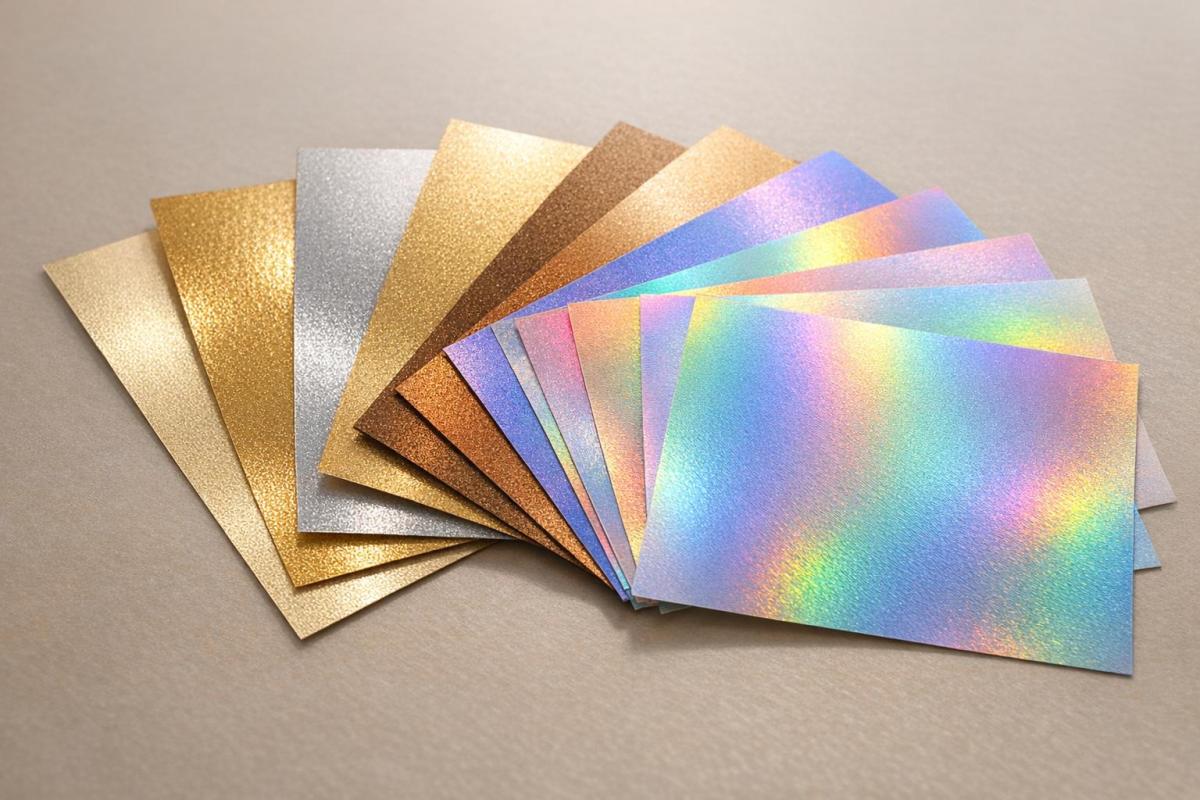
Looking to add a refined touch to your projects? Metallic and iridescent cardstock are specialty papers designed to transform ordinary designs into stunning creations. Here’s what you need to know:
- Metallic Cardstock: Offers a consistent, reflective shine in single colors like gold or silver. Perfect for wedding invitations, business cards, and luxury packaging.
- Iridescent Cardstock: Features a color-shifting effect that changes with light, creating a rainbow-like finish. Great for festive designs, bold packaging, and eye-catching crafts.
- Both types are durable, often acid-free, and compatible with specific printing techniques like laser printing, foil stamping, and white ink underprinting.
Quick Comparison
| Feature | Metallic Cardstock | Iridescent Cardstock |
|---|---|---|
| Finish | Mirror-like or pearlescent | Color-shifting, prismatic |
| Best Uses | Luxury, formal designs | Festive, playful projects |
| Printing Compatibility | Laser, digital, offset | Laser, offset |
| Durability | Acid-free, fade-resistant | Scratch-resistant options |
Whether you’re crafting elegant invitations or vibrant packaging, these papers provide a polished, professional look. Read on for tips, techniques, and brand recommendations to get the best results.
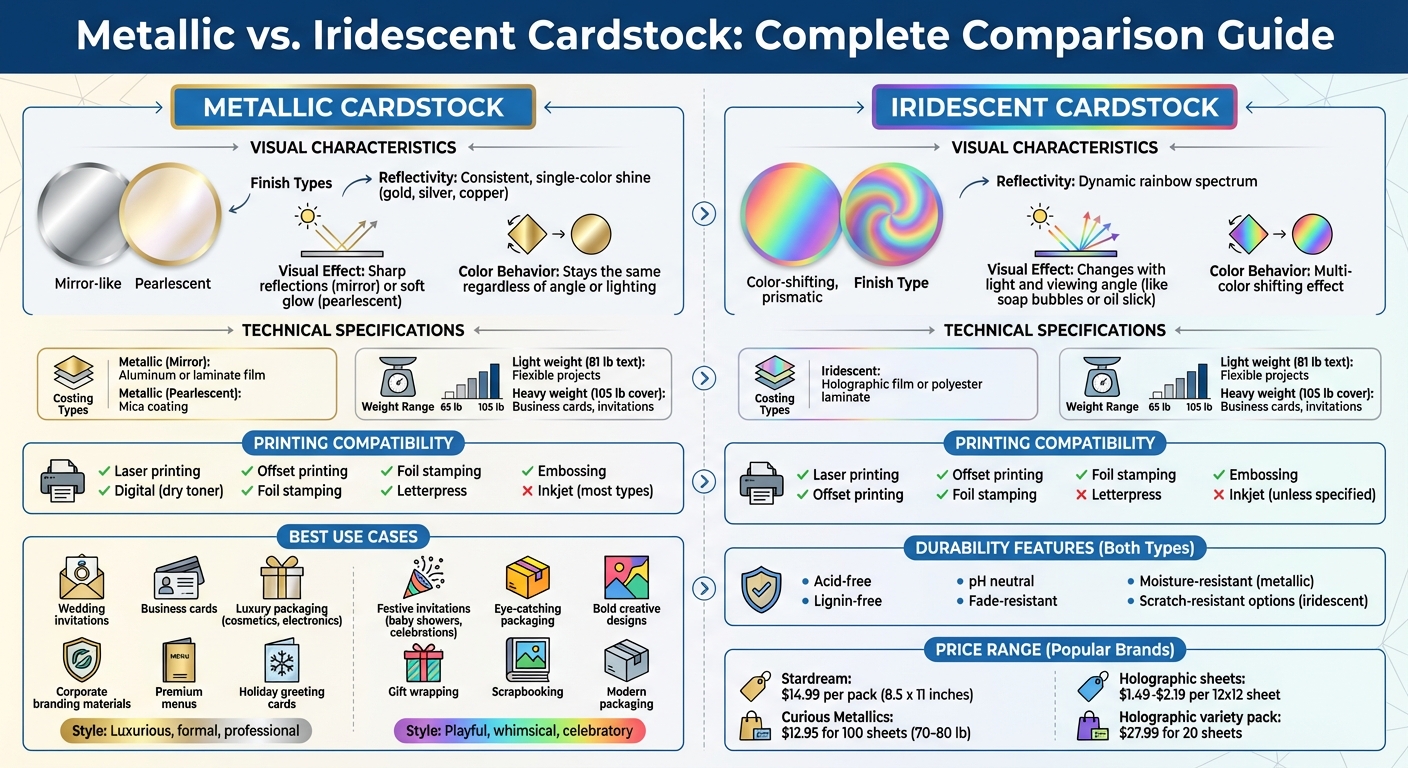
Metallic vs Iridescent Cardstock: Complete Comparison Guide
3 🤯 Ways to Use METALLIC Paper featuring NEW Release from Simon Says Stamp #cardmakingtutorial #card
What Is Metallic Cardstock?
Metallic cardstock is a type of paper with a special coating made from aluminum or mica, giving it a reflective, shimmering surface. Unlike regular cardstock, which typically has a matte or uncoated finish, metallic cardstock stands out with its striking, glossy appearance.
The Stardream series, for instance, uses a mica coating that creates a soft, pearlescent glow. Some metallic cardstocks have shimmer and color that run through the entire sheet, making both sides equally dazzling. Others feature a single-sided finish, like a mirror or sparkle effect, with a plain white back.
This cardstock comes in various weights, ranging from 65 lb to 105 lb cover weight (130–375 gsm). Lighter weights, such as 81 lb text, are great for projects requiring flexibility, like crafting paper flowers. On the other hand, heavier weights are perfect for items that need durability and structure, such as business cards, luxury invitations, and upscale packaging.
Beyond its aesthetic appeal, metallic cardstock has some practical perks. Many options are acid-free, lignin-free, and pH neutral, which helps prevent fading and brittleness over time. The metallic coating also boosts moisture resistance and makes the paper easier to fold and score.
Metallic cardstock is a go-to choice for projects like wedding invitations, business cards, luxury packaging, scrapbooking, menus, and holiday greeting cards. Its reflective finish instantly adds a touch of sophistication and elegance. Up next, we’ll look at iridescent cardstock, which offers a softer, pearlescent glow that complements metallic finishes beautifully.
What Is Iridescent Cardstock?
Iridescent cardstock creates a mesmerizing, color-shifting effect that changes with the light or viewing angle. Unlike metallic cardstock, which has a consistent reflective shine, iridescent paper dances through a spectrum of hues, much like the rainbow shimmer on a soap bubble or the surface of a CD. This unique effect is caused by optical phenomena, making it stand out from the steady gleam of metallic options.
The science behind this effect is called goniochromism, which occurs due to thin-film interference. Essentially, light waves bounce off semi-transparent layers or tiny structures on the paper’s surface, creating the illusion of shifting colors. In some cases, diffraction adds a full rainbow spectrum when the paper is tilted.
The term "iridescent" itself reflects its origins, combining the Greek word iris (meaning rainbow) and the Latin suffix -escent (indicating a tendency toward). This highlights the fact that the colors of iridescent cardstock are structurally generated rather than applied through traditional chemical dyes.
For instance, premium lines like Stardream achieve their shimmering, light-catching finish by using a mica coating. This coating refracts light to produce a soft, glowing luster. Other types achieve their vivid, scratch-resistant colors by laminating a polyester film onto a cast-coated board, which encapsulates dyes for a more dramatic effect. Depending on the method, the finish can range from a subtle pearlescent shine to a bold, oil-slick rainbow effect.
Pearlescent finishes, which reflect mostly white light, create a gentle, pearl-like glow. On the other hand, true iridescent finishes manipulate light to deliver a constantly shifting spectrum of colors. This dynamic quality makes iridescent cardstock a popular choice for festive invitations, eye-catching packaging, and bold, creative designs.
Metallic vs. Iridescent Cardstock: Key Differences
When it comes to specialty cardstock, metallic and iridescent options each bring their own unique flair. Metallic cardstock is all about consistency – it offers a steady reflective finish in a single color, like gold, silver, or copper. The shine remains the same no matter the angle or lighting, making it a go-to for a sleek and polished look. On the other hand, iridescent cardstock is dynamic and ever-changing, shifting through a spectrum of colors as light hits it, much like the mesmerizing effect of soap bubbles or an oil slick.
The way these two types reflect light sets them apart. Mirror-finish metallic cardstock creates sharp, high-shine reflections, while pearlescent metallics, often enhanced with mica coatings, give off a softer, more refined glow. Iridescent cardstock, however, uses prisms to create a lively, color-shifting effect that grabs attention in a completely different way.
These visual qualities influence their ideal uses. Metallic cardstock is perfect for projects that demand a luxurious or professional feel, such as premium packaging for cosmetics and electronics, high-end menus, or corporate branding materials. Its consistent shine exudes sophistication and exclusivity. Iridescent cardstock, with its playful and eye-catching design, is better suited for celebratory and whimsical projects like baby shower invitations, festive gift wrapping, or creative scrapbooking where a touch of magic is desired.
When it comes to printing, pearlescent metallics (like Stardream) are compatible with both laser and digital printers, making them versatile for various designs. However, mirror-finish metallics are less porous and work best with laser or offset printing methods. For adhesives, mirror finishes require strong options like Scor-tape to ensure a clean, polished result, as liquid glues may not adhere as well to their smooth, non-porous surfaces.
Comparison Table
| Feature | Metallic (Mirror) | Metallic (Pearlescent/Shimmer) | Iridescent (Holographic) |
|---|---|---|---|
| Reflectivity | High (Mirror-like) | Subtle (Luster/Glow) | High (Prismatic) |
| Color Variation | Single, consistent color | Single color with mica shimmer | Multi-color/Rainbow shift |
| Visual Effect | Sharp, direct reflections | Soft, elegant sheen | Dynamic, color-changing |
| Coating Type | Laminate film | Mica coating | Holographic film |
| Best Uses | High-impact accents, cake toppers | Wedding invitations, formal stationery | Modern packaging, eye-catching crafts |
Understanding these differences can help you choose the right cardstock to make your project stand out. Next, let’s explore some top specialty cardstock options that highlight these distinctive features.
sbb-itb-ce53437
Types and Brands of Specialty Cardstock
Here’s a closer look at some standout specialty cardstock brands that cater to professional-grade projects.
Stardream Cardstock
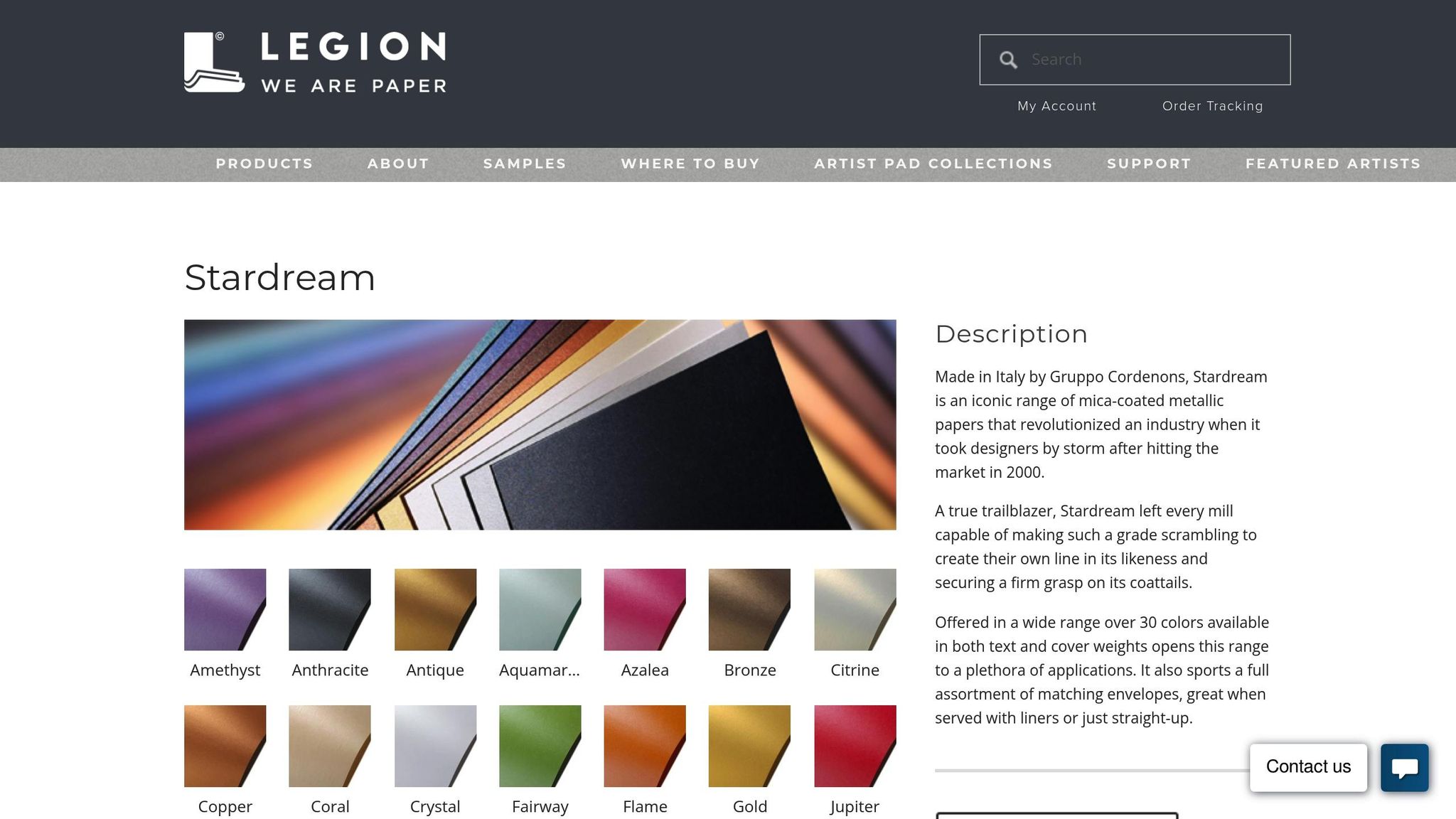
Stardream cardstock is known for its dual-sided, mica-infused coating that creates a stunning pearlescent shimmer on both sides. Produced in Italy by Gruppo Cordenons, this paper ensures full-color saturation throughout the sheet, making it a favorite for elegant designs.
The collection includes 25–27 colors, such as Anthracite, Kunzite, and Lapis Lazuli. It comes in two weights: 81 lb Text (120 gsm) for lighter uses like crafting paper flowers, and 105 lb Cover (285 gsm) for sturdier projects like business cards and invitations. A standard pack of 8.5 x 11-inch sheets costs about $14.99, with bulk options available for larger needs.
"This iridescent pearlescent paper has an extremely smooth dual-sided metallic finish with a soft subtle shimmer that catches light beautifully and lends a touch of elegance to every design." – Stardream Paper
Stardream cardstock is ideal for laser and digital (dry toner) printing. It also supports professional techniques like letterpress, foil stamping, and embossing, though it’s not compatible with inkjet printers. This archival-quality paper is acid-free, lignin-free, chlorine-free, and pH neutral, ensuring it resists fading over time. Matching envelopes in standard sizes are available to complete coordinated stationery sets.
Curious Metallics
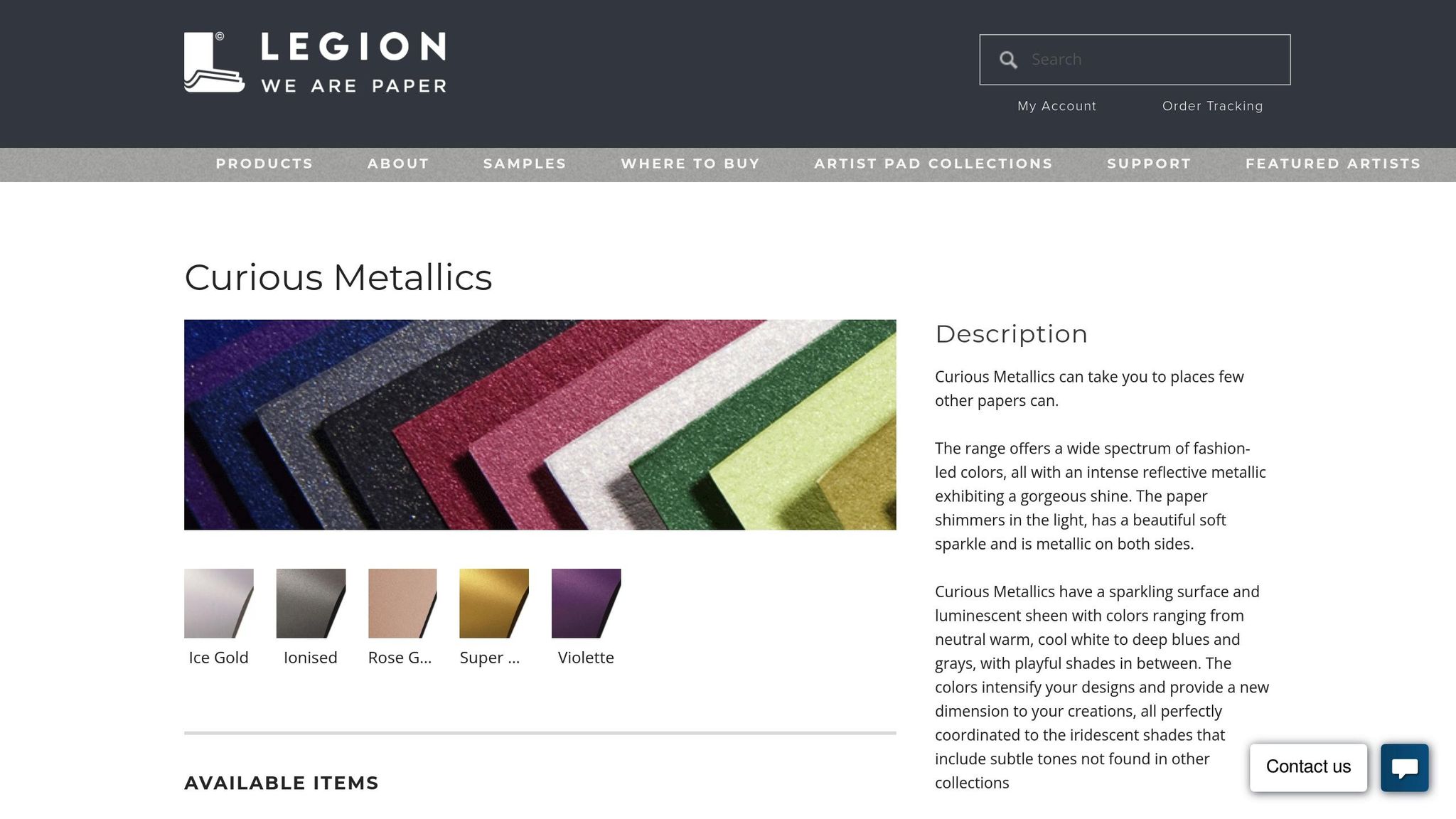
Curious Metallics offers a refined finish with a luminescent sheen and delicate sparkling flecks. Its specialized finishes include options like "Ice Gold", which features a soft pearlized shimmer, and translucent iridescent variants that add understated elegance to any project.
Available in multiple weights, including 70 lb and 80 lb text, Curious Metallics is priced competitively. For example, a pack of Curious Light Specs Gold (70 lb Text Weight, 8.5 x 11 inches) costs approximately $12.95 for 100 sheets. Its dual-sided metallic finish makes it a go-to for premium designs like brochures, certificates, and business cards. Colors such as Electric Blue, Poison Ivory, and Virtual Pearl add a unique touch, while its archival quality ensures durability for long-term use.
Holographic and Iridescent Foil Cardstock
Holographic cardstock delivers a futuristic, eye-catching effect. When viewed straight on, it appears solid, but tilting it reveals a spectrum of colors. This effect is achieved through a high-quality laminate film coating that creates a mirror-like, reflective surface.
Popular holographic options include brands like Mirri, which offers designs such as Silver Rainbow, Pillars of Light, and Gallium, as well as Encore Paper with options like Unicorn Holographic and Ice Chips. Single 12 x 12-inch sheets are priced between $1.49 and $2.19, while a variety pack of 20 sheets costs around $27.99. These materials are perfect for projects where a bold first impression is key.
Holographic cardstock is best suited for laser and offset printing, as most options are incompatible with inkjet printers unless specifically labeled. For clean edges when die-cutting heavyweight options (like 105 lb cover), use a double-pass setting. When adhering this material, solid adhesives like Scor tape work better than liquid glues, which can disrupt the reflective surface.
This type of cardstock is popular for high-end applications, including business cards, brochures, menus, and luxury packaging. Many professional-grade options are acid-free, lignin-free, and fade-resistant, ensuring vibrant and long-lasting results for your creative projects.
Printing Techniques for Specialty Cardstock
Digital Printing
When it comes to metallic and iridescent cardstock, digital and laser printing shine – literally. These methods work so well because dry toner fuses perfectly to the non-porous surface, maintaining the cardstock’s reflective finish. Laser printing, in particular, is often the go-to choice for specialty cardstock since the toner creates a durable, plastic-like layer that resists smearing on metallic coatings.
If you’re aiming for vibrant metallic colors, try printing CMYK layers over a silver ink base. This approach allows the light to build up, preserving the cardstock’s shimmer. On coated metallic stocks, the ink doesn’t absorb into the paper but instead stays on the surface. This results in better "ink holdout", which enhances the reflective shine.
For heavier cardstock, use your printer’s manual feed tray and set it to "heavyweight" or "coated" mode to avoid paper jams. Additionally, short-grain paper is easier to bend around printer rollers compared to long-grain, which can help minimize feeding problems when working with thicker stocks.
These digital printing techniques create a solid foundation for even more striking effects, like foil stamping and white ink underprinting.
Foil Stamping and White Ink Underprinting
To elevate specialty cardstock further, techniques like foil stamping and white ink underprinting add extra flair and sophistication.
Foil stamping uses heat and pressure to apply a metallic film directly onto the cardstock, producing an ultra-reflective, mirror-like finish. This method is far more striking than metallic inks. Traditional foil stamping requires a custom metal die for each design, which makes it more costly for smaller print runs but perfect for high-end projects like business cards, invitations, or luxury packaging.
For a more budget-friendly option, digital foiling (also called foil fusing) is a great alternative. This process applies toner-reactive foil to areas with dry toner, allowing intricate details – down to 6-point text – to shine, as long as toner saturation is sufficient. It costs around $0.04–$0.08 per 8.5" × 11" sheet and eliminates the need for expensive dies. Smooth, uncoated cardstock works best for this method, as textured papers can interfere with foil adhesion.
"The best paper stock for foil fusing is going to be a smooth and uncoated sheet. Real textured paper with mountains and valleys won’t allow the foil to properly adhere." – Mallory Morsa, Product Expert, Binding101
White ink underprinting is another powerful tool, especially for dark or highly reflective cardstock. By laying down a white ink base first, you ensure that subsequent colors don’t get absorbed into the paper or fade into dark backgrounds. This keeps colors vibrant and metallic effects prominent. If you’re designing with foil in mind, keep your elements bold and simple. Thin lines or intricate scripts may not transfer well, and foil can make text appear slightly larger. Adjust kerning and leading to maintain clarity and readability.
Project Ideas and Applications
Leveraging the unique qualities of specialty papers can elevate a variety of print projects, from professional stationery to creative packaging.
Business Cards and Invitations
Metallic and iridescent cardstock can make business cards and invitations stand out with a polished, eye-catching finish. The reflective surface naturally highlights key details like company names, logos, and event information, creating a clear visual hierarchy. Foil-accented business cards are a popular choice for high-end projects, offering a premium look at competitive prices. For best results, use text sizes of 10pt or larger to maintain readability against the reflective background, and limit foil accents to specific areas to ensure the design remains focused and impactful.
Greeting Cards and Scrapbooking
Specialty cardstock isn’t just for professional use – it’s perfect for personal projects like greeting cards and scrapbooks. These papers add a touch of shimmer to creations for weddings, baby showers, retirements, and holiday celebrations. The Stardream line, featuring up to 25 colors such as gold, silver, and copper with dual-sided metallic finishes, is ideal for projects involving folding and cutting. Individual sheets are priced between $1.50 and $2.50, and bulk purchases often come with discounts of up to 15%.
Posters and Packaging
Specialty cardstock also shines in larger formats like posters and packaging. Metallic cardstock is especially favored in luxury packaging for industries like jewelry, electronics, and cosmetics due to its reflective properties, which enhance the product’s perceived value. Tony Gao, Business Director at EPACK, notes:
"Metallic paper transforms ordinary packaging into something extraordinary, combining visual allure with practical benefits".
Beyond aesthetics, metallic cardstock offers practical advantages like moisture resistance and light shielding, which can extend the shelf life of products such as cosmetics and gourmet foods. For packaging, a weight of 325gsm (455 microns) is commonly used for boxes, inserts, and tags. Advanced textured metallic papers can even mimic materials like leather or linen, adding a tactile element. For food packaging, such as confectionery boxes, it’s crucial to ensure the material complies with FDA non-toxicity and food safety standards.
If you’re ready to bring these ideas to life, Miro Printing & Graphics Inc. in Hackensack, NJ provides a full range of printing and post-press services to bring your designs to perfection.
Conclusion
Metallic and iridescent cardstock can add a touch of sophistication and flair to any print project. From business cards to wedding invitations and custom packaging, these specialty papers combine visual charm with durability, making them a standout choice for creative designs. The secret to success lies in choosing the right finish and pairing it with the best printing techniques.
As The Paper Mill Store puts it, "Incorporating metallic tones into your craft and design projects is like finding your favorite pair of designer jeans on sale for half price – you get all the glamor without spending an absolute bomb". With options like Stardream’s pearlescent dual-sided finish, Mirricard’s stunning mirror-like surface, and the dynamic color-shifting effects of holographic cardstock, there’s a perfect paper to fit any creative idea or budget.
To achieve a polished result, stick to laser printers, check the paper grain before folding, and use reliable adhesives like double-sided tape.
Ready to elevate your next project? Miro Printing & Graphics Inc., located in Hackensack, NJ, offers expert printing and post-press services. With their careful material selection and precise techniques, they can help turn your metallic and iridescent designs into something truly remarkable.
FAQs
What are the most effective printing techniques for metallic and iridescent cardstock?
When using metallic and iridescent cardstock, foil stamping is an excellent way to achieve bold, reflective designs that catch the eye. Another great option is spot-metallic ink printing, which adds a polished metallic effect to selected parts of your design, especially on coated sheets. To bring texture and dimension to your project, consider embossing or debossing. For an added touch of shine and durability, spot varnish or UV coating can be applied. These methods emphasize the distinct qualities of metallic and iridescent cardstock, ensuring your designs leave a lasting impression.
What makes iridescent cardstock change colors when viewed from different angles?
Iridescent cardstock achieves its mesmerizing color-shifting effect through a special coating made of micro-structured or thin-film layers. These layers play with light, creating interference that reflects varying colors based on the viewing angle or lighting conditions. This dynamic and striking look makes it an ideal choice for artistic projects and high-end designs.
What types of projects work best with metallic and iridescent cardstock?
Metallic cardstock is an excellent choice when you want your project to stand out with a sleek, polished appearance and a durable finish. Its sturdy, smooth surface makes it perfect for formal pieces like invitations, business cards, holiday greetings, or even custom die-cut and embossed designs. The reflective quality adds a touch of sophistication, making it a go-to option for upscale projects.
Iridescent cardstock, by contrast, brings a playful twist with its color-shifting effect that changes depending on the light. This makes it ideal for party invitations, decorative tags, scrapbook embellishments, or creative overlays. The shimmering finish adds a fun, dynamic vibe to any design. For professional results, Miro Printing & Graphics Inc. can expertly handle your metallic or iridescent projects, ensuring precision and high-quality finishes.
Related Blog Posts
- Foil Stamping vs Metallic Ink: Key Differences
- How Foil Stamping Works: Step-by-Step Guide
- Foil Stamping Techniques for Cardstock Printing
- Foil Stamping Color Options Explained
https://app.seobotai.com/banner/banner.js?id=696ad31c0a871bef4ad31156
 BergenCountyPrintersBlogs