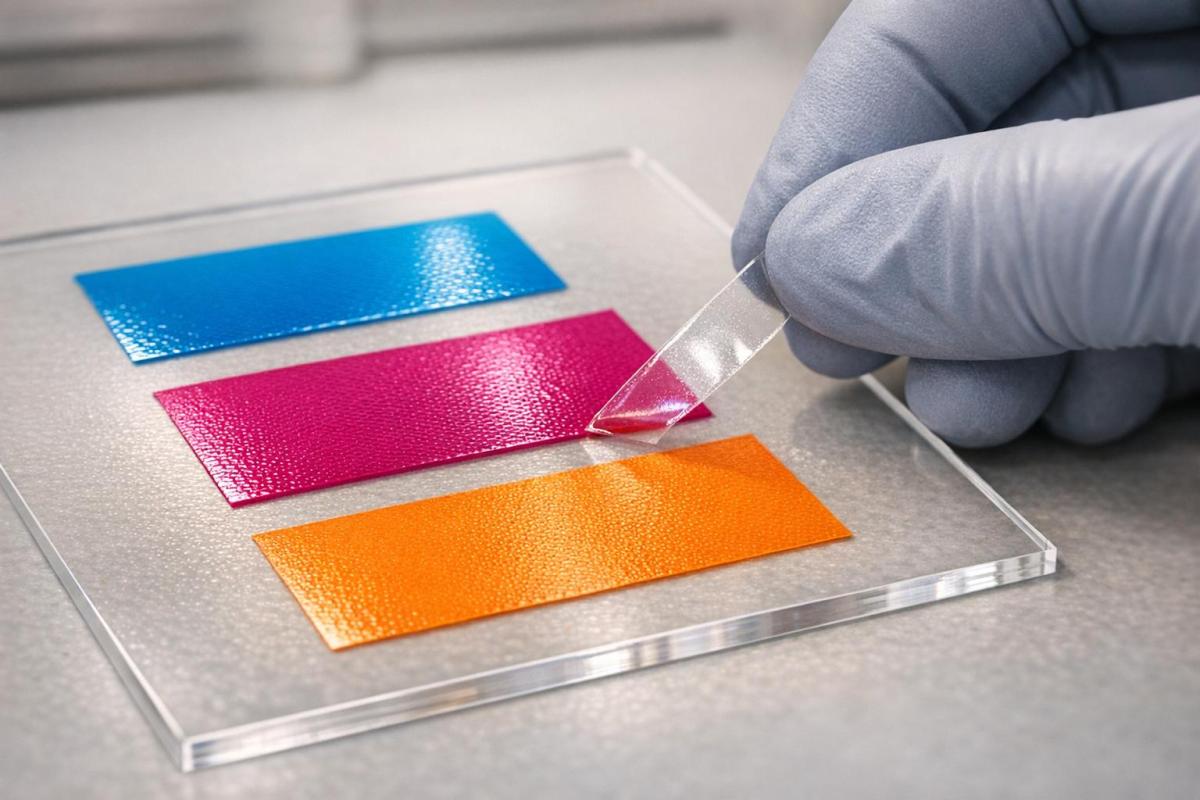
Printing on polycarbonate is tricky due to its smooth, non-porous surface and low surface energy, which makes ink adhesion challenging. The right ink can make all the difference in achieving durable and vibrant results for applications like automotive panels, membrane switches, and signage. Here’s a quick breakdown of the best ink options for polycarbonate:
- Solvent-Based Inks: Form a chemical bond with the surface, offering strong adhesion and flexibility. Great for second-surface printing and vibrant finishes.
- UV Screen Printing Inks: Cure instantly under UV light, providing a glossy, durable finish with excellent scratch resistance.
- Specialized Plastic Inks: Designed for polycarbonate, these inks deliver top-tier adhesion, durability, and color consistency, often using advanced chemical formulations.
Key Considerations:
- Proper surface preparation (e.g., cleaning with isopropyl alcohol or using flame/corona treatments) is essential for adhesion.
- Testing adhesion with tools like Dyne pens ensures print quality.
- Protective coatings and second-surface printing can extend the lifespan of prints.
Quick Tip: For long-lasting results, pair the right ink with proper curing and surface prep techniques. Whether you’re printing on automotive dashboards or industrial labels, understanding the strengths of each ink type ensures your projects hold up under wear and exposure.
UV Printing | How to Get Good Ink Adhesion
sbb-itb-ce53437
1. Solvent-Based Inks
Solvent-based inks create a chemical bond with polycarbonate’s hydrophobic surface. Additives like triethanolamine are sometimes included in the formulation to slightly etch the plastic, embedding the dye permanently into the material. This process ensures a bond that traditional inks simply can’t match, particularly on smooth polycarbonate surfaces.
Adhesion Quality
The Candoc PC Series stands out for its ability to handle demanding applications such as membrane switches and automotive components, offering strong adhesion and resistance to delamination. Modern solvent inks, like LogoJET‘s formulation (priced at $125.00 per 100 mL bottle), allow for direct printing without requiring surface pretreatments. These inks dry quickly – inkjet applications take just 1 to 5 seconds to air dry, while screen-printed versions reach a touch-dry state in 10–15 minutes and harden fully within 3–4 hours.
To protect polycarbonate from solvent damage, high-quality solvent inkjet films include a barrier coat. This coating prevents the solvents from degrading the polycarbonate’s structure, ensuring long-term durability. When thinning solvent inks for screen printing, it’s critical to limit the reducer to 10–15%; exceeding this amount can compromise performance.
These features combine to make solvent-based inks highly durable and reliable.
Durability
Solvent inks are particularly effective in second surface printing, where the image is printed in reverse on the back of clear polycarbonate. This method leverages the material’s 200x impact resistance, protecting the print from touch, weather, and vandalism. Even under constant bending or physical stress, the inks remain flexible and resist delamination.
Color Vibrancy
Beyond durability, these inks deliver outstanding visual quality. They produce sharp, transparent colors, extra-opaque finishes, and even metallic mirror effects. For example, Polycolor Extra-opaque solvent inks provide excellent coverage, achieving 20 to 25 m²/kg when applied with a 61-64 mesh screen. For projects requiring maximum opacity on treated polycarbonate, using an extra-opaque series as the final layer ensures optimal results.
2. UV Screen Printing Inks
UV screen printing inks cure almost instantly when exposed to ultraviolet light, forming a hard and durable finish on polycarbonate surfaces. The Ruco 975UV series is a prime example, offering high reactivity that ensures thorough curing and excellent adhesion, even during fast-paced production runs. Unlike traditional air-drying inks, UV inks solidify immediately, preventing smudging and maintaining detailed precision.
This rapid curing process not only enhances print sharpness but also ensures strong adhesion to the substrate.
Adhesion Quality
The Marabu Ultra Plus UVP series is known for its highly cross-linked structure, which ensures strong adhesion on various plastic substrates, including polycarbonate. For demanding applications like automotive dashboards or electronic displays, an added adhesion modifier boosts both mechanical and chemical resistance. This cross-linking forms a tough bond during UV exposure, allowing the ink to endure frequent handling and environmental stress without peeling or cracking.
Durability
Once cured, UV inks offer impressive resistance to solvents and water, significantly extending the lifespan of prints on polycarbonate. Specialized formulations, such as the VG and VK series, include UV resistance to prevent fading from outdoor exposure. Meanwhile, the FLG-HF G05 formulation provides enhanced scratch resistance, making it ideal for surfaces subject to frequent touch or cleaning. These qualities make UV inks particularly suited for industrial applications where prints face constant wear or harsh conditions.
Color Vibrancy
UV inks create a high-gloss finish that enhances color depth and visual vibrancy on polycarbonate surfaces. Marabu’s Ultracolor system offers bold shades like Brilliant Blue, Magenta, Violet, and Grass Green, designed for vivid and eye-catching results. The instant curing process locks pigments in place, preserving their brightness and preventing dullness over time. For applications requiring complete opacity, high-opaque versions of white and black deliver full coverage while maintaining a glossy finish.
These features make UV inks an excellent solution for overcoming the challenges of polycarbonate’s low surface energy and sensitivity to heat, ensuring prints that are both vibrant and long-lasting.
3. Specialized Plastic Inks
Specialized plastic inks provide tailored solutions to tackle the unique challenges of printing on polycarbonate, focusing on adhesion, durability, and vibrant color reproduction.
These inks are specifically formulated to address the non-porous surface of polycarbonate. By incorporating chemical affinity additives like polyamines (e.g., polyethyleneimine or polyvinylpyrrolidone), they create strong bonds with the substrate. Some formulations even use lower amines, such as triethanolamine, to form microscopic pores that help embed dyes effectively.
Adhesion Quality
What sets specialized plastic inks apart is their superior adhesion properties. For instance, the Candoc PC Series is engineered to resist delamination in demanding applications. These inks are available in 1-component systems (requiring only a solvent) or 2-component systems (which combine a solvent with a hardener) to meet varying durability needs.
"PC Series Polycarbonate ink has been developed to meet the high standards and specifications of the membrane switch, automotive, and appliance applications… [offering] delamination resistance, excellent flexibility, [and] outstanding adhesion properties." – Davis International
Other options, like the INXCure CardPro series, deliver top-tier bond strength to prevent delamination in card applications. Meanwhile, the 10KK series offers a two-component system that enhances durability beyond what single-component systems can achieve.
Durability
Durability is another key strength of these inks. Products like the BA Series resist abrasion, making them ideal for high-contact surfaces such as smartphone cases or industrial machine guards. Many of these inks are also "forming capable", meaning they can endure the heat and stretching involved in vacuum or pressure forming without cracking or losing adhesion.
For electronics applications, the XIP-HF Series provides halogen-free options with electrical properties, available in both matte and gloss finishes. These features make them suitable for a wide range of uses, from consumer devices to industrial components.
Color Vibrancy
Specialized plastic inks also excel in delivering consistent and vivid colors. Their high-strength pigments ensure vibrant results across production runs. For example, the Candoc PC Series offers high-clarity transparent colors, perfect for backlit applications like automotive displays and membrane switches. Advanced ink vehicles further enhance transfer quality, ensuring sharp and vivid color reproduction.
Some UV curable systems are particularly noteworthy, as they are 100% reactive, curing instantly without volatile solvents to lock in color. For applications where flexibility is critical, the XFM series strikes a balance between color clarity and delamination resistance.
These specialized inks not only meet the demands of polycarbonate printing but also elevate the overall quality and performance of the finished product.
Surface Preparation for Better Ink Adhesion
Even the best inks won’t stick well to a surface that’s not clean. While polycarbonate naturally has a high dyne level, which helps ink bond effectively, contaminants like dust, grease, fingerprints, and static electricity can quickly ruin that advantage.
The simplest and most reliable way to clean the surface is by using high-purity isopropyl alcohol (IPA) with a lint-free cloth. This combination removes oils, moisture, and fingerprints without leaving behind lint, unlike regular paper towels. When peeling off the protective polyethylene film, it’s also a good idea to use an ionized gun. This tool neutralizes static charges that might attract dust and interfere with how evenly the ink spreads.
Before moving forward, it’s important to test the surface energy. Use Dyne pens to check this – you’re looking for a minimum reading of 40. If the test ink beads up or leaves gaps, the surface needs further treatment.
"When using Dyne pens, for a good printing surface, we want to see a minimum of 40." – Sean Lanigan, President of Applied Surface Technologies
If the surface fails the Dyne test, you can try flame treatment or other advanced methods like corona discharge to improve its wettability. A butane torch works well for flame treatment, but be careful not to overheat and warp the plastic. For more advanced options, corona discharge or plasma treatment can oxidize the surface, making it more receptive to ink. In some cases, Pyrosil treatment is used, which adds an invisible silicon dioxide layer to create high surface energy and enhance bonding for UV inks.
Once printing and curing are complete, test the ink adhesion with a cross-hatch test. Score the ink in a grid pattern, apply 3M #600 tape, and peel it off at a 180° angle. If the ink stays on the surface, the adhesion is solid. Keep in mind that polycarbonate scratches easily, so avoid abrasive cleaning methods that could leave marks on your final print.
With the surface properly prepared, it’s time to explore how these steps impact the durability of ink on polycarbonate.
How Long Different Inks Last on Polycarbonate
The lifespan of prints on polycarbonate depends heavily on the type of ink used and the level of protection applied. External factors like UV exposure, moisture, and physical wear play a significant role in determining how long the ink will last. For instance, prolonged UV exposure can cause the polycarbonate to yellow and standard inks to fade. Similarly, moisture can lead to ink delamination, especially when water-based inks are used. On top of that, glossy finishes tend to show scratches and abrasions more quickly, even though polycarbonate itself is a tough material.
To combat these challenges, the right ink formulations and protective measures are essential. UV-curable inks and two-component formulations are excellent choices for resisting fading and wear. These inks are specifically designed for low surface energy plastics like polycarbonate and can endure exposure to harsh chemicals and outdoor environments. Another effective approach is second-surface printing, where the ink is applied to the reverse side of the polycarbonate, allowing the material itself to act as a shield. This method significantly increases the durability of the print.
"The substrate becomes the protection of the ink… reverse prints on polycarbonate last considerably longer than 1st surface prints." – Hopkins Printing
Protective overcoats also play a critical role in extending the lifespan of polycarbonate prints. UV-curable varnishes and hardcoats, such as Marnot Advanced Polycarbonate, provide an additional layer of protection against scratches and chemical exposure. For applications like membrane switches that experience frequent handling, textured finishes – like velvet or suede – are particularly effective. These finishes not only hide fingerprints and minor scratches but also enhance the durability of the prints. Unlike untreated polycarbonate, these coatings are designed to pass the ASTM D3359 cross-hatch tape test, which measures adhesion strength.
For outdoor signage or industrial labels, using polycarbonate films with UV-stabilized coatings is crucial to prevent hazing and yellowing. In environments with heavy chemical exposure, pairing specialized inks like the Candoc PC Series with protective varnishes ensures that prints remain intact. To guarantee long-term performance, it’s essential to perform environmental simulation testing, such as humidity chamber tests and accelerated UV exposure cycles, to confirm that the prints can withstand actual conditions.
Ink Comparison Table
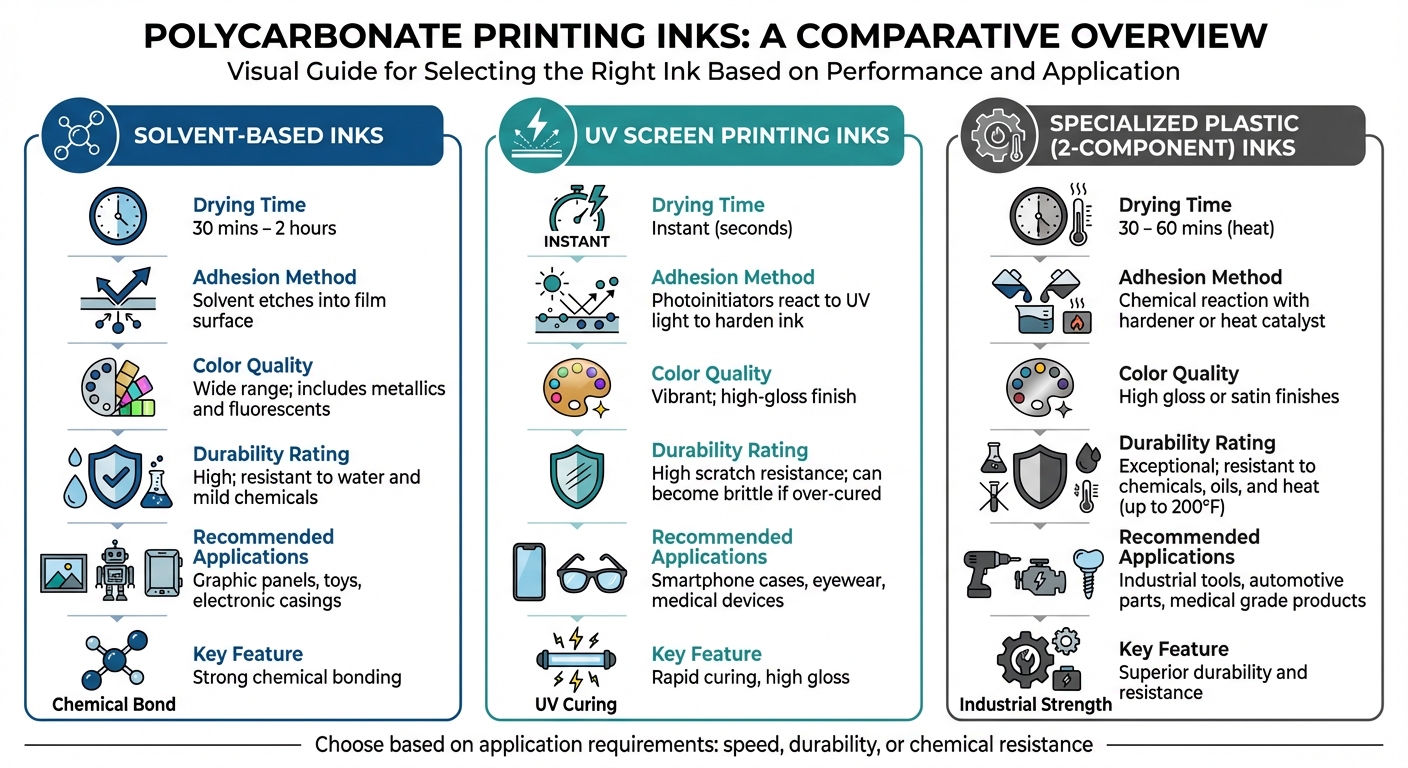
Polycarbonate Ink Types Comparison: Performance and Applications
Printing on polycarbonate requires choosing the right ink to balance drying time, adhesion, color quality, and durability. Here’s a quick-reference table summarizing the key performance aspects of various ink types:
| Ink Type | Drying Time | Adhesion Method | Color Quality | Durability Rating | Recommended Applications |
|---|---|---|---|---|---|
| Solvent-Based | 30 mins – 2 hours | Solvent "bites" or etches into the film surface | Wide range; includes metallics and fluorescents | High; resistant to water and mild chemicals | Graphic panels, toys, electronic casings |
| UV Screen Printing | Instant (seconds) | Photoinitiators react to UV light to harden ink | Vibrant; high-gloss finish | High scratch resistance; can become brittle if over-cured | Smartphone cases, eyewear, medical devices |
| Specialized Plastic (2-Component) | 30 – 60 mins (heat) | Chemical reaction with hardener or heat catalyst | High gloss or satin finishes | Exceptional; resistant to chemicals, oils, and heat (up to 200°F) | Industrial tools, automotive parts, medical grade products |
This table highlights how each ink type caters to the demands of durability, adhesion, and vibrant color reproduction on polycarbonate surfaces. Let’s take a closer look at each option:
Solvent-based inks chemically etch into the surface, providing strong adhesion and a broad color spectrum. As Jim Hingst notes:
"Solvent based inks generally bond well because the solvent in the ink chemically bites into the film".
While these inks offer excellent bonding, they require proper ventilation during drying and benefit from forced drying at 130°F to 150°F.
UV inks cure almost instantly under UV light, making them perfect for high-speed production. They deliver vibrant, scratch-resistant finishes but can become brittle if over-cured.
Two-component specialized inks rely on chemical cross-linking for top-notch durability. They resist chemicals, oils, and temperatures up to 200°F, making them ideal for industrial and medical-grade applications. Full curing is essential before any post-printing processes.
Conclusion
Choosing the right ink for polycarbonate printing means aligning the ink’s chemistry with your specific application needs. Solvent-based inks are ideal for creating strong chemical bonds, UV-curable inks offer instant curing and vibrant finishes, and two-component inks provide industrial-grade durability.
When working with polycarbonate – a non-porous, low-energy material – factors like adhesion, thermal sensitivity, and mechanical workability are crucial. Proper surface preparation, such as using corona or plasma treatment or cleaning with high-purity isopropyl alcohol, ensures better adhesion and flexibility, especially during forming processes. These steps directly influence the print’s durability and lifespan.
If there’s any variability in your polycarbonate batches, always conduct adhesion tests to ensure consistency. For applications in harsh environments, protective printing techniques can further enhance durability.
Achieving high-quality results requires precision in formulation and expert handling during the printing process. For complex industrial projects or large-scale production, combining technical expertise with proper ink formulations and processing controls is key. As John White from AndresJet explains:
"Printing on polycarbonate requires a delicate balance of surface treatment, ink chemistry, and curing control."
Whether you’re creating membrane switches, automotive parts, or outdoor signage, understanding the available ink options helps you produce prints that stand out visually and hold up over time. For more tailored advice on improving your polycarbonate printing processes, reach out to the experts at Miro Printing & Graphics Inc.
FAQs
Which ink type is best for outdoor polycarbonate?
UV inks are a great choice for outdoor polycarbonate applications because they provide strong durability and resist weathering, chemicals, and scratches. These inks can maintain their performance for 5–7 years outdoors without requiring additional protective measures, making them a dependable option for extended use.
Do I need flame or corona treatment before printing?
When printing on polycarbonate, surface treatments like corona, plasma, or flame treatment are highly recommended. These methods work by increasing the material’s surface energy and introducing polar functional groups, which significantly improve ink adhesion. Without treatment, polycarbonate’s nonpolar nature causes it to repel ink, leading to poor print quality and durability.
How can I prevent scratching and ink peeling?
To reduce the chances of scratching or ink peeling on polycarbonate, it’s important to use inks that are made specifically for this material. Look for options with high adhesion and flexibility to ensure better performance. Inks like UV-curable or eco-solvent types can also offer improved durability. Before printing, make sure the surface is thoroughly cleaned and free from dust or oils – this helps the ink stick better and last longer. Following these steps can protect the print quality and help it withstand environmental wear and tear.
Related Blog Posts
- Troubleshooting Surface Coating Defects in Printing
- Substrate Selection for Digital Printing
- UV vs. Eco-Solvent Inks: Which Offers Better Resistance?
- Surface Treatments for Better Ink Adhesion
https://app.seobotai.com/banner/banner.js?id=69bde28c1b352ff267cb3290
 BergenCountyPrintersBlogs