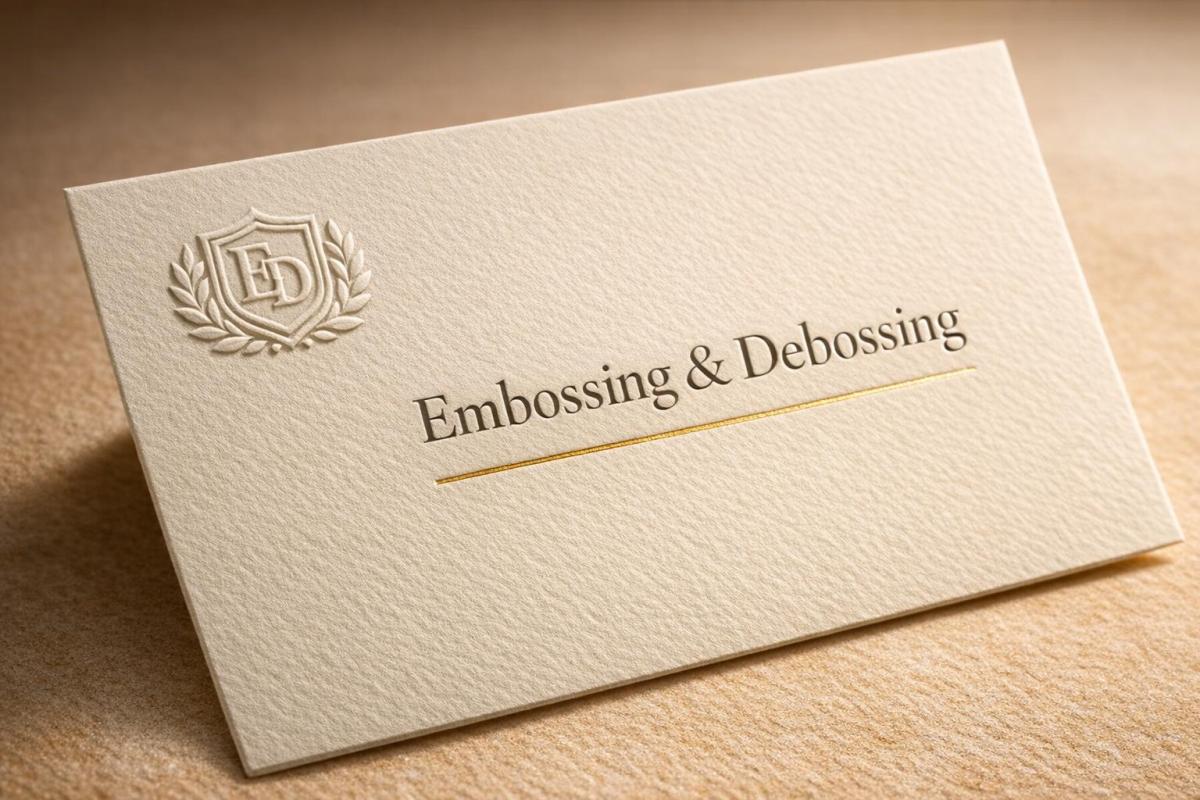
Embossing and debossing are mechanical printing techniques that add a tactile, three-dimensional element to designs. Embossing raises parts of the material, creating a textured, standout effect, while debossing presses designs inward for a recessed, engraved look. Both methods use custom metal dies, heat, and pressure to create their effects.
Key Takeaways:
- Embossing: Raised design; bold and textured; works well for logos, seals, and luxury packaging.
- Debossing: Recessed design; subtle and refined; ideal for stationery, journals, and premium branding.
- Best materials: Heavyweight, uncoated papers (300 gsm or thicker) with long fibers for durability and sharp impressions.
- Can be combined with foil stamping or spot UV for added visual appeal and durability.
These techniques are widely used in business cards, invitations, luxury packaging, and more, offering a high-end feel that engages both sight and touch. The choice between embossing and debossing depends on the desired visual and tactile effect, as well as material considerations.
The Embossing Process
How Embossing Works
Embossing relies on a pair of custom metal plates known as dies. The male die has a raised (convex) version of the design, while the female die (or counter-die) features a matching recessed (concave) impression. To create the embossed effect, your paper or cardstock is sandwiched between these dies, and a press applies heat and pressure. This reshapes the fibers of the material into a raised, three-dimensional design.
The heat softens the paper fibers, ensuring the impression is both precise and durable. A typical emboss depth ranges from 15 to 25 microns – about 1/64th of an inch. Proper alignment of the dies is crucial; even slight misalignment can result in weak or uneven impressions.
To ensure sharp, clean results, always use a vector file (like those created in Adobe Illustrator) for die production. Raster images, such as JPEGs, lack the clarity needed for the fine edges of metal dies. For best results, use fonts no smaller than 11 points and maintain a minimum line thickness of 1.0 point to prevent breakage. Also, keep embossed elements at least 3 mm to 5 mm away from trim edges and 4 mm from folds to avoid wrinkling or distortion.
This foundational process supports the various embossing techniques explained below.
Types of Embossing
| Embossing Type | Description | Best Application |
|---|---|---|
| Blind | Relies purely on texture and shadow, with no ink or foil | Minimalist designs, stationery |
| Registered | Aligns the raised design perfectly with printed ink or foil | Logos, brand names, packaging |
| Combination | Embossing and foil stamping occur simultaneously | High-end labels, certificates |
| Multi-Level | Creates a sculptural effect with varying depths | Crests, intricate illustrations |
| Glazing | Produces a shiny, polished raised surface using high heat and pressure | Dark, heavy-weight paper stocks |
Where Embossing Is Used
Embossing techniques are a versatile tool in modern print design. They’re commonly used to enhance logos, crests, monograms, and detailed graphics like botanical patterns or fine line art. For example, business cards with embossed logos convey a sense of professionalism and care, while wedding invitations and luxury stationery gain a tactile, heirloom-like quality.
Packaging and book covers also benefit from embossing, especially when using textured patterns like linen, leather grain, or geometric designs. These textures not only elevate the design but also help reinforce premium branding and justify higher price points. Embossing works best on uncoated, long-fiber paper stocks, such as cotton paper, which hold deep impressions far better than coated papers that may crack under pressure.
One thing to note: standard embossing leaves a recessed (debossed) mirror image on the back of the sheet. If a flat reverse side is needed, you can opt for duplexing (mounting two sheets together) or select an alternative finishing technique.
sbb-itb-ce53437
How To Deboss and Emboss Using the KSF 3 Press | Using Your Hot Stamping Press
The Debossing Process
Debossing, like embossing, brings a tactile element to designs, but instead of raising the material, it presses the design inward, creating a recessed effect.
How Debossing Works
Debossing involves pressing a design into a material to create a sunken impression. Steven Waxman, a printing consultant at Printing Industry Exchange, explains:
"The paper fibers can be bent easily by the heat and pressure of the process".
The process uses a male die to press the design into the material, supported by a female counter-die. Heat and pressure push the fibers into a permanent recessed shape. Unlike embossing, debossing usually doesn’t leave a visible impression on the reverse side – especially with thicker paper stock – making it ideal for double-sided designs.
For best results, use paper that’s at least 300gsm (14pt) to prevent tearing. Soft, thick papers like linen or felt are particularly effective because their fibers are more pliable under heat and pressure. Designs should be submitted as vector files to ensure precise die cutting. Also, keep debossed elements away from edges to avoid wrinkling or tearing.
A practical tip? Increase the letter spacing in your design. During debossing, the paper fibers stretch, which can cause closely spaced letters to merge together.
This recessed method not only ensures design clarity but also protects the impression from surface wear.
Blind vs. Foil Debossing
Blind debossing relies purely on the interplay of light and shadow over the recessed surface, creating a subtle and textured effect. This minimalist approach works well for professional stationery, leather-bound journals, and other designs that aim for a refined, understated look.
Foil debossing, on the other hand, combines the recessed impression with metallic or colored foil. The foil is stamped into the indented area, creating a reflective, high-contrast finish while protecting the foil from scratches. This technique is perfect for high-end wedding invitations, luxury product packaging, and certificates that need a bold, eye-catching touch.
Both techniques offer excellent durability. Because the design is recessed, it’s naturally shielded from wear and tear. Blind debossing is usually more affordable since it requires only one process and doesn’t involve the precise alignment needed for foil or ink.
| Feature | Blind Debossing | Foil Debossing |
|---|---|---|
| Additional Elements | None (no ink or foil) | Metallic or colored foil |
| Visual Style | Subtle, textured, understated | Bold, reflective, high-contrast |
| Primary Appeal | Tactile and elegant | Luxurious and striking |
| Best Application | Business stationery, journals | Wedding invitations, premium packaging |
| Cost | Lower | Higher due to foil and complexity |
Where Debossing Is Used
Debossing is often used to add sophistication and depth to professional materials like letterhead, presentation folders, and promotional items. On business cards, a debossed logo can create a premium, engraved effect that leaves a lasting impression.
Luxury packaging frequently incorporates debossing to elevate brand perception. Think high-end cosmetics boxes, wine labels, or gourmet food packaging. The recessed design helps contain ink or foil, reducing the chance of smudging or bleeding. This precision makes debossing ideal for intricate logos, monograms, or brand names.
For best results, consider cotton-based papers with long fibers, which produce deeper, sharper impressions. Avoid glossy or coated stocks, as they’re prone to cracking under pressure. Blind debossing looks particularly striking on uncoated, matte papers, which enhance the interplay of light and shadow. The main cost comes from creating custom metal dies – usually made from magnesium, copper, or brass. While this can be expensive for small runs, it becomes more economical for larger production volumes, typically over 1,000 units.
Embossing vs. Debossing: Key Differences
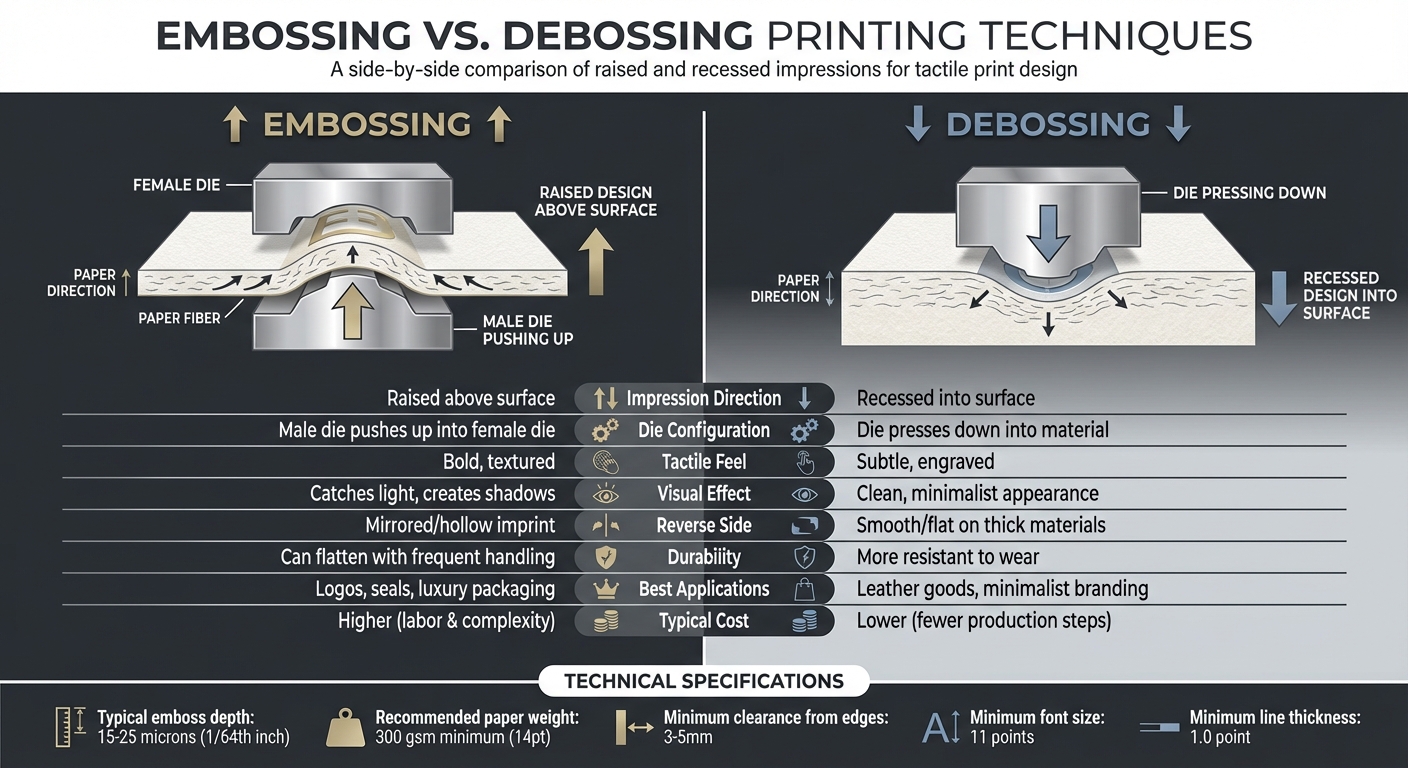
Embossing vs Debossing: Visual Comparison Guide
Understanding the differences between embossing and debossing helps clarify when to use each technique in design projects.
Both methods add a three-dimensional quality, but they achieve this in opposite ways. Embossing raises the design, giving it a bold, textured feel, while debossing presses the design into the material, creating a more subtle, engraved effect.
One practical difference lies in how these techniques affect the reverse side of the material. Embossing leaves a mirrored imprint on the back, which might not be ideal for certain projects. On the other hand, debossing usually leaves the back smooth, especially when using thick materials like 30pt cardstock for business cards. If a clean back surface is essential, duplexing – gluing two sheets together after embossing – can solve the issue.
Durability is another factor to consider. Since embossed designs are raised, they can wear down or flatten with frequent handling. Debossed designs, being recessed, are generally more resistant to wear and maintain their look over time.
Comparison Table: Embossing vs. Debossing
| Feature | Embossing | Debossing |
|---|---|---|
| Impression Direction | Raised above the surface | Recessed into the surface |
| Die Configuration | Male die pushes up into the female die | Die presses down into the material |
| Tactile Feel | Bold, textured | Subtle, engraved |
| Visual Effect | Catches light, creates shadows | Clean, minimalist appearance |
| Reverse Side | Mirrored or hollow imprint | Smooth or flat on thick materials |
| Durability | Can flatten with frequent handling | More resistant to wear |
| Best Applications | Logos, seals, luxury packaging | Leather goods, minimalist branding |
| Typical Cost | Higher due to labor and complexity | Lower with fewer production steps |
These distinctions play a crucial role in choosing the right method for commercial printing projects. Each technique has its strengths, making them suitable for different applications depending on the desired effect and material.
Choosing Materials for Embossing and Debossing
When it comes to embossing and debossing, selecting the right paper stock is crucial. The paper’s weight, texture, and coating all play a role in achieving sharp, durable impressions.
Heavyweight stock is a must for quality results. Paper with a weight of at least 300 gsm (around 14 pt) can endure the pressure from metal dies without tearing or distorting. Long-fiber papers, like those made from cotton or linen, are excellent for creating deep impressions without cracking. In contrast, coated or glossy papers are more fragile and susceptible to surface damage. As the Inprint Group explains:
"Embossing and debossing work best on uncoated and textured stocks… They are less effective on very thin papers or coated stocks that can crack under pressure".
Let’s dive deeper into the best paper choices for each technique.
Best Papers for Embossing
Embossing calls for paper thick enough to support raised designs without collapsing. While 300 gsm or heavier is suitable for most projects, some specialized uses may work with stocks under 200 gsm. The key is to opt for uncoated, long-fiber cardstock that can handle the die’s pressure. Smooth, uncoated papers are particularly good at showcasing fine details, whereas heavily textured stocks might blur intricate designs. To avoid issues during production, ensure embossed elements are placed at least 3 mm (approximately 0.12 inches) to 5 mm (approximately 0.20 inches) away from trim edges and folds.
Now, let’s look at the specific needs for debossing.
Best Papers for Debossing
Debossing works best with soft, pliable papers that can take a deep impression without damage. Cotton and linen papers are favorites for this technique because their fibers compress easily, resulting in clean and lasting indentations. Thicker stocks, typically 300 gsm or more, are ideal for achieving deep, letterpress-style results. Unlike embossing, debossing often leaves the back of thick materials smooth, making it a great choice for projects where both sides of the paper need to look polished. Be cautious with recycled paper, as its compressed fibers can lead to inconsistent detailing.
Combining Embossing and Debossing with Other Techniques
Expanding on embossing and debossing, adding extra finishes can take print designs to the next level. When paired with techniques like foil stamping, spot UV coating, or die-cutting, these methods create multi-dimensional effects that exude quality. In fact, 72% of consumers say high-quality packaging shapes their perception of a brand. Strategically layering these finishes turns ordinary print materials into tactile experiences that scream premium craftsmanship.
Adding Foil Stamping or Spot UV Coating
Registered embossing ensures that raised or recessed areas align perfectly with finishes like foil or spot UV, adding depth and a touch of elegance to specific design elements. When foil stamping is introduced, the metallic sheen – whether gold, silver, copper, or holographic – grabs attention by reflecting light. As the Gentle Packing Team explains:
"The foil brings out crisp detail in the raised or recessed areas, drawing the eye and making the design even more eye-catching than standard ink or plain embossing".
For debossing, foil applied within the recessed areas not only enhances the polished look but also protects it from wear and tear. Similarly, spot UV coating creates striking contrasts, especially on matte or dark surfaces. By adding a high-gloss finish over embossed areas, it amplifies both the visual impact and the smooth texture of the design. Combining these techniques opens up opportunities for even more dynamic and memorable effects.
Layering Multiple Finishing Techniques
Stacking techniques like die-cutting with blind embossing or foil stamping produces sculptural, three-dimensional designs that stand out. Die-cutting defines the shape, while embossing or debossing introduces texture and depth. However, care must be taken with design details – serif fonts smaller than 10 pt or 11 pt and lines thinner than 1.0 pt can lose clarity during the pressing and coating processes.
While these advanced combinations may increase initial costs due to custom dies and additional press runs, they become highly economical for larger orders of 1,000 units or more. For projects that aim to deliver a premium, high-end look, companies like Miro Printing & Graphics Inc. use these techniques to create visually and physically captivating print materials.
Applications in Commercial Printing
Embossing and debossing add a tactile element that can redefine how a brand is perceived. Whether it’s in corporate settings or luxury retail, these techniques create a physical connection with customers that flat printing simply can’t match. Here’s a striking fact: 60% of consumers base purchasing decisions on touch. That’s why businesses are turning to dimensional finishes for materials that leave a lasting impression. Let’s explore how these techniques shine in commercial printing projects.
Business and Marketing Materials
When it comes to business and marketing materials, embossing and debossing bring a touch of sophistication. For example, business cards with embossed designs offer a bold, standout effect, while debossing gives them a sleek, modern edge. But it doesn’t stop with cards – letterheads, envelopes, and presentation folders can also benefit. Using blind embossing, which relies on light and shadow rather than color or foil, these materials gain a refined, professional appearance.
Marketing brochures often use raised or recessed titles to invite interaction. Similarly, certificates and awards incorporate embossed seals or signatures to convey authenticity and a sense of prestige. These tactile enhancements elevate everyday marketing collateral while also making a strong impact on premium items like high-end packaging and personal invitations.
Luxury Packaging and Invitations
For luxury products, embossing and debossing add a sense of exclusivity. Think about product boxes, wine labels, or cartons – these finishes make them feel premium. Debossing, in particular, stands out for its durability, as the recessed design is naturally shielded by the surrounding material, making it 30% more resistant to wear from frequent handling. As BrillPack puts it:
"A raised logo or sunken design signals quality, making customers see your brand as upscale. It’s like a warm welcome that says, ‘We’re special.’"
Event and wedding invitations also benefit from these techniques. Embossing, often paired with foil stamping, adds a romantic and elegant touch that’s hard to ignore. And for personal items like leather journals, notebooks, or wallets, debossing has become a go-to choice. The engraved design not only looks polished but also conveys a sense of permanence and high quality. Companies like Miro Printing & Graphics Inc. use these methods to create standout materials that leave a lasting impression in competitive markets.
Conclusion
Embossing and debossing techniques bring a new dimension to printed materials, transforming them into tactile experiences that convey a sense of quality and craftsmanship. The choice between the two depends on your project goals: embossing creates raised designs that catch the light, while debossing leaves recessed impressions that are durable and understated.
The materials you choose play a big role in the final outcome. Papers with uncoated, soft fibers – like cotton-based options – are ideal for holding deep impressions, while glossy stocks may crack under pressure.
For projects that require these specialty finishes, partnering with an experienced print shop makes all the difference. Miro Printing & Graphics Inc., with over 30 years of expertise, excels in delivering complex custom work. Their in-house bindery and design services ensure embossing and debossing are seamlessly integrated into the final product. As one client shared:
"Mike and his team at Miro have delivered stars, comet, and galaxy size projects… No matter how little or large, no matter what the deadline, I sleep at night knowing Miro is on it."
- LycoRed T.
Their attention to detail and thorough proofing process help avoid potential issues, ensuring the final product meets the highest standards. Whether it’s luxury packaging, wedding invitations, or business cards that stand out, expert guidance can elevate your project to leave a lasting impression.
FAQs
How do I choose embossing vs. debossing for my project?
Choosing between embossing and debossing comes down to the style and texture you’re aiming for. Embossing gives a raised, three-dimensional effect, making it perfect for elements like logos or premium details that you want to pop. On the other hand, debossing presses the design into the surface, creating a more understated, recessed look. To decide, think about the material you’re working with, the kind of tactile experience you want to create, and how much you want the design to stand out visually.
What paper stock gives the cleanest, deepest impressions?
Thicker paper or cardstock is ideal for embossing, as it allows for clean and well-defined impressions. Using heavier materials along with detailed dies ensures precise and polished results.
Can embossing or debossing be combined with foil or spot UV?
Yes, embossing and debossing can work alongside foil stamping or spot UV to create eye-catching designs with both visual and tactile appeal. These methods elevate the look and feel of printed materials, adding layers of depth and a polished finish.
Related Blog Posts
- Ultimate Guide to Post-Press Finishing
- How Foil Stamping Works: Step-by-Step Guide
- Ultimate Guide to Textured Printing Effects
- Foil Stamping Techniques for Cardstock Printing
https://app.seobotai.com/banner/banner.js?id=69bf33211b352ff267cb5aeb
 BergenCountyPrintersBlogs