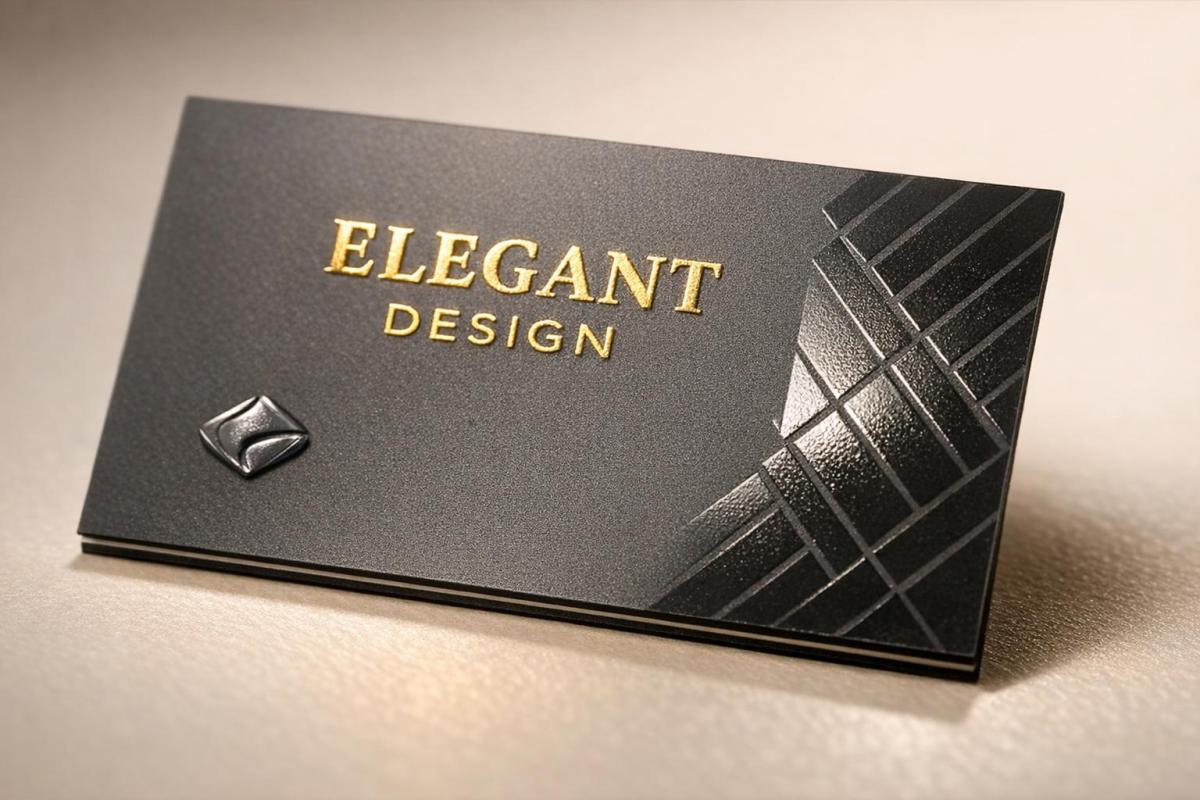
Post-press finishing is the secret to transforming printed materials into polished, high-quality products. It goes beyond printing to enhance durability, appearance, texture, and protection. Here’s a quick breakdown of six key techniques and their benefits:
- Spot UV: Adds glossy highlights to specific areas for contrast and tactile appeal – great for business cards and brochures.
- Matte Varnish: Creates a smooth, glare-free finish, ideal for text-heavy materials like manuals.
- Lamination: Protects prints with a durable plastic film, perfect for menus and book covers.
- UV Coatings: Delivers vibrant colors and scratch resistance but may crack on folds.
- Digital Embossing: Adds raised textures for a 3D effect, enhancing depth and detail.
- Foil Stamping: Applies metallic finishes for a shiny, luxurious look, often used for logos and premium branding.
Each method offers unique strengths, from enhancing visual impact to improving durability. Choosing the right finish depends on your project’s goals, budget, and usage requirements.
1. Spot UV
Spot UV is a printing technique that applies a glossy coating to specific elements like logos, text, or images. This selective application creates a visually striking contrast that grabs attention.
Eye-Catching Design
Spot UV is all about creating contrast. When applied to a matte background, the glossy finish highlights key design features, making them pop. As McKenzie Swisshelm from American Business Machines puts it:
"Spot UV adds a touch of shine that highlights key elements and gives print products a premium, professional appearance".
The process relies on digital precision, requiring only a 100% black layer to mark coating areas. This level of control makes Spot UV a go-to option for items like business cards, brochures, and luxury packaging.
Multi-Sensory Appeal
Spot UV doesn’t just look good – it feels good too. The raised, glossy coating adds a tactile dimension that enhances the overall experience. When applied to elements like brand names or intricate patterns, it creates a multi-sensory effect that elevates the perception of quality.
Budget-Friendly Sophistication
One of Spot UV’s standout features is its cost-effectiveness. It delivers a premium look without the hefty price tag of techniques like foil stamping or embossing. Since the process is digital, it eliminates the need for custom dies or screens, making it particularly affordable for short print runs or customized projects. This means you can achieve a high-end finish without breaking the bank.
Miro Printing & Graphics Inc. leverages advanced digital technology to produce Spot UV finishes that are as engaging to touch as they are to see.
sbb-itb-ce53437
2. Matte Varnish
Matte varnish creates a smooth, non-reflective finish that gives prints a soft, understated look. Unlike glossy finishes that reflect light, matte varnish absorbs it, resulting in a modern and subtle appearance. It’s a technique that combines visual appeal with practical benefits.
Aesthetic Appeal
One standout advantage of matte varnish is its ability to reduce glare, making text easier to read – especially in items like manuals and brochures. It also enhances the perceived quality of the paper, giving printed materials a more polished and professional presentation.
Texture and Feel
Matte varnish adds a smooth, velvety texture that feels great to the touch. However, it does come with a tradeoff: it can soften image details compared to gloss finishes. When used over images, matte varnish tends to reduce sharpness and vibrancy, offering a more muted visual effect.
Durability
This finish provides basic protection against ink smudging and is less prone to showing fingerprints, making it a good choice for items that are handled frequently. That said, it has its limitations. As Gordon Pritchard notes:
"It is more resistant to fingerprinting than a gloss varnish however it will tend to scuff or gloss up with wear".
To minimize scuffing or burnishing during shipping, placing blank interleaving paper between printed items is recommended.
Affordability
Matte varnish is an economical finishing option. Since it uses a standard on-press litho plate, there’s no need for costly offline equipment, keeping production costs low. However, it offers less protection than options like aqueous or UV coatings and may yellow over time with prolonged exposure. This is in contrast to finishes like Spot UV, which focus on enhancing gloss and tactile contrast.
3. Lamination
Lamination involves covering printed materials with a protective plastic film, as explained by John Monson. Unlike liquid coatings that harden on the surface, lamination fuses a film directly onto the sheet, giving it extra thickness and weight.
Durability
Lamination is ideal when prints need to endure tough conditions. It’s perfect for items like menus that face spills, book covers that get tossed around, or playing cards that are constantly shuffled. The film acts as a shield, protecting against damage and wear. Unlike UV coatings, which can crack along fold lines, lamination – when properly scored – holds up better under bending. This durability ensures prints maintain their quality over time. As John Monson puts it:
"Pick lamination when the piece will undergo frequent handling and friction".
At Miro Printing & Graphics Inc., lamination is a go-to solution for making high-use materials both sturdy and visually appealing.
Aesthetic Enhancement
Lamination doesn’t just protect – it also improves how prints look and feel. Gloss lamination makes colors pop, while matte or satin finishes cut down on glare and hide fingerprints. For premium products, soft-touch lamination adds a velvety texture that exudes sophistication, making it a popular choice for luxury packaging and upscale business cards.
Next, we’ll explore UV coatings, another way to elevate print quality.
Cost Implications
Lamination does come with a higher price tag, but its durability can make it worth the cost. The process is more labor-intensive and uses physical film, which increases expenses compared to liquid coatings. However, for items that face heavy use, the investment pays off by reducing the need for replacements. For short-term materials like event flyers, though, John Monson advises:
"If it’s a handout that will live for one event, lamination is usually overkill."
It’s also worth noting that the added thickness might affect shipping costs. Always test fold lines on a sample before placing large orders to ensure the final product meets expectations.
4. UV Coatings
After lamination’s tactile durability, UV coatings bring their own appeal with a combination of striking visuals and affordability.
UV coating is a liquid compound that solidifies in milliseconds when exposed to ultraviolet light. Unlike lamination, which uses a bonded film, UV coating forms a thin, durable polymer layer. As John Monson puts it:
"UV coating is a hardened coating. Lamination is a bonded film. Different tools, different results."
Durability
UV coating provides a scratch-resistant finish that resists yellowing, making it a solid choice for prints that will see frequent handling. However, its rigidity can lead to cracking along fold lines. If your project includes aggressive folding, like brochures or booklets, aqueous coating is a better alternative. Similarly, for items that need to endure frequent wiping or heavy wear, lamination offers better long-term protection.
Aesthetic Appeal
Gloss UV coating adds a vibrant, photo-like finish that makes colors pop, making it the go-to choice for about 99% of UV coating applications. For designs that require a more understated look, matte and satin finishes are also available, offering non-reflective options.
Selective gloss is another standout feature, enhancing specific design elements to create contrast and draw attention. Thanks to its clarity and resistance to yellowing, UV coating preserves the quality and vibrancy of prints over time.
Cost Considerations
UV coating is an affordable option, especially for high-volume projects, as it cures almost instantly. For instance, applying gloss UV coating to 1,000 business cards costs less than $10.
While selective gloss applications are slightly more expensive than full-sheet (flood) UV coating, they provide a strong visual impact at a fraction of the cost of lamination. However, UV coating is not suitable for areas meant for writing, as its slick surface does not hold ink.
Next, we’ll dive into finishing techniques that add unique textures to your designs.
5. Digital Embossing
Digital embossing takes print design to the next level by adding raised textures that bring depth and dimension to your projects. Using high-resolution inkjet technology, this method applies clear polymer layers in varying thicknesses, creating intricate details and a striking 3D effect.
Tactile Experience
One of the standout features of digital embossing is the tactile experience it provides. These raised details not only look stunning but also feel distinctive, enhancing the perception of quality and authenticity. As BcardsCreation highlights:
"Subtle tactile effects engage emotional memory centers without overwhelming with decorative excess, reinforcing premium brand perception through understated sophistication."
For luxury or high-end designs, less is often more. Focusing on just one or two elements, like a logo or brand name, can make a stronger statement. Pairing this technique with thicker materials, such as cotton blends or heavyweight paper, ensures the embossed details remain sharp and impactful.
Aesthetic Enhancement
Unlike traditional embossing, digital methods allow for variable data printing. This means you can personalize designs – think custom packaging or limited-edition runs – without the added expense of tooling. Plus, combining embossing with colorized inks creates a dynamic, multi-sensory design that truly stands out.
Cost Implications
Digital embossing offers a cost-effective alternative to traditional methods by eliminating the need for custom metal dies. This makes it ideal for small- to medium-sized projects, with minimum orders as low as 48 units. Yukta Arora from PackagingConnections explains:
"Digital embossing revolutionizes this by eliminating physical tooling, enabling on-demand production and rapid prototyping."
The streamlined setup not only reduces costs but also speeds up production. To ensure the best results, designers should carefully space embossed lines to avoid polymer pooling or blending.
At Miro Printing & Graphics Inc., cutting-edge digital embossing techniques bring both visual and tactile appeal to every project, creating designs that leave a lasting impression.
Up next, we’ll explore how foil stamping adds even more texture and visual interest to printed materials.
6. Foil Stamping
Foil stamping is a printing technique that uses metallic or pigmented finishes to create a shiny, reflective surface. By heating a die to temperatures between 90 and 180°C, a thin layer of foil is transferred onto the material. This process makes logos, text, or design elements visually striking, standing out far more than standard ink.
Visual Appeal
The reflective nature of foil stamping gives printed materials a polished, high-end look, making them stand out in retail settings. Modern systems like the MGI iFOIL allow for precise application of metallic finishes, which can even be combined with subtle 3D effects to elevate the design. The metallic sheen naturally draws the eye, making it a popular choice for brands aiming to grab attention.
Texture and Dimension
Beyond its visual impact, foil stamping adds a tactile quality to printed pieces. Techniques such as foil embossing create raised, three-dimensional designs that not only feel unique but also evoke a sense of luxury and craftsmanship. This tactile element often reinforces the perception of quality and sophistication.
Cost Considerations
Foil stamping involves upfront costs for die fabrication, making it less budget-friendly for small print runs. However, it becomes more cost-efficient for larger quantities. Flat foil stamping is generally the more economical choice, while sculpted 3D foil stamping is priced higher due to its intricate, multi-step process. To ensure clean foil application, smooth-surface papers like coated ivory board (≥250 gsm) are recommended, and design elements should maintain a minimum line thickness of 0.15–0.2 mm.
At Miro Printing & Graphics Inc., advanced foil stamping techniques combine visual brilliance with tactile sophistication, helping brands create materials that stand out and exude premium quality.
This exploration of foil stamping highlights its ability to enhance both the look and feel of printed designs while considering practical factors like cost and material choice.
Advantages and Disadvantages
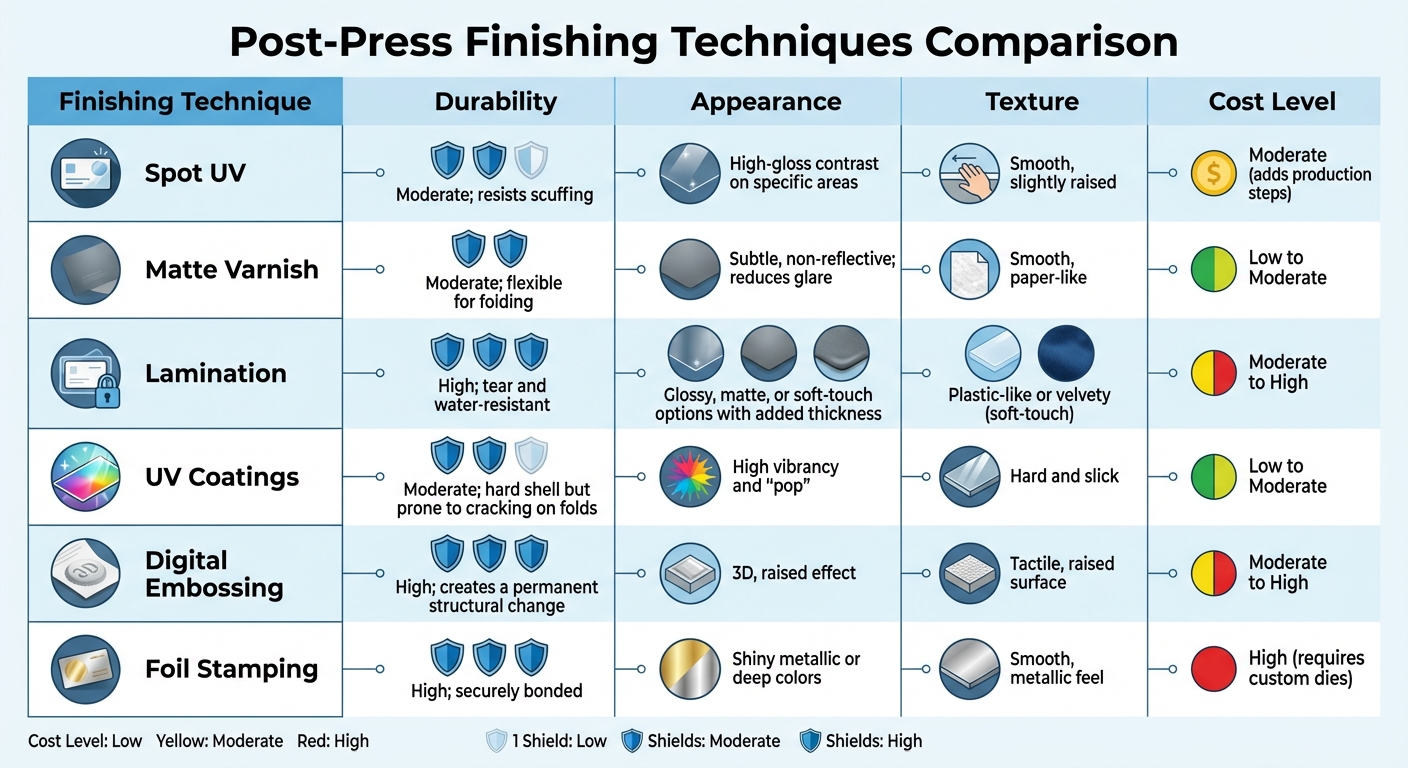
Post-Press Finishing Techniques Comparison: Durability, Appearance, Texture & Cost
When choosing a finishing method, it’s essential to weigh both performance and appearance. The right finish can elevate print quality by striking a balance between durability, visual appeal, and cost.
Here’s a comparison of six popular finishing techniques based on key criteria:
| Finishing Technique | Durability | Appearance | Texture | Cost Level |
|---|---|---|---|---|
| Spot UV | Moderate; resists scuffing | High-gloss contrast on specific areas | Smooth, slightly raised | Moderate (adds production steps) |
| Matte Varnish | Moderate; flexible for folding | Subtle, non-reflective; reduces glare | Smooth, paper-like | Low to Moderate |
| Lamination | High; tear and water-resistant | Glossy, matte, or soft-touch options with added thickness | Plastic-like or velvety (soft-touch) | Moderate to High |
| UV Coatings | Moderate; hard shell but prone to cracking on folds | High vibrancy and "pop" | Hard and slick | Low to Moderate |
| Digital Embossing | High; creates a permanent structural change | 3D, raised effect | Tactile, raised surface | Moderate to High |
| Foil Stamping | High; securely bonded | Shiny metallic or deep colors | Smooth, metallic feel | High (requires custom dies) |
This breakdown highlights the unique strengths and drawbacks of each technique, helping you make informed decisions.
For items like menus or membership cards that endure frequent handling and exposure to moisture, lamination is a standout choice due to its high durability. As John Monson puts it:
"UV coating is a hardened coating. Lamination is a bonded film. Different tools, different results".
However, UV coatings, while vibrant, can crack along folds, making them less ideal for foldable materials. Flexible finishes are better suited for such projects.
Beyond durability, consider how finishes influence branding and readability. For luxury branding, pairing matte lamination with Spot UV or Foil Stamping can create a striking, tactile contrast. As Color Vision Printing explains:
"Spot UV works best on darker substrates. Also, a matte substrate with low sheen is ideal because it provides the most contrast with the glossy UV".
Matte and satin finishes are excellent for reducing glare and improving text readability in manuals and brochures. On the other hand, gloss finishes amplify color vibrancy and make images stand out, though they may compromise readability under bright light.
Conclusion
Post-press finishing takes a standard print and turns it into something that stands out and performs. Each technique brings its own flair: Spot UV and Foil Stamping add striking visual contrast and a premium tactile experience; Matte Varnish minimizes glare for easier readability in text-heavy designs; Lamination adds durability, especially for items that endure heavy use or exposure to moisture; UV Coatings enhance color richness; and Digital Embossing introduces textured elements that draw attention and engage the senses.
When applied with precision, these methods elevate print materials from mere ideas to polished, high-quality products. Automated, integrated systems ensure consistent results while reducing the risk of errors that could impact the final outcome.
For businesses looking to incorporate these techniques, Miro Printing & Graphics Inc. offers a wide range of in-house post-press services in Hackensack, NJ. Their capabilities include cutting, folding, binding, die cutting, and more – perfect for projects that require both durability and visual appeal. They also provide digital, offset, and large-format printing services to meet diverse needs.
Knowing how each finishing option enhances print quality helps you make choices that align with your brand, budget, and goals.
FAQs
Which finish is best for items that will be folded?
For items that need to be folded, the right finish makes all the difference. It ensures smooth, accurate creases while avoiding cracking or any damage during the folding process. Techniques like scoring or other finishes designed specifically for folding help preserve both the quality and durability of the final product.
Can I write on a UV-coated or laminated print?
Yes, but it depends on the finish. UV coating provides a smooth, glossy surface that might only work with certain types of pens. Lamination, on the other hand, tends to be more adaptable and easier to write on, though how well it holds writing can vary depending on the specific type of lamination applied.
How do I choose a finish based on budget and print quantity?
Choosing the right finish comes down to your budget and the size of your print run. If you’re working with a smaller budget or have a limited print run, aqueous coating is a solid choice. It’s cost-effective and provides basic protection for your prints. On the other hand, if you’re producing larger quantities or want a more polished, high-end appearance, varnishes – whether gloss, satin, or matte – offer added durability and a more striking visual effect. Weigh your options carefully to ensure the finish aligns with your project’s goals.
Related Blog Posts
- Post-Press Quality Control Checklist
- Ultimate Guide to Post-Press Finishing
- Common Post-Press Quality Issues and Fixes
- Ultimate Guide to Textured Printing Effects
https://app.seobotai.com/banner/banner.js?id=69c326791b352ff267cbe964
 BergenCountyPrintersBlogs