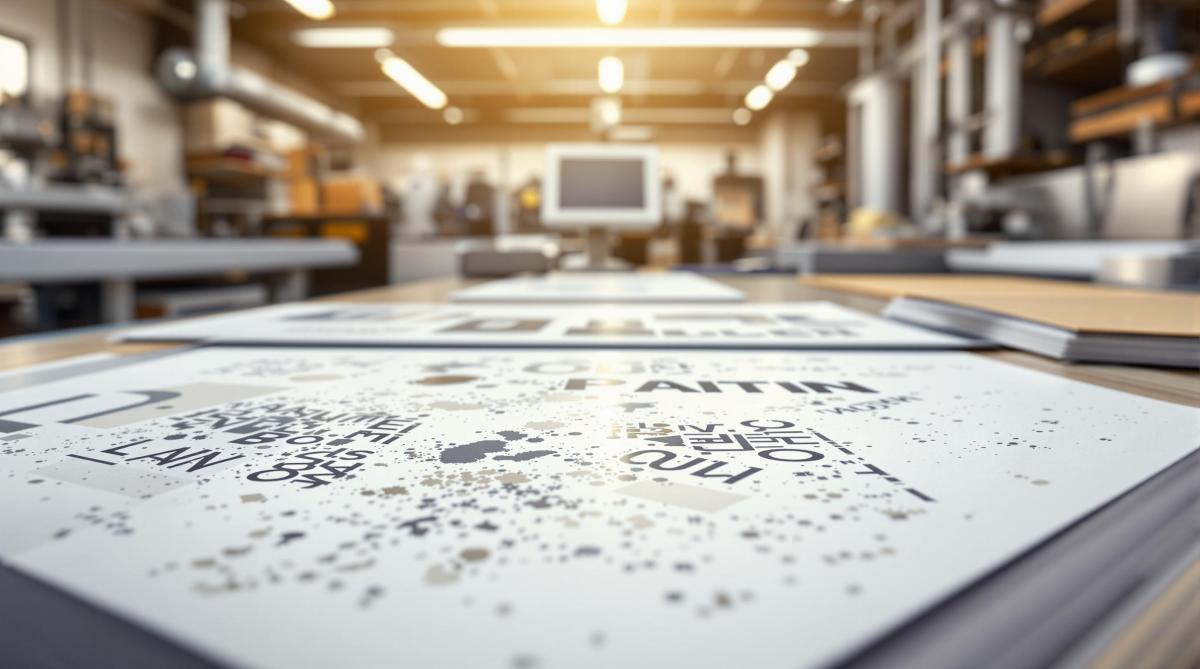
Print quality issues can ruin your project before it even starts. Here’s how to spot and fix common substrate defects in printing, like uneven ink coverage, pinholing, contamination, and color misalignment. These problems often stem from issues with materials, equipment, or environmental conditions.
Key Takeaways:
- Uneven Ink Coverage (Mottling): Caused by ink viscosity issues or substrate absorption problems.
- Pinholing: Tiny unprinted spots from improper substrate prep or environmental factors.
- Contamination: Dust, debris, or pollutants disrupting ink transfer.
- Ink Bonding Problems: Poor adhesion leading to peeling or flaking.
- Color Misalignment: Blurry or misaligned overlays due to equipment calibration or substrate movement.
Quick Solutions:
- Inspect prints for defects early using quality control tools.
- Maintain proper press room conditions (temperature, humidity, cleanliness).
- Test substrate properties like moisture and surface energy before printing.
- Regularly clean and calibrate equipment.
- Train staff to handle substrates properly and follow quality checks.
By identifying and addressing these issues early, you can save time, reduce costs, and maintain high print quality.
Static Electricity on Corrugated Plastic Substrates Causes …
Main Types of Substrate Defects
Recognizing substrate defects is key to solving printing problems before they affect the final product. Below is a closer look at the most common issues in commercial printing.
Uneven Ink Coverage (Mottling)
Mottling refers to uneven color distribution caused by inconsistencies in ink viscosity or substrate absorption. At Miro Printing & Graphics Inc., technicians rely on precision viscometers to maintain consistent ink flow and viscosity.
Some common causes of mottling include:
- Incorrect ink-water balance
- Uneven substrate coating
- Poor drying conditions
- Variations in surface tension
Small Unprinted Spots (Pinholing)
Pinholing appears as tiny white spots where ink fails to adhere, especially in solid color areas. Properly preparing the substrate and controlling environmental factors can help minimize this issue.
Print Contamination
Print contamination happens when foreign particles disrupt ink transfer onto the substrate. Common culprits include:
- Paper dust
- Static-attracted debris
- Dried ink particles
- Environmental pollutants
Maintaining a strict cleaning routine and using advanced air filtration systems can effectively prevent contamination.
Ink Bonding Problems
When ink doesn’t adhere properly, it can lead to peeling, rubbing, or flaking. Here’s a breakdown of factors affecting ink adhesion and their solutions:
| Factor | Impact on Adhesion | Solution |
|---|---|---|
| Surface Energy | Reduces ink wetting | Use corona treatment |
| Material Compatibility | Weakens adhesion | Adjust ink formulation |
| Drying Conditions | Affects curing | Control the environment |
| Substrate Cleanliness | Reduces bond strength | Pre-print cleaning |
Color Alignment Issues
Misaligned colors can result in blurry images or incorrect overlays. These issues often stem from:
- Faulty plate registration
- Substrate movement during printing
- Calibration errors in equipment
- Fluctuations in temperature and humidity
To address this, print specialists use advanced registration systems to ensure precise color alignment in every print run.
Next, we’ll explore methods to identify and fix these defects effectively.
sbb-itb-ce53437
Finding and Fixing Defects
Print Quality Inspection
At Miro Printing & Graphics Inc., we follow a clear quality control process to catch substrate issues early. Our team starts with a visual review of prints under standard lighting, using magnification when necessary. Key areas we check include:
- Surface uniformity: Ensuring ink coverage is even across the print area.
- Color accuracy: Comparing printed colors to approved proofs under calibrated lighting.
- Registration alignment: Confirming that color overlays align perfectly using registration marks.
- Surface integrity: Looking for physical flaws like scratches or dents.
After this inspection, we evaluate equipment and materials to pinpoint possible sources of defects.
Material and Equipment Checks
Once the visual inspection is complete, we conduct detailed checks of materials and equipment to confirm findings. These tests help identify specific causes of substrate defects. Our process includes:
- Measuring substrate moisture levels.
- Assessing surface energy.
- Monitoring press room conditions.
- Checking ink viscosity.
- Verifying registration accuracy.
These steps help us catch and address issues before they affect an entire production run.
Problem-Solving Guide
We take a structured approach to troubleshooting by addressing problems step-by-step:
-
Initial Assessment
Review print samples under standard conditions. Use high-resolution photos to document defects. -
Environmental Control
Adjust press room conditions, such as temperature, humidity, air filtration, and static control, to maintain an optimal environment. -
Material Verification
Test substrate properties before large print jobs. Check for surface tension, moisture content, thickness uniformity, and dimensional stability. -
Process Adjustment
Fine-tune printing settings like ink viscosity, pressure, ink-water balance, and drying parameters based on test results.
Defect Prevention Methods
Preventing defects is just as important as identifying them. At Miro Printing & Graphics Inc., we follow strict measures to maintain consistent print quality and reduce substrate-related issues.
Equipment Maintenance
Keeping equipment in top shape is key to avoiding defects. This includes cleaning printing components, checking moving parts, and fine-tuning systems like registration, tension controls, and feed mechanisms. We also regularly inspect rollers, bearings, and moisture control systems to ensure they are performing as they should.
Material Quality Standards
We maintain high standards for the materials we use. Substrates are checked for moisture, thickness, and smoothness to ensure they meet our specifications. For example, moisture levels are tested with electronic moisture meters, and thickness is measured using digital micrometers. Here’s a quick look at our process:
| Quality Parameter | Specification | Testing Method |
|---|---|---|
| Moisture Content | Per quality standards | Electronic moisture meter |
| Thickness Variation | Within defined tolerance | Digital micrometer |
| Surface Smoothness | Meets industry standards | Visual or energy test |
By working closely with certified suppliers and setting clear expectations, we ensure each delivery meets our strict requirements. This approach helps address potential issues before they arise.
Staff Training and Work Area Control
Well-trained staff and organized workspaces go a long way in preventing substrate problems. We provide ongoing training on substrate handling, quality checks, and contamination prevention, ensuring consistent and high-quality printing results.
Summary
With over 30 years of experience, Miro Printing & Graphics Inc. tackles substrate defects using proven quality control processes, skilled staff, and strict protocols. Substrate defects can harm print quality, but identifying and addressing them ensures consistently great results.
"With meticulous attention to detail, our print shop offers a customized approach tailored to each project."
- Miro Printing & Graphics Inc.
Here’s how Miro Printing & Graphics Inc. maintains top-tier print quality:
Quality Control Systems
- Regularly maintaining and calibrating equipment
- Enforcing strict material quality standards
- Training staff thoroughly
- Maintaining controlled work environment conditions
Professional Expertise
The team brings years of experience and treats every project as unique. As one happy customer shared:
"Great customer service and unmatched attention to detail make all the difference!"
- Mike B.
Prevention and Solutions
To ensure flawless results, Miro Printing & Graphics Inc. employs:
- Advanced inspection protocols
- Rigorous material testing
- Scheduled equipment maintenance
- Continuous staff training
These efforts ensure every project meets the highest standards while staying on budget. By keeping substrate defects under control, Miro Printing & Graphics Inc. guarantees exceptional results for every print job.
Related posts
- Troubleshooting Surface Coating Defects in Printing
- How to Identify Surface Coating Defects in Printing
- Substrate Selection for Digital Printing
- Common Post-Press Quality Issues and Fixes
https://app.seobotai.com/banner/banner.js?id=67ff0d7cb0912f75a97f1163
 BergenCountyPrintersBlogs