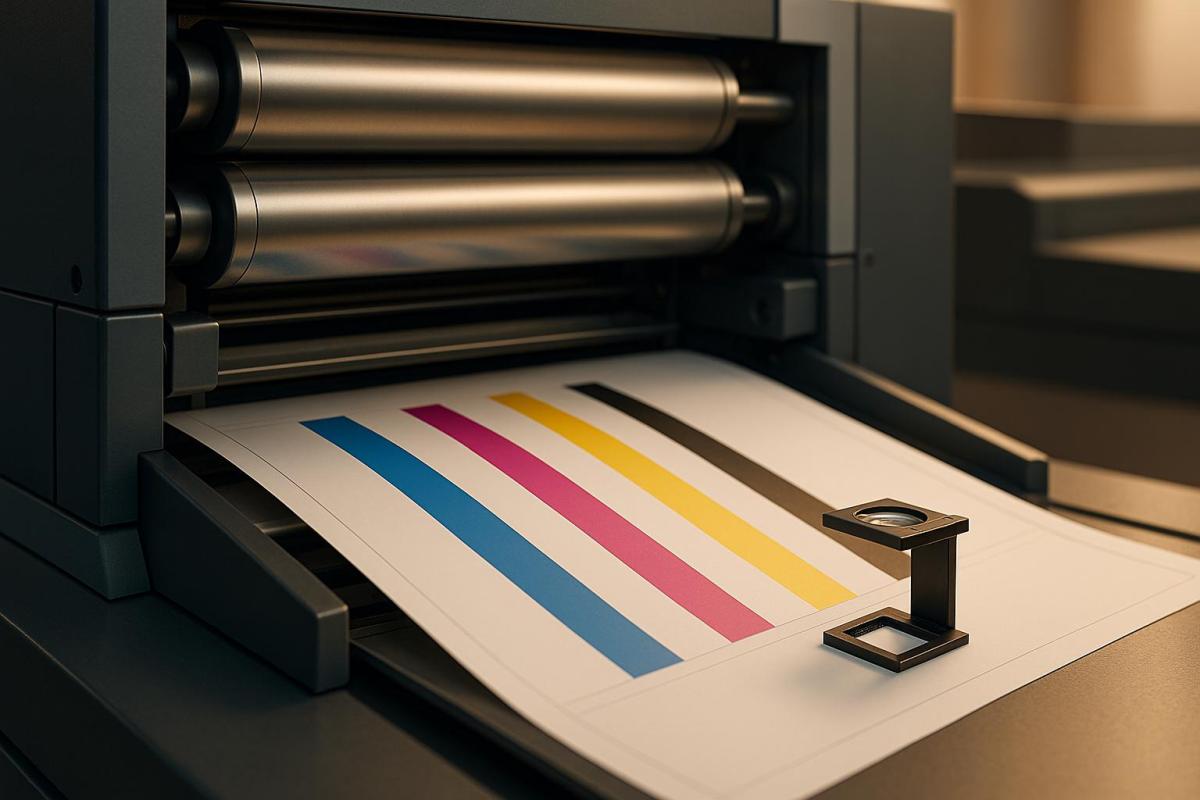
ISO 12647 is a global standard that ensures consistent, high-quality printing by defining measurable benchmarks for color accuracy, ink density, and process control. It applies to various printing methods like offset, digital, and flexographic printing, helping printers achieve repeatable results and meet client expectations.
Key Takeaways:
- Color Consistency: Defines specific L*a*b* targets for accurate color reproduction.
- Ink Density: Sets precise density levels for cyan, magenta, yellow, and black inks.
- Tone Value Increase (TVI): Controls dot gain for sharp and detailed imagery.
- Substrate Standards: Ensures predictable performance across different papers and materials.
- Process Monitoring: Relies on tools like spectrophotometers to verify compliance.
ISO 12647 also emphasizes structured workflows, including equipment calibration, proofing, and production monitoring, to minimize errors and improve efficiency. For businesses, this means fewer misprints, reduced waste, and stronger client trust. Companies like Miro Printing & Graphics Inc. successfully use these standards to deliver consistent, reliable results across projects of all sizes.
Navigating Print Standards – Industry vs. Custom
Core Principles of ISO 12647
ISO 12647 revolves around two main ideas: setting precise measurement targets and following standardized workflows.
Key Parameters for Print Quality
At the heart of ISO 12647 are five essential process control parameters. These parameters provide clear, objective benchmarks, removing uncertainty from print production.
- Color reproduction: This standard ensures consistent color accuracy by defining specific L*a*b* targets. For instance, a corporate blue will appear the same across different print jobs, maintaining brand integrity.
- Ink density control: Each process color – cyan, magenta, yellow, and black – has defined density targets. Verified using densitometers, these targets help maintain balanced color saturation and prevent issues like overly dark shadows or faint highlights.
- Tone Value Increase (TVI): Often referred to as dot gain, TVI measures how much printed dots spread beyond their intended size. The standard sets acceptable tolerances for TVI to ensure crisp contrast and detailed imagery.
- Paper and substrate specifications: Characteristics like whiteness, gloss, and surface texture are standardized to ensure predictable substrate behavior. This consistency helps printers achieve reliable results across various materials.
- Measurement methods and tools: Compliance is verified using spectrophotometric and densitometric readings, typically through standardized test strips and control bars. These tools ensure accuracy throughout the process.
Together, these parameters establish a reliable framework that guarantees every print meets the desired quality standards.
Standardized Workflows for Consistency
Using these parameters as a foundation, ISO 12647 introduces structured workflows designed to reduce human error and process variability. This approach ensures consistent results at every stage, from prepress to finishing.
The process begins with equipment calibration and characterization. Regular checks confirm that presses, proofing systems, and measurement tools meet the standard’s specifications. This ensures all equipment operates within set limits.
During production, process monitoring involves measuring control strips at specific intervals. Results are compared with the standard’s targets, and if any measurements exceed tolerances, immediate corrective actions are taken and logged.
ISO 12647 also enhances proofing and approval processes. Instead of relying on subjective visual evaluations, printers and clients can use measurable criteria to assess whether proofs and production sheets meet the standard. This reduces disagreements and simplifies the approval process.
Documentation and traceability play a vital role in maintaining quality. By recording measurements, calibrations, and adjustments, printers can troubleshoot efficiently and demonstrate compliance when needed.
Adoption of ISO 12647 has been widespread, with over 80% of printing facilities in some regions using it for color management and quality control. Additionally, applying techniques based on the standard has resulted in a 20% improvement in color gamut for certain paper types.
This structured workflow is particularly valuable for high-volume commercial printers, where maintaining consistency across shifts, operators, and production runs is essential. By adhering to ISO 12647, these operations can achieve repeatable, high-quality results every time.
How to Implement ISO 12647 Standards
To meet ISO 12647 standards, focus on precise prepress file preparation, thorough proofing, meticulous calibration, and constant production monitoring. These steps ensure your printing process aligns with the standard’s requirements.
Prepress File Preparation and Color Management
Achieving ISO 12647 compliance starts with a well-structured prepress process. Use standardized ICC profiles tailored to your print process and substrate. For example, GRACoL is ideal for coated materials, while SWOP works best for uncoated substrates. Convert files to the appropriate CMYK color space and resolution, ensuring proper bleeds and embedding color profiles. Double-check that color separations align with the substrate and ink limits to reduce the need for adjustments or reprints.
Proofing and Verification Processes
Proofing is a critical step to confirm color accuracy. Use contract proofs generated on calibrated devices with reference profiles like FOGRA39 or GRACoL. Include measurable color control strips on proofs, then verify compliance through spectrophotometric measurements. This process ensures adherence to ISO 12647-7 and -8 guidelines.
Calibration and Equipment Maintenance
Calibration ensures your equipment operates within ISO 12647 specifications. Adjust ink densities, dot gain curves, and substrate parameters accordingly. Routine maintenance, such as cleaning components, checking alignment, and updating software, is essential to prevent color inconsistencies. Keep detailed records of calibration and measurements, and schedule regular checks to maintain compliance.
Process Monitoring During Production
During production, regularly sample prints and measure key metrics like ink density, tone value increase (TVI), and color consistency using spectrophotometers. Address any deviations from ISO 12647 targets immediately, and document all measurements to support continuous improvement. Train your team to interpret measurement data effectively and respond promptly to maintain quality standards.
sbb-itb-ce53437
Benefits of ISO 12647 Compliance
Adopting ISO 12647 standards brings measurable improvements to printing operations, boosting efficiency, cutting waste, and building stronger client relationships. These advantages stem from the standardized processes it introduces, which go beyond basic quality checks to support smoother workflows and long-term growth.
Better Color Consistency and Accuracy
ISO 12647 removes the uncertainty in color reproduction by providing precise targets for every stage of the printing process. It defines specific ink density and color benchmarks, ensuring consistent results. This is especially critical for materials tied to brand identity, where even slight color variations can impact perception. By calibrating equipment to ISO 12647-2 and using tools like spectrophotometers, printers can achieve predictable and repeatable outcomes. References such as FOGRA39 further help minimize inconsistencies and reduce the need for manual adjustments.
A commercial printer in New Jersey shared that, after implementing ISO 12647-2, complaints about color inconsistencies dropped by 75% within a year – instilling greater confidence among their clients.
Higher Efficiency and Less Waste
Standardized workflows under ISO 12647 significantly reduce the trial-and-error process that often leads to wasted resources. Printers adhering to these standards report up to 20% reductions in ink and paper waste, thanks to fewer misprints and more predictable results. Additionally, streamlined calibration and process controls mean less downtime for troubleshooting and quicker turnaround times. According to the European Color Initiative, optimized processes under this standard can expand the color gamut by 20%. Many facilities have also seen a 15% drop in material costs while improving client retention after adopting these practices. These operational efficiencies align perfectly with the objective quality checks built into ISO 12647.
Clear Quality Evaluation
ISO 12647 shifts quality checks from subjective visual inspections to objective, measurable standards. By setting clear tolerances for factors like color and density, printers can use tools such as spectrophotometers to verify that prints meet required specifications. This not only simplifies quality assessments but also enhances transparency in client communication.
Moreover, the standard allows for external verification of color accuracy, ensuring that both printers and designers can confirm the final product meets the agreed-upon standards. For digital printing operations, ISO 12647 also bridges the gap with offset printing, delivering comparable color quality and consistency. This seamless alignment between digital and offset processes highlights the operational improvements printers can achieve with ISO 12647.
How Miro Printing & Graphics Inc. Uses ISO 12647
Miro Printing & Graphics Inc. incorporates ISO 12647 standards throughout its printing processes, ensuring that every project – whether it’s a set of business cards or a large-format display – meets strict benchmarks for color accuracy and consistency.
Standards Integration in Service Offerings
The company applies ISO 12647 standards across a range of printing technologies. Offset presses are aligned with ISO 12647-2 specifications, while digital presses adhere to ISO 12647-5 guidelines, guaranteeing uniform results for projects of all sizes.
For large-format printing, Miro Printing & Graphics Inc. adapts ISO 12647 principles to account for different substrates and printing conditions. For instance, a retail campaign involving varied materials saw a 15% reduction in material waste and turnaround time compared to previous workflows.
Custom projects also benefit greatly from this standardized approach. Whether it’s packaging that requires precise brand color matching or marketing collateral that demands consistent reproduction across multiple runs, the ISO 12647 framework ensures reliable results. These practices extend across all production stages, reinforcing the company’s in-house quality control systems.
In-House Quality Control and Expertise
Quality control at Miro Printing & Graphics Inc. is maintained through advanced in-house systems. Calibrated spectrophotometers and standardized profiles are used to ensure compliance with ISO 12647 standards.
Prepress files are prepared with standardized color profiles, and the production process is closely monitored using tools like control charts and spectrophotometric measurements. Hardcopy proofs are measured against ISO 12647-7 standards to simulate final print conditions, giving clients confidence that the final product will match the approved proofs.
The expertise of Miro Printing & Graphics Inc.’s staff is a critical factor in upholding these standards. Employees receive ongoing training in ISO 12647 protocols, color science, and equipment calibration. This enables the team to quickly address any process deviations and provide clients with guidance on file preparation and color management.
Customer-Focused Approach to Print Quality
By combining rigorous standards with internal expertise, Miro Printing & Graphics Inc. strengthens client trust through transparent and reliable quality processes. ISO 12647 compliance serves as the foundation of these relationships, offering clear documentation and proofing that meet international standards.
This approach is especially beneficial for clients with demanding color requirements. Corporate branding materials, packaging, catalogs, and large-format displays all benefit from the consistent color reproduction that ISO 12647 compliance ensures, even across multiple orders and varied materials.
Miro Printing & Graphics Inc. tailors its ISO 12647-based processes to meet specific client needs. For example, packaging projects may require tighter tolerances for brand colors, while marketing materials might prioritize faster delivery times. This adaptability allows the company to achieve optimal results within the ISO 12647 framework while addressing unique client demands.
With many print buyers now requiring ISO 12647 compliance as a condition for partnerships, Miro Printing & Graphics Inc. has positioned itself as a trusted partner. By consistently meeting these standards, the company reduces concerns about color inconsistencies and costly reprints, fostering long-term relationships built on reliability and trust.
Conclusion: ISO 12647’s Role in Print Quality
ISO 12647 standards serve as a dependable guide for achieving consistent, high-quality prints. By setting measurable benchmarks for color accuracy, process control, and workflow efficiency, these standards benefit both printers and their clients, ensuring predictable and repeatable results.
By defining clear parameters for factors like ink density, tone value increase, and color reproduction, ISO 12647 eliminates guesswork and reduces variability across production runs and printing technologies. This consistency is invaluable in maintaining quality and meeting client expectations.
For print shops navigating a competitive market, ISO 12647 compliance offers measurable business benefits. According to industry data, facilities with compliance scores of 80% or higher often experience stronger client trust and increased repeat business, as customers appreciate the assurance of standardized quality benchmarks. Additionally, compliance helps streamline workflows, cut material waste, and lower production costs, making operations more efficient.
The modular nature of ISO 12647 allows it to adapt to various printing methods, including offset, digital, flexographic, and gravure printing. This flexibility ensures consistent quality across different technologies.
Take Miro Printing & Graphics Inc., for example. Their approach to implementing ISO 12647 demonstrates how these standards can provide a competitive edge in the U.S. market. From prepress preparation to final production checks, their use of ISO 12647 practices has improved process reliability and operational efficiency, showcasing the practical value of these standards in action.
ISO 12647 also fosters transparency and accountability in print production. Clients benefit from objective criteria for evaluating quality, while print providers gain from clear documentation that supports their claims. This shared understanding reduces disputes and strengthens business relationships based on verifiable performance.
As the printing industry continues to evolve, ISO 12647 remains a cornerstone standard for ensuring quality across various technologies. It not only validates print quality but also builds trust between providers and clients – a trust grounded in consistent, measurable results that align with international benchmarks.
FAQs
How does ISO 12647 ensure consistent and accurate color in printing?
ISO 12647 is a globally recognized standard that outlines clear guidelines for managing color in print production. It specifies parameters like ink density, color matching, and tone reproduction, all aimed at helping printers deliver consistent and high-quality results across various jobs and materials.
Following ISO 12647 plays a key role in ensuring color accuracy and predictability, minimizing variations and reducing errors during the printing process. This is especially crucial for businesses that depend on consistent branding or uniform print quality across multiple projects. If you’re looking for expert printing services that align with industry standards like ISO 12647, Miro Printing & Graphics Inc. in Hackensack, NJ, offers reliable solutions tailored to meet your needs.
How can a printing company successfully implement ISO 12647 standards to ensure top-quality results?
To put ISO 12647 standards into practice, a printing company needs to follow a clear and organized plan. Begin by fully understanding the standard’s requirements, which are centered around achieving consistent color quality and adhering to industry norms. After that, focus on calibrating and standardizing all printing equipment, from presses to proofing devices, ensuring they meet ISO 12647 guidelines. Use reliable tools to regularly monitor and measure output, confirming everything stays within the required parameters.
It’s also crucial to train staff so that everyone involved in production knows how to apply the standards effectively. On top of that, implement a quality management system to document procedures, track performance, and quickly address any inconsistencies. By sticking to this approach, printing companies can reliably produce top-notch prints that align with customer expectations.
What are the advantages of ISO 12647 compliance for printers and their customers?
ISO 12647 compliance plays a key role in maintaining consistency and quality in print production. By offering clear guidelines for color management and process control, it helps printers achieve greater efficiency, minimize waste, and confidently meet industry standards.
For customers, this compliance means they can count on dependable, predictable print outcomes. Their materials will not only look polished and professional but also match their expectations. This level of reliability strengthens trust and encourages lasting partnerships between printers and their clients.
Related Blog Posts
- Common Post-Press Quality Issues and Fixes
- ISO 2846: Ink Color Standards Explained
- Proofing Standards in Printing: Key ISO Guidelines
- How Color Management Impacts Brand Identity
https://app.seobotai.com/banner/banner.js?id=691d09cc9c1061ed16122eb1
 BergenCountyPrintersBlogs