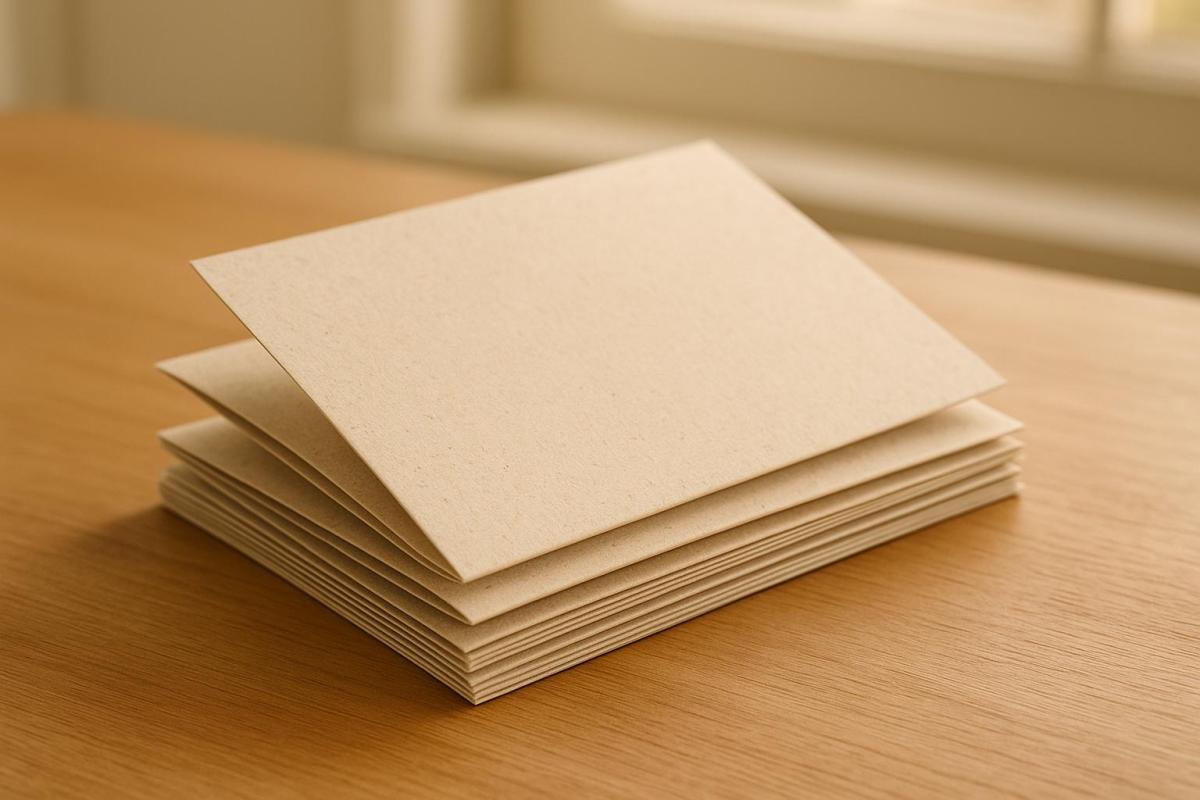
Want to make eco-friendly folded prints without sacrificing quality? Choosing the right recycled paper is key. Here’s how you can balance sustainability, performance, and cost:
- Why Recycled Paper? It saves 17 trees, 7,000 gallons of water, and 4,000 kWh of energy per ton compared to virgin paper.
- Types of Recycled Paper: Post-consumer waste (PCW) is the most sustainable but may need fresh fibers for strength. Pre-consumer waste is another option.
- Finishes & Grades: Matte (text-heavy), glossy (vivid images), and uncoated (natural texture) finishes suit different needs. Choose heavier paper (170–200 GSM) for premium feel or lighter stocks (80–100 GSM) for easier folding.
- Folding Tips: Score heavy stocks, fold with the grain, and test folds to avoid cracking.
- Certifications: Look for FSC, Green Seal, or PCF labels to ensure sustainability.
- Cost Considerations: Recycled paper costs 29%–56% more but offers long-term benefits. Bulk orders can save up to 10%.
Recycled paper now rivals virgin paper in quality, making it an excellent choice for brochures, flyers, and more. Start small, test samples, and partner with local printers for the best results.
PAPER CHOICES FOR PRINTING: A showcase of silk, gloss, uncoated and recycled finishes | Ex Why Zed
Types of Recycled Paper Available
Understanding the different types of recycled paper can help you make the best choice for your folded prints. The market offers a variety of options, each influenced by the source of the fibers, finishes, and grades. These factors not only affect print quality but also the environmental impact of your project. Let’s break down how fiber sources and finishes play a role in performance.
Post-Consumer vs. Pre-Consumer Recycled Paper
The source of the fibers is a key factor in determining both environmental impact and paper performance. Pre-consumer waste refers to materials like scraps and trimmings left over from manufacturing processes – these never make it to consumers. On the other hand, post-consumer waste (PCW) comes from paper products that have already been used and discarded by consumers.
PCW paper is often the better environmental choice since it helps divert waste from landfills. However, for folded prints, PCW paper may require a small percentage of fresh fibers to maintain strength and ensure proper folding. While PCW paper can sometimes cost more due to the additional processing it undergoes, its positive environmental impact often makes it worth the extra expense. If you’re comparing recycled paper options, choosing PCW materials helps promote a circular economy by keeping consumer waste in use.
Paper Finishes and Grades for Folded Prints
The finish of the paper has a big influence on its appearance and functionality, and different finishes are better suited to different types of projects.
- Matte finishes offer a non-reflective surface, making them perfect for text-heavy materials like corporate brochures, annual reports, and educational content. They resist fingerprints and ensure readability.
- Glossy finishes enhance color and image sharpness, making them ideal for visually striking marketing materials. However, they can show fingerprints easily and may create glare under bright lights.
- Uncoated finishes have a natural texture and are great for writing. These papers absorb ink differently than coated ones, making them a good fit for stationery, forms, and documents that require signatures.
Paper weight also matters, especially for folded prints. Heavier papers showcase fine details but can increase mailing costs. Lighter papers fold more easily but might feel less premium. Paper weight is measured in GSM (grams per square meter) – a higher GSM means thicker, more substantial paper.
When it comes to paper grades, the intended use of your project should guide your choice. Text stocks are suitable for standard brochures and flyers, while cover stocks provide the durability needed for presentation folders or premium marketing pieces. If your project requires writing, avoid heavily coated or textured papers, as they can make ink absorption tricky.
How to Check Quality for Folded Prints
When working with recycled paper for folded prints, it’s important to evaluate its quality based on key factors like weight, color, and folding techniques. Modern recycled papers often rival virgin paper in performance, but understanding these elements ensures your projects meet professional standards. Let’s dive into how paper weight, color fidelity, and folding methods can impact your final results.
Paper Weight and Folding Performance
The weight of the paper plays a crucial role in how it folds and feels. Lighter paper stocks, typically in the 80–100 GSM range, are easier to fold but may lack a premium look and feel. On the other hand, heavier stocks, ranging from 170–200 GSM, exude a more professional quality but require extra care. For heavier papers, pre-scoring and folding along the grain are essential to avoid cracking. Grain direction matters – folding with the grain minimizes damage, while folding against it can lead to visible cracks, especially in papers with uneven fiber strength.
Color Quality and Print Sharpness
Recycled paper can sometimes present challenges with brightness and ink absorption due to its fiber composition. However, advancements in recycled paper production now offer options with brightness levels on par with non-recycled paper.
To ensure sharp and vibrant prints, adjust your printer settings and run test prints. Using high-resolution images and eco-friendly inks can enhance the overall sharpness. For best results, avoid large solid color areas and opt for vector graphics, which tend to print more crisply on recycled paper.
Tips for Better Folding Results
Once you’ve accounted for weight and color, proper folding techniques can make all the difference. Here are some practical tips to perfect your folds:
- Score heavy stocks to create a controlled crease and reduce cracking.
- Test fold a small section before proceeding with the entire project.
- Fold perpendicular to the grain to maintain integrity and prevent damage.
- Pre-fold challenging stocks to ensure smoother results.
- Keep rollers clean to avoid smudges or imperfections.
- Leave at least a 1/8-inch margin from trim lines to account for slight variances.
"The ideal crease should perform like a perfect hinge when folded. This cannot be fully achieved, but the challenge is to come as close to such a hinge function as possible." – Darcey Thompson, Director of Marketing and Creative, Southeastern Printing
A good way to assess creasability is to evaluate how the paper reacts to scoring and folding. Papers with strong creasability will fold cleanly with minimal surface cracking, even at low creasing depths. Interestingly, recycled papers with multi-ply construction often perform better. Their inner layers can separate into thin plies during folding, reducing the risk of breaking.
Cost and Where to Find Recycled Paper
When planning folded print projects, knowing the cost and sourcing options for recycled paper is crucial. Recycled paper often costs more than virgin paper due to extra processes like collection, sorting, pulping, and de-inking.
"Why does recycled paper cost more than brand new (virgin) paper?" – Anderberg Innovative Print Solutions
Several factors influence the price of recycled paper, including weight, finish, and order quantity. For instance, a ream of 60 lb text paper typically costs between $32.97 and $35.47, while premium options like 100 lb cover paper can go for $41.97 per ream. Bulk orders often offer savings of up to 10%.
Despite the higher costs, the environmental advantages are compelling. A single ton (2,000 pounds) of recycled paper conserves 17 trees, 380 gallons of oil, three cubic yards of landfill space, 4,000 kilowatts of energy, and 7,000 gallons of water. Once you weigh these benefits against the cost, the next step is finding dependable suppliers who provide high-quality recycled paper.
Finding Reliable Paper Suppliers
Understanding pricing details can help you identify suppliers offering competitive rates alongside certified recycled stock. The right suppliers balance environmental standards with print performance needs. For example, The Paper Mill Store features a wide range of recycled paper from top brands like Neenah, Mohawk, and Finch. They also provide custom services such as cutting and scoring to meet specific project demands.
American Eagle Paper Mills showcases the potential of large-scale recycled paper production. In 2023, they produced up to 220 tons of recycled paper daily, turning waste into high-quality printing and specialty papers. Their commitment to sustainability is clear:
"We believe that today’s actions shape tomorrow’s world, which is why we embrace eco-friendly practices and value our partnerships with sustainability-driven organizations, distributors, commercial print shops, and other green heroes." – American Eagle Paper Mills
Local suppliers, like Miro Printing & Graphics Inc. in Hackensack, NJ, offer competitive pricing on recycled paper and provide in-house bindery services. Working with local providers can reduce shipping delays and allow you to review paper samples before placing large orders.
Recycled paper production has expanded significantly, with 46 million tons of paper recycled in the U.S. in 2023. This effort achieved recycling rates of 65–69% for paper and 71–76% for cardboard. Today, about 80% of U.S. paper mills incorporate some recycled content into their products.
To ensure quality and sustainability, request samples before committing to large purchases. Look for certifications like the Forest Stewardship Council (FSC) label, which guarantees responsible sourcing. Many suppliers also offer bulk discounts and custom finishing options, helping you manage costs while meeting the specific needs of your folded print projects.
sbb-itb-ce53437
Certifications and Environmental Benefits
Certifications play a vital role in ensuring the quality and sustainability of recycled paper. These third-party validations confirm that your folded print projects adhere to eco-friendly standards while maintaining professional results. As you finalize paper choices for folded prints, checking for certifications ensures that high-quality output aligns with environmental responsibility.
Important Certifications to Know
Forest Stewardship Council (FSC) Recycled is a top certification for recycled paper. It guarantees responsible forest management and verifies the percentage of recycled content. While FSC-certified paper can cost up to 20% more, it offers transparency in the supply chain and ensures sustainability claims are accurate. The FSC also enforces stricter rules on forest conversion, prioritizing ecological protection compared to other certifications.
Green Seal certification addresses several sustainability factors, including the use of 100% recycled material, verified post-consumer content, and chlorine-free processing. This certification resonates with consumers, as 78% are more inclined to purchase products featuring the Green Seal mark. Retailers like Amazon even highlight Green Seal-certified products under their Climate Pledge Friendly program, giving these items a distinct sustainability badge.
"Green Seal certification for our products provides immediate credibility and trust with our customers."
– Julie Howard, VP and General Manager, Towel Category at Georgia-Pacific
Processed Chlorine Free (PCF) certification focuses on ensuring that recycled paper is produced without chlorine-based bleaching processes. Companies like Neenah Paper offer a wide range of PCF-certified options, such as CLASSIC CREST Papers (Recycled 100 Bright White, Recycled 100 Natural White), ENVIRONMENT Papers (PC 100 Natural, PC 100 White), and NEENAH Folding Board (100 PC White).
When choosing recycled paper, pay attention to the recycled content percentage listed on the packaging and aim for the highest percentage available. Post-consumer content is particularly impactful, as it represents materials that have already completed a full usage cycle. Be cautious with terms like "recyclable", which only indicate the potential for recycling without guaranteeing any recycled material.
These certifications not only validate the quality of recycled paper but also confirm its positive environmental contributions.
How Recycled Paper Helps the Environment
Using recycled paper offers numerous environmental benefits. It conserves resources, reduces waste, and minimizes environmental impact by saving energy, water, and lowering greenhouse gas emissions. Compared to virgin fiber production, recycled paper uses about 26% less energy and generates 40% less wastewater.
Recycling paper also helps preserve trees and reduce landfill use. Paper products account for roughly 28% of landfill waste, and approximately 80% of discarded paper ends up in landfills without being recycled. By choosing recycled paper, you actively help address these issues.
One of the biggest advantages is the reduction of greenhouse gas emissions. With the U.S. consuming 100 million tons of paper annually, recycled paper makes up only 35% of that total, leaving significant room for improvement.
"By choosing recycled paper, you are voting with your dollars for a cleaner and healthier planet."
– Green America
For folded print projects, recycled paper often offers better opacity than virgin paper, which enhances print quality while delivering environmental benefits.
Working with certified suppliers like Miro Printing & Graphics Inc. ensures access to reliable, eco-friendly recycled paper. Their expertise helps match the right certifications to your specific project needs, achieving a balance between sustainability goals and top-notch performance.
How to Select the Right Recycled Paper
Finding the right recycled paper for your project means balancing quality, sustainability, and budget while ensuring it aligns with your specific needs. Here’s how to make the best choice.
Matching Paper to Your Project Type
The type of paper you choose can make or break your project, so it’s essential to match the weight and finish to its purpose. For projects like brochures, newsletters, or flyers, 60–80 lb text paper works well. It folds cleanly and is easy to handle.
If you’re creating something that needs a more durable feel – like premium menus, folders, or high-end brochures – opt for 100–130 lb cover stock. This heavier paper holds its structure better, even with frequent handling.
For business cards or postcards, the heaviest recycled options, such as 14–16 pt cardstock, are ideal. Modern recycled cardstock rivals virgin paper in performance while supporting eco-friendly goals.
Pay attention to other paper qualities, like smoothness, brightness, opacity, and how well it absorbs ink. These factors directly affect the look and feel of your project. For instance, corporate materials may demand a bright, smooth finish, while brands focused on sustainability might lean toward natural textures and subtle color variations.
Once you’ve matched the paper to your project, you can explore ways to customize it for an even better fit.
Custom Options and Special Finishes
Recycled paper offers plenty of room for creativity. For instance, double-sided printing works beautifully with recycled stocks because their opacity reduces the risk of ink showing through. Pairing recycled paper with vegetable-based inks creates a fully eco-conscious solution.
You can also experiment with custom folding patterns like gate folds, accordion folds, and roll folds. Just make sure to choose the right paper weight for the fold you want.
Looking for a polished finish? Recycled papers can accommodate matte and satin coatings to boost durability without sacrificing recyclability. Some even work well with foil stamping and embossing, though it’s a good idea to test these techniques beforehand to ensure the best results.
Keep in mind that recycled paper can sometimes affect how colors appear. Adjust your color settings as needed to ensure your design looks its best.
To bring these ideas to life, it helps to collaborate with local printing experts.
Working with Local Print Experts
Once you’ve narrowed down your paper and finish choices, teaming up with a local printing professional can make all the difference. Experienced printers, like Miro Printing & Graphics Inc., can guide you through the process of selecting the perfect recycled paper for your project.
Local print shops often have direct connections with certified suppliers and can source FSC-certified recycled options that align with your sustainability goals. They also understand which papers work best for specific folding techniques and can suggest alternatives if your first choice is unavailable.
Before committing to a full production run, request paper samples and run test prints. This hands-on approach lets you evaluate texture, weight, and print quality while fine-tuning color settings and quality control measures.
Another advantage of working with local experts is their knowledge of regional paper availability and pricing. They can recommend cost-effective options that meet your needs without compromising quality. This is especially helpful when you’re working with tight deadlines or specific certification requirements.
Local printers can also offer custom solutions that online suppliers might not provide. Whether it’s coordinating special orders, suggesting creative alternatives, or offering technical support, a trusted partner like Miro Printing & Graphics Inc. can help you achieve professional results for your recycled paper projects.
Making the Best Choice for Your Folded Prints
When it comes to selecting recycled paper for your folded prints, it’s all about finding the right balance between quality, cost, and environmental impact. Thanks to advancements in manufacturing, recycled paper now rivals – and sometimes surpasses – the performance of virgin paper. This means you can make eco-conscious decisions without compromising on results.
To ensure your prints look sharp and fold crisply, pay attention to technical details like 70–90 GSM weight, 80–100 brightness, and over 90% opacity. These specs are key for achieving professional results. Also, proper storage is crucial – keep your paper in a cool, dry spot, away from sunlight, to avoid warping. A little preparation goes a long way in creating a smooth and cost-efficient printing process.
Yes, recycled paper can cost 29%–56% more upfront. But it often pays off in the long run, thanks to reduced waste and the potential for bulk discounts. Plus, the environmental perks – like conserving trees and saving energy – make the extra cost worth considering.
For peace of mind, check for certifications like FSC labels or recycled content markings to confirm the paper’s sustainability credentials. If you want to maximize your eco-friendly impact, opt for paper made from 100% post-consumer waste. Before committing to a large order, test a few prints to ensure compatibility with your printer.
Another tip? Lean on local experts. Experienced providers like Miro Printing & Graphics Inc. can simplify the process. They’ll help you navigate paper options, recommend finishes, and even handle specialty requests – all while offering clear pricing. Local shops often go the extra mile to understand your project’s specific needs, making them a valuable resource.
Start small if you’re unsure – try using recycled paper for covers or section dividers. As you get more comfortable with the options, you can gradually expand its use across your projects. By prioritizing quality, sustainability, and cost, your folded prints can shine while supporting a greener planet.
FAQs
What’s the difference between post-consumer and pre-consumer recycled paper, and how does it affect folded print quality?
The key distinction between post-consumer and pre-consumer recycled paper lies in where the recycled material originates. Post-consumer paper comes from items that have already been used and recycled by individuals, like old newspapers or office documents. In contrast, pre-consumer paper is derived from manufacturing leftovers, such as scraps or trimmings, before these materials ever reach consumers.
For folded prints, post-consumer recycled paper often has a slightly rougher texture and a more natural, eco-conscious appearance. While this can give your prints a unique character, it might not be the best choice for intricate or glossy designs. On the flip side, pre-consumer recycled paper typically offers a smoother surface and greater consistency, making it ideal for projects that demand sharp visuals or bold, vibrant colors.
Ultimately, your choice should depend on your design goals and priorities. If reducing environmental impact is your main focus, post-consumer paper is a solid pick. However, if your project calls for a polished and professional look, pre-consumer paper might be the way to go. It’s always a good idea to discuss your options with your printer to ensure the paper aligns with your project’s specific needs.
How can I make sure the recycled paper I choose for folded prints is truly eco-friendly?
When choosing recycled paper that aligns with eco-friendly practices, it’s important to look for certifications. For example, the FSC Recycled label ensures the paper is made entirely from recycled fibers. Another way to confirm its authenticity is by checking third-party certifications, such as those issued by SCS Global Services.
Don’t overlook the quality of the paper, either. Recycled paper is available in different grades, so pick one that suits your project while staying mindful of sustainability. It’s also a good idea to consult with your printer to verify availability and explore options that fit both your budget and environmental priorities.
How can I find affordable, high-quality recycled paper for folded print projects?
To find budget-friendly, high-quality recycled paper for folded print projects, buying in bulk is a smart move. This approach reduces the cost per sheet significantly. Make sure to choose paper certified by organizations like the FSC (Forest Stewardship Council) or those marked with a recycled symbol to ensure they align with sustainability standards.
You might also consider pre-consumer recycled paper as a more economical alternative to virgin paper. It often offers great print quality at a lower price. Check with your local print shop or paper supplier to explore the best options available for your project.
Related posts
- Cost-Saving Tips for Sustainable Paper Choices
- How to Choose the Right Paper for Custom Prints
- Pre vs Post-Consumer Recycled Paper: Key Differences
- Checklist for Choosing Recycled Paper for Printing
https://app.seobotai.com/banner/banner.js?id=685c656d5559d477e76804f7
 BergenCountyPrintersBlogs