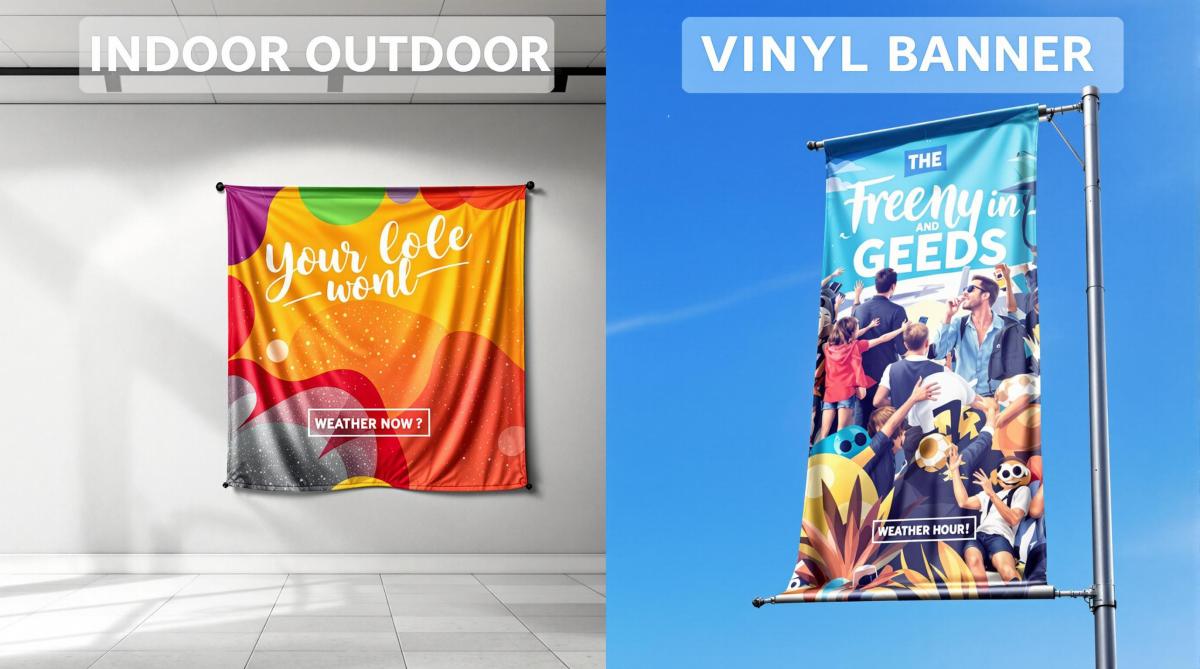
Choosing the right banner depends on where it will be displayed and its purpose. Here’s a quick breakdown:
- Indoor Banners: Best for controlled environments like trade shows or retail stores. Made from lightweight materials like fabric or standard vinyl, they allow for detailed designs, smaller text, and interactive elements (e.g., QR codes). They’re not weatherproof and are ideal for close-range viewing.
- Outdoor Banners: Designed for durability in harsh weather conditions. Made from reinforced vinyl or mesh, they feature bold designs, large fonts, and UV-resistant inks for visibility from a distance. These banners are built to last and withstand wind, rain, and sunlight.
Quick Comparison
| Feature | Indoor Banners | Outdoor Banners |
|---|---|---|
| Material | Lightweight vinyl, fabric | Reinforced vinyl, mesh |
| Durability | Short-term, indoor use | Long-term, weatherproof |
| Design | Detailed, small text | Bold, large fonts |
| Viewing Distance | Close range | Long distance |
| Best Uses | Trade shows, retail spaces | Storefronts, events, highways |
Use indoor banners for detailed, up-close messaging in controlled settings. Opt for outdoor banners when visibility and durability in tough conditions are key.
Indoor and Outdoor Vinyl Banners
Materials and Durability
The type of material used for banners plays a big role in how well they perform and how long they last.
Indoor Banner Materials
Indoor banners are usually made from fabric or vinyl designed for sharp, high-resolution printing in controlled environments. Polyester blends are a common choice for fabric banners because they resist wrinkles and work well for detailed printing. These are popular for trade shows and retail displays.
Outdoor Banner Materials
Outdoor banners need tougher materials to handle harsh weather conditions like sun, wind, and rain. Heavy-duty vinyl and mesh banners are the go-to options. Heavy vinyl is great for street-facing displays due to its resistance to UV rays and water. Mesh banners, with their perforated design, are ideal for windy areas as they allow air to pass through.
| Material Type | Best Used For | Key Features |
|---|---|---|
| Heavy Vinyl | Street-facing displays | UV-resistant, waterproof |
| Mesh Banner | Windy locations | Allows air to pass through |
Lifespan and Wear
Indoor and outdoor banners differ significantly in how long they last. Indoor banners usually hold up for a few months to a year, while outdoor banners can last several years if cared for properly. Factors like UV exposure (which causes fading), extreme temperatures (leading to warping), moisture (causing material breakdown), and poor mounting can all shorten a banner’s lifespan.
For outdoor use, experts recommend adding features like reinforced edges and wind slits to reduce weather damage. Professionals from companies like Miro Printing & Graphics Inc. (https://bergencountyprinters.com) stress that choosing the right materials and structural reinforcements is essential for long-lasting results.
With the right materials in place, the next step is designing a banner that fits its environment. Material selection sets the stage for creating a functional and visually effective design, as we’ll explore in the following section.
Design Requirements
When creating banners, it’s important to consider both material durability and how the design fits the environment where the banner will be displayed.
Indoor Design Specs
Indoor banners are seen up close, often under controlled lighting. This allows for detailed designs, including intricate graphics, small text, and subtle color gradients. Features like QR codes and social media handles work well here since viewers can interact with them easily.
Outdoor Design Specs
Outdoor banners need to stand out from a distance. This means using bold, large fonts and high-contrast colors. Professionals like Miro Printing & Graphics Inc. recommend UV-resistant inks to keep colors vibrant despite exposure to sunlight and weather.
Design Selection Guide
To choose the right design, think about:
- Viewing Context: How far away and at what angle will people see the banner?
- Environmental Conditions: Will it face bright sunlight, rain, or other weather challenges?
- Message Priority: Focus on one clear message for outdoor banners, while indoor banners can include more details.
These design principles help lay the groundwork for determining the best banner placement, which will be covered next.
Setup and Location
The success of a banner often depends on where it’s placed.
Indoor Locations
Indoor banners work best in spaces where the environment is controlled, like trade shows, retail stores, or corporate lobbies. For maximum impact, position them at eye level in well-lit areas. This ensures they grab attention and are easy to read.
Lightweight polyester banners are a great choice for temporary setups. They’re easy to install and give a polished look.
Outdoor Locations
Outdoor banners need a bit more planning to handle weather changes and longer viewing distances. High-traffic spots like storefronts or event venues are ideal, but you’ll need materials that can stand up to the elements. Here are some key factors to consider:
| Factor | Challenge | Best Solution |
|---|---|---|
| Sun Exposure | UV damage risk | UV-resistant vinyl |
| Wind Impact | Risk of tearing | Mesh banners for airflow |
| Viewing Distance | Need for visibility | Larger size, bold design |
| Traffic Flow | Audience movement | Place at strategic angles |
Location Tips
For indoor banners, choose spots where people naturally stop, like near registration desks or information booths. This gives them time to take in the details or interact with features like QR codes.
For outdoor banners, think about the sun’s position throughout the day to avoid glare, ensuring your message remains clear and visible.
sbb-itb-ce53437
Quick Reference Chart
Here’s a handy comparison to help you decide between indoor and outdoor banners based on your specific needs.
Feature Comparison
| Feature | Indoor Banners | Outdoor Banners |
|---|---|---|
| Material | Lightweight vinyl, fabric | Reinforced vinyl, mesh |
| Durability | Best for controlled indoor settings | Built to handle outdoor weather |
| Weather Resistance | Minimal protection for indoor use | Resistant to sun, rain, and other elements |
| Design Elements | Detailed graphics, smaller text (e.g., QR codes) | Bold fonts, simple graphics for visibility |
| Viewing Distance | Great for close-up viewing | Easy to read from far away |
| Installation | Simple hanging options | Requires sturdy mounting hardware |
| Best Uses | Trade shows, retail displays, corporate events | Storefronts, outdoor events, highway signs |
When choosing a banner, match it to its environment. For indoor use, go with lightweight vinyl or fabric for detailed designs under controlled lighting. For outdoor settings, opt for reinforced materials or mesh to handle weather and ensure clear visibility from a distance. This guide sets you up to make the right choice in the next steps.
Banner Selection Guide
Location Analysis
Think about where your banner will be displayed. Consider the height of ceilings, wall sizes, and lighting conditions. For trade shows, banners should be visible from moderate distances, while retail displays work best at eye level. Outdoor banners need to handle wind, sunlight, and varied viewing angles, especially in high-traffic areas.
Goal Setting
Your banner choice should align with your advertising goals and the duration of your campaign. Temporary indoor promotions benefit from lightweight vinyl, which offers sharp and detailed visuals. Long-term outdoor banners, on the other hand, need sturdier materials like reinforced vinyl or mesh to endure weather conditions while staying visually appealing.
| Goal | Recommended Banner Type | Key Considerations |
|---|---|---|
| Trade Show Display (short-term) | Indoor Fabric | Easy to set up, wrinkle-free, professional look |
| Seasonal Retail Promotion | Indoor Vinyl | Great for detailed graphics and budget-friendly |
| Storefront Advertising | Outdoor Mesh | Resists wind, UV-protected, and highly visible |
| Construction Site Signage | Heavy-duty Outdoor Vinyl | Extremely durable and weatherproof |
Once your goals are clear, the next step is finding the right print shop to bring your vision to life.
Print Shop Selection
Choose a reliable print shop to ensure your banner is both high-quality and durable. Experienced printers can guide you on materials and technical details. For instance, Miro Printing & Graphics Inc. in Hackensack, NJ, specializes in large format printing and offers in-house design support to fine-tune banners for both indoor and outdoor use.
When evaluating a printer, check if they provide material samples, mounting hardware options, installation tips, color matching, and guarantees on durability. Local printers with knowledge of regional weather conditions are particularly helpful. For example, in windy areas, mesh banners with wind slits often outperform solid vinyl while still standing out visually.
Conclusion
Choose your banner based on the materials, design needs, and where it will be displayed. Indoor banners are typically made from lightweight vinyl or fabric, making them ideal for controlled spaces. On the other hand, outdoor banners require tougher materials to withstand external conditions, which can impact their lifespan and design clarity.
The design approach also varies. Indoor banners can feature detailed graphics since they’re viewed up close. Outdoor banners, however, work best with bold, simple designs and larger fonts to ensure they’re readable from a distance.
Think about the environment where the banner will be displayed. Indoor banners thrive in stable settings with consistent lighting and predictable viewing distances. Outdoor banners, however, need to handle weather changes and other unpredictable factors.
Durability is another key factor. While indoor banners may seem like the cheaper option upfront, outdoor banners often save money in the long run because they’re built to resist harsh weather conditions.
FAQs
Here are quick answers to common questions about the differences and key considerations for indoor and outdoor banners.
What sets indoor and outdoor banners apart?
Indoor banners are typically made from scrim vinyl, a lighter material suited for controlled environments. Outdoor banners, on the other hand, use blackout vinyl, which is sturdier and designed to withstand weather conditions.
How do design needs differ for indoor vs. outdoor banners?
Indoor banners can feature intricate graphics and smaller text since they are viewed up close. Outdoor banners require bold, straightforward designs with larger fonts to ensure visibility from a distance and in varying lighting conditions.
What affects the lifespan of a banner?
Indoor banners can last for several years with proper care. Outdoor banners are crafted for tougher environments, often featuring UV-resistant coatings and added reinforcements to extend their durability.
How do I decide between indoor and outdoor banners?
Think about these aspects:
- Location: Will the banner be in a controlled indoor space or exposed to outdoor elements?
- Viewing Distance: Is it meant for close-up viewing or to catch attention from afar?
- Duration: Is it for a short-term event or a long-term display?
- Budget: Weigh the initial investment against how long you need the banner to last.
Where are indoor and outdoor banners most effective?
Indoor banners work great for:
- Trade shows
- Retail spaces
- Conference rooms
- Shopping malls
Outdoor banners shine in places like:
- Building exteriors
- Event venues
- Street advertising spots
- Sports arenas
"A professional print shop can provide expert advice on material selection, design considerations, and installation methods tailored to the specific needs of the business, ensuring that the chosen banner effectively meets the advertising goals", says Miro Printing & Graphics Inc., a full-service print shop specializing in both indoor and outdoor banners.
Related Blog Posts
- How to Choose the Right Paper for Custom Prints
- Foil Stamping vs Metallic Ink: Key Differences
- Fire-Resistant Fabrics for Printing: Types and Uses
- Substrate Selection for Digital Printing
https://app.seobotai.com/banner/banner.js?id=67b7dc55a97035aabf3e02bc
 BergenCountyPrintersBlogs