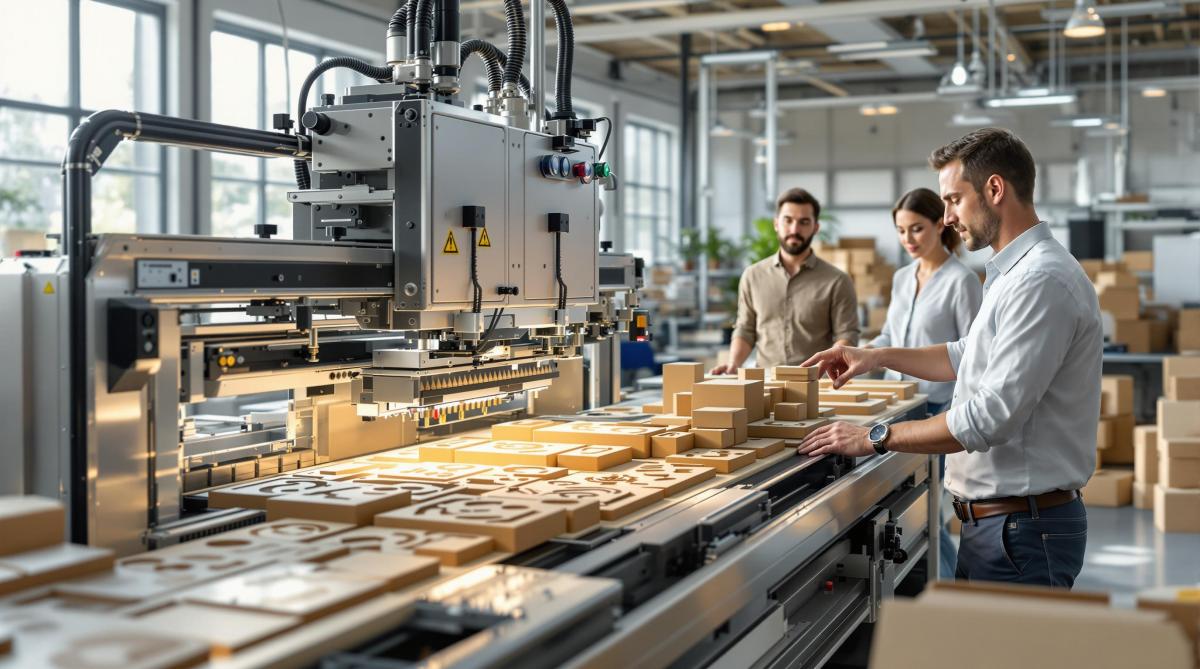
Automated die-cut packaging systems are transforming U.S. manufacturing by cutting material waste by up to 20%, speeding up production, and delivering fast returns on investment. These systems integrate AI, IoT, and energy-efficient machinery to enhance production accuracy while supporting eco-friendly goals.
Key Highlights:
- Eco-Friendly Upgrades: Energy-efficient presses, compostable materials, and recycling systems.
- Advanced Technologies: Rotary systems for high-volume output, laser systems for custom projects, and IoT-enabled systems for real-time monitoring.
- Industry Adoption: Food, pharmaceuticals, and cosmetics lead the way with smart sensors and precision tools.
- Future Trends: AI-powered quality control and 5G sensors for predictive maintenance and real-time tracking.
By embracing these innovations, manufacturers can achieve faster cycles, lower costs, and meet sustainability goals with ease.
Rotary Die Cutting for Folding Cartons and Packaging!
Market Analysis
Manufacturers in the U.S. are turning to automated die-cut systems to reduce expenses, speed up production, and meet growing consumer expectations. These changes align with the earlier points about quick returns on investment and reduced waste. Let’s take a closer look at the production technologies driving the evolution of die-cut packaging.
New Production Technologies
Eco-Friendly Production
Manufacturers are increasingly focusing on environmentally conscious upgrades to their machinery. This includes using energy-efficient servo-driven presses that can recover energy during deceleration, switching to compostable and biodegradable materials, and implementing automated sorting systems to recycle leftover materials. These steps aim to combine efficiency with a reduced environmental footprint.
sbb-itb-ce53437
U.S. Manufacturing Trends
Leading Industries
In the U.S., industries like food & beverage, pharmaceuticals, and cosmetics are at the forefront of adopting advanced manufacturing technologies. These companies use smart-sensor lines for real-time adjustments, precision die-cutting for blister packaging, and intricate techniques for premium packaging designs. By combining energy-efficient presses with recyclable materials, they achieve both accuracy in production and eco-friendly practices.
Balancing Space and Output
Manufacturers are rethinking plant layouts to fit automated die-cutting systems into smaller spaces. Modern systems now include integrated material-handling modules and modular add-ons, allowing businesses to boost or maintain production levels without requiring more floor space. Up next, let’s break down the key die-cutting technologies shaping U.S. manufacturing.
Comparing Technologies
Once layouts are streamlined, manufacturers choose between rotary, laser, and IoT-enabled systems. Rotary die-cutting systems are ideal for large-scale production, offering fast throughput and easy die changes. Laser systems shine in small-batch, highly customized projects since they eliminate the need for tooling. Meanwhile, IoT-enabled systems provide real-time monitoring and predictive maintenance, ensuring smoother operations and reduced downtime.
Industry Outlook
2024-2034 Industry Changes
The automated die-cut packaging sector is set for major advancements by 2034, building on existing IoT, rotary, and laser-based systems. AI-powered smart sensors, already utilized by leading pharmaceutical and food processing companies, are expected to take defect detection and production efficiency to the next level.
The rollout of 5G-enabled sensors is also reshaping how manufacturers monitor production. These sensors allow for comprehensive tracking systems that provide real-time insights across the entire operation.
Market Success Factors
Success in automated die-cut packaging increasingly hinges on a company’s ability to embrace digital transformation. Businesses investing in connected systems are seeing measurable gains in efficiency. Key factors driving this success include:
- AI-driven quality control using smart sensors
- Real-time tracking of materials through 5G-enabled systems
- Seamless digital integration for faster setup and changeovers
- Predictive maintenance to minimize unexpected downtime
- Use of sustainable materials and energy-efficient machinery
- Cloud-based dashboards for monitoring production, quality, and resources
Cloud-based monitoring tools have become crucial for staying competitive. These dashboards offer a clear view of production workflows, quality assurance efforts, and resource management, empowering organizations to make informed, data-driven decisions in real time.
Conclusion
Our analysis highlights how automated die-cut packaging is reshaping U.S. manufacturing. These systems offer faster production cycles, precise accuracy, and cut material waste by up to 20%. Technologies like rotary and laser systems, combined with IoT-enabled setups, deliver strong returns in months while supporting eco-friendly goals with energy-efficient presses and compostable materials.
Looking ahead to 2024–2034, advancements like AI-driven quality control and 5G-connected sensors will bring real-time analytics and predictive maintenance to the forefront, helping companies scale production, minimize downtime, and surpass customer expectations.
Miro Printing & Graphics Inc. stays ahead by integrating these technologies to deliver tailored, efficient die-cut packaging solutions. Work with Miro to modernize your packaging operations and gain a competitive advantage.
Related posts
- How Automation Improves Print Turnaround Times
- How Die-Cutting Impacts Waste Reduction
- How to Prepare Files for Die-Cutting and Laser Cutting
- How Digital Die-Cutting Works for Packaging
https://app.seobotai.com/banner/banner.js?id=6802eb093c6b972ab5077def
 BergenCountyPrintersBlogs