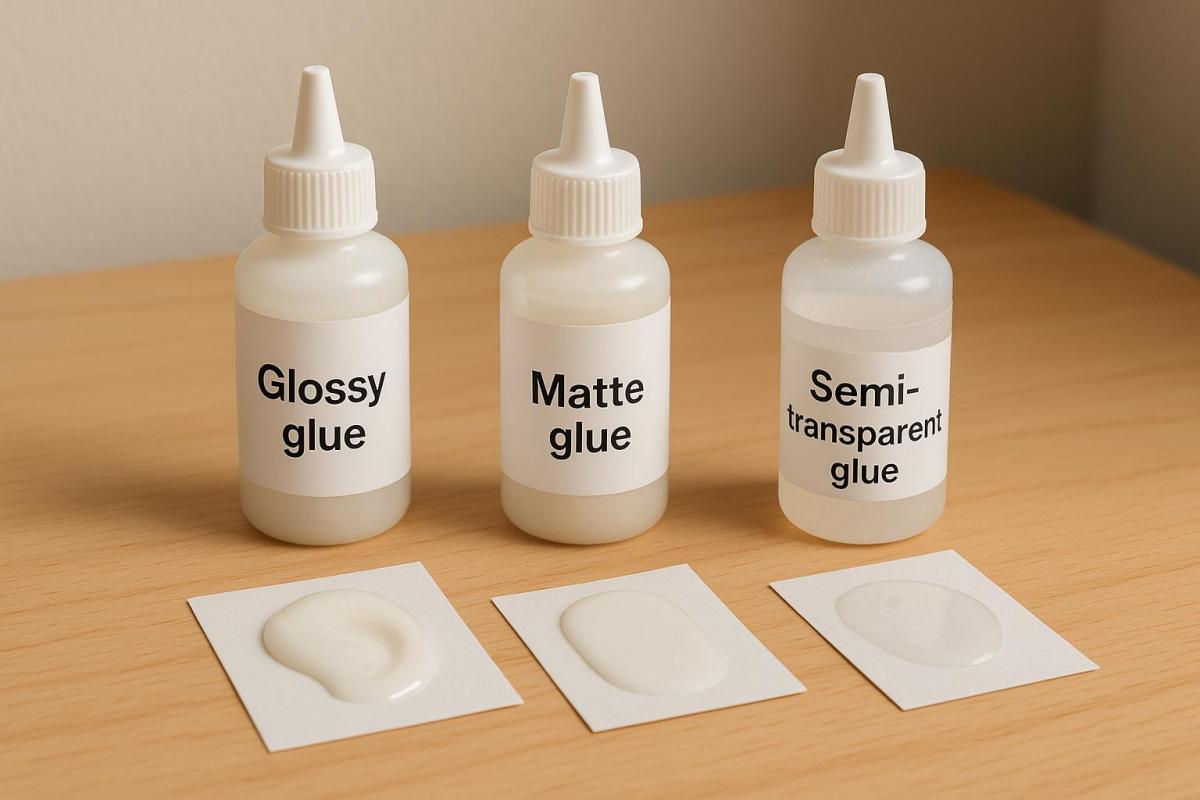
Perfect binding relies on adhesives to secure pages and covers along the spine, creating durable and polished books, catalogs, or magazines. Choosing the right glue is critical to achieving strength, flexibility, and cost efficiency. The three main adhesives used are:
- EVA Hot Melt Adhesive: Affordable and fast-setting, ideal for uncoated or lightly coated paper. It’s less flexible and struggles with heavy use or coated materials.
- PUR Adhesive: Offers superior strength and flexibility, working well with all paper types, including coated and synthetic materials. It’s more expensive and requires longer curing time.
- Water-Based Dispersion Adhesive: A middle-ground option that works with various materials and is eco-friendly. It offers moderate bond strength and slower set times.
Each adhesive has unique strengths and limitations. EVA is budget-friendly and efficient for standard projects, PUR excels in durability and premium finishes, and dispersion adhesives balance cost and compatibility for specialty applications.
Quick Comparison:
| Glue Type | Bond Strength | Set Time | Best For | Cost (per gallon) |
|---|---|---|---|---|
| EVA Hot Melt | Moderate | Seconds | Uncoated/lightly coated papers | $20–$30 |
| PUR | High | Hours (24 hrs) | Coated, synthetic, premium books | $50–$100+ |
| Dispersion | Moderate | Minutes | Coated/uncoated, eco-friendly | $30–$50 |
Selecting the right adhesive depends on your project’s paper type, durability needs, and budget.
Glue Options For Perfect Bound Paperback Books
1. EVA Hot Melt Adhesive
EVA (Ethylene Vinyl Acetate) hot melt adhesive is a widely used option for perfect binding in the United States. This thermoplastic adhesive is heated to its application temperature, applied to the book’s spine, and quickly solidifies as it cools, creating a dependable bond. It offers a straightforward process and reliable performance, making it a popular choice. Here’s a closer look at its key characteristics.
Bond Strength
EVA hot melt adhesive provides sufficient bond strength for most standard perfect binding needs. However, it’s less flexible compared to PUR adhesive, which has higher flex-test values. This rigidity can lead to issues in books requiring a lay-flat finish or those subjected to frequent, repeated use. Under heavy wear, EVA adhesive may crack or fail, particularly in books with coated paper or high page counts.
In comparison, PUR adhesive is about 50% stronger than EVA, making EVA more suitable for projects where extreme durability isn’t a priority.
Set Time
One of EVA’s standout advantages is its fast set time – it solidifies within seconds to a few minutes after application. This rapid setting allows for immediate trimming and shipping, which is especially beneficial for projects with tight deadlines.
However, this speed comes with a trade-off: EVA requires a thicker application, typically 25 to 35 ml, compared to PUR’s 10 to 12 ml. While this increases adhesive consumption, the time saved often outweighs the higher material usage in high-volume operations.
Substrate Compatibility
EVA performs best with uncoated paper and some lightly coated papers. It penetrates standard paper fibers effectively, forming a strong mechanical bond with most common book papers. However, it struggles with heavily coated, lacquered, or synthetic materials, where penetration is limited. Glossy magazine pages, plastic covers, and heavily coated art papers can pose challenges for EVA’s bonding ability.
For more demanding applications, premium EVA formulations are available. These versions are designed to handle tougher substrates and may also meet regulatory standards for indirect food contact, making them suitable for certain packaging uses.
Cost
EVA hot melt adhesive is generally more affordable than PUR, both in terms of material costs and the equipment required for application. The machinery for EVA is simpler, and since it doesn’t involve hazardous chemicals, the safety and ventilation requirements are minimal. This makes EVA an appealing choice for smaller print shops.
For example, Miro Printing & Graphics Inc. uses EVA adhesives for cost-effective, quick in-house binding of standard materials.
With lower material costs, simpler equipment, and faster production speeds, EVA is an economical solution for high-volume projects where budget and efficiency are key considerations. These features make it a practical option for many perfect binding applications.
2. PUR (Polyurethane Reactive) Adhesive
PUR (Polyurethane Reactive) adhesive has become a game-changer in perfect binding. Unlike EVA adhesives, which simply cool and harden, PUR reacts with moisture to create a cross-linked, flexible film. This moisture-curing process results in a bond that’s permanent and cannot be re-melted, making it ideal for demanding binding applications.
Bond Strength
When it comes to strength, PUR adhesive outperforms EVA by a significant margin, delivering 40-60% greater bond strength once fully cured. This strength comes from the cross-linked structure formed during the curing process, providing unmatched durability while maintaining flexibility.
In flex testing, PUR excels with values often exceeding 1,000 flexes. This means books bound with PUR can endure repeated opening and closing without cracking spines or loosening pages. Thanks to its elastomeric properties, PUR stretches and flexes without breaking, making it perfect for books that need to lay flat or handle frequent use.
Set Time
PUR adhesive cures in two stages. It forms an initial bond within seconds to minutes, but full curing takes about 24 hours.
While this longer cure time requires careful planning, the results are worth it. Unlike EVA, which allows for immediate trimming and shipping, PUR-bound books benefit from resting for the full cure period to achieve maximum strength. Many print shops manage this by scheduling PUR jobs earlier in their production cycles or maintaining inventory buffers to accommodate the curing timeline.
Substrate Compatibility
One of PUR’s standout features is its ability to bond with materials that EVA adhesives struggle to handle. It works effectively with coated papers, synthetic materials, plastic covers, and heavily lacquered surfaces, making it the go-to adhesive for premium publications, art books, and specialty projects.
Additionally, PUR dries completely clear, so any excess glue remains invisible on finished pages. This is especially important for high-end publications where aesthetics matter. Its ability to bond with recycled papers, even those treated with various coatings, also makes PUR an excellent choice for environmentally conscious printing projects. Despite its higher cost, PUR’s performance and versatility make it invaluable for premium applications.
Cost
Yes, PUR adhesive is more expensive per pound than EVA, but it’s more efficient in application. PUR requires only 10-12ml of adhesive per book compared to 25-35ml for EVA, helping offset the higher material costs. This thinner application reduces spine distortion and creates a cleaner, more polished appearance.
Using PUR does come with additional equipment needs, such as precise temperature and moisture control systems. However, the long-term durability it provides makes it a worthwhile investment for high-quality publications. U.S. print providers are increasingly turning to PUR to meet the growing demand for premium binding solutions.
The shift toward PUR adhesives reflects their advantages. Many publishers now favor PUR over traditional EVA glue for perfect binding, recognizing its durability and superior performance as worth the higher upfront costs.
sbb-itb-ce53437
3. Dispersion Adhesive
Dispersion adhesives rely on a water-based system for perfect binding. Applied at room temperature, they set as the water evaporates, creating a flexible bond that works well with various paper types. Most dispersion adhesives are made from polyvinyl acetate (PVA), offering low-VOC and environmentally friendly performance. Their adaptability makes them a go-to choice for digital print jobs, art books, and other diverse projects.
Bond Strength
Dispersion adhesives form a strong, flexible bond, particularly effective for uncoated and lightly coated papers. While they may not match the durability of PUR adhesives, their flexibility is a standout feature. This allows books to open easily without cracking the spine, making them a great option for publications that need to lie flat or endure frequent handling. However, for books exposed to heavy use or harsh conditions, other adhesive types might be a better fit.
Set Time
The set time for dispersion adhesives falls between that of hot melt and PUR adhesives. This medium-paced curing process allows for repositioning during binding, offering flexibility during production. For faster results, some variants like Planatol AD 165 are designed to set more quickly.
These setting characteristics, paired with their broad compatibility, make dispersion adhesives a practical choice for many binding needs.
Substrate Compatibility
One of the standout features of dispersion adhesives is their ability to work with a wide range of materials. They perform well with uncoated, coated, lacquered, foiled, and calendered papers. Specific formulations cater to different substrate requirements:
- PräTack B66: Ideal for fan-fold perfect bindings on both coated and uncoated papers.
- Planatol AD 94/5B: Designed for painted, lacquered, foiled, and calendered materials.
- Planatol 152: Best suited for spine-binding with uncoated papers.
Cost
Dispersion adhesives offer a budget-friendly alternative to EVA and PUR adhesives. They are generally less expensive than PUR options while providing better compatibility with various substrates compared to basic EVA formulations. Their affordability, combined with ease of use, minimal cleanup, and no need for heating, makes them an excellent choice for short runs and digital printing.
For guidance on choosing the right adhesive, reach out to Miro Printing & Graphics Inc. This cost advantage, along with their versatility, makes dispersion adhesives a practical option for many binding projects.
Advantages and Disadvantages
EVA, PUR, and dispersion adhesives each bring their own strengths and weaknesses to the table. Choosing the right one depends on your project’s specific needs, budget, and timeline.
EVA hot melt adhesive stands out for its speed and affordability. Its quick set time allows for immediate handling, making it perfect for high-volume projects. Costing around $20 to $30 per gallon, EVA helps keep expenses in check. Plus, it’s a safer option since it doesn’t release harmful chemicals during application. On the downside, EVA’s bond strength is moderate, and its lack of flexibility makes it less ideal for premium publications or books that need to withstand heavy use. For projects requiring enhanced durability, PUR adhesive might be worth considering.
PUR adhesive is the go-to choice for durability and high performance, though it comes with a higher price tag and longer production times. With the ability to endure over 1,000 flexes and exceptional bond strength, PUR is in a league of its own. It also offers unmatched flexibility, allowing books to lay flat without cracking the spine. Its compatibility with all paper types and the need for only 10–12 ml per application results in thinner, more polished spines. However, PUR’s cost – ranging from $50 to $100 or more per gallon – and its 24-hour curing time can delay production schedules. For those seeking a balance between cost, performance, and eco-consciousness, dispersion adhesives might be the right fit.
Dispersion adhesives strike a middle ground, offering decent substrate compatibility and eco-friendly properties. Their water-based, low-VOC formula makes them a greener choice. Priced between $30 and $50 per gallon, they’re more affordable than PUR but pricier than EVA. Their flexibility during application allows for repositioning, which can be helpful during binding. However, slower set times can stretch production schedules, and their bond strength isn’t as robust as PUR adhesives in high-stress scenarios.
| Glue Type | Bond Strength | Set Time | Substrate Compatibility | Cost (per gallon) | Advantages | Disadvantages |
|---|---|---|---|---|---|---|
| EVA Hot Melt | Moderate | Fast (seconds) | Best for uncoated/lightweight | $20–$30 | Quick production, low cost, safer use | Limited durability, less flexible |
| PUR | High | Slow (hours) | Excellent for all papers | $50–$100+ | Superior strength, lay-flat performance | Higher cost, longer cure time |
| Dispersion | Moderate | Moderate (minutes) | Good for coated/uncoated | $30–$50 | Eco-friendly, flexible application | Slower production, moderate strength |
Ultimately, selecting the right adhesive comes down to balancing your project’s performance needs, budget, and deadlines. For tailored advice, Miro Printing & Graphics Inc. in Hackensack, NJ, can help you choose the best option based on your specific materials, volume, and quality expectations.
Conclusion
Selecting the right adhesive depends on your paper type, durability requirements, and production timeline. Each adhesive brings distinct advantages to different binding scenarios. EVA hot melt adhesive is a fast, budget-friendly option, ideal for paperbacks, catalogs, and magazines made with uncoated paper. PUR adhesive, on the other hand, offers unmatched strength and flexibility, making it the go-to choice for art books, photo books, thick manuals, or publications that need lay-flat functionality. Meanwhile, dispersion adhesives strike a balance, working well for fan-folded art books and specialty digital print jobs.
Your decision should align with the specific needs of your project, factoring in paper type, durability, usage, cost, timeline, and environmental conditions. Uncoated papers bond effectively with EVA, while coated, glossy, or heavier papers often call for PUR or specialized dispersion adhesives. For projects requiring long-term durability, the added performance of PUR can make its higher cost worthwhile.
If your project demands not just durability but also a polished appearance, the expertise of in-house bindery professionals can make all the difference. Miro Printing & Graphics Inc. emphasizes this point:
"Let us know what type of project you are working on, and allow us to offer our expertise."
With over 30 years of experience and comprehensive in-house bindery services, their team ensures the adhesive choice is tailored to your materials, volume, and quality standards. Their customized approach and precision allow them to handle even the most intricate binding projects, delivering results that not only meet but exceed expectations.
FAQs
What should I consider when choosing between EVA, PUR, and dispersion adhesives for perfect binding?
When choosing the right adhesive for your perfect binding project, it’s important to match the adhesive to your specific materials and how the final product will be used. Here’s a quick breakdown of the options:
- EVA (Ethylene Vinyl Acetate): This is a budget-friendly choice that works well with standard paper types. However, it may not perform as well in extreme temperatures or under heavy usage.
- PUR (Polyurethane Reactive): Known for its durability, this adhesive offers excellent flexibility and strength. It’s a great option for projects involving coated paper or when you need a binding that will last over time.
- Dispersion adhesives: These water-based adhesives are a more environmentally friendly option, but they don’t quite offer the same durability as EVA or PUR.
When making your decision, think about the type of paper you’re using, how the finished product will be handled, and the environmental conditions it will face, like temperature or humidity. If you’re not sure which adhesive is the best fit, reaching out to a professional print shop – like Miro Printing & Graphics Inc. – can help you achieve the perfect result.
How does the adhesive curing time impact the timeline for a perfect binding project?
The time it takes for adhesive to cure is a key factor in shaping the production schedule for a perfect binding project. For instance, adhesives like EVA (Ethylene Vinyl Acetate) cure relatively fast, which can speed up production. On the other hand, PUR (Polyurethane Reactive) adhesives take longer to cure but offer enhanced durability and flexibility.
When mapping out your project, be sure to factor in the curing time of the adhesive to balance quality with meeting your deadlines. To streamline the process and get expert advice, you might want to collaborate with a professional print shop such as Miro Printing & Graphics Inc. Their team can guide you in choosing the best materials and creating a timeline that works for your project.
What are the environmental advantages of using dispersion adhesives instead of EVA or PUR in perfect binding?
Dispersion adhesives stand out as a greener alternative to traditional options like EVA (ethylene vinyl acetate) or PUR (polyurethane reactive) adhesives. Being water-based, they release fewer volatile organic compounds (VOCs) during use, which means less pollution and a cleaner application process. Plus, their composition often makes them easier to recycle or dispose of responsibly – an appealing feature for anyone aiming to prioritize sustainability.
Although they might not work for every binding project, their eco-friendly nature has made them a go-to option for businesses seeking to minimize environmental impact while maintaining high standards of performance.
Related Blog Posts
- Top 6 Binding Methods for Professional Documents
- Substrate Selection for Digital Printing
- Ultimate Guide to Custom Binding Options
- How Binding Choices Impact Print Durability
https://app.seobotai.com/banner/banner.js?id=692252829c1061ed1621551b
 BergenCountyPrintersBlogs