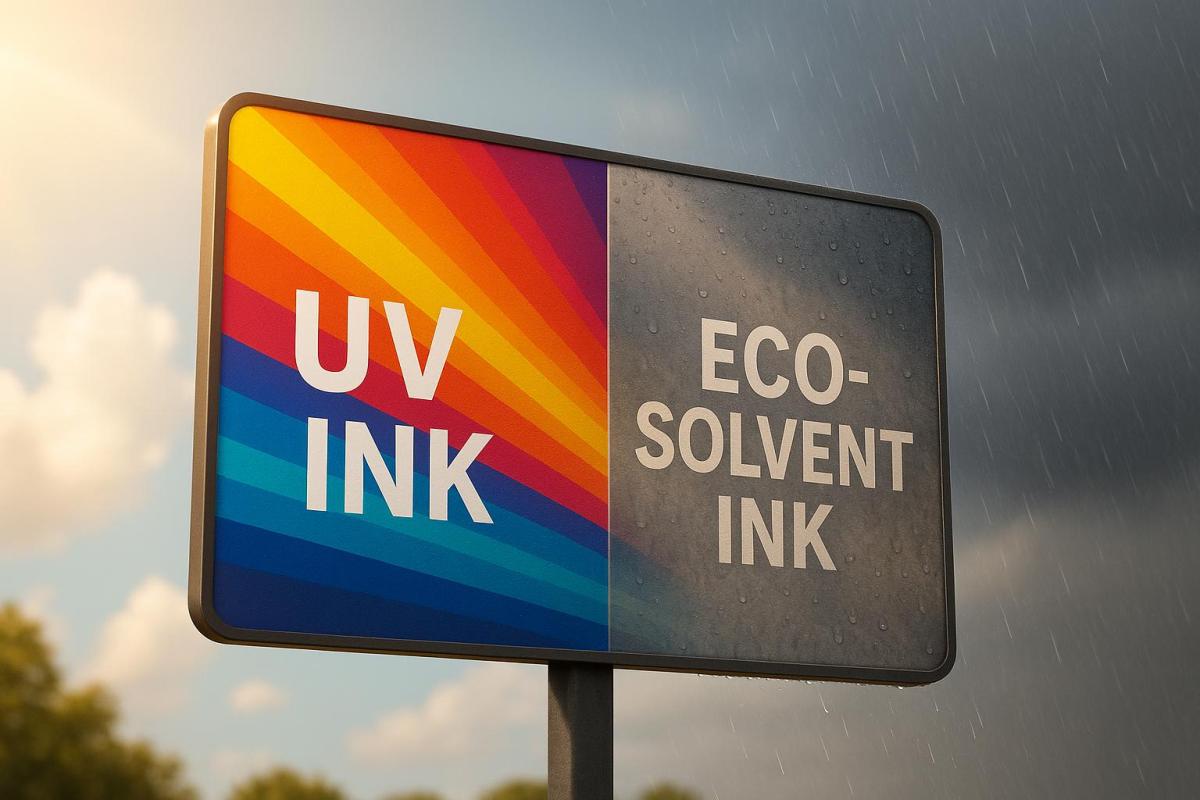
When choosing between UV and eco-solvent inks for outdoor prints, the decision depends on your specific needs:
- UV inks: Best for rigid materials and long-term durability. They cure instantly, resist harsh weather, chemicals, and scratches, and last 5–7 years outdoors without extra protection.
- Eco-solvent inks: Ideal for flexible materials like vinyl and fabric. They offer good weather resistance but often need lamination for extended outdoor use. They emit fewer odors, making them suitable for indoor spaces.
Quick Comparison:
| Factor | UV Inks | Eco-Solvent Inks |
|---|---|---|
| Durability | Long-lasting without lamination | Requires lamination for longevity |
| Flexibility | Limited | High |
| Chemical Resistance | High | Moderate |
| Drying Time | Instant | Requires time |
| Best Use | Rigid materials | Flexible materials |
UV inks are perfect for tough outdoor environments, while eco-solvent inks are a better choice for projects requiring flexibility.
For the best results, match the ink type to your material and project requirements.
Ink Type Comparison Guide for Business Owners
UV Ink Properties and Resistance
To understand why UV inks are a go-to choice for tough outdoor applications, it’s essential to explore their curing process, durability, and compatibility with various materials.
How UV Inks Cure and Form
UV inks cure instantly when exposed to ultraviolet light, creating a solid and durable surface. This rapid polymerization forms a tough, scratch-resistant layer that sits atop the substrate rather than soaking into it. The immediate curing process eliminates drying time, prevents smudging, and ensures vibrant colors with sharp details. This quick solidification is key to their long-lasting performance.
Durability and Resistance Performance
UV inks are built to endure. Prints made with UV inks can last 5–7 years or more outdoors without the need for lamination. Thanks to their chemical composition, they resist UV rays, water, abrasion, and even harsh chemicals like cleaning agents or automotive fluids. Whether exposed to direct sunlight or heavy rain, these prints maintain their professional look. Additionally, their superior water resistance outperforms many traditional transfer methods, making them a reliable option for challenging environments. This resilience not only ensures consistent branding but also helps reduce replacement costs over time.
Material Compatibility and Uses
UV inks excel on rigid materials like acrylic, aluminum composite panels, PVC foam boards, and polycarbonate sheets. When used with these substrates, they can withstand years of outdoor exposure without compromising structural integrity. However, because UV inks tend to be rigid, they may crack on surfaces that stretch or bend frequently, making them less ideal for highly flexible applications.
To maximize results, it’s crucial to use substrates designed to handle UV exposure, temperature fluctuations, and moisture. Proper printer calibration and lamp upkeep are also essential to prevent issues like cracking, peeling, or fading. For projects needing extra protection, applying a clear coat or UV-resistant laminating film can shield prints from fading, moisture, chemicals, and environmental pollutants.
Eco-Solvent Ink Properties and Resistance
Eco-solvent inks take a different route compared to UV inks, using a solvent-based system that prioritizes flexibility and a reduced environmental impact. This makes them a great match for printing on flexible substrates.
Composition and Drying Process
Eco-solvent inks are formulated with gentler solvents that evaporate gradually. As the solvent dissipates, the ink slightly penetrates the substrate and forms a flexible film on its surface. Unlike UV inks, which cure almost instantly, eco-solvent inks require a drying period that depends on environmental factors like temperature and humidity. This slower drying process allows the ink to adapt to substrates that need to bend or stretch, making it especially useful for curved or flexible materials. Thanks to this gradual curing, eco-solvent inks hold up well in outdoor conditions that may fluctuate.
Weather and Chemical Resistance
Eco-solvent inks offer moderate durability for outdoor use. Their resistance to weather can be enhanced with protective lamination, which extends the lifespan of printed materials in diverse environments. Once cured, these inks resist moisture and temperature changes, minimizing issues like color bleeding or adhesion failures. However, their chemical resistance depends on the specific formulation. While many eco-solvent inks can handle mild cleaning agents, additional protective coatings may be necessary for exposure to harsh chemicals.
Low-Emission Benefits and Applications
One standout advantage of eco-solvent inks is their lower volatile organic compound (VOC) emissions. They produce less odor during printing and require less intensive ventilation, making them well-suited for indoor spaces where air quality is a concern. Eco-solvent inks also shine in applications where both durability and flexibility are essential. They are widely used for vinyl banners, vehicle wraps, and window graphics – projects where the ability to stretch or bend without cracking is key to maintaining both the look and functionality of the print. These qualities make them a reliable choice for long-lasting indoor and outdoor applications.
sbb-itb-ce53437
UV vs. Eco-Solvent Ink Comparison
When deciding between UV inks and eco-solvent inks, it all boils down to your project’s specific needs. UV inks are known for their durability, while eco-solvent inks shine in flexibility. Each type has its own strengths and limitations, as outlined in the table below.
Performance Comparison Table
| Factor | UV Inks | Eco-Solvent Inks |
|---|---|---|
| Chemical Resistance | Excellent – withstands harsh chemicals and solvents | Moderate – tolerates mild cleaning agents; often needs extra coating |
| UV Resistance | Superior – retains color even with prolonged outdoor exposure | Good – lamination helps maintain color stability |
| Water Resistance | Outstanding – forms a waterproof layer upon curing | Good – resists moisture well with proper curing |
| Abrasion Resistance | Excellent – creates a hard, scratch-resistant surface | Moderate – more prone to surface wear but offers flexibility |
| Substrate Compatibility | Ideal for rigid materials like metal, glass, and hard plastics | Best for flexible materials like vinyl, fabric, and soft plastics |
| Post-Processing | Ready for handling immediately after curing | Requires drying time and benefits from lamination |
| Outdoor Durability | Long-lasting without additional protection | Shorter lifespan outdoors; durability improves with protective coating |
UV inks are perfect for projects requiring fast curing and exceptional resistance in challenging environments.
On the other hand, eco-solvent inks excel when flexibility is key, making them a go-to for applications like vehicle wraps or banners.
How to Choose the Right Ink Type
Choosing between UV and eco-solvent inks depends on your project’s specific demands. UV inks are the top choice for rigid substrates and situations requiring maximum durability, such as outdoor signs exposed to extreme weather or labels that need to withstand chemical exposure. Their long-lasting performance makes them an excellent investment for industrial and outdoor applications.
Eco-solvent inks, however, are the better option for flexible materials. They’re ideal for vehicle wraps, fabric banners, and indoor graphics where bending and stretching are essential. Plus, their lower odor and minimal ventilation requirements make them more practical for indoor use or in spaces with limited airflow.
While UV inks may come with a higher initial cost, their durability often translates into better long-term value. Eco-solvent inks, with their lower upfront cost, might require additional lamination to extend their lifespan, especially for outdoor use.
Choosing the Right Ink for Your Project
Key Points Summary
The type of ink you choose can make or break your project, especially when it comes to durability. UV inks are known for their excellent resistance to abrasion, chemicals, water, and UV light. They create a tough, weather-resistant coating, making them a go-to option for projects like outdoor signage, industrial labels, or any application where longevity and resilience are non-negotiable.
On the other hand, eco-solvent inks may not provide the same level of durability for high-resistance needs. Understanding these differences helps professionals select the best ink for each specific project.
Miro Printing & Graphics Inc. Expertise
At Miro Printing & Graphics Inc., we bring this knowledge to life. Our team is skilled in both UV and eco-solvent printing, ensuring we meet the exact durability demands of your project.
Whether you’re planning large-format outdoor advertising in New Jersey or tackling a project with strict performance criteria, we’ve got you covered. From initial consultation to final delivery, our services are designed to deliver results that last and leave a lasting impression.
FAQs
What should I consider when deciding between UV and eco-solvent inks for outdoor printing?
When choosing between UV inks and eco-solvent inks for outdoor printing, it’s important to consider how they hold up against the elements. UV inks stand out for their strong resistance to UV rays, harsh weather, chemicals, and scratches. This makes them a go-to choice for projects that need to endure tough outdoor conditions. They can last an impressive 5–7 years or more and work well with both rigid and flexible materials.
On the other hand, eco-solvent inks provide durability for 3–5 years outdoors and are particularly well-suited for flexible materials like vinyl and banners. However, they don’t hold up as well as UV inks when exposed to extreme sunlight or severe weather. Other factors to consider include how quickly they dry, their environmental footprint, and how well they pair with the material you’re using. By weighing these aspects, you can determine which ink type aligns best with your project’s specific requirements.
Why are UV inks so durable, even without lamination?
UV inks stand out for their durability, thanks to their ability to cure instantly when exposed to ultraviolet light. This curing process creates a strong, chemically stable layer that resists fading, water, chemicals, and abrasion. The result? A resilient, plastic-like finish capable of withstanding tough outdoor conditions – no lamination required.
Because of this, UV inks are a go-to option for outdoor printing. They hold up exceptionally well over time, even when faced with challenging weather and environmental factors.
What are the benefits of using eco-solvent inks for indoor printing?
Eco-solvent inks bring a range of benefits to indoor printing. For starters, they release far fewer volatile organic compounds (VOCs) and other harmful pollutants than traditional solvent inks. This not only helps maintain better indoor air quality but also creates a safer and more pleasant environment for both employees and anyone nearby.
Another perk? These inks produce very little fume and have a much gentler odor, making them perfect for use in enclosed spaces. With their lower environmental footprint and health-conscious design, eco-solvent inks are an excellent option for businesses aiming to combine safety with sustainable printing practices.
Related Blog Posts
- Substrate Selection for Digital Printing
- UV Printing vs. Lamination: Which Protects Better?
- Soy-Based Inks vs. Petroleum-Based Inks
- How Water-Based Inks Improve Printing Sustainability
https://app.seobotai.com/banner/banner.js?id=68d339ade3dd4bddfa4bbd10
 BergenCountyPrintersBlogs