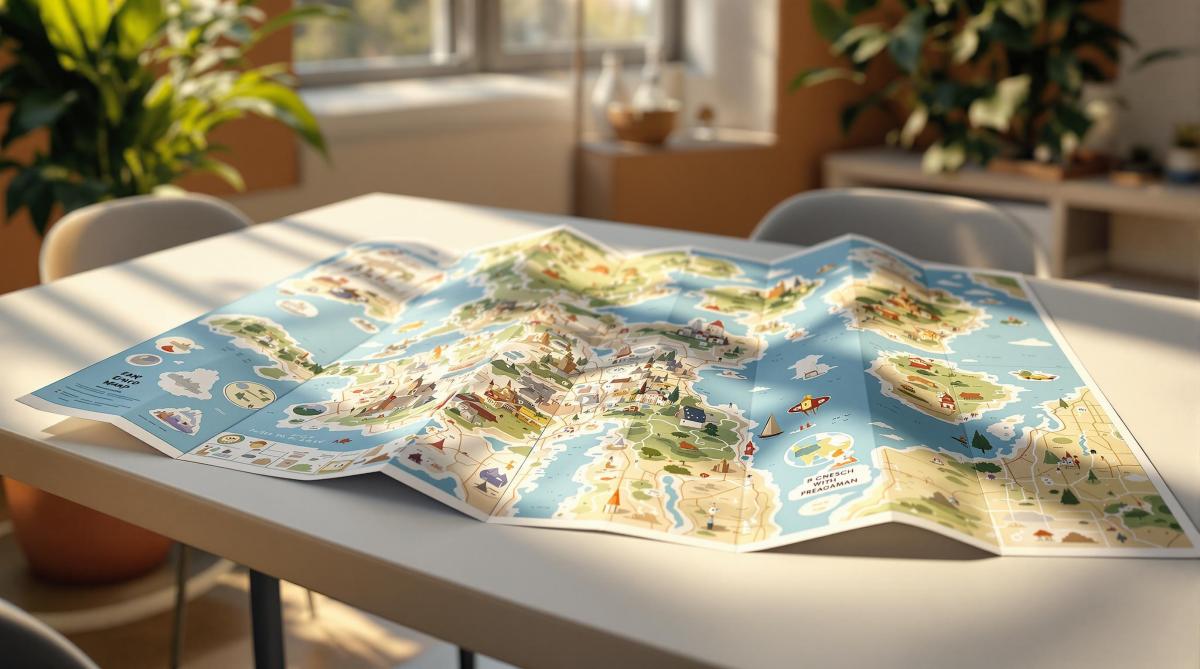
Cross fold designs are a practical way to present large visuals – like maps, diagrams, or brochures – in a compact, foldable format. They use perpendicular folds to create smaller, connected panels, making it easy to navigate complex information step by step.
Key Features:
- Compact Size: Large documents fold into pocket-sized formats.
- Logical Layout: Panels unfold sequentially or fully for easy navigation.
- Durable Materials: Paper type and scoring ensure smooth, clean folds.
Common Uses:
- Maps: Hiking trails, road maps, travel guides.
- Marketing: Product catalogs, event brochures, real estate flyers.
- Education: Step-by-step guides, training manuals, assembly instructions.
Cross fold designs are ideal for anyone needing to share detailed information in a portable, organized way.
Designer Folds: Square Folded Cross
Basic Structure and Components
Cross fold designs rely on precise engineering and careful material selection to achieve their unique layout.
How Cross Folds Work
Cross folds use perpendicular folds to create a grid-like structure. The process begins with horizontal folds, followed by vertical folds, resulting in evenly sized panels. Each panel must be accurately measured to ensure proper alignment.
Standard Dimensions:
| Panel Type | Typical Dimensions (inches) | Common Uses |
|---|---|---|
| Standard Map | 24 x 36 folded to 4 x 6 | Road maps, hiking trails |
| Brochure Size | 17 x 22 folded to 8.5 x 11 | Marketing materials |
| Poster Format | 36 x 48 folded to 9 x 12 | Educational displays |
Designs include a small 1/16-inch gap between panels. This gap accommodates paper thickness and ensures smooth, seamless folding. Paper type and printing methods also play a critical role in the final quality of the fold.
Paper Types and Print Methods
The direction of the paper grain is essential for achieving clean folds. Folds should always align with the grain direction to avoid cracking or uneven edges.
Recommended Paper Types:
- 80# text: Ideal for standard documents.
- 100# text: Suited for maps that will be handled often.
- Synthetic papers: Perfect for waterproof or outdoor applications.
Print Methods:
- Digital printing: Best for short runs or projects requiring variable data.
- Offset printing: Ideal for high-volume jobs and precise color consistency.
- UV-cured inks: Adds durability, especially when printing on synthetic papers.
To prevent cracking along fold lines, scoring is typically done before folding. This ensures clean, professional-looking folds that can withstand repeated use without compromising the document’s integrity.
Main Uses and Applications
Cross fold formats are widely used across industries, combining detailed information with easy portability. Their design offers a practical way to present complex content in a compact and accessible format.
Maps and Travel Documents
Cross fold designs are a staple for travel materials, balancing convenience and functionality. Thanks to their perpendicular folds, users can view specific sections of a map without fully unfolding it. This makes them a popular choice for trail maps and visitor guides at national parks and tourist destinations. Their structure ensures travelers can carry detailed information without sacrificing ease of use.
Marketing Materials
In marketing, cross folds offer an interactive way to present information, guiding viewers through details in a structured and engaging manner. Miro Printing & Graphics Inc. emphasizes the importance of presentation: "Presentation is the first step to a successful, lasting relationship." Cross folds allow businesses to create a step-by-step flow that holds the audience’s attention.
Some common uses include:
- Product catalogs with detailed specifications
- Real estate brochures showcasing properties
- Event information packets
- Displays for trade shows
Learning and Training Tools
For educational and instructional purposes, cross folds help break down complex information into organized, bite-sized sections. This format is particularly useful for:
- Step-by-step guides for technical or procedural instructions
- Quick-reference materials with easy-to-navigate panels
- Assembly manuals that combine visuals and text
- Training modules designed to progress in stages
The combination of precise folding and high-quality printing enhances their effectiveness for learning and training purposes.
sbb-itb-ce53437
Benefits of Cross Fold Designs
Compact and Convenient
Cross fold designs are perfect for turning large visuals into smaller, more manageable forms. Think of maps or diagrams that can fold down to pocket size. This makes them easy to transport and store. Plus, customized folds allow users to access specific sections without needing to open the entire document. For example, technical documents like architectural blueprints or detailed diagrams can stay clear and organized while taking up minimal space.
Engaging and Interactive
Cross fold designs do more than save space – they make the user experience more engaging. By dividing content into logical sections, this format encourages interaction. Each fold reveals new information, helping users stay focused and understand how different sections connect.
There are three ways to navigate cross fold designs:
- Step-by-step: Unfold panels in sequence to follow the content flow.
- Direct access: Open specific sections as needed.
- Full view: Unfold everything to see the entire layout at once.
This flexibility makes cross fold designs both practical and user-friendly.
Print Production Guidelines
Print Quality Standards
Producing professional cross fold designs requires top-notch print quality. High-resolution printing – usually 300 DPI or higher – ensures text stays sharp and images remain clear, even after multiple folds. Precise alignment is crucial, especially when designs extend across multiple panels.
For intricate cross fold projects, partnering with a printing service that offers detailed proofing is key. At Miro Printing & Graphics Inc., every project undergoes rigorous checks to ensure accurate colors, exact registration, and properly aligned folds.
Material Selection
The type of paper you choose plays a big role in the durability and usability of a cross fold design. Here are some important factors to weigh:
- Weight: Pick a paper weight that balances strength with flexibility.
- Coating: Matte or gloss finishes not only affect the look but also impact how well the paper folds.
- Durability: Opt for paper that resists tearing at creases for longer-lasting designs.
For items like maps or technical documents that are handled often, moisture-resistant paper is a smart choice. It helps maintain the structure and appearance of the design over time. Once the right material is selected, precise folding is the next step to achieving a polished cross fold.
Folding Precision
Meeting high print and material standards ensures that each folded panel aligns perfectly, enhancing both the look and function of the design. Modern folding machines use scoring techniques to create smooth, clean creases without damaging the paper – an essential step when multiple folds need to line up perfectly.
As one happy customer shared:
"Great customer service that we didn’t get with our old online printer. Attention to detail is what makes the difference!" – Mike B.
Accurate scoring and even folds are non-negotiable. Experienced print shops rely on calibrated equipment and strict quality controls to deliver flawless results.
Summary
This section recaps the key elements and practical advantages covered earlier.
Main Points
Cross fold designs provide an efficient way to present detailed information in a compact format. Here are the highlights:
- High-resolution printing for sharp, clear visuals
- Durable paper choices with the right weight and finish for longevity
- Accurate folding and scoring to ensure panels align perfectly
These aspects support the production steps outlined previously.
Print Services
For the best results, businesses should partner with skilled print providers. Miro Printing & Graphics Inc. offers custom cross fold designs that combine functionality with visual impact. Their process includes thorough proofing, top-quality printing, and precise folding techniques. This dedication to detail ensures every cross fold meets high standards and serves its purpose effectively.
Related posts
- Folded Print Formats: Cost Breakdown
- 5 Tips to Prevent Cracking on Folded Prints
- French Fold Brochures: Design Tips
- 8 Common Folding Styles for Print Materials
https://app.seobotai.com/banner/banner.js?id=67fc3c50af1a45e500bc28ad
 BergenCountyPrintersBlogs