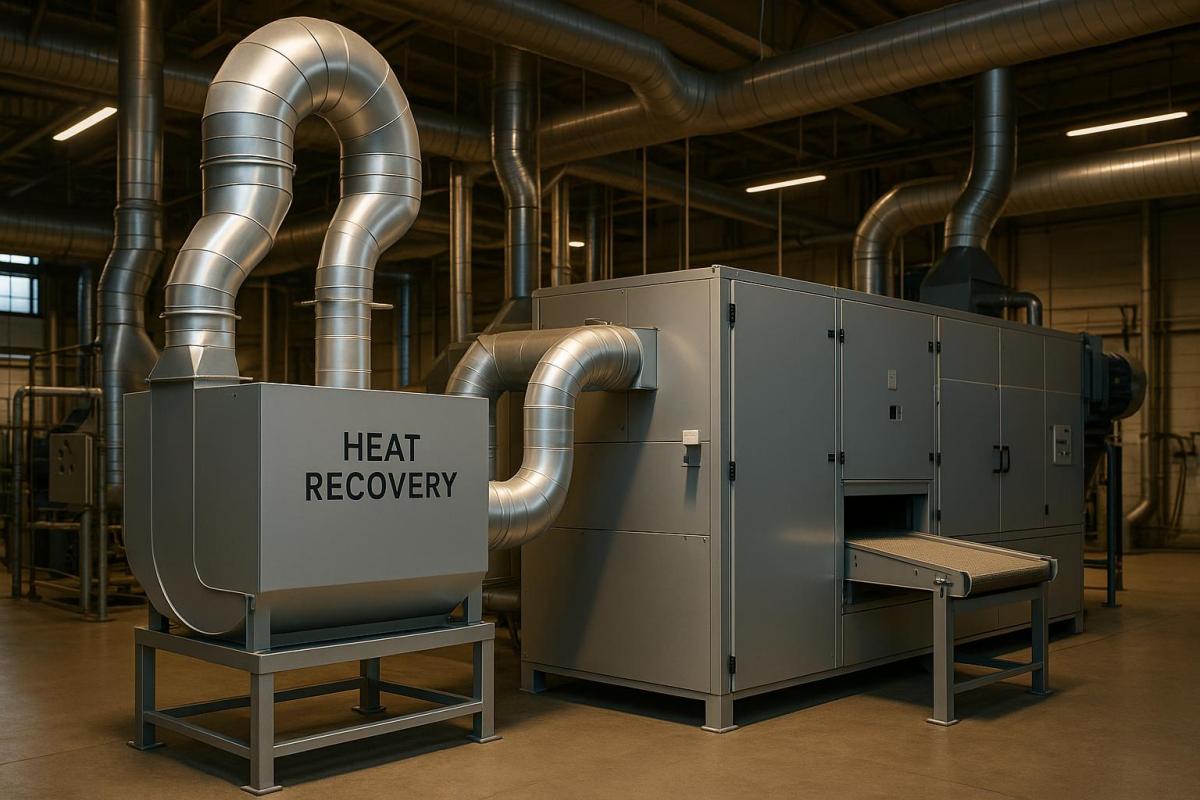
Heat recovery systems save energy and reduce costs in industrial drying operations by reusing heat from exhaust air or gases. These systems are particularly effective in industries like printing, textiles, and paper production, where drying consumes significant energy. Here’s why they matter:
- Energy Efficiency: Recovering waste heat can cut energy use by 20–50%, lowering operating costs.
- Cost Savings: Facilities can save hundreds of thousands to millions of dollars annually, with payback periods typically between 1–4 years.
- Lower Emissions: Systems reduce fossil fuel use and carbon emissions, helping meet regulatory requirements.
- Two Main Types: Sensible heat recovery (direct heat transfer) and latent heat recovery (energy from water vapor condensation).
Modern heat recovery systems, such as heat exchangers and vapor compression systems, are tailored to specific drying needs. They improve energy efficiency while supporting compliance with environmental standards. Facilities running high-demand drying processes, like those in substrate production, benefit the most from these systems.
Process Heat Recovery System with Dust & Odour Control
How Heat Recovery Works in Drying Systems
Heat recovery in drying systems operates on basic thermodynamic principles, capturing heat from exhaust streams and redirecting it into incoming process flows. This process not only cuts energy costs but also reduces environmental impact, as previously discussed. There are two main ways this is achieved: sensible heat transfer (direct heat exchange) and latent heat transfer (energy released during water vapor condensation).
Exhaust air or gases leaving the dryer carry significant thermal energy that would otherwise go to waste. Heat recovery systems harness this energy to preheat incoming air, water, or other fluids, minimizing the need for additional fuel or electricity to reach the required drying temperatures.
Sensible Heat Recovery
Sensible heat recovery focuses on capturing the heat from exhaust air or gases to warm incoming streams, without involving a phase change. This is typically done using heat exchangers – devices like air preheaters (for gas-to-gas transfer) or economizers (for gas-to-liquid transfer). These systems allow efficient energy transfer while keeping the streams separate.
In substrate drying, sensible heat recovery is often used to preheat combustion air or process water. For instance, if exhaust air exits the dryer at 300°F (149°C), a heat exchanger can recover much of that energy to raise the temperature of incoming air from 70°F (21°C) to around 200°F (93°C) or higher. This preheating significantly reduces the workload on primary heating sources. The effectiveness of this process depends on factors such as the temperature difference, flow rates, and the design of the heat exchanger.
Latent Heat Recovery
Latent heat recovery taps into the energy released when water vapor condenses from the exhaust air. This method often captures more energy than sensible heat recovery because the phase change releases a substantial amount of thermal energy – about 1,000 BTU per pound of water vapor under standard conditions. By cooling the exhaust below its dew point, water vapor condenses, releasing this energy, which can then be collected using specialized systems designed to handle moisture and resist corrosion.
This approach is particularly important in processes that remove water-based solvents or moisture from substrates. A notable example is the DryFiciency project (2017–2021), which demonstrated that using high-temperature vapor compression heat pumps for latent heat recovery could cut energy demand from 700–800 kWh per ton to about 200 kWh per ton of evaporated water. The project achieved up to 80% energy savings, alongside significant reductions in fossil fuel use and carbon emissions, showcasing the immense efficiency gains latent heat recovery can provide.
| Heat Recovery Type | Energy Source | Typical Applications | Energy Savings Potential |
|---|---|---|---|
| Sensible Heat Recovery | Temperature difference in gases | Preheating air or water | Moderate to high |
| Latent Heat Recovery | Water vapor condensation | Process heating; hot water supply | High to very high |
While latent heat recovery systems are more complex – requiring careful management of condensate and corrosion risks – their energy benefits often outweigh these challenges, especially in high-moisture environments.
Interestingly, both sensible and latent heat recovery can work together in a single system to maximize energy capture. The best setup depends on the exhaust stream’s characteristics, the desired temperature levels, and the specific needs of the drying process. These considerations lay the groundwork for selecting the right heat recovery equipment, which will be explored in the next section.
Heat Recovery Equipment for Drying Applications
This section explores equipment designed to improve industrial drying efficiency by capturing and reusing waste heat. Choosing the right heat recovery system depends on your drying process, temperature requirements, and facility setup. Below, we detail options for both direct and latent heat recovery systems.
Direct Contact Heat Exchangers
Plate heat exchangers are a compact solution for facilities with limited space. These systems use thin metal plates to transfer heat between exhaust and fresh air streams while keeping them separate, ensuring efficient thermal exchange without contamination.
Rotary heat wheels are ideal for large-scale operations, providing continuous heat transfer. As the wheel rotates, it absorbs heat from the warm exhaust air and releases it into the cooler incoming air. While they require a higher initial investment, their efficiency makes them worthwhile for larger systems.
Shell-and-tube exchangers offer versatility, transferring heat from exhaust gases to liquids or air. This makes them especially useful in facilities needing both heated air and process liquids, adapting well to varied drying conditions.
For applications requiring more advanced recovery, systems designed to capture latent heat are discussed next.
Vapor Condensation Systems
Advanced systems like heat pipes and vapor compression systems recover both sensible and latent heat from exhaust streams. These are particularly effective in processes where moisture removal is critical, such as printing operations using water-based inks or coatings.
Vapor compression heat pumps have demonstrated impressive energy savings in industrial settings. For example, the DryFiciency project achieved energy reductions of 60–80%, lowering specific energy demand from 700–800 kWh per ton to approximately 200 kWh per ton of evaporated water.
Regenerative thermal oxidizers (RTOs) are another dual-purpose solution, especially valuable in facilities handling solvent-based inks or coatings. RTOs not only reduce emissions of volatile organic compounds (VOCs) but also recover heat for drying processes. Operating in autothermal mode, they utilize the heat generated from VOC combustion to supply energy for drying. This approach not only ensures environmental compliance but also cuts energy costs.
For instance, Miro Printing & Graphics Inc. in Hackensack, NJ, uses such systems to meet environmental standards while improving energy efficiency in their solvent-based operations.
Installation with Existing Drying Equipment
Retrofitting heat recovery systems into existing drying setups requires careful planning to maintain optimal drying conditions and ensure compatibility. Key steps include connecting exchangers to existing exhaust ducts and air intakes, managing pressure and condensate, and integrating the system with current controls and safety protocols. Modern systems often come with features like automatic cleaning and noise reduction to enhance reliability and workplace comfort.
Phased installations provide flexibility, allowing facilities to start with basic sensible heat recovery and later upgrade to latent heat systems as energy savings justify further investment. This approach helps manage upfront costs while delivering immediate benefits.
| Equipment Type | Typical Application | Key Benefits |
|---|---|---|
| Plate Heat Exchanger | Air-to-air drying processes | Simple, efficient, and low maintenance |
| Rotary Heat Wheel | Large-scale continuous operations | High efficiency and compact design |
| Shell-and-Tube Heat Exchanger | Processes requiring liquid heating | Versatile performance with robust construction |
| Vapor Compression Heat Pump | High-temperature drying and steam generation | Significant energy savings and carbon reduction |
| Regenerative Thermal Oxidizer | Solvent-based ink drying | Combines emission control with energy recovery |
Regular monitoring and maintenance are crucial to ensure long-term performance. Many modern systems feature automated controls that adjust operations based on production needs and environmental conditions, enhancing efficiency and reducing manual oversight.
sbb-itb-ce53437
Financial and Environmental Benefits of Heat Recovery
Heat recovery systems offer a smart way to cut energy use, lower emissions, and ease regulatory challenges. By reusing waste heat, facilities can save a lot of money and improve their environmental performance at the same time.
Energy Cost Savings
Heat recovery systems can slash energy consumption in drying operations by 20–50%, depending on how well the technology integrates with the process. For example, paper and board facilities have managed to recover over 50 MW of energy, translating into annual savings ranging from hundreds of thousands to several million U.S. dollars. One U.S. tissue paper manufacturer reduced natural gas usage for drying by 30%, saving about $250,000 annually. This also cut over 1,000 metric tons of CO₂ emissions each year, with the entire system paying for itself in less than three years. In a more specialized case, a dairy company used a heat-regenerating adsorption dryer to recover up to 400 kW of heat. This heat was then used to preheat boiler feed water and support hot water processing, improving the overall efficiency of the facility. These financial gains go hand in hand with meaningful environmental benefits.
Carbon Reduction and Environmental Impact
By cutting fossil fuel use, heat recovery systems significantly reduce carbon emissions, making them a key tool for eco-conscious manufacturing. Case studies show that CO₂ emissions in drying processes can drop by 20–50%, mirroring the energy savings achieved. Beyond reducing carbon output, these systems can work alongside purification technologies, like regenerative thermal oxidizers, to lower emissions of volatile organic compounds (VOCs). They also help curb the formation of secondary pollutants and, in closed-loop setups, can recycle evaporated water back into the process, reducing overall water consumption. Such improvements not only help facilities comply with strict U.S. environmental regulations, like those under the Clean Air Act, but can also make them eligible for energy efficiency incentives and rebates. One example from the converting industry involved a substrate production facility that installed a regenerative thermal oxidizer with integrated heat recovery. The system effectively purified emissions to levels well below legal limits and recovered enough heat to operate in an autothermal mode, eliminating the need for additional fuel.
Return on Investment (ROI)
Heat recovery systems typically offer strong financial returns, with payback periods ranging from 1 to 4 years depending on factors like system complexity, energy prices, and the scale of implementation. Once installed, these systems can continue to deliver operational cost savings for over a decade. In substrate production, key factors affecting ROI include the initial cost of installation, energy prices (for both natural gas and electricity), system efficiency, ease of integration with existing equipment, and the facility’s operating hours. Facilities with continuous, high-demand drying loads – especially those running multiple shifts – tend to see faster returns. For instance, the tissue paper facility mentioned earlier saved $250,000 annually and achieved a payback period of under three years, all while improving compliance with regulatory requirements.
| Financial Metric | Typical Range | Key Factors |
|---|---|---|
| Energy Savings | 20–50% reduction | System type, integration quality |
| Payback Period | 1–4 years | Energy prices, facility size, operating hours |
| Annual Cost Savings | $100,000–$2,000,000+ | Facility scale, energy consumption |
| Long-term Benefits | 10+ years | System maintenance, energy price trends |
For printing operations, companies like Miro Printing & Graphics Inc. in Hackensack, NJ, have successfully combined heat recovery with emission control to achieve both economic and environmental gains. These examples highlight the potential of heat recovery systems to deliver lasting value across industries.
Summary and Key Points
Heat recovery systems transform waste heat into usable energy, significantly improving the efficiency of drying processes in substrate production facilities. By capturing heat from exhaust streams and repurposing it to preheat process inputs, these systems achieve both operational savings and reduced environmental impact.
These systems use heat exchangers to harness energy from hot exhaust gases, with recovery capabilities exceeding 50 MW (equivalent to 86 tons of steam per hour). Modern units can generate up to 400 kW for preheating applications, demonstrating their impressive capacity.
There are two main approaches to heat recovery: sensible recovery, which captures direct thermal energy, and latent recovery, which utilizes energy from water vapor condensation. These systems are designed to integrate seamlessly with existing drying setups, often requiring only minor adjustments.
The advantages are clear: heat recovery reduces energy consumption, lowers operational costs, and typically pays for itself within 1–3 years. For companies like Miro Printing & Graphics Inc., this makes it a practical and cost-effective solution.
Beyond cost savings, heat recovery systems contribute to environmental goals by cutting fuel use, reducing VOC emissions, and even lowering water demand in closed-loop systems. These benefits help facilities meet U.S. environmental standards, particularly when combined with technologies like regenerative thermal oxidizers.
For printing operations and substrate production facilities, such as those managed by Miro Printing & Graphics Inc., heat recovery systems offer a competitive edge. They deliver immediate energy savings, boost process efficiency, and enhance compliance with environmental regulations, making them a critical element of sustainable business practices.
FAQs
How do heat recovery systems help lower carbon emissions in industrial drying processes?
Heat recovery systems are a game changer when it comes to cutting carbon emissions. They work by capturing waste heat generated during industrial drying processes – heat that would otherwise escape into the air – and putting it to good use. This recycling process helps facilities reduce energy consumption, which in turn lowers greenhouse gas emissions and boosts overall energy efficiency.
Beyond the environmental benefits, these systems can also lead to noticeable savings on energy costs. For substrate production facilities, this means a practical way to operate more sustainably while keeping expenses in check. Adopting heat recovery technology is a smart move for businesses aiming to balance greener practices with steady productivity.
What is the difference between sensible and latent heat recovery, and how do they contribute to energy efficiency in drying processes?
When it comes to heat recovery, there are two main approaches: sensible heat recovery and latent heat recovery. Sensible heat recovery deals with capturing and reusing heat from temperature changes in air or materials. On the other hand, latent heat recovery focuses on reclaiming energy from moisture or phase changes, like condensation. Both methods are excellent ways to cut down on energy waste by recycling heat that would otherwise escape.
In drying processes, sensible heat recovery works best in systems with large temperature swings, while latent heat recovery shines in settings with high moisture levels. Combining these methods allows facilities to significantly reduce energy use, cut operating costs, and take a step toward more efficient and eco-friendly operations.
What should you consider when upgrading existing drying equipment with heat recovery systems?
When upgrading drying equipment with heat recovery systems, there are a few crucial aspects to keep in mind. Start by evaluating how energy-efficient your current equipment is and pinpointing where heat loss occurs. This step helps you gauge the potential advantages of adding a heat recovery system. Another key consideration is compatibility – the new system needs to integrate smoothly with your existing setup without affecting performance.
You’ll also want to weigh the cost-effectiveness of the upgrade. Factor in the upfront costs, projected energy savings, and how long it will take to recoup your investment. Lastly, take a close look at the maintenance requirements of the heat recovery system to ensure it aligns with your facility’s operational capacity. Careful planning can lead to better energy efficiency and lower operating costs down the road.
Related Blog Posts
- Cost-Saving Tips for Sustainable Paper Choices
- How Die-Cutting Impacts Waste Reduction
- Ultimate Guide to Recycling in Printing
- Improving Resource Efficiency in Paper Substrates
https://app.seobotai.com/banner/banner.js?id=68f8448d1019c13c0b387bc1
 BergenCountyPrintersBlogs