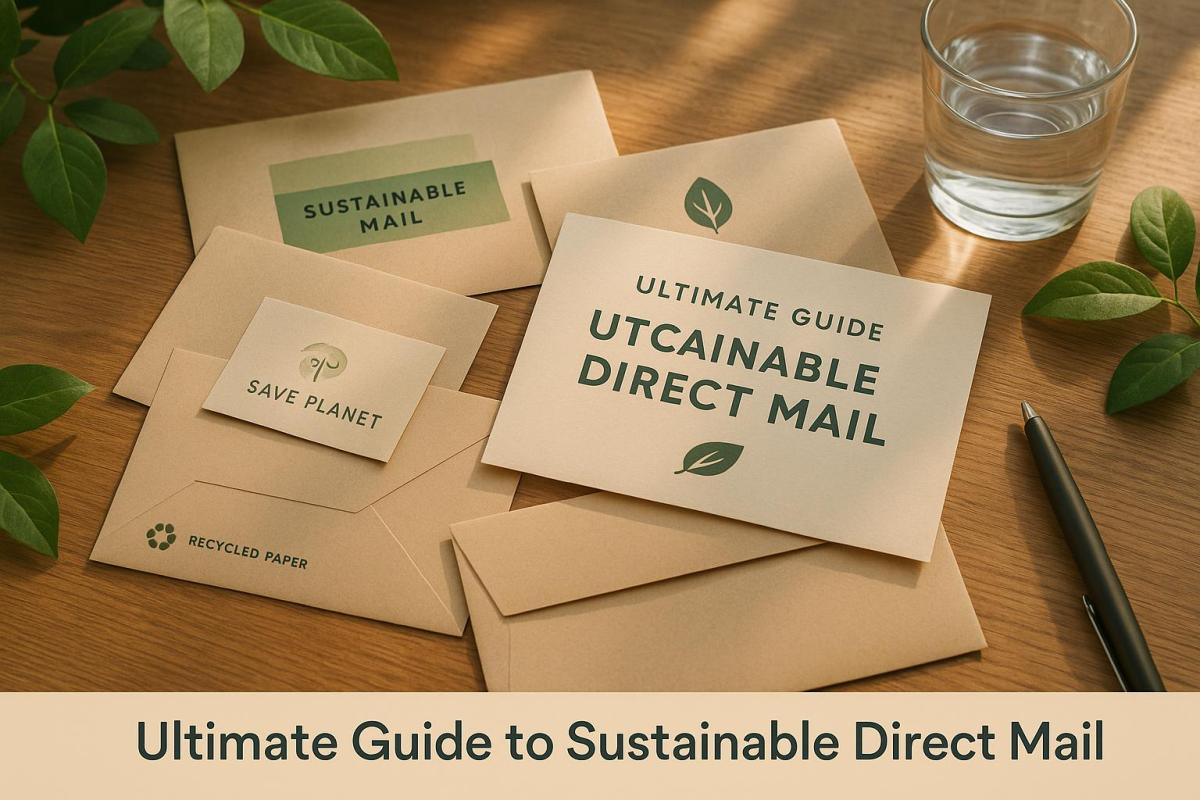
Direct mail marketing can achieve high response rates but often comes with a heavy environmental cost. This guide focuses on how businesses can make their campaigns more eco-friendly while reducing waste and improving efficiency. Here’s what you’ll learn:
- Use recycled or responsibly sourced materials like FSC-certified paper.
- Switch to vegetable-based inks and biodegradable coatings.
- Streamline designs to save on paper and ink.
- Integrate digital tools like QR codes to cut down on printed materials.
- Optimize mailing lists to avoid undeliverable or irrelevant mail.
- Partner with local vendors to reduce transportation emissions.
- Track progress with key metrics like waste reduction and carbon savings.
The bottom line: Sustainable direct mail is achievable with small changes to materials, design, and delivery methods. This approach not only reduces waste but also resonates with eco-conscious consumers and cuts costs. Let’s dive into the details.
How Can Direct Mail Campaigns Be More Sustainable? – Marketing and Advertising Guru
Choosing Green Materials and Printing Methods
Opting for eco-friendly materials and production techniques not only supports environmental goals but also enhances the effectiveness of your campaign. These decisions directly influence both the ecological footprint and the overall success of your project. The material choices you make now will set the foundation for environmentally conscious design and production techniques discussed later in this guide.
Green Paper Options
Recycled paper is a straightforward and widely available option for sustainable direct mail. It’s made from post-consumer materials like old newspapers and magazines or pre-consumer waste such as paper mill trimmings. Compared to virgin paper, producing recycled paper uses fewer resources and generates significantly lower greenhouse gas emissions.
If you’re looking for responsibly sourced options, consider papers certified by the Forest Stewardship Council (FSC) or the Sustainable Forestry Initiative (SFI). These certifications ensure the paper comes from forests managed under strict environmental and social standards. Another option to explore is bio-laminated postcards, which are biodegradable in landfills yet durable enough for handling and display.
Additionally, prioritize paper types that require less water, bleach, and energy during manufacturing. These choices contribute to a cleaner production process and align with sustainable goals.
Safe Inks and Coatings
Switching to vegetable- or water-based inks is a simple way to reduce environmental harm. Vegetable-based inks, including soy-based options, decrease reliance on fossil fuels and help lower carbon emissions. Similarly, water-based inks reduce the release of harmful chemicals during printing and disposal.
For coatings and finishes, avoid traditional plastic-based options. Instead, go for recyclable or biodegradable alternatives. Water-based coatings are another excellent choice, as they emit fewer chemicals. If durability or visual appeal requires a coating, choose compostable or biodegradable finishes that allow your mailers to be recycled or composted after use.
Reducing Waste in Production
Efficient production processes can significantly cut down on waste. For instance, double-sided printing reduces paper consumption by up to 50%. Using appropriately sized envelopes and packaging minimizes excess materials, while optimizing print layouts reduces trim waste and maximizes material use. Batch printing is another practical approach, combining multiple jobs or larger quantities to lower both costs and waste.
To avoid unnecessary reprints, review digital proofs and mock-ups thoroughly before finalizing designs.
Miro Printing & Graphics Inc. specializes in sustainable campaigns by offering integrated design, printing, and waste-reduction solutions. Their in-house design services, digital and offset printing capabilities, and bindery operations ensure sustainability is considered at every stage of production.
Minimalist design can also play a big role in conserving resources. Simplifying graphics and removing unnecessary elements reduces the use of both paper and ink. Thoughtful use of white space focuses attention on key messages, while natural color palettes can incorporate plant-based dyes that are gentler on the environment. On-demand printing is another smart option, producing only the quantities you need and eliminating excess inventory and waste.
| Material Choice | Environmental Benefit | Best Application |
|---|---|---|
| Recycled Paper | Lower greenhouse gas emissions | General direct mail pieces, newsletters |
| FSC-Certified Paper | Supports responsible forest management | Premium campaigns, branded materials |
| Vegetable-Based Inks | Reduces reliance on petroleum | All printed materials |
| Bio-Laminated Postcards | Biodegradable and durable | Postcards, promotional cards |
| Double-Sided Printing | Cuts paper usage by up to 50% | Multi-message campaigns, catalogs |
Partnering with a printing company that prioritizes waste-reduction techniques is essential for achieving sustainable production without compromising quality. Look for providers that recycle scraps, manage inventory efficiently, and use optimized cutting patterns to minimize material waste.
Design Strategies for Green Direct Mail
Creating environmentally friendly direct mail that’s both effective and visually appealing is all about striking the right balance between engagement and resource conservation.
Smart Design Techniques
Streamlining your mailer’s design can significantly cut down on materials and costs. For example, using USPS-approved postcard sizes not only reduces paper and postage expenses but also minimizes transportation emissions. Opt for postcards or single-sheet self-mailers instead of multi-page brochures. These formats require less paper, ink, and energy to produce while still delivering your message effectively.
A clean, simple layout with plenty of white space can draw attention to your key messages while using less ink. Pair this with natural color palettes and plant-based dyes to align with environmentally conscious branding.
Be mindful of features that complicate recycling, such as plastic windows or metallic foils. Instead, choose water-based coatings over UV or plastic-based finishes. If extra protection is necessary, biodegradable laminates can ensure your mailers break down naturally over time.
A great example of these principles in action comes from Compu-Mail in 2024. By adopting a minimalist design approach for a major retail client, they reduced paper use by 32% and boosted response rates by 18% – proving that sustainable design can deliver impressive results.
Adding Digital Elements
Incorporating digital tools like QR codes and personalized URLs can transform traditional mail into an interactive experience. A single postcard with a QR code can guide recipients to online resources, such as videos, detailed product information, or personalized landing pages. This reduces the need for extensive printed materials while enhancing engagement.
You can also explore augmented reality (AR) features. With AR, recipients can use their smartphones to access interactive 3D demonstrations or virtual try-ons, making your campaign more engaging and memorable. These digital elements not only enrich the user experience but also provide valuable data for tracking and analyzing campaign performance.
Companies like Miro Printing & Graphics Inc. make it easy to integrate these technologies. Their in-house design and production services ensure that both physical and digital components work seamlessly together for a high-quality result.
Green Messaging to Connect with Recipients
Every mailer should include clear recycling instructions. Simple messages like “Recycle this mailer to help reduce waste” alongside recognizable recycling symbols can encourage responsible disposal and build trust with your audience.
When promoting your sustainability efforts, avoid vague claims. Be specific and transparent about your eco-friendly practices. For instance, stating that your mailer is “Made with FSC-certified paper from responsibly managed forests” provides credibility and resonates with environmentally conscious consumers.
You can also use your mailer to spark a broader conversation about sustainability. Include a link to a website or landing page where recipients can learn more about your green initiatives through stories, infographics, or videos. This not only educates your audience but also inspires them to adopt eco-friendly practices themselves.
| Design Strategy | Environmental Benefit | Engagement Impact | Implementation Tip |
|---|---|---|---|
| Minimalist Layout | Reduces ink and paper use | Improves message clarity | Use white space effectively |
| QR Code Integration | Cuts down on additional inserts | Creates an interactive experience | Link to personalized content |
| Standard Sizing | Optimizes material usage | Maintains a professional look | Follow USPS size guidelines |
| Natural Color Palette | Uses plant-based dyes | Reinforces eco-friendly branding | Stick to earth tones |
Sustainable design is all about continuous improvement. Test small batches before scaling up, and regularly evaluate material usage, engagement metrics, and recipient feedback to refine your approach.
Next, we’ll dive into sustainable delivery practices to further reduce your campaign’s environmental impact.
sbb-itb-ce53437
Green Delivery and Mailing Practices
The final leg of your direct mail campaign is a prime opportunity to lower its environmental impact. Delivery vehicles are a major source of carbon emissions, but with smart planning and the right partnerships, you can significantly reduce your campaign’s footprint.
Improving Delivery Routes
Careful planning of delivery routes can dramatically cut the carbon emissions that result from scattered and inefficient shipments. Consolidating mailings with other deliveries and using centralized hubs to maximize vehicle capacity are effective ways to achieve this.
Collaborating with postal services to streamline delivery routes also helps reduce emissions and costs. For instance, USPS provides tools that group addresses geographically, minimizing unnecessary delivery overlaps.
Another way to reduce environmental impact is by refining your mailing list. By targeting only relevant recipients through thorough list analysis, you not only improve response rates but also eliminate unnecessary deliveries. Fewer stops mean fewer vehicles on the road and less fuel consumption.
Timing your campaign strategically with your mailing service provider can further boost efficiency. Aligning your mailings with regular delivery schedules avoids the need for special trips and ensures your items travel alongside other shipments. Local partnerships can also play a big role in shrinking your environmental footprint.
Working with Local Partners for Reduced Footprint
Teaming up with local print shops, such as Miro Printing & Graphics Inc. in Hackensack, NJ, is another way to cut transportation-related emissions. When printing, mailing, and fulfillment happen closer to your target audience, the need for long-distance shipping – and its associated carbon output – is minimized.
Local partnerships come with other eco-friendly perks. When all mailing and fulfillment services are handled under one roof, like at Miro Printing & Graphics Inc., you reduce the need for multiple transport legs between providers. This not only saves on emissions but also streamlines the entire process.
Look for local businesses that prioritize sustainability. Certifications like FSC (Forest Stewardship Council) membership are reliable indicators of environmentally responsible practices. Additionally, local providers often offer quicker turnaround times, reducing the need for rush shipping methods that generate higher emissions. Plus, working with nearby partners improves communication and quality control, which can help prevent reprints or corrections that waste resources.
Beyond the environmental benefits, supporting local businesses strengthens community economies, creating a positive cycle where sustainable practices thrive. These partnerships, combined with effective list management, can make a significant difference.
Address Validation and List Maintenance
Accurate and well-maintained mailing lists are crucial for efficient delivery and achieving sustainability goals. Validating addresses and updating lists regularly help prevent mail from being sent to undeliverable or outdated addresses, cutting down on wasted materials and unnecessary emissions. Research indicates that proper list cleaning can reduce undeliverable mail by up to 20%, saving both resources and costs.
USPS address validation tools can verify addresses in real time before a campaign begins, catching common errors like misspelled street names or outdated ZIP codes. Third-party services can also identify duplicates, deceased recipients, or individuals who have moved without leaving a forwarding address.
Modern CRM systems simplify list maintenance by automatically flagging undeliverable addresses and removing inactive recipients. This ensures your mailings reach only valid, engaged recipients, aligning with your sustainability efforts.
Regularly updating your database to remove duplicates, verify addresses, and segment lists for targeted campaigns not only improves response rates but also reduces your environmental impact. Many mailing services, such as those offered by Miro Printing & Graphics Inc., integrate automated address validation tools directly into their processes, making it easier to maintain clean lists.
Cleaner mailing lists lead to more efficient delivery routes, fewer unnecessary stops, and lower fuel consumption per successful delivery. When combined with other sustainability efforts, these practices create a ripple effect of environmental benefits.
Measuring and Communicating Your Green Efforts
Tracking and sharing the results of your sustainable direct mail initiatives not only strengthens your credibility but also helps refine your practices. By measuring environmental performance, you can pinpoint successes and identify areas for improvement. At the same time, clear and honest communication builds trust with eco-conscious consumers. Let’s dive into the key metrics and strategies that can highlight your green impact.
Tracking Key Green Metrics
A successful sustainability program starts with identifying and measuring the right metrics. One of the most telling indicators is waste reduction. Compare material waste before and after implementing sustainable practices to see the difference. For instance, switching to eco-friendly materials can significantly cut waste – track these changes with concrete data.
Another crucial metric is the percentage of recycled or sustainably sourced materials used. Ask your suppliers for documentation that confirms the percentage of post-consumer or pre-consumer recycled content in your paper and packaging. This data not only ensures your materials align with your goals but also provides valuable proof to share with stakeholders.
To assess your carbon footprint, use postal service calculators to estimate emissions based on factors like material type, volume, shipping distance, and energy sources. Collaborating with print partners, such as Miro Printing & Graphics Inc., who offer carbon reporting services, can help you fine-tune these calculations.
Energy audits with reliable print partners can also provide insights into your environmental impact. For example, producing recycled paper generates up to 50% fewer greenhouse gas emissions compared to virgin paper, making this an essential metric to highlight your efforts.
Building Trust Through Certifications and Labels
Certifications are a powerful way to demonstrate your commitment to sustainability. Recognized labels like FSC (Forest Stewardship Council) and SFI (Sustainable Forestry Initiative) confirm that your paper products come from responsibly managed forests. Recycling symbols, on the other hand, show that your materials are either recyclable or made from recycled content.
The use of FSC-certified paper in direct mail campaigns has grown significantly in recent years, reflecting a broader industry focus on sustainability. Place certification logos in easily noticeable but non-intrusive spots, such as the back panel or near the address block. Add a brief explanation of what the certification represents, and consider including a QR code or URL that links to more details about your sustainability efforts. This approach not only informs but also engages recipients, making your commitment more transparent.
Teaching Your Audience About Green Practices
Once you’ve established credibility through certifications, turn your attention to educating your audience. Use your direct mail as a platform to share simple, actionable messages about environmental responsibility. Highlight your eco-friendly materials with concise, clear text on mailers and digital channels.
For example, include recycling instructions like, "Please recycle this mailer" or "Printed on recyclable material." These small touches can encourage proper recycling. You can also go a step further by offering links to local recycling guidelines or providing incentives, such as discounts for returning used mailers, to promote responsible disposal.
Sharing tangible data – like waste reduction figures, carbon savings, or certifications achieved – can make your impact relatable. Case studies are another effective way to illustrate your progress. Regular updates through newsletters, social media, or dedicated web pages keep stakeholders informed and engaged with your ongoing efforts.
To further reduce waste, consider using address validation and list management tools to minimize undeliverable mail. Highlighting these operational improvements in your communications reinforces your commitment to sustainability.
Finally, extend your educational efforts beyond mailers. Campaigns through email or social media can amplify your message and build long-term awareness about environmental issues. This multi-channel approach ensures your sustainability story reaches your audience wherever they are, while maintaining a consistent and impactful narrative.
Conclusion
Sustainable direct mail offers tangible benefits, from improving brand perception to reducing costs and building stronger customer loyalty. Embracing environmentally friendly practices aligns with the growing demand for sustainability and helps businesses stay ahead of potential regulatory changes.
Key Points Summary
The backbone of sustainable direct mail lies in thoughtful material selection. Opting for FSC-certified or recycled paper, vegetable-based inks, and biodegradable coatings reduces environmental impact without sacrificing quality. Streamlined design choices – like resizing mailers, using minimalist layouts, and printing double-sided – cut down on material usage while maintaining an appealing look. Incorporating digital elements enhances engagement, offering more content with less paper.
Efficient delivery and list management play a critical role in reducing waste. Ensuring mail reaches only the intended audience not only minimizes environmental impact but also improves campaign efficiency. Tracking your efforts through metrics like the percentage of recycled materials used or waste reduction achieved provides hard data to share with stakeholders. Certifications such as FSC and SFI enhance credibility, while including recycling instructions encourages recipients to participate in your green initiatives.
The move toward personalized, data-driven campaigns and partnerships between brands and suppliers is driving faster adoption of sustainable materials and practices.
Next Steps to Take Action
Ready to make your direct mail strategy more sustainable? Start by reviewing your current processes and identifying areas for improvement. Simple changes, like switching to FSC-certified paper or verifying mailing addresses, can make a big difference. Cleaning up mailing lists to reduce undeliverable mail is a small step with a significant impact on both the environment and your campaign ROI.
Work with local, eco-conscious providers to reduce transportation emissions and support sustainability in your community. For example, Miro Printing & Graphics Inc., based in Hackensack, NJ, offers a range of printing and mailing services, including digital and offset printing, large-format capabilities, and in-house design and bindery. Partnering with a local provider like this not only cuts down on your carbon footprint but also ensures close collaboration with a team dedicated to green practices.
Set clear sustainability goals and implement systems to track your progress using metrics that matter. Educate your team on eco-friendly practices and create workflows that make sustainable decisions easy and automatic. Including recycling instructions and educational messages on your mailers extends your environmental efforts beyond your business.
FAQs
What are the best ways to make my direct mail campaigns sustainable and budget-friendly?
To make your direct mail campaigns more eco-friendly and budget-conscious, start with recycled or FSC-certified paper. These options help cut down on environmental impact without sacrificing quality. Pair this with eco-friendly inks like soy-based or water-based varieties, which are gentler on the planet.
Streamline your design to minimize waste – stick to standard sizes to avoid unnecessary trimming and keep postage costs down. Consolidating mailings can further reduce both material use and shipping expenses. Working with a full-service print shop that emphasizes sustainable practices can simplify the process and ensure your campaign stays environmentally responsible.
You can also incorporate digital elements like QR codes or personalized URLs. These not only cut back on printing but also boost engagement, making your campaign efficient and impactful.
How can I measure and share the environmental impact of my direct mail campaigns?
To understand the impact your direct mail campaigns have on the planet, start by keeping track of key elements like how much paper you’re using, the percentage of recycled materials involved, and the carbon emissions tied to production and delivery. You can use tools like carbon footprint calculators to get a clearer picture of the environmental costs. Partnering with vendors who prioritize eco-conscious practices can also help ensure every step of your campaign aligns with sustainability goals.
Make sure to share these efforts with your audience. Highlight details such as using recycled paper, eco-friendly inks, and carbon-neutral shipping in your campaign messaging. Being open about your green initiatives not only strengthens trust but can also inspire others to make more environmentally-friendly choices.
How can tools like QR codes and augmented reality make direct mail campaigns more sustainable and effective?
Digital tools like QR codes and augmented reality (AR) can completely transform direct mail campaigns, making them more engaging while cutting down on waste. For instance, QR codes let you guide recipients to online resources – think detailed product pages, videos, or digital catalogs – without needing to print extra materials. This approach not only saves paper but also creates a richer, more interactive experience for your audience.
AR takes things a step further by adding an interactive twist to your mailers. Recipients can use their devices to scan printed materials and access digital content like 3D product demonstrations or virtual tours. This eliminates the need for additional printed inserts and leaves a lasting impression, combining creativity with eco-consciousness.
Related Blog Posts
- Cost-Saving Tips for Sustainable Paper Choices
- Ultimate Guide to Recycling in Printing
- Guide to Eco-Friendly Printing Substrates
- Ultimate Guide to Eco-Friendly Mailing Formats
https://app.seobotai.com/banner/banner.js?id=69167af960ed14ccdc748695
 BergenCountyPrintersBlogs