Ultimate Guide to Foil Stamping Costs

Explore the factors influencing foil stamping costs, from materials to methods, and learn how to achieve high-quality results within budget.

Foil stamping adds a polished, high-end look to printed materials like business cards, invitations, and packaging. However, the cost can vary based on factors like materials, design complexity, and production methods. Here’s what you need to know:

  • Material Choices: Standard papers cost less, while textured or premium options increase expenses.
  • Foil Types: Metallic foils are affordable, but specialty options like holographic foils are pricier.
  • Design Complexity: Intricate designs require more labor and higher die setup costs.
  • Production Volume: Larger orders reduce the per-unit cost by spreading fixed expenses.

Foil Stamping Methods:

  • Hot Foil Stamping: Best for large runs but involves higher setup costs.
  • Cold Foil Stamping: A flexible option for medium runs, using UV adhesives.
  • Digital Foil: Cost-effective for small or custom projects, as it skips die creation.

To save money, focus on selective foiling, use standard materials, and plan bulk orders. Partnering with a skilled provider like Miro Printing & Graphics Inc. ensures quality results while keeping costs under control.

Best Cardstock for Hot Foil Stamping

Main Factors That Affect Foil Stamping Costs

Foil stamping adds a touch of sophistication and elegance to designs, but understanding what influences its cost is crucial for planning your project and managing your budget. Let’s break down the key elements that determine foil stamping expenses.

Material Selection

The type of paper you choose plays a big role in the cost. Standard paper options are typically more affordable, but if you opt for premium papers with unique textures or extra thickness, expect to pay more. Smooth, uncoated papers are ideal for foil stamping because they allow the foil to adhere more effectively. On the other hand, textured or coated papers may require additional preparation, which can increase costs.

Foil Type and Coverage Area

The type of foil you use can also impact your budget. Standard metallic foils are generally the most economical choice. However, specialty foils, like holographic or custom-colored options, come with a higher price tag. The size of the area being foiled matters, too – larger coverage areas require more material and labor. If you’re looking to save, consider using foil selectively to highlight key elements while keeping costs manageable.

Die Creation and Setup Costs

Creating the die is another factor to consider. The complexity of your design directly affects the cost of die production. Intricate designs take more time to create and set up, which increases labor costs. However, if you’re planning a larger print run, the cost per unit decreases as the setup costs are spread across more pieces. Keep in mind that precise setup and calibration are essential for achieving a flawless finish, and this attention to detail can add to the overall expense.

Foil Stamping Methods and Their Costs

The method you choose for foil stamping plays a big role in both the quality of the final product and the overall cost. Here’s a closer look at the key methods, how they work, and what impacts their cost.

Hot Foil Stamping

Hot foil stamping is a classic technique that uses heat and pressure to transfer metallic foil onto a surface. A heated metal die presses the foil onto the material, creating a permanent bond. While the upfront costs can be high due to the need for specialized equipment and custom metal dies, this method shines for larger production runs. The cost per unit decreases as the volume increases, making it a smart choice for detailed designs on items such as business cards, invitations, book covers, and packaging.

Cold Foil Stamping

Cold foil stamping skips the heat and instead relies on UV-curable adhesives to bond the foil to the material. Without the need for high temperatures, it reduces equipment and die costs. This method is also more versatile, allowing for textured or gradient effects and working well with heat-sensitive materials. While specialized adhesives and foils can add to the cost, cold foil stamping is a great middle-ground option for medium production runs where flexibility and efficiency are key.

Digital Foil Enhancement

Digital foil enhancement is a newer method that uses digital printing technology to apply foil, completely eliminating the need for custom dies. This makes it an affordable option for short runs, prototypes, or personalized projects. It offers impressive visual results and easily handles variable designs. However, opacity and durability can vary slightly compared to other methods. Still, for custom or limited-edition items, digital foil enhancement stands out as a convenient and cost-effective choice.

sbb-itb-ce53437

How to Reduce Foil Stamping Costs

Careful planning and smart design decisions can go a long way in cutting foil stamping costs without sacrificing the visual appeal of your project. By using foil strategically and making thoughtful choices, you can achieve a polished, professional look while staying within budget. Here are some practical ways to keep costs in check.

Focus on Selective Foiling

Selective foiling, often called spot foil stamping, is a great way to save money while maintaining a high-end appearance. Instead of applying foil to an entire surface, this method uses foil only on specific design elements like logos, names, or accents.

By concentrating foil on key areas, you reduce material usage and keep costs under control. For instance, highlighting a logo or a key piece of text with foil can add depth and make your design pop without overusing the material. This approach not only saves money but also enhances the overall design by drawing attention to the most important elements.

Interestingly, selective foiling often creates a more dynamic and engaging design than full foil coverage. It ensures that your focal points stand out while keeping expenses manageable.

Choose Standard Materials and Foils

The materials and foils you choose can significantly impact your budget. Sticking with standard paper stocks and commonly available foil colors is a straightforward way to keep costs down. While unique materials or custom foil colors might seem appealing, they often come at a premium price.

Classic foil shades like gold, silver, and copper are not only versatile but also cost-effective. Similarly, opting for standard paper weights and finishes simplifies production, which can lower overall expenses. Avoiding specialty papers or uncommon textures can help you achieve a polished look without overspending.

Plan for Bulk Orders

Ordering in bulk is another smart way to reduce foil stamping costs. Fixed expenses – like creating the die, setting up equipment, and preparation time – are spread across a larger number of items, which lowers the per-piece cost.

If possible, plan your foil stamping needs for multiple projects or timeframes to take advantage of better pricing tiers. Combining orders for seasonal campaigns or recurring events can help you avoid repeat setup charges and maximize savings. For businesses with consistent designs, bulk orders can be especially cost-effective, offering significant savings over time.

Working with Miro Printing & Graphics Inc.

Finding ways to save on costs while maintaining quality is much easier when you partner with a team that knows the ins and outs of both design and production. That’s where Miro Printing & Graphics Inc. steps in. Based in Hackensack, NJ, this full-service print shop combines expertise, top-tier equipment, and a wide range of services to deliver professional results while keeping your budget in check.

Foil Stamping Services

Miro Printing & Graphics Inc. has honed its craft in foil stamping, offering techniques that elevate the look and feel of printed materials. Using advanced equipment and high-quality materials, they ensure sharp, clean results that give your brand a polished, professional edge.

Their team is well-versed in the intricacies of various foil types and can help you choose the right materials to achieve your desired look without overspending. Whether you’re considering hot foil stamping for a classic touch or exploring digital foil enhancement for a modern twist, their technical expertise ensures that your project hits the mark in both design and cost-effectiveness. This seamless blend of knowledge and skill extends across all of Miro’s comprehensive service offerings.

Full-Service Benefits

Miro Printing & Graphics Inc. takes a full-service approach, simplifying the entire production process. With their in-house design team, you can collaborate directly with experts who understand the specific requirements of foil stamping from the outset. This approach often leads to smarter, more budget-friendly design decisions because production efficiency is factored in from the beginning.

Beyond foil stamping, Miro offers a wide array of services, including digital and offset printing, as well as post-press options like cutting, folding, and binding. By handling everything in one place, you save time and reduce costs since there’s no need to juggle multiple vendors.

Their in-house bindery is particularly helpful for complex projects. With everything managed under one roof, you avoid the delays and miscommunications that can crop up when coordinating with multiple providers. This streamlined process not only saves time but also helps keep your budget on track.

Getting Accurate Cost Estimates

Accurate cost estimates are key to managing your budget and making informed decisions. Miro Printing & Graphics Inc. provides detailed quotes tailored to your project’s specifics, ensuring transparency and clarity.

To get the most precise estimate, gather all project details before reaching out. This includes your preferred print format, quantity, dimensions, paper stock, and foil stamping requirements. If your project involves foil stamping, be sure to outline which areas will feature foil, your color preferences, and any unique design elements.

When submitting your request, include complete artwork and detailed specifications, such as foil placement, colors, and page count. For multi-page projects like catalogs or booklets, specifying the exact page count helps avoid delays in the quoting process.

If you’re unsure about any aspect of your project, Miro’s team is ready to assist. Their experience with foil stamping ensures they can guide you through the process, even if you’re unfamiliar with the technical details.

For added clarity, request itemized quotes that break down costs for each component of your project. This level of detail makes it easier to understand where your money is going and helps identify areas where adjustments can be made to better align with your budget. If anything in the quote seems unclear, don’t hesitate to ask for explanations to ensure every cost and service is fully understood.

Conclusion

Foil stamping costs become clearer when you understand the factors that influence them. Elements like material choices, foil types, and die costs all play a role in shaping the final expense. By recognizing how these pieces fit together, you can make informed decisions that balance aesthetics with your budget.

The method you choose also impacts both cost and appearance. Hot foil stamping offers a timeless, high-end finish but involves higher setup costs, making it ideal for larger projects. On the other hand, digital foil enhancement provides a more flexible option for smaller runs, as it doesn’t require custom dies. Each technique has its strengths, depending on your project’s needs and timeline.

Managing costs effectively often comes down to making smart choices. Opting for selective foiling, using standard materials, and planning in bulk can significantly lower per-unit costs without compromising the quality of your finished product. These strategies allow you to achieve a polished, premium look while staying within budget.

Partnering with a seasoned provider like Miro Printing & Graphics Inc. simplifies the process. Their full-service capabilities eliminate the need to juggle multiple vendors, and their in-house design team can enhance both the visual appeal and cost-efficiency of your project. With detailed, itemized quotes, you gain transparency into every cost component, helping you avoid surprises and make well-informed decisions. Their comprehensive approach ensures seamless integration of design and production, delivering consistent results from start to finish.

Investing in foil stamping is worthwhile. With careful planning and the right partner, you can achieve a professional and striking look that elevates your materials while keeping expenses under control. Whether it’s business cards, invitations, or marketing pieces, understanding these cost factors gives you the power to bring your vision to life without overspending.

FAQs

What’s the most cost-effective foil stamping method for my project based on size and design complexity?

Choosing the right foil stamping method for your project comes down to balancing cost, design complexity, and production size. Cold foil stamping is often the more budget-friendly option for larger production runs. It skips the need for heated dies and performs best with simpler, less intricate designs.

On the flip side, hot foil stamping shines when working on smaller projects or designs that demand precision and fine detail. Its tooling allows for a high level of intricacy, making it the go-to choice for more elaborate creations.

To keep costs down, stick to bold and straightforward designs. Intricate, multi-layered effects or detailed patterns usually require extra tooling, which can drive up expenses. By assessing your project’s specific requirements, you can choose the most suitable method without overspending.

How can I lower foil stamping costs while still achieving a high-quality design?

To keep foil stamping costs in check without compromising on quality, focus on applying foil to specific design elements like logos or small accents instead of larger areas. This targeted approach reduces material usage and helps trim expenses.

Simplifying your design can also go a long way. Opt for bold, straightforward shapes and clean lines, as these are easier and more cost-effective to work with during the hot foil stamping process. Pairing this with high-quality foils and collaborating with skilled printers can significantly improve the final outcome while minimizing waste.

Finally, pay close attention to the temperature and pressure settings during the stamping process. Fine-tuning these parameters can help avoid errors and reduce material loss, ensuring your designs maintain their quality without stretching your budget.

How do materials and foil choices affect the look and cost of a foil stamping project?

The materials and foils you select can make a big difference in both the look and cost of your foil stamping project. Specialty foils – like metallic, holographic, or matte finishes – add a polished, attention-grabbing touch that can take your design to the next level. Pairing these with premium papers can further enhance the quality and feel of the finished piece.

That said, these upgrades come with a price. Specialty foils and high-end materials are often more expensive, with foil rolls typically costing between $30 and $50 each. More intricate designs, such as full-coverage or holographic effects, may also require additional time and resources, which can drive up production costs. Striking the right balance between your design goals and your budget is essential for achieving the results you want.

Related Blog Posts

https://app.seobotai.com/banner/banner.js?id=68d5dc31e3dd4bddfa53e71b

FSC Standards: What Printers Need to Know

Learn about FSC certification for printers, its importance, key labels, and how it supports sustainable practices and client trust.

FSC certification helps printers show their commitment to responsible sourcing and forest management. It ensures materials like paper come from well-managed forests or recycled sources, aligning with growing client and market demands for eco-friendly practices. Here’s what you need to know:

  • What it is: FSC certification tracks materials from forest to product, ensuring responsible sourcing.
  • Why it matters: Many clients, including governments and corporations, now require FSC-certified materials for projects.
  • Key labels:
    • FSC 100%: All materials from certified forests.
    • FSC Mix: Combines certified, recycled, and controlled sources.
    • FSC Recycled: Made entirely from reclaimed or post-consumer waste.
  • Chain of Custody: Certification ensures materials are tracked and separated during production.
  • Getting certified: Involves audits, documentation, and staff training to meet FSC standards.

FSC certification also boosts credibility and helps printers meet client expectations. By combining it with eco-friendly practices like vegetable-based inks and energy-efficient equipment, printers can reduce their impact and attract environmentally conscious customers.

Unlocking Success for Small Printers with FSC Group Certification

FSC

Key FSC Labels and What They Mean

For printers aiming to make informed choices about material sourcing, understanding the different FSC labels is essential. These labels not only reflect specific standards but also play a role in shaping both the environmental impact and the marketability of printed products. They also align with FSC’s stringent chain-of-custody requirements.

FSC 100%, FSC Mix, and FSC Recycled

The FSC system offers three distinct labels, each with its own criteria for material sourcing and marketing:

  • FSC 100%: This label guarantees that all materials used come exclusively from FSC-certified forests. It ensures that every fiber in the product originates from responsibly managed forests that meet rigorous environmental and social standards. Using FSC 100% materials enhances environmental credibility and satisfies strict sustainability expectations from clients.
  • FSC Mix: This label allows for a blend of FSC-certified materials, recycled content, and controlled wood sources. It provides printers with sourcing flexibility while maintaining credible environmental standards. Products carrying this label must include a minimum percentage of FSC-certified or recycled content, which varies based on the product type.
  • FSC Recycled: This label signifies that materials are sourced from reclaimed or post-consumer waste. It appeals to clients who prioritize waste reduction and circular economy principles. Often, FSC Recycled materials offer cost benefits while still meeting sustainability goals.

When sourcing materials, printers should verify the authenticity of these labels through the FSC Global Certificate Database at info.fsc.org or search.fsc.org. It’s important to ensure that the supplier’s certificate specifically covers the required materials for a project. Additionally, checking FSC codes on sales documents and packaging is crucial. Look for the FSC License Code (FSC-C######) on FSC labels and promotional materials, and the FSC Certificate Code (ACB-XXX-######) on invoices and delivery notes.

The FSC database provides detailed information about each certificate, including its issue and expiration dates, contact details, and the specific products covered under the certification. If no results appear during a search, it could mean the certificate has expired, been terminated, or suspended.

For printers, FSC certification is a must to use any FSC label on printed materials.

Printing professionals, such as those at Miro Printing & Graphics Inc., rely on these verification processes to ensure their work meets the highest sustainability and quality standards. This labeling system is directly tied to maintaining a robust FSC chain of custody, which will be discussed next.

FSC Chain of Custody Requirements for Printers

When it comes to FSC labels, understanding the chain of custody (CoC) is a must for printers. The FSC CoC certification ensures that materials labeled as FSC-certified are kept separate from non-certified ones throughout the entire production process – from the forest all the way to the finished product. For any company handling forest-based products, securing this certification is essential to back up FSC claims.

For printing businesses, CoC certification isn’t optional – it’s a requirement. This certification is what allows them to confidently label their printed products as FSC-certified, providing assurance to their customers.

The process involves strict segregation of FSC-certified materials from non-certified ones, along with meticulous tracking. These steps are non-negotiable for maintaining compliance with FSC standards.

Take, for instance, the practices at Miro Printing & Graphics Inc., where these principles are fully integrated into their operations. By adhering to FSC guidelines, they not only support sustainable resource use but also foster trust with clients who prioritize environmentally responsible choices. This strong chain of custody framework sets the stage for navigating the audits and compliance measures needed to achieve and maintain FSC certification.

How to Get and Keep FSC Certification

Securing FSC certification is just the beginning of a larger commitment to sustainable practices. Maintaining this certification requires ongoing effort, regular monitoring, and adherence to FSC standards. Below, we’ll break down the steps to obtain certification and the key measures needed to stay compliant over time.

Application and Audit Process

The path to FSC certification begins with selecting an FSC-accredited certifier. These independent organizations assess your operations to ensure they meet the Chain of Custody requirements. To start, you’ll need to prepare detailed documentation that outlines how FSC-certified materials are handled. This includes systems for separating certified from non-certified materials, tracking certified projects, and clearly identifying FSC work throughout your supply chain. For example, internal processes should mark FSC projects from the very beginning.

Certifiers will review your facility, your material handling procedures, and your team’s understanding of FSC standards. This includes compliance with FSC Core Labor Requirements and integrating FSC guidelines into client-facing processes – such as using job tickets to clearly label FSC projects.

Once you successfully pass the initial audit, you’ll receive your Chain of Custody certification, which allows you to use FSC labels on qualifying print jobs. However, maintaining this certification is an ongoing process that demands strict attention to detail and adherence to established procedures.

Compliance and Training Requirements

To retain your certification, annual on-site audits by an FSC-accredited certifier are required. These audits ensure that your operations consistently meet the Chain of Custody standards. A comprehensive documentation system is crucial – every FSC-certified project must have a complete paper trail, from start to finish, for auditors to review.

Training your staff is equally important. Your team must stay up-to-date on FSC standards and follow internal compliance processes to maintain certification. Everyone involved should understand their role in ensuring the integrity of the chain of custody.

Another critical aspect of compliance is the proper use of the FSC logo. Guidelines dictate its placement, size, and presentation on finished products. Any misuse of the logo can lead to compliance issues, and repeated violations may result in losing your FSC certification. This highlights the need for rigorous attention to detail when applying FSC standards.

For companies like Miro Printing & Graphics Inc., FSC certification is more than just a badge – it’s an integral part of their daily operations. By embedding FSC requirements into their standard procedures, they ensure ongoing compliance and sustainable practices across all projects. The key to long-term success lies in treating FSC certification as a continuous commitment, requiring regular reviews and a proactive approach to sustainable printing practices.

sbb-itb-ce53437

Benefits of FSC Certification for Printers

Earning FSC certification demonstrates a printer’s dedication to responsible sourcing while fostering trust within the market.

Building Client Confidence and Market Appeal

Displaying the FSC logo tells customers that the materials – whether wood, paper, or other products – originate from responsibly managed forests or recycled sources. This third-party validation strengthens the perception of sustainable practices and reassures clients. For printers, it’s a clear way to stand out by offering products that resonate with environmentally conscious buyers.

Strengthening Business and Environmental Efforts

FSC certification not only boosts your brand’s reputation for eco-consciousness but also helps differentiate your services in a crowded marketplace. Companies like Miro Printing & Graphics Inc. showcase their commitment to sustainability through this certification, demonstrating leadership in environmental responsibility. It also opens the door to adopting more sustainable practices in the future.

Eco-Friendly Practices Beyond FSC Certification

FSC certification is a great starting point for sustainable printing, but it’s only part of the picture. To truly reduce environmental impact and meet the growing demand for greener products, printers need to embrace additional eco-friendly practices. These go beyond certification, reflecting a deeper commitment to sustainability.

Green Printing Techniques

Switching to eco-conscious inks is a smart step. Vegetable-based inks emit fewer volatile organic compounds (VOCs) compared to petroleum-based options, making recycling easier. Meanwhile, water-based inks eliminate harsh chemical solvents while still delivering vibrant colors and high-quality prints.

Reducing waste is another key focus. Printers can optimize layouts, adopt gang printing methods, and use precise color management to cut down on material waste. Comprehensive recycling programs for paper scraps, ink cartridges, and printing plates ensure leftover materials are handled responsibly.

Investing in energy-efficient equipment is also essential. Modern digital presses and advanced curing systems are specifically designed to use less energy without sacrificing performance. Additionally, adopting waterless printing technology eliminates the need for chemical fountain solutions, improving air quality and producing sharp, consistent results.

These techniques not only reduce environmental impact but also align with the expectations of consumers who are increasingly drawn to eco-friendly products.

Meeting Consumer Demand for Green Products

Sustainability is no longer just a bonus – it’s a priority for many consumers and corporate clients. Businesses often evaluate vendors based on their environmental practices, and a growing number of customers are willing to pay more for products with a smaller ecological footprint.

Promoting the benefits of green printing can help attract this eco-conscious audience. By tracking metrics like energy consumption, waste diversion rates, and carbon footprint, printers can provide concrete evidence of their environmental efforts. This transparency builds trust and sets them apart in a competitive market.

Offering carbon-neutral printing options is another way to appeal to environmentally aware clients. By collaborating with verified carbon offset programs, printers can neutralize the emissions tied to their operations. Many clients see this as a valuable service.

Additionally, developing specialty eco-friendly product lines can make a printing business stand out. Options might include recycled paper with high post-consumer content, tree-free papers made from agricultural byproducts, or biodegradable packaging materials.

At Miro Printing & Graphics Inc., a full-service print shop in Hackensack, NJ, sustainability is woven into every aspect of our operations. By combining FSC standards with these eco-friendly strategies, we’re not just meeting expectations but leading the way in sustainable printing practices.

Conclusion

FSC certification stands out as the benchmark for responsible forest management and a powerful way to build stronger client relationships. With research showing that up to 73% of consumers worldwide are willing to adjust their purchasing habits to minimize environmental impact, FSC certification has shifted from being a choice to an essential business strategy.

In the U.S. and Canada alone, FSC has certified over 168 million acres of forestland, offering an average annual economic benefit of $4.74 per cubic meter in certified production. This certification brings together environmental responsibility and economic value.

The market advantages of FSC certification are clear. As Mike Ribaudo, Executive Vice President at Kase Printing, puts it:

"The FSC logo is a mark of trust. It ensures that wood, paper, and other forest products you’re using in your business are sourced responsibly from well-managed forests or recycled materials".

To fully integrate FSC practices, make it a point to discuss certification in every project meeting, train your team on chain-of-custody processes, and establish tracking systems to monitor materials from their origin to the final product. Additionally, reallocating resources – like moving from physical proofs to digital ones – can help manage costs effectively.

Combine FSC certification with other eco-friendly practices, such as using vegetable-based inks and energy-efficient equipment. This not only reinforces your business’s commitment to sustainability but also positions it as a forward-thinking leader ready to meet the demands of today’s eco-conscious market.

By investing in FSC certification, you enhance your reputation, minimize supply chain risks, and tap into a growing customer base that values sustainability. For printing businesses, it’s not a matter of if but when to take the leap.

At Miro Printing & Graphics Inc., we are dedicated to providing sustainable printing solutions that align with FSC standards. Choosing responsible forest management practices isn’t just about meeting current demands – it’s about securing a stronger, greener future.

FAQs

What steps does a printing company need to take to get FSC Chain of Custody certification?

To get FSC Chain of Custody certification, a printing company starts by reaching out to an FSC-accredited Certification Body (CB). This step is crucial to understand the process and specific requirements involved.

Next, the company needs to set up a management system designed to track FSC-certified materials throughout its supply chain. This system ensures proper documentation and control measures are in place to meet FSC standards.

After implementing the system, an FSC-approved CB conducts an audit to confirm compliance. If the audit is successful, the company earns the certification. This allows them to use FSC trademarks on their products, showcasing their dedication to responsible sourcing practices.

How does FSC certification help printing companies build trust and stand out in the market?

FSC certification offers printing companies a way to build trust and distinguish themselves by highlighting their dedication to responsible forest management. This appeals to clients who prioritize eco-friendly practices and care about the environment.

By adhering to FSC standards, printing businesses can strengthen their brand reputation, draw in loyal customers, and stand out in a crowded market. Moreover, having FSC certification shows a clear commitment to preserving natural resources, which can help nurture lasting client relationships and open doors to new growth opportunities.

What are some eco-friendly practices printers can adopt in addition to FSC certification to minimize their environmental impact?

Printers looking to reduce their environmental impact can take meaningful steps by combining eco-conscious practices with FSC certification. For instance, opting for soy-based or vegetable-based inks helps cut down on harmful emissions, while digital printing ensures more accurate print runs, resulting in less waste.

Beyond that, upgrading to energy-efficient equipment and choosing biodegradable or recyclable materials for projects can make a noticeable difference. These efforts not only conserve resources and reduce waste but also highlight a dedication to environmentally responsible printing practices.

Related Blog Posts

https://app.seobotai.com/banner/banner.js?id=68d35609e3dd4bddfa4bd9c8

UV vs. Eco-Solvent Inks: Which Offers Better Resistance?

Explore the strengths and weaknesses of UV and eco-solvent inks to determine the best choice for your outdoor printing needs.

When choosing between UV and eco-solvent inks for outdoor prints, the decision depends on your specific needs:

  • UV inks: Best for rigid materials and long-term durability. They cure instantly, resist harsh weather, chemicals, and scratches, and last 5–7 years outdoors without extra protection.
  • Eco-solvent inks: Ideal for flexible materials like vinyl and fabric. They offer good weather resistance but often need lamination for extended outdoor use. They emit fewer odors, making them suitable for indoor spaces.

Quick Comparison:

Factor UV Inks Eco-Solvent Inks
Durability Long-lasting without lamination Requires lamination for longevity
Flexibility Limited High
Chemical Resistance High Moderate
Drying Time Instant Requires time
Best Use Rigid materials Flexible materials

UV inks are perfect for tough outdoor environments, while eco-solvent inks are a better choice for projects requiring flexibility.
For the best results, match the ink type to your material and project requirements.

Ink Type Comparison Guide for Business Owners

UV Ink Properties and Resistance

To understand why UV inks are a go-to choice for tough outdoor applications, it’s essential to explore their curing process, durability, and compatibility with various materials.

How UV Inks Cure and Form

UV inks cure instantly when exposed to ultraviolet light, creating a solid and durable surface. This rapid polymerization forms a tough, scratch-resistant layer that sits atop the substrate rather than soaking into it. The immediate curing process eliminates drying time, prevents smudging, and ensures vibrant colors with sharp details. This quick solidification is key to their long-lasting performance.

Durability and Resistance Performance

UV inks are built to endure. Prints made with UV inks can last 5–7 years or more outdoors without the need for lamination. Thanks to their chemical composition, they resist UV rays, water, abrasion, and even harsh chemicals like cleaning agents or automotive fluids. Whether exposed to direct sunlight or heavy rain, these prints maintain their professional look. Additionally, their superior water resistance outperforms many traditional transfer methods, making them a reliable option for challenging environments. This resilience not only ensures consistent branding but also helps reduce replacement costs over time.

Material Compatibility and Uses

UV inks excel on rigid materials like acrylic, aluminum composite panels, PVC foam boards, and polycarbonate sheets. When used with these substrates, they can withstand years of outdoor exposure without compromising structural integrity. However, because UV inks tend to be rigid, they may crack on surfaces that stretch or bend frequently, making them less ideal for highly flexible applications.

To maximize results, it’s crucial to use substrates designed to handle UV exposure, temperature fluctuations, and moisture. Proper printer calibration and lamp upkeep are also essential to prevent issues like cracking, peeling, or fading. For projects needing extra protection, applying a clear coat or UV-resistant laminating film can shield prints from fading, moisture, chemicals, and environmental pollutants.

Eco-Solvent Ink Properties and Resistance

Eco-solvent inks take a different route compared to UV inks, using a solvent-based system that prioritizes flexibility and a reduced environmental impact. This makes them a great match for printing on flexible substrates.

Composition and Drying Process

Eco-solvent inks are formulated with gentler solvents that evaporate gradually. As the solvent dissipates, the ink slightly penetrates the substrate and forms a flexible film on its surface. Unlike UV inks, which cure almost instantly, eco-solvent inks require a drying period that depends on environmental factors like temperature and humidity. This slower drying process allows the ink to adapt to substrates that need to bend or stretch, making it especially useful for curved or flexible materials. Thanks to this gradual curing, eco-solvent inks hold up well in outdoor conditions that may fluctuate.

Weather and Chemical Resistance

Eco-solvent inks offer moderate durability for outdoor use. Their resistance to weather can be enhanced with protective lamination, which extends the lifespan of printed materials in diverse environments. Once cured, these inks resist moisture and temperature changes, minimizing issues like color bleeding or adhesion failures. However, their chemical resistance depends on the specific formulation. While many eco-solvent inks can handle mild cleaning agents, additional protective coatings may be necessary for exposure to harsh chemicals.

Low-Emission Benefits and Applications

One standout advantage of eco-solvent inks is their lower volatile organic compound (VOC) emissions. They produce less odor during printing and require less intensive ventilation, making them well-suited for indoor spaces where air quality is a concern. Eco-solvent inks also shine in applications where both durability and flexibility are essential. They are widely used for vinyl banners, vehicle wraps, and window graphics – projects where the ability to stretch or bend without cracking is key to maintaining both the look and functionality of the print. These qualities make them a reliable choice for long-lasting indoor and outdoor applications.

sbb-itb-ce53437

UV vs. Eco-Solvent Ink Comparison

When deciding between UV inks and eco-solvent inks, it all boils down to your project’s specific needs. UV inks are known for their durability, while eco-solvent inks shine in flexibility. Each type has its own strengths and limitations, as outlined in the table below.

Performance Comparison Table

Factor UV Inks Eco-Solvent Inks
Chemical Resistance Excellent – withstands harsh chemicals and solvents Moderate – tolerates mild cleaning agents; often needs extra coating
UV Resistance Superior – retains color even with prolonged outdoor exposure Good – lamination helps maintain color stability
Water Resistance Outstanding – forms a waterproof layer upon curing Good – resists moisture well with proper curing
Abrasion Resistance Excellent – creates a hard, scratch-resistant surface Moderate – more prone to surface wear but offers flexibility
Substrate Compatibility Ideal for rigid materials like metal, glass, and hard plastics Best for flexible materials like vinyl, fabric, and soft plastics
Post-Processing Ready for handling immediately after curing Requires drying time and benefits from lamination
Outdoor Durability Long-lasting without additional protection Shorter lifespan outdoors; durability improves with protective coating

UV inks are perfect for projects requiring fast curing and exceptional resistance in challenging environments.

On the other hand, eco-solvent inks excel when flexibility is key, making them a go-to for applications like vehicle wraps or banners.

How to Choose the Right Ink Type

Choosing between UV and eco-solvent inks depends on your project’s specific demands. UV inks are the top choice for rigid substrates and situations requiring maximum durability, such as outdoor signs exposed to extreme weather or labels that need to withstand chemical exposure. Their long-lasting performance makes them an excellent investment for industrial and outdoor applications.

Eco-solvent inks, however, are the better option for flexible materials. They’re ideal for vehicle wraps, fabric banners, and indoor graphics where bending and stretching are essential. Plus, their lower odor and minimal ventilation requirements make them more practical for indoor use or in spaces with limited airflow.

While UV inks may come with a higher initial cost, their durability often translates into better long-term value. Eco-solvent inks, with their lower upfront cost, might require additional lamination to extend their lifespan, especially for outdoor use.

Choosing the Right Ink for Your Project

Key Points Summary

The type of ink you choose can make or break your project, especially when it comes to durability. UV inks are known for their excellent resistance to abrasion, chemicals, water, and UV light. They create a tough, weather-resistant coating, making them a go-to option for projects like outdoor signage, industrial labels, or any application where longevity and resilience are non-negotiable.

On the other hand, eco-solvent inks may not provide the same level of durability for high-resistance needs. Understanding these differences helps professionals select the best ink for each specific project.

Miro Printing & Graphics Inc. Expertise

At Miro Printing & Graphics Inc., we bring this knowledge to life. Our team is skilled in both UV and eco-solvent printing, ensuring we meet the exact durability demands of your project.

Whether you’re planning large-format outdoor advertising in New Jersey or tackling a project with strict performance criteria, we’ve got you covered. From initial consultation to final delivery, our services are designed to deliver results that last and leave a lasting impression.

FAQs

What should I consider when deciding between UV and eco-solvent inks for outdoor printing?

When choosing between UV inks and eco-solvent inks for outdoor printing, it’s important to consider how they hold up against the elements. UV inks stand out for their strong resistance to UV rays, harsh weather, chemicals, and scratches. This makes them a go-to choice for projects that need to endure tough outdoor conditions. They can last an impressive 5–7 years or more and work well with both rigid and flexible materials.

On the other hand, eco-solvent inks provide durability for 3–5 years outdoors and are particularly well-suited for flexible materials like vinyl and banners. However, they don’t hold up as well as UV inks when exposed to extreme sunlight or severe weather. Other factors to consider include how quickly they dry, their environmental footprint, and how well they pair with the material you’re using. By weighing these aspects, you can determine which ink type aligns best with your project’s specific requirements.

Why are UV inks so durable, even without lamination?

UV inks stand out for their durability, thanks to their ability to cure instantly when exposed to ultraviolet light. This curing process creates a strong, chemically stable layer that resists fading, water, chemicals, and abrasion. The result? A resilient, plastic-like finish capable of withstanding tough outdoor conditions – no lamination required.

Because of this, UV inks are a go-to option for outdoor printing. They hold up exceptionally well over time, even when faced with challenging weather and environmental factors.

What are the benefits of using eco-solvent inks for indoor printing?

Eco-solvent inks bring a range of benefits to indoor printing. For starters, they release far fewer volatile organic compounds (VOCs) and other harmful pollutants than traditional solvent inks. This not only helps maintain better indoor air quality but also creates a safer and more pleasant environment for both employees and anyone nearby.

Another perk? These inks produce very little fume and have a much gentler odor, making them perfect for use in enclosed spaces. With their lower environmental footprint and health-conscious design, eco-solvent inks are an excellent option for businesses aiming to combine safety with sustainable printing practices.

Related Blog Posts

https://app.seobotai.com/banner/banner.js?id=68d339ade3dd4bddfa4bbd10

Standard DPI for Commercial Printing

Learn the standard DPI for commercial printing to ensure sharp, professional-quality prints while balancing quality and file size.

When printing professionally, DPI (Dots Per Inch) determines the sharpness and detail of your materials. Here’s what you need to know:

  • 300 DPI is the standard for most print jobs like business cards, brochures, and magazines. It ensures sharp, detailed results for items viewed up close.
  • For larger prints like banners or posters, 150 DPI or even 100 DPI works well due to longer viewing distances.
  • High-resolution images are critical. Low-res files (e.g., 72 DPI) can result in blurry, pixelated prints.
  • Material type and viewing distance influence the ideal DPI. Glossy papers handle higher DPI, while textured surfaces can work with lower resolutions.
  • Balancing quality with file size is key. Higher DPI creates larger files, which may slow production without noticeable quality improvements for distant viewing.

Proper DPI selection ensures clear, professional prints while optimizing time and costs.

Image resolution for printing: our guide

Standard DPI Requirements for Commercial Printing

Selecting the right DPI is crucial for saving time, reducing costs, and ensuring your printed materials look professional across various formats.

300 DPI: The Go-To Resolution for Most Print Jobs

For most commercial printing projects, 300 DPI is the gold standard. This resolution is ideal for items people hold and view up close, like business cards, brochures, flyers, booklets, magazines, and postcards.

At 300 DPI, individual dots are indistinguishable to the human eye at typical reading distances (12–18 inches). This ensures that text remains sharp and images appear smooth and detailed. For instance, a business card printed at a lower resolution might look pixelated, giving off an unpolished vibe, while one printed at 300 DPI conveys professionalism and attention to detail.

Marketing materials like brochures and catalogs also benefit greatly from 300 DPI. High-resolution product images appear vibrant and detailed, leaving a strong impression on potential customers. Investing in this resolution enhances the overall quality and impact of your printed materials.

However, for prints viewed from a distance, the DPI standards are adjusted to suit the viewing conditions.

DPI for Large Format Printing

For larger prints, lower resolutions are often more practical due to the increased viewing distance. When you’re dealing with banners, posters, trade show displays, or outdoor signage, viewing distance becomes a key factor in determining the required DPI.

  • 150 DPI: Ideal for most large-format indoor prints like banners, trade show graphics, and wall displays. At viewing distances of 3–6 feet, this resolution provides clear images and manageable file sizes.
  • 100 DPI: Works well for very large outdoor signage, such as billboards and vehicle wraps, which are typically viewed from much farther away (10 feet or more). For example, a billboard seen from 50 feet doesn’t need the same level of detail as a brochure held in your hand.

Using a lower DPI for large-format printing offers several advantages: faster file processing, reduced printing time, and lower costs. It also prevents the creation of unnecessarily large files that printers and viewers won’t benefit from.

DPI Requirements Table for Common Print Products

Print Product Recommended DPI Typical Viewing Distance Notes
Business Cards 300 DPI 12–18 inches Close-up items require the sharpest details.
Brochures & Flyers 300 DPI 12–24 inches Standard for marketing materials.
Magazines & Catalogs 300 DPI 12–18 inches Ensures crisp text and detailed images.
Posters (small) 300 DPI 2–4 feet Suitable for sizes up to 18" x 24".
Banners & Displays 150 DPI 3–6 feet Ideal for indoor events and trade shows.
Large Posters 100–150 DPI 4–8 feet Best for sizes 24" x 36" and larger.
Outdoor Signage 100 DPI 10+ feet Perfect for billboards and building signs.
Vehicle Graphics 100–150 DPI 6–20 feet Used for wraps and decals.

For example, a 24" x 36" poster printed at 300 DPI creates a very large file, which may be unnecessary. Printing it at 150 DPI still delivers excellent quality while keeping file sizes more practical.

These recommendations are general guidelines, not hard-and-fast rules. Factors like paper type, ink quality, and specific viewing conditions can all influence the ideal DPI for your project. When in doubt, it’s better to start with a slightly higher resolution and scale down if needed, as increasing resolution later can compromise quality.

Factors That Affect DPI Selection

When preparing files for printing, there’s more to consider than just standard DPI guidelines. Factors like viewing distance, material type, and production needs all play a role in determining the best DPI settings for your project.

How Viewing Distance Affects DPI

Viewing distance is a key factor in determining the required DPI. The farther away someone views an item, the less detail the human eye can detect, meaning ultra-high resolutions aren’t necessary for distant displays.

For items viewed up close, such as business cards or brochures, 300 DPI is essential. At this range, any pixelation or blurriness becomes obvious, making a high resolution critical for sharp, professional results.

On the other hand, for items viewed from a moderate distance – like posters on a wall 4–6 feet away – 150 DPI is generally sufficient. At this range, the eye naturally blends details, allowing for a lower resolution without compromising visual quality.

For large outdoor signage, such as billboards seen from 20–50 feet away, even 100 DPI can look great. Printing these at 300 DPI would create unnecessarily large files without offering any noticeable improvement to viewers at such distances.

Next, let’s look at how the material you print on affects the final resolution.

How Material Choice Affects DPI

The type of material you print on directly influences how much detail the final product can display. Different surfaces interact with ink or toner in unique ways, affecting sharpness and clarity.

  • Glossy papers handle the highest DPI settings. Their smooth surfaces allow ink to sit precisely where it’s placed, making them ideal for fine details and sharp text. These materials are well-suited for the full 300 DPI standard.
  • Coated papers also align with the 300 DPI recommendation. The coating prevents ink from spreading, ensuring crisp edges and clear images.
  • Uncoated papers often don’t need the full 300 DPI resolution. As printing expert Rafael Otake explains:

    On coated paper, a standard lineature is 150 lpi, so the pixel resolution or ppi is recommended to be 300ppi. This is where this "standard" comes from. But it is not the only case. On uncoated paper, the lineature could be lower, like 133 lpi, so the pixel resolution could be 266 ppi.

  • Textured and canvas materials naturally mask small imperfections due to their rough surfaces. These materials typically perform well at 200 DPI, with some coarser options working effectively at 150 DPI.

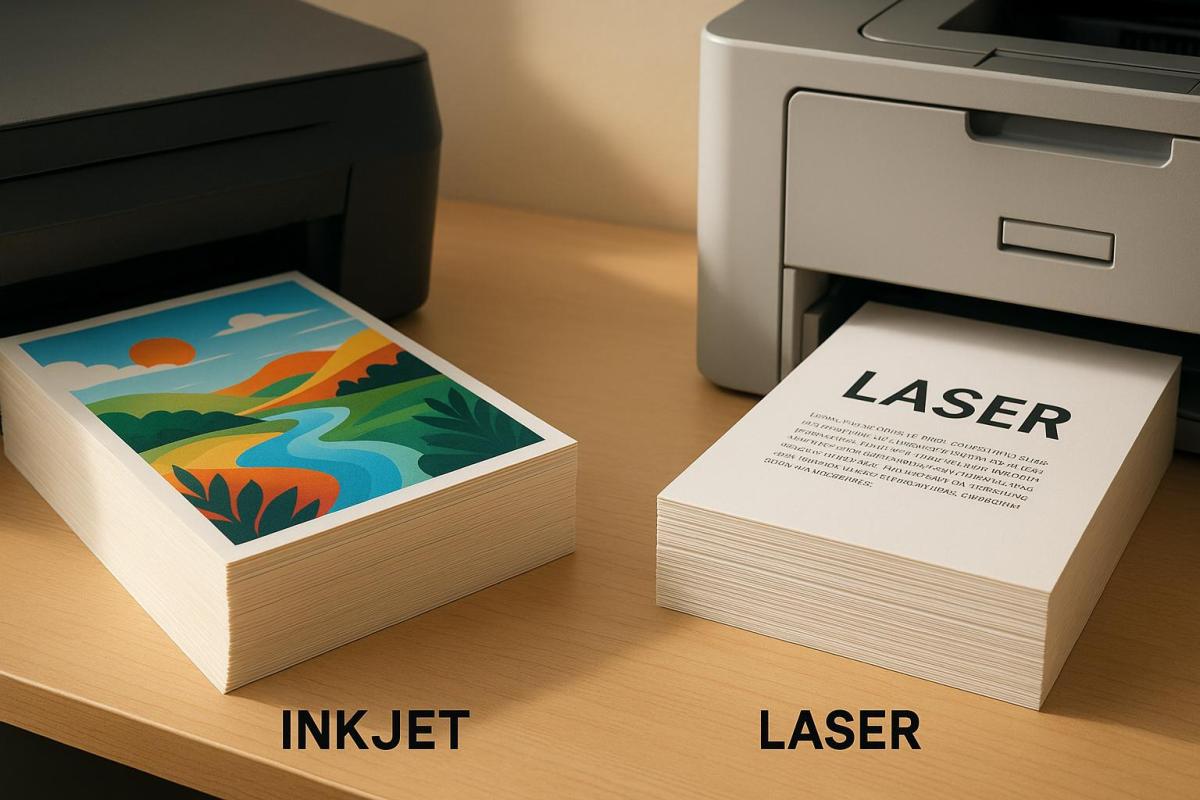
Additionally, the printing method matters. Inkjet printers may experience some ink seepage into paper fibers, which can slightly reduce sharpness. In contrast, laser printers use toner that sits on the surface of the paper, often producing sharper results at the same DPI.

Finally, let’s consider how file size impacts production.

File Size and Production Speed

Higher DPI settings don’t just affect print quality – they also impact file size and production speed. A 300 DPI file contains four times more data than a 150 DPI file, which can significantly slow down production.

Large files can bog down design software, delay file transfers, and strain print servers, all of which add time to the production process. For example, a banner rendered at 300 DPI might take 30–45 minutes to process and print, while the same banner at 150 DPI could finish in just 10–15 minutes with comparable visual results.

Storage costs are another consideration. Oversized files consume valuable server space, which can impact resource allocation for other projects. Balancing resolution with file size is critical to maintaining efficiency without sacrificing quality.

Most commercial printers are optimized for standard DPI settings, ensuring smooth workflows. Sticking to these recommendations helps you avoid unnecessary delays and costs while delivering high-quality results.

sbb-itb-ce53437

How to Prepare Print-Ready Files with Correct DPI

Getting your files ready for printing with the correct DPI is key to ensuring high-quality results. Starting with the right resolution settings for your images and graphics saves time and prevents quality issues. A well-prepared file ensures that your final prints showcase the detail and clarity you intended, aligning perfectly with the DPI standards discussed earlier.

Setting DPI in Design Software

Professional design tools make it easy to set and adjust DPI. For example, in Adobe Photoshop, you can tweak both pixel dimensions and resolution in the "Image Size" dialog box. For most print projects, set the resolution to 300 DPI.

In Adobe Illustrator and InDesign, you can check and manage image resolution through the "Document Raster Effects Settings" or the "Links" panel. InDesign even flags images that fall below the 300 DPI threshold with warning icons, helping you catch potential issues early.

Other design programs often come with pre-made print templates that already include the correct DPI settings, making the setup process even simpler.

Common File Preparation Mistakes to Avoid

Even after setting the right DPI, some common errors can still compromise your print quality. One major mistake is altering the DPI metadata without actually improving the image resolution. Simply changing the DPI number in your software’s settings doesn’t add detail – it only tells the printer how to interpret the existing pixels.

How to Adjust Image Resolution

If you need to adjust an image’s resolution, it’s important to understand the difference between resampling and just changing DPI metadata. Resampling alters the actual amount of image data: downsampling reduces pixels, while upsampling adds new ones.

Upsampling, or increasing resolution, must be done carefully since the software has to "guess" where to add new pixels. This process can sometimes lead to a loss of sharpness. For the best results, use options like "Bicubic Smoother" in Adobe Photoshop or "Lanczos" in GIMP.

For even better results, consider AI-powered upscaling tools like Topaz Labs‘ Gigapixel AI or LetsEnhance. These tools use artificial intelligence to add pixels more intelligently, preserving more detail and sharpness compared to traditional upsampling methods.

On the other hand, downsampling usually provides better results because it works with existing image detail rather than creating new pixels. Starting with high-quality originals is always your best bet for achieving optimal print results. A sharp, high-resolution image will always outperform an upsampled low-resolution one, regardless of the software used.

After resampling, applying an Unsharp Mask filter can help restore focus and detail to your adjusted images, ensuring they’re print-ready.

How Miro Printing & Graphics Inc. Supports Optimal DPI Standards

When it comes to achieving top-notch print quality, selecting the right print partner is just as important as understanding DPI standards. Miro Printing & Graphics Inc., based in Hackensack, NJ, ensures that your files meet industry DPI benchmarks, delivering professional-grade clarity and sharpness in every project.

Comprehensive Printing Services

Miro Printing & Graphics Inc. provides a wide array of printing solutions, tailored to meet the DPI requirements of each project type. Their digital printing services produce crisp 300 DPI outputs, perfect for brochures, business cards, and flyers. For larger-scale jobs, their offset printing ensures exceptional detail and consistency across high-volume runs. When it comes to large-format printing, their team carefully adjusts methods based on the viewing distance, ensuring the best visual impact. Additionally, their bindery services – such as booklet making, perfect binding, and comb binding – maintain image quality throughout the finishing process.

Personalized Project Support

One of the standout features of Miro Printing & Graphics Inc. is their hands-on approach to each project. They meticulously review every file to catch resolution issues early, ensuring proper DPI and preventing costly reprints. This proactive attention to detail minimizes errors and maximizes efficiency.

"Let us know what type of project you are working on, and allow us to offer our expertise. During the process, Miro Printing & Graphics Inc. will work with a professional, personal approach to better understand your company’s needs. The end result is a finished piece that exceeds your highest expectations but never your budget!"

In-House Design and File Optimization

To make the entire process seamless, Miro Printing & Graphics Inc. offers in-house design services. Their skilled design team collaborates directly with your source materials, enhancing low-resolution images, ensuring proper rasterization of vector files, and refining intricate layouts. This ensures that your files are optimized for printing from start to finish.

Conclusion

Choosing the right DPI is key to achieving sharp, professional-quality prints. It plays a major role in ensuring your materials look polished and visually appealing.

For most marketing materials, 300 DPI is the go-to standard for crisp, detailed results. However, larger projects like banners or posters can often work well with a resolution of 100–150 DPI, since viewers typically see them from a distance, where ultra-high resolution isn’t as critical. As a rule of thumb, higher DPI produces sharper prints, while lower resolutions can lead to pixelation and blurry images.

Several factors influence the ideal DPI, including viewing distance, the type of material being printed on, and file size. For example, a billboard viewed from far away doesn’t require the same level of detail as a business card that’s examined up close. Beyond resolution, ensuring your files are properly optimized is just as important to translate these settings into flawless prints.

Steps like converting colors from RGB to CMYK, using lossless file formats, and setting appropriate bleed zones are essential for quality results. Even with the perfect DPI, neglecting these preparation steps can compromise the final outcome.

FAQs

Why is 300 DPI the standard resolution for commercial printing?

When it comes to commercial printing, 300 DPI (dots per inch) is the go-to resolution. Why? It delivers sharp, clear images and text that look polished and professional. At this level of detail, everything remains crisp, even when viewed up close, with little to no pixelation or blurriness.

This resolution is ideal for materials like brochures, banners, and booklets, ensuring they leave a strong visual impression. Using a lower resolution risks muddying the details, which can detract from the quality of the final product. Sticking to 300 DPI helps maintain the standard of excellence expected in print.

When it comes to large format printing, the viewing distance is crucial in deciding the ideal DPI. For prints that will be seen up close (within 6 feet), a higher DPI – 200 to 300 – is necessary to achieve crisp, detailed visuals. If the prints will be viewed from a medium range (6 to 12 feet), a DPI of 100 to 150 typically does the job. For anything viewed from over 12 feet away, a DPI of 100 or lower is sufficient, as the human eye naturally picks up less detail at greater distances.

Matching the DPI to the viewing distance strikes the right balance between image quality and printing efficiency. This ensures your large format prints look impressive while avoiding unnecessary use of resources.

What are the downsides of using a higher DPI than needed for large prints?

When working with large prints, using a higher DPI than needed can lead to unnecessarily large file sizes. This not only slows down processing and printing but also demands more storage space – without any visible improvement in print quality. This is especially true for items like banners or posters, which are usually viewed from a distance.

For most large-format prints, a DPI between 150 and 300 delivers great results. Going beyond this range often wastes resources without adding any real benefit to the final product.

Related Blog Posts

https://app.seobotai.com/banner/banner.js?id=68d1e6847b5c01ae369367c6

Lightfastness Testing for CMYK Prints

Learn how lightfastness testing ensures your CMYK prints resist fading, maintain vibrancy, and prolong their lifespan through informed material choices.

Lightfastness testing helps ensure your CMYK prints stay vibrant and durable over time. It measures how well prints resist fading when exposed to light, which is crucial for maintaining quality in marketing materials, signage, and fine art prints. Here’s what you need to know:

  • Why It Matters: Fading can distort colors (magenta fades fastest) and harm brand consistency, increasing reprinting costs.
  • Key Factors: Ink type (pigment-based lasts longer than dye-based), substrate choice (coated papers and vinyl perform better), and exposure conditions (UV light, temperature, humidity).
  • Testing Methods: Accelerated aging tests simulate years of light exposure in hours, using tools like spectrophotometers to measure fading.
  • Improving Durability: Use pigment-based inks, UV-resistant substrates, and protective coatings to extend print life.

Understanding these principles ensures your prints maintain their appearance and value, whether displayed indoors or outdoors.

Lightfastness, How It’s Tested And What It Means For You | Acrylic Painting Liquitex

Liquitex

Standard Lightfastness Testing Methods

Testing lightfastness involves specialized methods that replicate prolonged light exposure in controlled lab settings. These standardized procedures help printing professionals predict how various ink and substrate combinations will hold up over time, ensuring informed decisions before large-scale production begins.

Accelerated Aging Tests

Accelerated aging tests subject print samples to intense artificial light that mimics the UV and visible light spectra of natural sunlight. Xenon arc lamps are a popular choice for these tests because they closely simulate sunlight. The samples are placed in controlled environmental chambers that replicate indoor display conditions. Testing durations are carefully calibrated to represent years of exposure in just a few hours. Throughout the process, color measurements are taken at regular intervals to identify which colors begin to fade first. These tests provide a solid foundation for standardized comparisons, as outlined in the next section.

Key Standards for Lightfastness Testing

International standards play a critical role in guiding lightfastness testing for the graphic arts industry. For instance, ISO 2835 specifies parameters like light intensity, temperature, humidity, and measurement intervals, ensuring consistent and comparable results across different labs. Another widely used benchmark is the Blue Wool scale, originally developed for textiles but now adapted for print testing. This scale uses reference standards, with higher ratings indicating greater resistance to fading. In North America, additional testing protocols have been developed to address the unique challenges of digital printing, such as variations in substrates and ink application methods. Accurate color tracking, which is explored in the following section, is an essential part of these procedures.

Using Spectrophotometers for Color Measurement

Spectrophotometers are essential tools for detecting subtle color changes that might not be noticeable to the human eye. These devices use the Delta E (∆E) system to quantify color differences, providing a clear indication of when fading becomes apparent. By comparing baseline and post-exposure measurements, professionals can precisely track color shifts. For example, data often reveals that magenta tends to degrade more quickly, while other colors remain relatively stable. This level of detail allows printing experts to refine color profiles and choose ink formulations that improve the durability of CMYK prints.

Factors That Affect Lightfastness in CMYK Prints

Understanding the elements that influence lightfastness is essential for printing professionals aiming to produce long-lasting prints. From the chemical composition of inks to the conditions where prints are displayed, several factors play a role in determining how well CMYK prints resist fading over time.

Ink Formulation and Type

The durability of CMYK prints starts with the ink itself. One of the biggest differences comes down to the choice between pigment-based and dye-based inks. Pigment-based inks contain tiny particles that rest on the surface of the substrate, forming a physical layer that helps block UV rays and resist fading. When properly formulated, these inks can preserve their color for decades.

Dye-based inks, on the other hand, work by dissolving into the substrate fibers. While they produce vibrant and vivid colors, they’re more prone to fading since the dye molecules are more exposed to light and environmental factors.

Modern ink formulations often include UV inhibitors and antioxidants to combat fading. These additives slow the photochemical reactions that break down color. Even the particle size in pigment-based inks matters – smaller particles can enhance color saturation but may be slightly more vulnerable to fading than larger ones.

Color longevity also varies within the CMYK spectrum. Cyan tends to hold up the best, while magenta fades the quickest, with yellow falling somewhere in between. Black inks, especially those made with carbon-based pigments, generally offer excellent resistance to fading.

Substrate Selection

The type of substrate used can significantly impact how well inks resist fading. Coated papers provide a sealed surface that enhances lightfastness by preventing ink absorption, while uncoated papers absorb more ink, offering some protection but also increasing the risk of chemical degradation, especially if the paper is acidic.

Specialty substrates bring additional benefits. Synthetic materials like polyester films are chemically stable and don’t interact with ink components, making them highly resistant to fading. Textured art papers and canvas can also offer some protection by creating tiny shadows that reduce direct light exposure to the ink.

However, substrates with optical brightening agents (OBAs) present challenges. These agents make prints appear brighter initially, but they degrade faster than the ink, leading to noticeable shifts in the print’s overall appearance over time.

Ultimately, the combination of ink chemistry and substrate properties is crucial in achieving long-lasting CMYK prints.

Environmental Conditions

Environmental factors, especially light exposure, play a major role in determining the lifespan of CMYK prints. Direct sunlight, which contains high levels of UV radiation, causes the fastest fading. A print exposed to sunlight through a window can start showing signs of fading within weeks.

Indoor lighting, such as LEDs, emits less UV radiation but still contributes to gradual fading over time. Regional climate differences across the U.S. also matter – prints in Arizona’s dry heat face different challenges than those in Florida’s humid and damp conditions.

Temperature and humidity further accelerate fading. High temperatures speed up chemical reactions, while excessive humidity makes inks more reactive. Even air quality can influence lightfastness. Pollutants like ozone and nitrogen oxides, common in urban or industrial areas, can interact with ink components and cause fading, even in low-light environments.

Mounting and framing choices also affect print longevity. UV-filtering glass or acrylic can significantly extend the life of a print by blocking harmful rays. However, poor ventilation behind frames can trap moisture and pollutants, creating conditions that speed up degradation.

sbb-itb-ce53437

How to Read Lightfastness Test Results

Lightfastness test results help predict how prints will hold up over time, offering clear benchmarks for choosing materials and managing expectations about fading. Building on earlier discussions about ink types and substrates, this section will guide you through understanding lightfastness data to achieve the best CMYK print results. We’ll explore key metrics, practical fading thresholds, and comparative performance to simplify material selection.

Key Metrics for Measuring Lightfastness

Delta E (∆E) quantifies color changes between fresh and faded prints. The scale runs from 0 (no change) to values above 6 (severe fading), aligned with human visual perception. Here’s how the scale breaks down:

  • 0-1: Changes are nearly invisible.
  • 1-3: Noticeable to trained observers.
  • 3-6: Clearly visible to most people.
  • Above 6: Fading is immediately obvious.

Gamut volume change measures shifts in the overall color range during fading. While ∆E focuses on individual colors, this metric evaluates whether the entire spectrum of reproducible colors shrinks or shifts, revealing how well the print retains its visual impact over time.

The Blue Wool scale, originally developed for textiles, rates lightfastness from 1 to 8 using blue wool reference samples. Here’s a quick breakdown:

  • 1-2: Poor lightfastness – suitable only for short-term indoor use.
  • 3-4: Works for general indoor applications.
  • 5-6: Handles moderate outdoor exposure.
  • 7-8: Excellent for demanding outdoor conditions.

Setting Practical Thresholds for Fading

Once you understand the metrics, it’s important to set realistic fading thresholds based on your project’s needs and budget. Different applications require varying levels of color stability:

  • Marketing materials: ∆E of 5-6 is acceptable.
  • Business signage: A stricter ∆E of 2-3 is recommended.
  • Fine art prints: Require a ∆E of 1.5 or below for optimal preservation.
  • Outdoor applications: May tolerate a ∆E of 3-4 due to harsher exposure conditions.

The environment where prints will be displayed also matters. Bright retail lighting or locations near windows demand tighter ∆E thresholds, while dimly lit offices or storage areas can allow for more leniency. Always consider the lighting intensity and type when determining acceptable fading limits.

Comparing Ink and Substrate Performance

The table below compares how different ink and substrate combinations perform under standardized tests, simulating 150 hours of xenon arc exposure – equivalent to about two years of typical indoor display conditions.

Ink Type Substrate ∆E After Testing Blue Wool Rating Best Applications
Pigment-based UV Vinyl 1.2 7-8 Outdoor signage, vehicle graphics
Pigment-based Solvent Canvas 1.8 6-7 Fine art, gallery prints
Pigment-based Aqueous Coated Paper 2.3 5-6 Indoor posters, presentations
Dye-based Aqueous Photo Paper 3.1 4-5 Short-term displays, proofs
Standard CMYK Offset Uncoated Paper 4.2 3-4 Brochures, newsletters
  • Pigment-based UV inks on vinyl stand out for their exceptional lightfastness, making them ideal for outdoor use, even though they come at a higher cost.
  • Solvent-based pigment inks on canvas offer a great balance of lightfastness and aesthetic appeal, perfect for fine art prints.
  • Aqueous pigment inks on coated paper provide solid performance for indoor applications at a moderate price.

On the other hand, dye-based inks, while delivering vibrant colors initially, fade more noticeably across all substrates. They are best suited for short-term projects where immediate visual impact is more important than longevity.

Keep in mind that these results are based on standardized conditions. Real-world performance can vary depending on factors like environmental conditions, display methods, and quality expectations. Use this data as a starting point, and whenever possible, test samples under the actual conditions your prints will face.

How to Improve Lightfastness in CMYK Prints

Now that you know how to interpret lightfastness test results, let’s dive into practical steps to make your CMYK prints more durable. By focusing on both the ink and the substrate, you can significantly extend the lifespan of your prints.

Best Practices for Better Lightfastness

To reduce fading, start by selecting the right substrate. Both the ink and the material you print on play a major role in how well your prints resist fading over time. Look for substrates that are resistant to degradation and have a neutral pH. Materials with low reflectivity can also help minimize wear and tear, further extending the life of your prints.

New Developments in Ink Technology

Advances in ink technology are making it easier to achieve longer-lasting prints. Modern inks now include UV-blocking additives and improved pigment encapsulation techniques, which shield color molecules from breaking down under light exposure. Nano-pigment technology has also been developed, offering better pigment dispersion and increased surface area. This not only improves lightfastness but also maintains vibrant, high-quality colors.

Another exciting innovation is hybrid ink systems. These combine the vividness of dye-based inks with the durability of pigment-based inks, giving you the best of both worlds. This makes them a great choice for applications where both color intensity and longevity are crucial.

How Miro Printing & Graphics Inc. Can Help

At Miro Printing & Graphics Inc., we specialize in helping you achieve prints that last. Whether you’re creating outdoor signage, indoor displays, or archival documents, we’ll guide you in choosing the best combination of inks and substrates for your specific needs. The right materials can mean the difference between prints that fade in a few months and those that stay vibrant for years.

Our expertise spans digital printing, offset printing, and large-format printing, allowing us to tailor our approach to your project. For outdoor applications requiring maximum durability, we use pigment-based UV inks on premium vinyl substrates. For indoor prints, we focus on balancing cost and longevity with aqueous pigment systems on carefully chosen coated papers.

In addition to printing, we offer a variety of protective finishing services. Our in-house bindery and finishing team ensures that protective coatings are applied flawlessly, enhancing both the durability and appearance of your prints.

Based in Hackensack, NJ, Miro Printing & Graphics Inc. proudly serves businesses across the region, delivering high-quality, long-lasting print solutions tailored to your needs. Let us help you create prints that stand the test of time.

Conclusion

Lightfastness testing plays a crucial role in ensuring that CMYK prints maintain their quality over time. This process involves the right combination of testing methods, material choices, and advanced printing techniques.

Key Takeaways

Accelerated aging tests and standardized methods help predict how prints will perform under various conditions, whether displayed indoors or exposed to outdoor elements for extended periods.

Print longevity is influenced by several interconnected factors. Ink formulation is a major component – pigment-based inks typically hold up better in lightfastness tests compared to dye-based options. Substrate selection also matters, with coated papers and specialized vinyl materials providing greater resistance to UV damage. Additionally, environmental conditions play a significant role in determining fade rates.

When analyzing test results, pay attention to Delta E values, which measure color change. Keep in mind that different applications require varying durability standards. For instance, indoor displays may allow for more noticeable color shifts than outdoor signage or archival materials.

These considerations form the foundation for creating long-lasting print solutions that meet diverse needs.

Miro Printing & Graphics Inc.: Your Trusted Printing Partner

Miro Printing & Graphics Inc.

Armed with these insights, Miro Printing & Graphics Inc. is here to help you achieve exceptional print longevity. With over 30 years of experience, we specialize in producing durable CMYK prints by understanding the intricate relationship between inks, substrates, and environmental factors.

"Let us know what type of project you are working on, and allow us to offer our expertise. During the process, Miro Printing & Graphics Inc. will work with a professional, personal approach to better understand your company’s needs. The end result is a finished piece that exceeds your highest expectations but never your budget!"

Our range of services – spanning digital, offset, and large-format printing – ensures that your prints not only look great but also stand the test of time. Whether you need outdoor banners designed to resist fading for years or indoor materials with consistent, vibrant colors, we guide you in selecting the ideal combination of inks and substrates for your project.

Located in Hackensack, NJ, we proudly serve businesses across the region, delivering prints with enduring quality. Our in-house bindery and finishing services add an extra layer of precision, applying protective coatings and treatments to ensure your materials are both visually stunning and long-lasting.

FAQs

How do pigment-based inks compare to dye-based inks in terms of lightfastness?

Pigment-based inks stand out for their resistance to fading when exposed to light. This quality makes them a go-to option for prints that need to retain their color and sharpness over time, such as archival materials or long-lasting CMYK prints.

In contrast, dye-based inks are made from soluble dyes, which are more vulnerable to UV light and other environmental factors. While they can deliver vivid, eye-catching colors initially, they tend to fade faster, especially in brightly lit or outdoor settings. If maintaining color over time is a top priority, pigment-based inks are the smarter choice.

How do humidity and temperature affect the longevity of CMYK prints?

Environmental factors like humidity and temperature have a big impact on how long CMYK prints last. If the humidity is too high, the paper can soak up moisture, which might cause it to warp, smudge, or fade faster. On the flip side, low humidity can lead to static buildup, which can cause problems like sheet misfeeds that hurt print quality.

Temperature swings can be just as tricky. When materials expand or contract due to temperature changes, it can throw off color alignment or distort the design, ultimately shortening the print’s lifespan. To keep your prints in great shape, aim for a stable environment – 45-55% relative humidity and steady temperatures are ideal. Storing prints properly in controlled conditions can make a noticeable difference in how long they last.

How can I make my CMYK prints more resistant to fading when used outdoors?

To keep your CMYK prints looking sharp and vibrant outdoors, think about adding UV-protective coatings like varnishes or laminates with UV inhibitors. These coatings act as a barrier against sunlight, helping to reduce fading and giving your prints a longer lifespan.

Another way to boost durability is by using UV-resistant inks or adding UV absorbers during the printing process. If you’re serious about maintaining print quality over time, performing lightfastness tests – like using a Xenon Arc fadeometer – can give you valuable insights into how your prints will hold up in outdoor conditions.

If you need professional help, Miro Printing & Graphics Inc. in Hackensack, NJ, provides top-notch printing services and post-press solutions to ensure your prints are both high-quality and built to last.

Related Blog Posts

https://app.seobotai.com/banner/banner.js?id=68d487bae3dd4bddfa4c15af

Checklist for Designing Die-Cut Cards

Learn how to design die-cut business cards that make a lasting impression with essential tips on dimensions, materials, finishes, and layout.

Die-cut business cards are a powerful way to make a lasting impression. By using custom shapes, materials, and finishes, they can visually and tactilely represent your brand. Here’s what you need to know:

  • Dimensions & Shapes: Start with a standard size (3.5" x 2") and extend your design by 0.125 inches for bleed. Custom shapes like rounded corners or unique cut-outs can add appeal but must balance creativity with usability.
  • Materials: Choose sturdy cardstock (14pt–16pt) or explore textured, coated, or plastic options for durability and aesthetic impact.
  • Finishes: Add spot UV, foil stamping, embossing, or edge painting for extra flair. These details enhance the design while maintaining functionality.
  • Layout & Readability: Ensure text and graphics are clear, with a safe margin of 1/8 inch from edges. Use high-contrast colors and legible fonts.
  • File Preparation: Submit print-ready files in PDF format with 300 DPI resolution, CMYK colors, and separate die-cut layers.

Die-cut cards demand precision in design and production. Miro Printing & Graphics Inc. offers expert support, from design troubleshooting to proofing, ensuring your cards stand out and meet technical standards.

Dimensions and Shapes

Standard Dimensions and Guidelines

When designing a die-cut business card, the starting point is the standard U.S. dimensions: 3.5" × 2". To ensure a polished final product, extend your design by 0.125 inches beyond the cut line for bleed and keep all critical elements at least 0.125 inches inside the trim. This prevents key details from being accidentally trimmed. If you’re venturing into custom die-cut shapes – like a card shaped as a house – these technical guidelines become even more important. The more intricate the shape, the more precise you need to be with bleed and spacing to achieve a flawless result.

How Custom Shapes Affect Usability

Once the dimensions and layout are set, the card’s shape takes center stage in determining how recipients will interact with it. Custom shapes add a tactile and visual appeal, making the card more engaging and memorable for those who receive it. However, they come with practical considerations that standard rectangular cards don’t encounter.

For example, rounded corners and smooth curves not only enhance usability but also reduce the risk of tearing, which can happen with sharp or acute angles during handling or production. These small design tweaks can make a big difference in durability.

The shape of the card can also leave a lasting impression. A unique design increases the chances of the card being kept and even sparking conversations. For instance, a card with an interactive die-cut feature – like a small window revealing hidden details or a tab that doubles as a bookmark – can encourage recipients to engage with it beyond a simple glance.

That said, readability should always remain a top priority. While creative shapes can align beautifully with your brand identity, it’s crucial to ensure that your card is practical and easy to read. Opt for clear, legible fonts and avoid overly intricate typefaces, as complex shapes can sometimes make text harder to decipher.

Custom shapes also allow your cards to serve purposes beyond traditional networking. A fitness trainer might design dumbbell-shaped cards that double as appointment reminders, while a bakery could create cupcake-shaped loyalty cards with punch-out sections to track purchases. These multifunctional designs not only reinforce brand identity but also add value for the recipient.

Ultimately, the goal is to strike the right balance between creativity and functionality. Consider how easy it is to handle your chosen shape. Your card should stand out as a unique representation of your brand while remaining practical for everyday use as a networking tool.

Materials and Finishes

Paper Stock Options

Choosing the right paper stock is your starting point. The thickness of cardstock, measured in points (pt) or pounds (lb), plays a huge role in the durability and overall feel of your card. Heavier weights offer a sturdier, more premium touch.

For die-cut business cards, 14pt to 16pt cardstock strikes a great balance between sturdiness and flexibility. This weight is ideal for clean, precise cuts while being rigid enough to hold intricate shapes without bending or tearing. If your design includes very detailed die-cut patterns, 18pt cardstock provides added stability, though it can be trickier to cut through complex designs.

Uncoated cardstock gives a natural, tactile feel and is perfect for techniques like embossing or letterpress. Its rough texture adds an earthy, handcrafted vibe to your card.

Coated cardstock, on the other hand, comes in two popular finishes: matte and gloss. Matte-coated stock delivers vibrant colors without the glare, and it’s easy to write on. Gloss-coated stock, however, offers vivid colors and sharp image quality, making it a great choice for designs featuring bold graphics or photography.

If durability is a priority, plastic substrates like 20mil PVC are an excellent option. These are waterproof and long-lasting, making them ideal for membership or loyalty cards that see frequent handling.

For a unique touch, consider textured papers. A linen finish offers a polished, classic look, while a felt finish provides a softer, approachable texture. These specialty papers can elevate your die-cut design by adding a tactile element that makes your card unforgettable.

Once you’ve settled on the paper stock, you can explore specialized finishes to make your design even more striking.

Special Finishes and Add-Ons

Spot UV coating is a fantastic way to draw attention to specific elements of your design. By applying a glossy finish to select areas while keeping the rest matte, you can emphasize the unique contours of your die-cut shape or highlight key details.

For a touch of luxury, foil stamping adds metallic accents that catch the light. Classic options like gold, silver, and copper are timeless, while rose gold or holographic foils offer a modern twist. Beyond the visual appeal, foil stamping adds a tactile dimension that pairs beautifully with the depth of die-cut designs.

Embossing and debossing create raised or recessed details that add texture to your card. These techniques work particularly well along the edges of die-cut shapes, creating borders that accentuate the custom outline. Blind embossing (without ink) delivers a subtle, elegant look, while registered embossing combines texture with printed elements for added impact.

For a soft, luxurious feel, soft-touch coating is a standout choice. It adds a velvety texture that enhances the tactile experience of your card’s unique shape while also resisting fingerprints and wear.

If your cards need extra protection, aqueous coating is a practical option. This water-based finish guards against moisture and wear while maintaining excellent print quality. It’s a cost-effective alternative to UV coating and dries quickly for a professional look.

Edge painting is another way to make your card pop. By adding color to the edges, you can highlight the custom shape and give your card a polished, finished appearance. Metallics like gold and silver are popular choices, but bold colors that match your branding can be equally striking.

When combining multiple finishes, think about how they’ll work together with your die-cut shape. For example, rounded corners pair beautifully with edge painting to emphasize smooth curves, while sharp angles might benefit from spot UV to showcase precision. These thoughtful combinations can take your custom design to the next level, ensuring your card leaves a lasting impression.

How To Set Up A Die Cut Business Card or Sticker in Adobe Illustrator | Clubcard TV

Adobe Illustrator

Design Layout Setup

Once you’ve nailed down your design’s dimensions and materials, it’s time to focus on the layout and where to place your content.

Required Information to Include

Make sure your card includes the essentials: your company name, logo, and primary contact details. Stick to one or two key contact methods like a phone number, email, or website, along with one or two active social media handles.

Adding a short job title or tagline can quickly communicate what you do. Phrases like "Creative Director" or "Your Marketing Partner" are concise and effective, especially if your business name doesn’t clearly explain your industry.

If space is tight – like on die-cut cards – consider adding a QR code. This can link directly to your digital business card, portfolio, or contact details. Just be sure to place it where it won’t interfere with the card’s unique shape but remains easy to scan.

Don’t forget a clear call-to-action. Phrases like "Schedule Your Free Consultation" or "View Our Latest Projects Online" can guide recipients toward their next step and make your card more engaging.

Once you’ve locked in the content, focus on refining your design for readability and visual appeal.

Design Best Practices

  • Font size matters: Use fonts that are easy to read, with a minimum size of 8pt – though 10pt or larger is ideal.
  • Lines and borders: Keep decorative lines or borders at least 0.5pt thick to ensure they print cleanly.
  • Graphics and images: Use vector graphics for logos and icons to maintain sharp edges, and ensure photos or illustrations are at 300 DPI at their actual size to avoid pixelation.
  • Color contrast: Ensure strong contrast between text and background, especially near the die-cut edges. For example, light text on a dark background (or vice versa) stands out better. Avoid placing critical text over busy patterns or images.
  • Visual hierarchy: Guide the reader’s eye by prioritizing elements. Start with your company name as the most prominent, followed by your name and title, and then your contact details in descending order of importance.
  • Die-cut considerations: Be mindful of how the card’s shape affects readability. Curved text can work well for short phrases like taglines, but keep contact details in straightforward horizontal or vertical arrangements for clarity.

Lastly, ensure your design elements are securely placed to avoid issues during trimming.

Safe Layout Guidelines

To avoid trimming mishaps, keep all critical elements at least 1/8 inch away from the die-cut edge.

Die-cut designs require a slightly different approach to bleed. While standard cards need a 1/8-inch bleed on all sides, die-cut cards require the bleed to follow the custom shape. Extend any background colors, patterns, or images beyond the cut line by at least 1/8 inch.

Pay extra attention to text placement near curved or angled edges. Horizontal text should maintain a safe distance from non-horizontal cut lines. If your design includes sharp angles or intricate details, avoid placing text in those areas altogether.

For logos, stick to stable, flat areas – usually the center or the largest unobstructed section. Avoid placing logos near complex cut patterns or narrow sections where distortion could occur.

If your die-cut shape includes functional elements like tabs or notches, keep these areas free of important details. These sections are more prone to wear and tear, so place critical information like phone numbers or email addresses in safer, more stable parts of the layout.

When working with Miro Printing & Graphics Inc., their design team can provide tailored safe area guidelines for your specific die-cut shape. This ensures your layout not only meets technical requirements but also makes a strong visual impact.

sbb-itb-ce53437

Getting your print files right is essential to avoid delays and costly reprints. A little extra attention upfront can save you a lot of headaches later.

File Format and Specifications

Always use PDF as your file format – it’s the industry standard for preserving designs across different software. When exporting, choose the "Press Quality" preset to ensure top-notch resolution and accurate colors.

Make sure to embed your fonts to prevent any unexpected text shifts during printing. Most design programs let you do this when exporting; just look for an option like "embed fonts" or "outline fonts" and check the box.

Convert your colors to CMYK before submitting your file. Remember, what you see on your screen (RGB) may not match the printed result, as print colors use CMYK inks. That vibrant blue on your monitor? It might print closer to purple if left unconverted.

For photos and raster images, set the resolution to 300 DPI. This ensures crisp, professional-quality prints without any pixelation. Vector elements, like logos and text, don’t require a DPI setting since they scale perfectly at any size.

If your design is vector-based, Adobe Illustrator (.AI) and Encapsulated PostScript (.EPS) files are excellent options. These formats are particularly effective for handling custom shapes and die-cut lines, as they maintain sharp edges no matter the size.

File Setup Tips

  • Disable facing pages – die-cut cards are single-sided, so this setting isn’t needed.
  • Add crop marks and bleed: Extend your background by 1/8 inch beyond the trim edge. Crop marks guide the printer on where to cut, while the bleed ensures no awkward white edges if the cut is slightly off.
  • Use a separate layer for die-cut lines: Assign a unique, bright color (like magenta) with a 0.25pt stroke to make the cutting path easy to identify for the production team.
  • Double-check your file at 100% zoom: Look for stray pixels, overlapping elements, or text placed too close to the cut line. A quick review can save you days of revisions.
  • Name your file clearly: For example, "CompanyName_DieCut_BusinessCard_CMYK_300DPI.pdf" makes it easy for the production team to know exactly what they’re handling.

If this process feels overwhelming, don’t worry – there’s help available.

In-House Design Support

Feeling stuck? Miro Printing & Graphics Inc. offers expert design services to take the guesswork out of file preparation. Their team can handle every step, from concept creation to print-ready files, ensuring your die-cut cards look amazing and meet all technical requirements.

Here’s how they can help:

  • Die-cutting expertise: Their team can spot and fix potential production issues before they become problems. They’ll adjust your design to ensure it works seamlessly with their cutting equipment, which can save you money on setup costs and reduce material waste.
  • File troubleshooting: Got a file with minor issues, like incorrect color profiles or low resolution? They can often fix these problems in-house without sending it back to you for revisions.
  • Proofing support: See exactly how your card will look before production starts. They can provide digital proofs for accurate colors and proportions or even physical samples if you want to feel the material and test the die-cut shape.

Pre-Press Review and Proofing

Once your file preparation is complete, it’s time for a final pre-press review. This step ensures your design is ready for production, helping you avoid costly reprints or delays.

Pre-Submission Checklist

Start by checking the legibility of your text. Print your design at actual size to make sure everything is readable, especially if you’re using a minimum text size of 8pt – this is particularly important for textured paper stocks. Double-check that all crucial details, like your contact information and company name, are clear and easy to find.

Pay close attention to color accuracy, especially for die-cut cards. Open your file in different software to catch any color shifts, and, if possible, view it on multiple devices. Be cautious with dark colors near die-cut edges; if your bleed isn’t set up correctly, white paper might peek through at the edges.

Keep all critical design elements – logos, text, and graphics – at least 1/8 inch away from the die-cut edge. Die-cutting equipment can slightly vary, and you don’t want important details, like your phone number, accidentally trimmed off.

Evaluate the die-cut shape to ensure it’s sturdy enough for production. Corners with angles sharper than 90 degrees are prone to tearing or bending. Thin or delicate sections should be at least 1/4 inch wide to maintain stability and durability.

Finally, confirm all file specifications are correct. Your resolution should be set at 300 DPI, colors in CMYK format, and fonts either embedded or outlined. Ensure the die-cut line is on a separate layer, marked with a distinct color that won’t interfere with your design.

Once you’ve verified these details, move on to proof review to ensure everything is production-ready.

Requesting Proofs

After ensuring your design meets technical standards, request proofs to finalize production quality. Digital proofs are a great way to check color accuracy, layout, and die-cut alignment. These proofs provide a clear view of how your design will look, including where the die-cut edges will fall.

For die-cut cards, physical proofs are especially helpful. They allow you to test the paper weight, assess durability, and confirm the practicality of the die-cut shape. While an intricate cut-out might look amazing, it could prove too fragile for everyday use in wallets or cardholders.

When reviewing proofs, compare the colors to your original design. Keep in mind that printed colors often differ from what you see on screen, particularly when specialty finishes or textured papers are involved. If your brand colors are essential to your identity, request a color-matched proof to ensure they’re accurate.

Proofs typically take 1-3 business days to prepare, depending on your design’s complexity and the production schedule. Be sure to account for this time in your project timeline, especially if you’re working toward a specific event or launch date.

Miro Printing & Graphics Inc. offers both digital and physical proofing options to help you perfect your die-cut cards before full production begins. Their team can also recommend adjustments during the proofing stage to address potential issues that could impact the final quality or durability of your cards.

Summary and Next Steps

Crafting professional die-cut cards requires careful attention to detail, from the initial concept to the final production stages. Following these essential steps ensures a polished, high-quality result.

Key Steps Review

Start by understanding the dimensions and shapes of your design. While the standard business card size of 3.5" x 2" serves as a reliable starting point, custom shapes demand extra precision. Avoid intricate or narrow design elements that could weaken the card’s durability.

Choose cardstock in the 14-16pt range for a balance between sturdiness and aesthetic appeal. Adding specialty finishes like spot UV or foil stamping can enhance the card’s visual impact. However, keep in mind that textured paper often requires larger text sizes to maintain legibility.

When laying out your design, maintain a safety margin of at least 1/8 inch from the edges to protect crucial elements such as logos and contact details. For file preparation, use 300 DPI resolution in CMYK, embed all fonts, and include a separate die-cut layer marked with a distinct color.

A thorough pre-press review is essential to avoid costly mistakes. By reviewing both digital and physical proofs, you can confirm color accuracy, test the paper’s durability, and ensure proper die-cut alignment. While this step may add 1-3 business days to your timeline, it’s a worthwhile safeguard against reprints.

Once these foundational steps are in place, having access to expert guidance can make a significant difference.

Why Partner with Miro Printing & Graphics Inc.

Miro Printing & Graphics Inc. specializes in die-cutting as part of their post-press services, making them an excellent choice for managing your custom card projects from start to finish. Their personalized approach ensures even the most intricate designs are handled with care and expertise.

Through their Custom Projects service, Miro Printing & Graphics Inc. offers tailored solutions that go beyond standard options. Whether you’re looking to experiment with unique shapes, specialty materials, or eye-catching finishing techniques, their experienced team collaborates with you to bring your vision to life while ensuring the final product is both durable and functional.

Their graphic design consultation services simplify the design process, providing expert advice to help you navigate complex specifications. This hands-on support ensures your die-cut cards are not only visually impressive but also ready for production.

Conveniently located at 831 Main St in Hackensack, New Jersey, Miro Printing & Graphics Inc. serves clients across New Jersey, New York, and Connecticut. To discuss your die-cut card project, you can reach them at (201) 439-9686 or email info@bergencountyprinters.com during business hours (Monday through Friday, 9:00 AM to 5:00 PM).

FAQs

What should I consider when choosing a custom shape for a die-cut business card?

When choosing a custom shape for your die-cut business card, it’s important to pick a design that mirrors your brand and industry. A shape that ties directly to your logo, product, or service can leave a memorable impression and highlight your originality.

However, don’t overlook practicality. The card’s shape should still be sturdy, easy to read, and convenient to handle. Overly elaborate designs might weaken the card or make production tricky. Striking the right mix of creativity and usability ensures your card grabs attention while staying polished and professional.

How do paper types and finishes affect the look and durability of die-cut cards?

The type of paper and finish you select for your die-cut cards plays a big role in both their look and durability. Coated finishes – like gloss or matte – add a layer of protection against moisture, dust, and wear. Plus, they make colors pop, giving your cards a sharp, vibrant appearance. If you prefer a more natural feel, uncoated paper offers a soft texture and muted tones, though it’s more prone to smudging and wear.

A glossy finish delivers a shiny, attention-grabbing effect, while matte offers a subtle and sophisticated vibe. Pairing the right paper with the perfect finish ensures your die-cut cards not only turn heads but also stand the test of time.

How do I make sure my design file is ready for printing die-cut cards?

To prepare your design file for die-cut business cards, start by adding a die line layer that clearly defines the card’s cut shape. Use a spot color, like "DIE-CUT FORME", and set it to CMYK. Don’t forget to include a bleed area of at least 0.125 inches to prevent any part of the design from being cut off.

Ensure all images and text are at a 300 dpi resolution and in CMYK color mode. To avoid font-related issues, either convert fonts to outlines or embed them. Add trim marks and maintain safe zones around the design to ensure accurate cutting. By following these guidelines, your file will be ready for professional die-cut printing.

Related Blog Posts

https://app.seobotai.com/banner/banner.js?id=68d0cc547b5c01ae368bb95f

Spot UV Coating: When and Why to Use It

Explore the advantages of Spot UV coating in printing, enhancing visual appeal and durability for business cards, packaging, and more.

Spot UV coating is a specialized printing technique that adds a glossy, raised finish to specific areas of a design, making them stand out visually and physically. It works by applying a UV-cured varnish to targeted spots, such as logos, headlines, or patterns, creating a striking contrast between shiny and matte elements. This method not only enhances the design’s appearance but also adds durability, protecting against scratches and wear.

Key Takeaways:

  • What it is: A glossy finish applied to specific design areas for emphasis.
  • How it works: Uses a mask file to precisely apply UV varnish to selected spots.
  • Why use it: Adds visual contrast, tactile appeal, and durability to printed materials.
  • Best uses: Business cards, packaging, brochures, invitations, and presentation folders.

Spot UV coating is ideal for creating a polished, professional look that grabs attention without being overdone. It’s especially effective on thick cardstock or darker backgrounds, where the glossy accents pop. Pairing it with other finishes, like matte lamination or embossing, can further enhance its impact. For small businesses or premium brands, it’s a cost-effective way to elevate printed materials and leave a lasting impression.

How to Setup Your Spot UV Mask File for Print | Primoprint

Primoprint

Benefits of Spot UV Coating

Spot UV coating takes printed materials to the next level by enhancing their look, feel, and durability. Here’s how it adds value across these key areas.

Better Visual Appeal

Spot UV creates a glossy, reflective finish that turns ordinary design elements into eye-catching highlights. For example, CHANEL used spot UV on their logo for folding carton boxes, creating a stunning contrast between glossy and matte finishes. Similarly, The Body Shop applied spot UV to their paper bags, making their logo stand out while reinforcing their premium image.

Better Tactile Experience

Beyond its visual charm, spot UV offers a distinct tactile sensation. The raised, smooth texture invites touch, adding an interactive element that speaks to thoughtful design. As Blue Label Packaging explains:

"With spot UV, you get a raised, smooth texture on some elements. This doesn’t just make the label visually attractive, but gives the customer a tactile experience, too."

Studies suggest that products appealing to touch can foster deeper emotional connections and boost customer loyalty. Sunday Minx applied spot UV on their luxury rigid boxes, highlighting their brand name and intricate patterns. The result? A sophisticated play between matte and glossy finishes that underscores their high-end image.

Spot UV can also be customized with effects like wrinkle, leather, or frosted finishes, adding extra depth and character. Pairing it with matte or soft-touch lamination creates striking contrasts that draw people in.

Durability and Protection

Spot UV coating isn’t just about aesthetics – it also protects. The UV-cured layer resists smudges, scratches, and moisture, keeping items like business cards and brochures looking polished even with frequent handling. This durability makes it a smart choice for materials where elegance and resilience are equally important.

Best Use Cases for Spot UV Coating

Spot UV coating isn’t just about adding a glossy finish – it’s about creating a visual and tactile experience that leaves a lasting impression. Here’s how it shines in different applications:

Business Cards and Brochures

Business cards are often the first impression someone has of your brand, so why not make them unforgettable? Adding spot UV to key elements like logos, company names, or contact details creates a sleek, glossy effect that pops against the matte background. For brochures, spot UV can draw attention to headlines, images, or other vital information, guiding the reader’s focus. Plus, the textured finish adds a layer of sophistication and reinforces your brand’s identity.

Packaging and Product Labels

In retail, packaging speaks volumes about a product’s quality. Spot UV coating can give packaging a premium look by highlighting brand logos, product names, or other focal points. This technique not only enhances visual appeal but also adds a layer of durability, keeping labels crisp and pristine throughout the product’s lifecycle. It’s the perfect way to convey elegance and craftsmanship in a competitive market.

Invitations and Presentation Folders

When every detail matters, spot UV coating can elevate invitations and presentation folders to a whole new level. For wedding or event invitations, applying spot UV to names, dates, or decorative elements adds a luxurious touch. In corporate settings, using spot UV on logos or cover designs enhances professionalism and polish. The combination of visual appeal and tactile engagement ensures these materials stand out, even with frequent handling.

For professional spot UV coating services that bring your designs to life, Miro Printing & Graphics Inc. in Hackensack, NJ, offers custom solutions tailored to your specific needs.

sbb-itb-ce53437

Design and Application Tips for Spot UV Coating

To make the most of spot UV coating, thoughtful design and precise preparation are key. By carefully planning its placement and combining it with complementary finishes, you can create striking, high-quality print materials.

Smart Placement for Maximum Impact

Spot UV is most effective when used sparingly. Highlight key elements like your logo, company name, or a standout image. Overloading your design with spot UV can dilute its effect and make the piece feel cluttered.

Pay attention to the visual hierarchy of your design. Spot UV should emphasize the most important details first, guiding the viewer’s eye naturally to secondary elements. For example:

  • On a business card, use it on your logo and name.
  • In a brochure, apply it to headlines or calls-to-action that you want to stand out.

Contrast is another powerful tool. Spot UV shines – literally – when applied over darker colors or matte backgrounds. A glossy UV accent on a black or deep-colored surface creates a sleek, mirror-like effect that grabs attention.

After identifying the key areas to highlight, think about combining spot UV with other finishes to elevate your design further.

Combining Spot UV with Other Finishes

Pairing spot UV with other finishing techniques can add depth and sophistication to your materials. However, the sequence of application matters to ensure flawless results.

  • Foil stamping: Apply foil stamping first, then spot UV. This prevents any adhesion issues between layers.
  • Matte lamination: Combine a matte laminated surface with spot UV for a striking contrast. The soft, matte finish against glossy UV accents creates a polished and modern look.
  • Embossing: Use embossing for texture, then add spot UV to the raised areas for a tactile and visually appealing effect. This works beautifully for logos or decorative elements where a combination of texture and shine enhances the design.

Consider the style of your brand when choosing combinations. Contemporary brands often favor spot UV paired with matte finishes, while more traditional brands opt for foil stamping and embossing for a timeless feel.

Before committing to a full print run, always test new combinations. Different materials and finishes can interact unpredictably, so testing ensures the final product meets your expectations.

Preparing Design Files for Spot UV

Accurate file preparation is critical for spot UV projects. Printing requires separate artwork files for precise application and to avoid misalignment.

If you’re combining spot UV with other finishes like foil stamping, prepare four distinct PDF files:

  • Master Print File: Your main design.
  • Hot Stamping File: For foil stamping areas.
  • Spot UV File: For UV-coated elements.
  • CMYK Printing File: For standard color printing.

For the Spot UV file, set the UV-coated areas to K=100 (solid black) on a transparent background. This ensures the coating is applied exactly where you want it. Avoid overlapping spot UV with other finishes like foil stamping, and leave a 1/16-inch gap between different finishing areas to prevent misalignment.

Lastly, remember that spot UV adds a slight thickness to your print. If you’re designing items like folders or packaging with tight tolerances, factor this into your measurements.

Collaborate with your printer early in the process to ensure your files are accurate and ready for production.

Spot UV Coating vs Other Finishing Techniques

The finishing technique you choose can make a big difference in how your printed materials look and feel. Spot UV coating, for instance, provides a distinctive visual and tactile experience, but other options might align better with your specific goals, budget, or timeline. Knowing the differences between these techniques is key to making the right call. Below is a comparison table highlighting the unique features of each.

Every finishing method brings something different to the table. Spot UV coating creates striking gloss contrasts against matte areas, while overall UV coating delivers a consistent high-gloss finish. Aqueous coating offers a softer, eco-conscious sheen, and foil stamping adds a metallic, high-end touch.

Your decision will often hinge on balancing creative impact, cost, and production time. For example, foil stamping might be worth the extra time and expense for a luxury product launch, but a corporate brochure could benefit from the quicker, more uniform finish of overall UV coating.

Comparison Table of Finishing Techniques

Technique Visual Effect Tactile Quality Durability Best For
Spot UV Coating Glossy accents with bold contrast Raised, smooth texture Excellent scratch resistance Business cards, packaging, invitations
Overall UV Coating Consistent, high-gloss finish Smooth finish Superior protection Magazines, catalogs, postcards
Aqueous Coating Soft satin sheen Natural, soft feel Good moisture resistance Brochures, flyers, eco-friendly projects
Foil Stamping Metallic shine with a mirror-like effect Smooth, premium feel Moderate (sensitive to bending) Luxury packaging, certificates, awards

Beyond aesthetics and texture, practical considerations like production time and material compatibility play a big role. Aqueous coating is quick to apply, making it ideal for projects with tight deadlines. Foil stamping, however, often requires more setup and specialized tools, which can extend turnaround times. Spot UV coating usually falls somewhere in the middle.

Environmental considerations are also worth keeping in mind. Aqueous coating, for instance, is more eco-friendly compared to other finishes. Balancing these factors – design impact, cost, and sustainability – will help you make a more informed choice.

Budget is another significant factor. While spot UV or foil stamping can create a bold, high-end look, they may not be cost-effective for larger projects where even a small price difference per piece adds up. In contrast, aqueous or overall UV finishes offer an elegant yet economical option for projects with tighter budgets.

Substrate material is equally important. Spot UV coating works best on thick cardstock but may not adhere well to certain synthetic surfaces. Similarly, foil stamping often requires specific paper weights and textures to achieve the desired effect. Testing your design and materials before full production is always a smart move to avoid surprises.

Next, we’ll dive deeper into when and why spot UV coating might be the best choice for your project.

When and Why to Choose Spot UV Coating

Spot UV coating is a smart choice when you want to add a touch of sophistication and create a lasting impression – all without stretching your budget. Its glossy, raised texture naturally catches the eye and invites touch, making it perfect for materials that need to stand out right away.

To get the most out of spot UV coating, focus on highlighting only the most important elements. This not only enhances the design but also helps keep costs manageable. It’s a great strategy for small businesses aiming to match the polished look of larger competitors without overspending.

For the best results, pair spot UV with thick cardstock (14pt or heavier). The contrast between the shiny coating and matte areas creates a striking effect, especially on items like business cards, product packaging, and presentation materials. Since these pieces are often handled directly, the tactile difference leaves a memorable impression. Plus, spot UV’s quick setup makes it a go-to option for projects with tight deadlines.

Use spot UV strategically to emphasize clear focal points like logos, product names, or call-to-action buttons. It’s especially effective on darker backgrounds, where the glossy finish pops against the matte surface, creating a dramatic and professional look.

For professional service providers – such as law firms, financial advisors, or consultants – spot UV coating adds a layer of refinement to business cards and presentation folders. It communicates attention to detail and quality without being overly flashy, striking the right balance between elegance and professionalism.

In addition to its visual appeal, spot UV coating offers practical benefits like scratch resistance and moisture protection, making it ideal for items that are frequently handled.

Working with Miro Printing & Graphics Inc. takes this process to the next level. Their in-house capabilities allow them to seamlessly combine spot UV coating with other services, such as design consultations and bindery work. This ensures your project maintains a consistent, high-quality finish from start to finish.

FAQs

How does spot UV coating compare to other finishing techniques in terms of cost and turnaround time?

Spot UV coating stands out as a cost-effective and time-efficient finishing option compared to techniques like embossing or foil stamping. Since it involves fewer materials and less labor, it helps cut costs while also speeding up the production process.

This makes Spot UV an excellent choice for projects with tight deadlines that still require a sleek and polished appearance. It’s particularly great for emphasizing specific design elements, offering an affordable way to create a professional and visually striking effect.

How can I prepare my design files for spot UV coating to achieve the best results?

To prepare your design files for spot UV coating, start by creating a separate, vector-based layer in your design software, such as Adobe Illustrator or InDesign. This layer should specifically highlight the areas where the UV coating will be applied. Use a solid black color or a designated spot color (like Pantone SpotUV) to mark these areas.

Make sure this layer is clearly labeled and kept separate from all other design elements. When you’re ready to save your file, export it as a PDF while preserving all layers. Be sure to follow the specific guidelines provided by your print shop. Keeping your file well-organized and clearly labeled ensures precise, sharp results and a professional-looking finish.

Can spot UV coating be used on all materials, or are certain surfaces better suited for it?

Spot UV coating performs exceptionally well on coated, non-porous surfaces like glossy or matte paper and smooth plastics such as BOPP or PET. These materials provide the perfect base for the coating to adhere properly, delivering the striking visual effect it’s known for.

On the other hand, uncoated or porous materials aren’t the best choice. They tend to absorb the coating unevenly, which can dull its effect. For the best results, stick to smooth, treated surfaces that highlight the high-gloss or matte contrast beautifully.

Related Blog Posts

https://app.seobotai.com/banner/banner.js?id=68d09afc7b5c01ae368b80ee

Common Gear Wear Patterns in Printing Machines

Learn about common gear wear patterns in printing machines, their causes, and how to prevent costly operational disruptions.

Gear wear in printing machines can lead to major quality and operational issues. From print defects like banding and misalignment to costly breakdowns, understanding and addressing wear early is critical. Here’s what you need to know:

  • Pitting & Scuffing: Surface damage causing noise, friction, and subtle print flaws.
  • Spalling & Tooth Breakage: Structural damage leading to jams and repeating print errors.
  • Tooth Wear & Polishing: Gradual wear causing timing issues and ink inconsistencies.
  • Causes: Poor lubrication, misalignment, and heavy loads are the main culprits.
  • Prevention: Regular maintenance, proper lubrication, and clean operating conditions reduce risks.

Spotting early signs like repeating bands, vibrations, or registration errors in print quality can save time and money. Routine inspections and quick repairs using quality parts ensure smooth operations and high-quality prints.

5 Common Gear Wear Patterns in Printing Machines

Recognizing gear wear early can save you from costly production halts. Each wear pattern tells a story about potential internal issues within your equipment. Below are the five most frequent gear wear patterns seen in commercial printing machines.

Pitting and Scuffing

These two patterns are signs of surface-level damage.

Pitting looks like tiny craters on the gear teeth, caused by metal fatigue along the pitch line.

Scuffing appears as rough, scratched surfaces that result from lubricant failure. It can start as light scoring and progress to deeper gouges over time.

Pitting doesn’t just make the machine noisier – it also increases friction. This puts extra strain on motors and can lead to noticeable issues like small shifts in print registration or faint, random banding patterns across your prints. As the wear worsens, these problems become harder to ignore.

Spalling and Tooth Breakage

Structural damage takes wear to the next level.

Spalling happens when cracks form beneath the surface of the gear and eventually cause small flakes of metal to break off, leaving sharp, jagged edges.

Tooth breakage occurs when a gear tooth partially or completely fails, which can lead to machine jams.

These types of damage often result in major operational disruptions. A broken tooth can lodge itself between other gears, potentially causing severe damage throughout the drive system. Even minor spalling can create impact loads that worsen the condition of neighboring gears.

Print quality takes a significant hit with these defects. Broken teeth cause predictable, repeating flaws in your prints, such as uniform marks or gaps that align with the gear’s rotation. Registration becomes unreliable as the damaged gear struggles to maintain proper timing.

Tooth Wear and Polishing

Gradual wear might seem less alarming, but it can still cause long-term issues.

Polishing creates a mirror-like finish on gear surfaces, the result of countless contact cycles between gear teeth under normal loads.

Tooth wear rounds off sharp edges and thins the gear teeth over time.

While polished gears might look smooth and harmless, they can lead to problems. The reduced friction between gears can cause micro-slipping, which disrupts timing during operation. Polished surfaces also retain less lubricant, increasing the likelihood of other wear patterns like pitting or scuffing.

These profile changes can lead to subtle but persistent issues, such as slight registration errors or variations in ink density that gradually become more noticeable as wear progresses.

What Causes Gear Wear in Printing Equipment

Understanding the reasons behind gear wear can help minimize equipment downtime. The most common culprit is poor lubrication, but other issues like misalignment and excessive loads also take a toll on gear performance.

Poor Lubrication

When lubrication is insufficient or contaminated, gears can’t mesh smoothly, leading to grinding. This not only speeds up wear but also results in bouncing and visible gear marks. To prolong the life of your gears, it’s essential to maintain proper lubricant levels and ensure the lubricant remains free from contaminants.

How to Spot Gear Problems in Print Quality

Keeping an eye on print output for signs of gear wear is just as important as performing regular gear inspections. Catching wear early can save time, reduce downtime, and maintain high print quality. Often, the first clues appear as subtle changes in print output, making routine monitoring a critical part of quality control.

Gear Marks and Banding

One of the most noticeable signs of gear wear is the appearance of repeating bands on printed sheets. These bands tend to show up in the same spots on each sheet, starting as slight variations in ink density. Over time, they can develop into more pronounced streaks, impacting the overall look of the print.

Another issue to watch for is small spots caused by debris from a worn gear tooth contaminating the ink system. These imperfections are not just cosmetic – they signal potential mechanical problems that could affect the machine’s overall performance. Catching these early signs can help prevent bigger issues down the line.

Vibration Problems and Registration Errors

Worn gears can also lead to vibrations that show up as blurry text, double images, or misaligned graphics. If the gears have too much play, it can cause registration errors, throwing off the alignment of images and text.

These mechanical issues often result in uneven ink distribution, with some areas receiving more ink than others. By routinely checking registration marks and control bars, you can spot these problems before they escalate and compromise the quality of your prints.

At Miro Printing & Graphics Inc., regular inspections and proactive maintenance are key to identifying and resolving gear wear issues. Addressing these problems early ensures that every print run meets the highest standards of quality and keeps the equipment running smoothly.

sbb-itb-ce53437

How to Prevent and Fix Gear Wear

Taking steps to prevent gear wear not only saves time and money but also ensures consistent print quality. Here’s how you can keep your gear systems running smoothly and efficiently.

Regular Maintenance and Inspections

A solid maintenance routine is the cornerstone of proper gear care. Regularly scheduled inspections help spot early signs of wear or misalignment, making it easier to address issues before they escalate.

Lubrication plays a major role in protecting gears. Applying the right lubricant in the correct amount, as recommended by the manufacturer, reduces friction between gear teeth. This keeps gears cooler, quieter, and extends their lifespan.

Cleaning and alignment checks are equally important. Removing ink residue and paper dust prevents these materials from acting as abrasives, which can damage gears over time. Proper installation and routine calibration ensure that gears are aligned correctly and share loads evenly, reducing stress on individual components.

Prompt Repairs and Quality Replacements

Even with regular maintenance, issues can still arise. Acting quickly when problems occur is crucial. Addressing small issues early can prevent costly breakdowns and production delays.

Using genuine replacement parts is essential for maintaining the performance and durability of your gear systems. Manufacturer-approved components are designed to fit seamlessly into your equipment, ensuring precise tolerances. While cheaper alternatives might save money upfront, they often wear out faster and can cause additional damage.

When repairs are needed, relying on skilled professionals ensures everything is adjusted and assembled properly. As repair expert Joseph D. Marone puts it:

"proper maintenance is the key to longevity"

Better Operating Conditions

The environment in which gears operate has a significant impact on their performance. Stable conditions help reduce stress on gear systems and minimize wear.

Dust control is particularly important in printing environments. Particles like paper dust and ink residue can infiltrate gear systems and act as abrasives. Keeping workspaces clean and ensuring proper ventilation can limit the amount of debris that reaches critical components.

Another key factor is operator training. Well-trained staff can identify early warning signs like unusual noises or vibrations and follow proper startup and shutdown procedures. They can also avoid practices that put unnecessary strain on gear systems. Encouraging operators to report any irregularities can lead to faster interventions and simpler repairs.

At Miro Printing & Graphics Inc., these strategies are used in combination to maintain optimal gear performance. By focusing on prevention and timely repairs, they ensure smooth operations and deliver the high-quality prints their customers depend on.

Conclusion

Gear wear patterns like pitting, scuffing, spalling, tooth breakage, and general tooth wear are clear indicators of potential problems that can disrupt smooth and consistent operations if left unchecked.

Catching these issues early can help avoid expensive breakdowns and production delays. In fact, routine maintenance can cut costs by up to 30% or more, making it a practical and cost-effective strategy for any printing business.

Beyond cost savings, proactive maintenance plays a critical role in enhancing print quality. It helps prevent common issues like streaks, banding, and registration errors, while also keeping downtime to a minimum.

Simple steps such as controlling dust, maintaining proper lubrication, and ensuring operators are well-trained can significantly extend the lifespan of gears. These measures also contribute to reducing energy consumption and minimizing waste.

At Miro Printing & Graphics Inc., the commitment to regular inspections, timely repairs using high-quality parts, and maintaining optimal operating conditions ensures dependable performance across all printing processes.

FAQs

What are the early warning signs of gear wear in printing machines?

Visible gear marks or patterns on printed materials, uneven streaks or bands, strange humming or grinding sounds, and inconsistent paper feeding are all early signs that the gears in a printing machine may be wearing out.

Catching these warning signs early is crucial to avoid more serious damage and maintain print quality. Scheduling regular maintenance and inspections can help spot these issues before they escalate into expensive repairs or extended downtime.

How does insufficient lubrication lead to gear wear in printing machines?

Insufficient lubrication can take a heavy toll on the gears in printing machines. When lubrication is lacking, gears grind directly against one another, leading to excessive tooth wear and heightened vibration. Over time, this friction damages the gear teeth, reducing the machine’s efficiency and overall performance.

On top of that, without adequate lubrication, the protective film that should form between gear surfaces is absent. This results in metal-to-metal contact, which ramps up friction and heat. The added heat can cause thermal damage, worsening the wear and tear. If left unchecked, these problems can escalate into complete gear failure, forcing costly repairs and cutting down the lifespan of your equipment. Routine lubrication and maintenance are vital to ensure your printing machines operate reliably and efficiently.

How can I maintain and extend the lifespan of gears in printing machines?

To keep the gears in printing machines running smoothly and lasting longer, regular upkeep is a must. Start by checking the gears regularly for any signs of trouble, such as unusual noises, misalignment, or visible wear and tear. Keeping them well-lubricated is crucial – it reduces friction and prevents overheating, both of which can cause gears to wear out faster.

Choosing durable materials like reinforced composites or nylon for gears can also make a big difference, especially if your machine handles heavy workloads. Simple habits like cleaning off dust and debris, avoiding overloading the machine, and promptly replacing worn gears can go a long way. These steps not only extend the life of your equipment but also help ensure it operates reliably with minimal downtime.

Related Blog Posts

https://app.seobotai.com/banner/banner.js?id=68cca5fc7b5c01ae368942df

Ultimate Guide to Banner Scaling and Resolution

Master banner scaling and resolution for professional results. Learn key tips on DPI, viewing distance, and artwork preparation.

Creating a professional banner isn’t just about design – it’s about getting the technical details right. The key to a sharp, clear banner is understanding scaling and resolution. Here’s what you need to know:

  • Resolution (DPI): Higher DPI means sharper prints. Use 150–300 DPI for close-up banners and 30–100 DPI for distant viewing.
  • Scaling: Always resize images proportionally to avoid distortion. Use vector graphics for logos and text to maintain quality at any size.
  • Viewing Distance: Match resolution to how far the banner will be viewed. For example, 100 DPI works for banners seen at 200 feet, while 300 DPI is ideal for close-up displays.
  • File Setup: Design at the final size or use proportional scaling. Add a 0.125-inch bleed and keep key elements within safe zones.
  • File Formats: Use AI, EPS, or PDF for vectors and PNG or TIFF for high-quality raster images.

Avoid common mistakes like upscaling low-resolution images or mismatched dimensions. Partner with a reliable printer to review your files, ensure color accuracy (use CMYK), and finalize with proper finishing options like grommets or pole pockets. These steps ensure your banner looks polished and professional.

DPI and Resolution | Graphic Design Tips from PrintPlace.com

PrintPlace.com

Understanding Resolution: DPI and Viewing Distance

Getting the resolution and scaling right can mean the difference between a banner that looks polished and professional and one that appears blurry or amateurish. Let’s break down how DPI settings and viewing distance work together to deliver the best print quality.

What is DPI and Why It Matters

DPI, or dots per inch, measures the level of detail in a printed image. It’s different from PPI (pixels per inch), which refers to screen resolution. The higher the DPI, the sharper the printed image and text will appear. However, for prints meant to be viewed from a distance, increasing DPI beyond a certain point doesn’t make a noticeable difference.

For large-format prints like banners, the recommended DPI typically ranges between 150 and 300 DPI. Exceeding this range can unnecessarily inflate file sizes, slowing down processing without adding visible clarity for distant viewers. In short, using a higher DPI than needed for distant-view banners complicates the printing process without improving the result.

Now that we’ve covered DPI basics, let’s see how viewing distance plays into the equation.

Matching Resolution to Viewing Distance

The relationship between DPI and viewing distance is straightforward: the farther away your banner will be viewed, the lower the DPI you need. This is because the human eye cannot perceive small details from a distance. For example, if your banner is meant to be read from 200–300 feet away, 100–150 DPI is usually enough. In such cases, prioritize bold fonts and minimal text for better readability.

On the other hand, banners designed for close-up viewing – like those used at trade shows or in retail displays – require higher resolutions, typically 200–300 DPI, to ensure every detail, including text and graphics, is crisp and clear.

Resolution Guidelines for Common Banner Sizes

Here’s a handy reference chart to help match DPI to banner size and viewing distance:

Banner Type Typical Size Viewing Distance Recommended DPI Notes
Outdoor Billboard 14′ x 48′ 300+ feet 30–50 DPI Use bold, simple graphics
Building Banner 4′ x 8′ 100–200 feet 75–100 DPI Large text and high-contrast colors
Trade Show Display 8′ x 10′ 5–15 feet 150–200 DPI Detailed graphics are acceptable
Retail Window Banner 3′ x 6′ 3–10 feet 200–250 DPI Sharp text and images are essential
Table Banner 2′ x 6′ 2–5 feet 250–300 DPI Maximum detail for close viewing

To avoid pixelation, always start with a high-quality image. For scalable designs, use vector formats whenever possible. If you’re working on a reduced scale, remember to proportionally adjust the resolution when enlarging the design. Printing a small test version of your banner can also help catch potential issues early.

Preparing Artwork for Banner Printing

Setting up your artwork correctly is crucial for producing high-quality, large-format banners. By following these steps for dimensions, file formats, and setup, you can avoid errors and ensure your banner looks flawless when printed.

Choosing the Right File Dimensions

Getting the dimensions right is the first step. To calculate the necessary pixel dimensions, multiply the banner’s width (in inches) by the DPI (dots per inch). Repeat the same for the height.

Here’s an example: If you’re designing a 4′ × 8′ trade show banner at 150 DPI, the math works out like this:

  • Width: 48 inches × 150 DPI = 7,200 pixels
  • Height: 96 inches × 150 DPI = 14,400 pixels

This means your file should be 7,200 × 14,400 pixels to maintain quality and avoid scaling issues.

If you’re working at a reduced scale (like 1:10), adjust the DPI proportionally. For instance, a 150 DPI banner at 1:10 scale would need a document resolution of 1,500 DPI to retain the same quality when scaled up.

Selecting the Best File Formats

The file format you choose can make or break the print quality. For crisp, scalable elements like text and logos, stick to vector formats such as AI, EPS, or PDF. For photographic elements, use high-resolution raster formats like PNG or TIFF. Avoid JPEG files whenever possible, as their compression can result in visible artifacts.

If you must use raster images, ensure they are created at the exact dimensions and DPI you calculated earlier. When dealing with JPEG files, ask for the original uncompressed version or request a PNG or TIFF export for better quality.

For designs that combine vector and raster elements, saving the final file as a high-quality PDF is your best bet to preserve clarity across all elements.

Color Modes and Bleed Requirements

Beyond dimensions and file formats, color modes and bleed settings are equally important for a polished final product. Always design in CMYK, as this color mode matches the inks used in printing. Converting your artwork to CMYK early in the design process lets you tweak colors as needed, ensuring the printed banner meets your expectations.

Don’t forget to include a 0.125-inch bleed on all sides and keep critical design elements at least 0.25 inches inside the trim edge. This ensures that minor shifts during cutting won’t leave white edges or crop important details. Extend background colors and images into the bleed area to achieve a seamless look.

At Miro Printing & Graphics Inc., their team of large-format printing specialists reviews your files before printing. They check for issues with dimensions, color modes, and bleed setup, ensuring your artwork transitions perfectly from screen to print. This attention to detail helps you avoid unnecessary delays and costly reprints.

sbb-itb-ce53437

Common Scaling and Resolution Mistakes

When creating banner artwork, even seasoned designers can stumble into some common pitfalls. These missteps can turn a well-thought-out design into a blurry, pixelated mess. Recognizing these issues ahead of time can save you from costly reprints and frustrating project delays.

Problems with Upscaling Low-Resolution Images

One of the most frequent mistakes is trying to stretch small images to fit large formats. For example, enlarging a 300-pixel logo to 3,000 pixels forces your software to fill in extra pixels through a process called interpolation. The result? A soft, blurry image that lacks sharpness.

A 72 DPI web image might look great on your screen but will appear blocky and pixelated when printed on a large banner. The individual pixels become glaringly obvious, creating a mosaic effect that ruins the banner’s professional appearance.

To avoid this, always use images in the resolution you need from the start. If high-resolution versions aren’t available, consider adjusting your layout to work with smaller images or switch to vector graphics, which can be scaled infinitely without losing quality. Stock photo websites often offer images in multiple resolutions – choose high-resolution options to ensure your banner looks sharp.

Mismatched File Dimensions and Print Sizes

Another common error is designing artwork at the wrong dimensions. For instance, creating a layout in 8.5″ × 11″ (standard letter size) and then scaling it to fit a banner often results in distorted proportions. A design made for a 16:9 screen ratio won’t translate cleanly to a 2:1 banner without cropping or stretching.

Scaling up improperly can also degrade image quality. If you design a banner in an 8.5″ × 11″ document and then enlarge it by 400%, you’re forcing the software to interpolate a massive amount of data. Photos and effects will lose clarity, and text might look fuzzy around the edges.

The best approach? Start your design at the final print dimensions or use a proportional scale with adjusted DPI. For example, if your computer struggles with a full-size file, work at 50% scale with 300 DPI to maintain quality without slowing down your workflow.

Pre-Press Checklist for Scaling Success

Before sending your banner to print, run through this essential checklist to catch scaling or resolution issues early:

  • Confirm document dimensions match the final print size. For example, a 4′ × 8′ banner should be set up as 48″ × 96″ in your design software. If working at a reduced scale, ensure the scale factor is consistent throughout your project.
  • Check image resolution. In Adobe Illustrator or InDesign, use the Links panel to verify effective DPI after scaling. Images should be at least 150 DPI for distances over 10 feet and 300 DPI for closer viewing. Anything below 100 DPI will likely print poorly.
  • Review file size. A flattened 4′ × 8′ banner file should be several hundred megabytes. If it’s much smaller, you might have resolution issues.
  • Ensure color mode is CMYK. RGB colors can shift significantly when converted for printing, so make this adjustment during the design phase – not at the print shop.

For peace of mind, professional pre-press services, like those offered by Miro Printing & Graphics Inc., can verify these settings. Their expertise in banner production helps catch potential issues before printing, saving time and ensuring your banner looks as good as you envisioned. This extra step is especially helpful for first-time customers navigating the complexities of large-format printing.

Working with Your Print Provider

Creating a standout banner starts with clear and detailed communication with your print provider. The right collaboration can transform your vision into a finished product that not only meets but surpasses your expectations.

Communicating Your Banner Specifications

When discussing your banner with a print provider, be as specific as possible. For example, instead of saying "a large banner", specify "a 4′ × 8′ vinyl banner." Include details about where and how it will be used. Is it for a trade show booth where people will see it from 3–5 feet away, or is it an outdoor sign that needs to be visible from 50 feet? These details matter.

Be upfront about your timeline. If you need the banner by Friday for a weekend event, let your printer know right away. Tight deadlines may require adjustments in file preparation or material selection, and your print provider can guide you through the best options.

Don’t forget to mention whether the banner is for indoor or outdoor use. For indoor settings, lighter materials like 13 oz. vinyl are often sufficient. Outdoor banners, on the other hand, might require 18 oz. blockout vinyl to withstand wind, UV rays, and temperature changes.

Also, clarify how the banner will be mounted. For example, grommets spaced every 2 feet work well for attaching banners to fences, while pole pockets are better suited for banner stands. Sharing these specifics allows your print provider to recommend the best finishing touches, ensuring your banner is both functional and visually appealing.

Benefits of Proofing and Pre-Press Services

Professional pre-press services are a lifesaver when it comes to catching issues before they become costly mistakes. For instance, digital proofs can reveal color shifts caused by converting from RGB to CMYK – critical if your logo or branding relies on precise color matching.

Pre-press technicians also review your files for technical problems that might go unnoticed. They’ll flag low-resolution images that could print poorly, missing fonts that might cause layout issues, or color mode errors that could affect the final output. Catching these issues early saves both time and money.

Many print providers offer both soft proofs (sent via email) and hard proofs (printed on actual material). While soft proofs are useful for reviewing layout and general colors, hard proofs let you assess material quality and see how colors look under different lighting conditions. For high-stakes projects, this extra step can provide much-needed confidence in the final product.

Pre-press services also optimize your files to ensure they meet resolution and color accuracy standards. These proactive measures set the stage for a smooth and successful printing experience.

Why Choose a Full-Service Print Partner

A full-service print provider takes the guesswork out of banner production by managing every stage of the process with professional expertise. For example, companies like Miro Printing & Graphics Inc. offer large format printing that handles everything from small indoor banners to massive outdoor displays, ensuring consistent quality no matter the size.

Full-service providers often include in-house design services, which can be a game-changer if your artwork needs adjustments. Whether it’s recreating a logo at a higher resolution or tweaking your layout to fit the banner format, having designers who understand printing requirements can save time and frustration.

Working with a local provider offers additional perks. Face-to-face consultations help clarify project details, and you can physically inspect material samples before making a decision. Local printers also understand regional weather conditions and regulations for outdoor signage, which can be invaluable when planning your project. They may even have connections with local installation services to simplify the process further.

Finally, post-press services like hemming, grommeting, pole pockets, or wind slits add the finishing touches that make your banner stand out. These tasks require specialized equipment and expertise, and having them done in-house ensures consistent quality from start to finish.

A full-service print partner also offers additional printing capabilities, such as digital printing, offset printing, and large format printing. This means they can handle all your event or campaign materials – like business cards, brochures, and banners – while maintaining consistent colors and branding across the board.

Achieving High-Quality Banner Prints

Creating professional-grade banners starts with mastering the basics of scaling and resolution. When you apply these principles effectively, your banners will look crisp and polished – whether they’re showcased at a bustling trade show or mounted on a building exterior.

Key Tips for Success

Here are the most important points to keep in mind:

  • Match resolution to viewing distance. The resolution of your banner should correspond to how far away it will be viewed. For example, a banner viewed from just 3 feet requires 150 DPI, while one seen from 50 feet away only needs 25 DPI. This isn’t about cutting corners; it’s about understanding how the eye perceives detail from different distances.
  • Use vector graphics for logos and text, and high-resolution images for photos. Vector graphics retain their quality no matter the size, making them ideal for logos and text. For photos, always start with high-resolution images – scaling down works well, but scaling up can result in pixelation.
  • Convert to CMYK before printing. Ensuring your design is in the CMYK color mode helps prevent unexpected color shifts when the banner is printed.
  • Incorporate bleed and safe zones. Add 0.125 inches of bleed on all sides and keep crucial elements like text and graphics at least 0.5 inches from the trim edge. This avoids white borders and ensures nothing important is accidentally trimmed.
  • Choose the right material. Lighter 13 oz. vinyl works well for indoor banners, while heavier 18 oz. blockout vinyl is better for outdoor use, offering greater durability against weather and UV exposure.

Preparing Your Banner Project

With these principles in mind, here’s how to move forward:

  1. Review your design files. Double-check that your artwork aligns with the guidelines above. Confirm that the resolution, color mode, and dimensions are correct. If your files fall short, now’s the time to make adjustments or source higher-quality assets.
  2. Think beyond the banner. Consider the bigger picture of your project. Do you need additional materials like brochures or business cards to complement your banner? Printing all materials with the same provider ensures consistent colors across your campaign.
  3. Partner with a reliable print provider. A trusted printer can make all the difference. Miro Printing & Graphics Inc. offers large format printing, in-house design services, and full post-press options like hemming, grommeting, and pole pockets. Their pre-press services help catch technical issues before printing, and their Hackensack, NJ location allows for in-person consultations and material samples.

FAQs

What DPI should I use for my banner based on how far away it will be viewed?

When determining the right DPI (dots per inch) for your banner, the viewing distance plays a key role. If your banner will be viewed from 6 feet or more, a DPI of 100 to 150 should do the trick. However, for banners meant to be seen up close, you’ll want to use a higher resolution, typically 150 to 300 DPI, to ensure the details remain crisp.

Need help figuring out the exact resolution? Use this handy formula:
Resolution (DPI) = Standard DPI ÷ (Viewing Distance in feet ÷ 10)

This approach ensures your banner maintains a sharp and polished appearance, regardless of how far away it’s viewed.

Why are vector graphics better than raster images for banner design?

Vector graphics are a fantastic choice for banner design because they can be resized to any dimension without losing their sharpness or clarity. This ensures your banners maintain crisp, clean visuals, even when blown up to large sizes – perfect for professional printing where detail matters.

On top of that, vector files are generally smaller than high-resolution raster images. This makes them easier to store, share, and handle during large-format printing. These qualities make vector graphics an excellent option for creating banners that look flawless at any scale.

Why should I convert my design to CMYK before printing a banner?

When preparing your design for printing, converting it to CMYK is a must. CMYK is the standard color model for printing and ensures that the colors in your design appear as intended on the final banner. Designs created in RGB, which is tailored for digital screens, can lead to unexpected color changes when printed.

Using CMYK gives you greater control over how your design will translate to print, allowing for consistent and reliable results. This is especially important for large-format prints like banners, where accurate color reproduction is key to achieving a polished, professional look.

Related Blog Posts

https://app.seobotai.com/banner/banner.js?id=68ca06b5c8ad31793f1176d9

How to Coordinate Print Projects with Vendors

Effective coordination with print vendors is essential to avoid costly mistakes and ensure high-quality outcomes in your print projects.

Want to avoid costly mistakes in your print projects? Coordinating with vendors effectively is key. From setting clear goals to ensuring file accuracy, every step impacts your timeline, budget, and final quality. Here’s what you need to know:

  • Define your project needs: Specify quantity, dimensions, materials, and colors to avoid miscommunication and get accurate quotes.
  • Choose the right vendor: Match your project (e.g., brochures, banners) with a vendor’s expertise (digital, offset, or large-format printing).
  • Set timelines: Work backward from your deadline, factoring in production times, proof reviews, and potential delays.
  • Submit print-ready files: Ensure proper file setup – CMYK color mode, 300 DPI resolution, and bleed/safe zones.
  • Communicate clearly: Designate points of contact, use detailed feedback, and consolidate input to streamline approvals.

How to create vendors

Know Your Print Project Requirements

Before contacting a vendor, it’s essential to have a clear understanding of your project needs. This step minimizes miscommunication, reduces the need for revisions, and ensures you receive accurate quotes right from the start.

Define Project Goals and Specifications

Start by outlining every detail of your print project. Be specific about the quantity, material type, dimensions, finishing options (like UV coating or embossing), and color requirements. Keep in mind that full-color printing or using Pantone colors can influence costs significantly.

Dimensions play a bigger role than you might think. For instance, a standard 8.5" x 11" brochure will cost differently than a custom 7" x 10" size, which may require additional cutting.

When it comes to color, decisions matter. Full-color (CMYK) printing is pricier than black and white, and incorporating Pantone colors can add even more complexity and expense. If maintaining brand consistency is a priority, specify exact Pantone shades instead of leaving it to guesswork.

Also, think about the intended use of your materials. Outdoor marketing pieces need to be weather-resistant, while internal documents can often be printed on basic paper stock. Restaurant menus, for example, benefit from grease-resistant coatings, and business cards should be printed on thicker cardstock to create a more professional feel.

Once your specifications are clear, confirm that your chosen vendor can meet these exact requirements.

Check Vendor Capabilities

It’s crucial to match your project needs with a vendor who specializes in the required services. A company that excels in business cards might not be equipped to handle large-format banners, and a shop focused on offset printing may not provide the quick turnarounds possible with digital printing.

  • Digital printing is ideal for smaller quantities (usually under 1,000 pieces) and offers quicker turnarounds, often within 24 to 48 hours.
  • Offset printing is better suited for larger runs, offering more consistent color quality, but it requires longer setup times.
  • Large format printing is designed for oversized pieces like banners and signage, which demand specialized equipment.

Ask vendors about their equipment capabilities. Can they handle your required paper weight? Do they offer in-house finishing services like cutting, folding, or binding, or will they need to outsource these tasks? Outsourcing can introduce delays and quality control issues.

If your project has unique elements – like die-cut shapes, metallic inks, or uncommon paper stocks – make sure the vendor has the expertise and tools to bring your vision to life. Don’t hesitate to request samples of similar work they’ve done. This helps you assess their quality, including color accuracy, alignment, and finishing.

Working with a local vendor often brings additional advantages, as illustrated below.

Benefits of Local Vendors Like Miro Printing & Graphics Inc.

Local vendors, such as Miro Printing & Graphics Inc., provide in-person communication that simplifies the process of reviewing samples, finalizing finishing options, and making real-time adjustments. You can physically examine paper samples, discuss details face-to-face, and make decisions that keep your project moving efficiently.

Miro Printing & Graphics Inc. stands out by offering digital printing, offset printing, and large format printing all in one place. This means you can handle various marketing materials – like business cards, brochures, and banners – through a single vendor, streamlining your entire campaign. Their in-house bindery services, including perfect binding, comb binding, and plastic coil binding, eliminate delays and quality issues that often arise with outsourcing.

For clients without in-house design teams, Miro’s design services can be a lifesaver. They allow for quick adjustments and immediate feedback, saving time and ensuring the final product aligns with your expectations.

Local vendors also excel at providing faster turnarounds. Instead of waiting for files to be shipped across the country or proofs to arrive by mail, you can review everything in person and approve changes on the spot, keeping your timeline intact.

Additionally, local providers understand regional needs. They know which paper stocks perform best in your area’s climate, are familiar with local business preferences, and can often accommodate rush jobs or special requests that larger, distant companies might decline. This combination of technical expertise and personalized service makes local vendors like Miro Printing & Graphics Inc. a valuable partner for your printing needs.

Set Clear Timelines and Project Milestones

Coordinating a print project without a solid timeline is like trying to build a house without a blueprint – chaotic and prone to errors. A well-structured schedule keeps everything on track, minimizes stress, and ensures you meet your deadlines without compromising quality.

Create and Share a Project Timeline

Start by working backward from your final deadline. For instance, if you need 1,000 brochures ready for a trade show on March 15th, map out every step leading up to that date. This includes tasks like finalizing the design, submitting files, reviewing proofs, production, and delivery or pickup.

Break the project into clear phases, each with specific deadlines. For example:

  • Allocate 3–5 business days for design.
  • Allow 1–2 days per proof review cycle.
  • Factor in production times, which vary based on the printing method and quantity. Digital printing for small runs (under 500 pieces) can take just 24–48 hours, while offset printing for larger quantities (5,000+ pieces) might require 5–7 business days.

Share this timeline with everyone involved right from the start. Your vendor, team members, and other stakeholders need to know not only the final deadline but also the intermediate steps and their respective due dates. A simple email with the timeline, paired with a request for confirmation, ensures everyone is aligned.

To avoid confusion, create a straightforward document listing each milestone, its deadline, and the person responsible. For example:

  • "Logo finalization – Marketing Team – February 10th"
  • "First proof delivery – Vendor – February 15th"

This level of detail ensures accountability and prevents delays. Don’t forget to include buffer days between milestones to absorb minor setbacks without derailing the entire project. Adjust your timeline as needed to reflect vendor-specific lead times and any potential hiccups.

Plan for Vendor Lead Times and Delays

Understanding your vendor’s production timelines is crucial for avoiding last-minute scrambles. Rushed projects often come with higher costs and the risk of compromised quality, so careful planning saves both time and money.

Here’s a quick breakdown of typical lead times by printing method:

  • Digital printing: 1–2 business days for small runs
  • Offset printing: 3–5 business days (requires plate setup and press configuration)
  • Large format printing: 2–4 business days, depending on size and finishing needs

If your project involves specialty finishes like UV coating, embossing, foil stamping, or die-cutting, add 2–5 extra business days to your schedule. For example, creating business cards with an embossed logo and metallic foil could take at least a week after final approval.

Paper stock availability can also affect your timeline. Standard options like 80# gloss text are usually ready to go, but specialty papers or textured stocks might need to be ordered, adding 3–7 business days, especially for larger quantities.

Don’t forget to account for proof review cycles. Plan for 2–3 rounds of review, with each cycle taking 1–2 business days. Shipping and delivery logistics also play a role. If you’re picking up locally, you’ll save time, but shipping materials can add 3–5 business days for standard ground delivery within the continental US. Expedited shipping is faster (1–2 days) but comes with higher costs.

Unexpected factors like weather, equipment maintenance, and seasonal demand can throw a wrench into your plans. For instance, the weeks leading up to major holidays often see increased demand, leading to longer production times. While rare, equipment breakdowns can also cause delays. Staying in close contact with your vendor helps you anticipate and address these challenges before they escalate.

Prepare contingency plans for critical projects. For example, identify alternative pickup dates, consider splitting large orders into smaller, more manageable batches, or develop backup distribution plans. These strategies ensure you’re ready to adapt if something doesn’t go as expected.

Prepare and Submit Print-Ready Files

Submitting print-ready files correctly the first time ensures a smoother process, avoiding costly reprints or delays that can disrupt your project timeline. Proper preparation eliminates guesswork for your vendor and sets the stage for a successful print job.

Understand File Specifications

To ensure accurate printing, it’s crucial to meet your vendor’s technical requirements. Start with CMYK color mode, as printing presses use this format instead of the RGB mode your monitor displays. Submitting files in RGB can result in dull or distorted colors when printed.

Image resolution is another key factor. Make sure all images are at least 300 DPI at their final size to avoid pixelation. While 72 DPI might look fine on a screen, it won’t translate well to print, leading to blurry or unprofessional results.

Pay attention to bleed and safe zones to prevent issues during trimming. Bleed refers to extending your design 0.125" (1/8 inch) beyond the final trim size on all sides. For instance, an 8.5" x 11" flyer should have a design canvas of 8.75" x 11.25". The safe zone, on the other hand, is 0.125" inside the trim line, where all critical text and graphics should be placed to avoid being cut off.

Finally, consider the paper weight for your project. Standard 20# bond paper (75 gsm) is common for basic prints, while premium brochures often use 100# gloss text (148 gsm). For sturdier materials like business cards or postcards, thicker stocks such as 14pt cardstock (350 gsm) are ideal, though they may increase costs and require specialized printing methods.

Double-Check File Accuracy with Checklists

Using a checklist to prepare your files can catch errors before they reach your vendor, saving time and avoiding quality issues. Start with font embedding – if fonts aren’t embedded or converted to outlines, your design could appear entirely different when printed. In programs like Adobe Illustrator, convert text to outlines or ensure fonts are embedded when exporting PDFs.

Another common issue involves image linking. When you place an image in layout software like InDesign, it creates a link to the original file. If that file is moved or renamed, the link breaks, causing printing errors. Use tools like InDesign’s "Package" function to include all linked files, and flatten layers unless your vendor specifies otherwise. Hidden layers should also be deleted to avoid unexpected printing issues.

Be sure to review color specifications as well. If you’re using spot colors like Pantone, clearly label them and ensure consistent use. If combining CMYK and spot colors, double-check that each serves its intended purpose without duplicating colors.

Submit Files Correctly

For most print projects, PDF format is the gold standard. PDFs preserve layouts, embed fonts, and maintain consistent display across different systems. Save your files as "Press Quality" to ensure high resolution and accurate color reproduction. Avoid using web settings, which can degrade quality.

When sending your files, include both the final PDF and native design files (e.g., .indd, .ai, .psd) in a well-organized package folder. This folder should also contain all linked images and fonts to make tracking and version control easier.

File naming is another simple but important step. Use descriptive names that include details like version numbers and dates. For example, instead of "brochure_final.pdf", use something like "ABC_Company_Brochure_v3_Jan2025.pdf." This clarity helps everyone involved stay on the same page, especially when multiple revisions are involved.

For large files (over 25 MB), use a secure cloud storage service. Many print vendors, such as Miro Printing & Graphics Inc., offer upload portals to handle large files securely and maintain version control.

Create a submission checklist to ensure nothing is overlooked. Key points to include are: correct dimensions with bleed, 300 DPI resolution, CMYK color mode, embedded fonts, linked images packaged, layers flattened, and proper file naming. Share this checklist with your vendor to confirm all requirements are met.

Lastly, clear communication during file submission can save time and prevent misunderstandings. Include a note summarizing your project details, such as quantity, paper preferences, finishing options, and your timeline. Highlight any special instructions, like color matching or folding requirements, to help your vendor catch potential issues early and offer helpful suggestions.

sbb-itb-ce53437

Build Effective Communication and Feedback Loops

Once you’ve set clear timelines and prepared your files, keeping the lines of communication open is essential to ensure your project stays on track. Good communication with your print vendor not only helps avoid costly mistakes but also keeps the workflow smooth. When everyone is on the same page and connected throughout the process, potential issues can be identified early, leading to better outcomes.

Set Clear Communication Guidelines

Laying down communication protocols from the start helps eliminate misunderstandings and ensures that no important details slip through the cracks. Start by designating one main contact person from your team and confirming who your primary contact will be at the vendor’s end.

Decide on the best communication channels for your project. Use email for formal tasks like approvals, file submissions, and updates that need a documented trail. For urgent or complex issues, phone calls are often more effective. Some vendors also provide project management portals for real-time updates and communication, which can be a great tool for staying organized.

Establish a regular check-in schedule that aligns with your project timeline. For example, for a two-week project, you might check in every 2–3 business days. Tight deadlines may require daily updates, while longer projects might do fine with weekly check-ins. Be clear about what each update should cover – whether it’s production progress, obstacles, or confirmation of deadlines.

You should also map out a communication schedule that specifies when different team members need to be involved. For instance, your design team might need to review proofs within 24 hours, while executives may require 48 hours for final approval. Share these internal deadlines with your vendor to help them coordinate effectively and send the right materials to the right people at the right time.

Once these guidelines are in place, you can move forward with reviewing proofs collaboratively.

Work Together on Proof Reviews

Proof reviews are a critical step to catch errors before printing, but they’re only effective when approached systematically by both you and your vendor. Digital proofs are useful for checking layout, typography, and overall color appearance, but keep in mind that monitor settings can distort how colors look. On the other hand, hard copy proofs give a more accurate sense of color and paper texture, though they can add time and expense to the process.

Schedule collaborative proof review sessions where your team and a vendor representative can go over the proof together. This method helps catch errors that might be missed in back-and-forth emails. Make sure to review proofs under proper lighting conditions to ensure accurate color assessment.

To avoid conflicting input, limit the number of reviewers. Assign specific roles – designers can focus on layout and color, marketers on messaging, and compliance teams on regulatory text. Streamlining the review process in this way prevents delays caused by contradictory feedback.

Document proof approval workflows clearly. Decide whether all stakeholders need to approve each round of proofs or if specific team members can sign off on behalf of their departments. For complex projects, tools like digital markup software can allow multiple reviewers to provide comments without overwriting one another’s feedback.

Give Clear and Actionable Feedback

Vague feedback like "make it pop" or "something feels off" only creates confusion and leads to unnecessary revision cycles. Instead, offer specific and actionable instructions that the vendor can easily follow. For instance, instead of saying "the blue needs to be darker", specify, "the blue in the header should match Pantone 286 C."

When providing feedback, use tools like Adobe Acrobat to annotate digital proofs directly. For physical proofs, mark them up using pens in contrasting colors. Highlight the areas you’re referencing with circles or boxes, and use arrows to point out specific elements.

Prioritize your feedback by distinguishing between critical errors and minor tweaks. Critical issues might include spelling mistakes, incorrect contact details, or violations of brand guidelines. Minor adjustments, like slight spacing changes or subtle color tweaks, can be addressed if time allows. This prioritization helps your vendor focus on what’s most important.

Always explain the reasoning behind your feedback. For example, rather than simply asking to "make the logo bigger", clarify by saying, "the logo needs to stand out more for better brand visibility at trade shows." Providing context allows your vendor to suggest alternative solutions that might be more effective than your initial request.

Finally, consolidate feedback from all reviewers before sending it to your vendor. If multiple people provide conflicting suggestions, resolve those internally first. Create a single, organized document listing all changes by page or section so your vendor can address them efficiently.

Miro Printing & Graphics Inc. exemplifies this collaborative approach by working closely with clients during proof reviews. Their team not only explains technical considerations but also suggests ways to improve quality or cut costs – insights that clients might otherwise overlook. This partnership-driven process often leads to smarter, more cost-effective results.

Monitor Progress and Control Quality

After setting up effective communication and proof review systems, the next step is keeping a close eye on progress and maintaining quality throughout production. This phase relies on your established timelines and communication protocols to ensure everything stays on track. Regular monitoring helps catch potential issues early.

Start by defining clear baselines for your project’s scope, timeline, and budget. These baselines act as reference points for tracking progress. Set up a consistent reporting schedule that includes updates on task completion, milestone achievements, deadlines, bottlenecks, budget, and resource allocation.

To measure progress effectively, use performance metrics. For example:

  • Schedule Performance Index (SPI): Tracks whether tasks are completed on time.
  • Cost Performance Index (CPI): Monitors how well the project is staying within budget.
  • Work Completion Percentages: Show the status of specific deliverables at a glance.

For larger print campaigns, techniques like Earned Value Management (EVM) can provide a comprehensive view of performance, comparing actual progress to both time and cost expectations.

Keep your schedule updated and share changes promptly. This ensures everyone is on the same page and prevents misunderstandings.

Be alert for early warning signs, such as missed deadlines, delays in milestones, budget overruns, resource shortages, or quality concerns. When these issues arise, dig into the root causes and adjust schedules or resources as needed to address them.

Breaking your project into distinct milestone phases can also help. For instance, in a large catalog printing project, milestones might include completing file submissions, approving proofs, setting up the press, finishing the printing process, and delivering the final product. Each phase serves as a checkpoint, offering opportunities to assess progress and resolve any concerns. These checkpoints are key to ensuring quality remains consistent and the project is delivered successfully.

Conclusion: Key Steps for Successful Vendor Coordination

This guide has walked through the essential steps for effective vendor coordination, emphasizing three key pillars: planning, communication, and quality assurance. Together, these elements create the framework for achieving timely, cost-efficient, and accurate results.

Planning is the cornerstone of success. It begins with clearly defined project goals, a solid understanding of your vendor’s capabilities, and realistic timelines. For instance, working with local vendors like Miro Printing & Graphics Inc. can offer advantages such as in-person consultations and quicker turnaround times, which often lead to better outcomes. Once a solid plan is in place, the focus shifts to maintaining effective communication.

Consistent communication ensures everyone stays on the same page. Regular check-ins, standardized file submission processes, and clear feedback channels are vital for aligning expectations. The best results come when all parties are engaged in open dialogue from the start and maintain it throughout the project.

The third pillar, quality assurance, is just as critical. Quality assurance safeguards your investment by ensuring product safety, protecting your brand reputation, and meeting compliance standards. It also reduces the risk of defects and expensive reprints. Techniques like milestone tracking, performance metrics, and regular quality checks help identify and address issues early. Catching errors during proofing not only saves time and money but also ensures a polished final product.

Ultimately, vendor coordination thrives on collaboration. It’s not just a business transaction – it’s a partnership. By focusing on planning, communication, and quality control, you create a reliable roadmap for successful vendor coordination that will continue to deliver positive results for your projects.

FAQs

What are the advantages of working with a local printing vendor?

Working with a local printing vendor offers several perks that can make a big difference. For starters, you’ll enjoy quicker turnaround times and personalized attention, as local vendors are typically more accessible and responsive to your unique needs. Being able to communicate directly ensures your project stays on schedule and aligns with your vision.

On top of that, opting for a local vendor can help you cut down on shipping costs, support businesses in your community, and explore more customizable options for special projects. Partnering with someone nearby simplifies the process and helps you achieve top-notch results without unnecessary hassle.

What steps should I take to prepare my print files correctly and avoid delays?

To get your print files ready and avoid hiccups, make sure to follow these key steps:

  • Convert colors to CMYK to achieve consistent and accurate color results.
  • Use images with a resolution of at least 300 DPI to maintain sharpness and avoid pixelation.
  • Embed or outline all fonts to eliminate font-related issues during printing.
  • Add bleed and trim marks to account for any cutting at the edges.
  • Save your files in a print-friendly format like PDF or TIFF.

Before sending off your files, double-check that the dimensions align with the project specs, and confirm that every design element meets the printer’s guidelines. These precautions can help you sidestep common problems like blurry images, missing bleed, or incorrect color settings, making the printing process hassle-free.

What should I do if unexpected delays threaten my print project timeline?

If your print project hits an unexpected delay, the first step is to figure out what’s causing the issue. Once you pinpoint the problem, reach out to your vendor and any other key stakeholders immediately. Open and timely communication can help set expectations and avoid further setbacks.

Next, take a close look at your timeline and identify the most critical tasks. Create a backup plan that adjusts deadlines realistically while aiming to reduce disruptions as much as possible. Consider simplifying steps like file preparation or feedback rounds to make up for lost time. Staying adaptable and focused on solutions can help keep things moving forward.

For added support, teaming up with a dependable print vendor like Miro Printing & Graphics Inc. can make all the difference. Their skilled team is ready to tackle challenges and ensure your project is handled with care and professionalism.

Related Blog Posts

https://app.seobotai.com/banner/banner.js?id=68c8b69fc8ad31793ff87061