Ultimate Guide to Eco-Friendly Mailing Formats

Explore eco-friendly mailing formats that reduce waste and enhance sustainability, including recycled, compostable, and poly mailers.

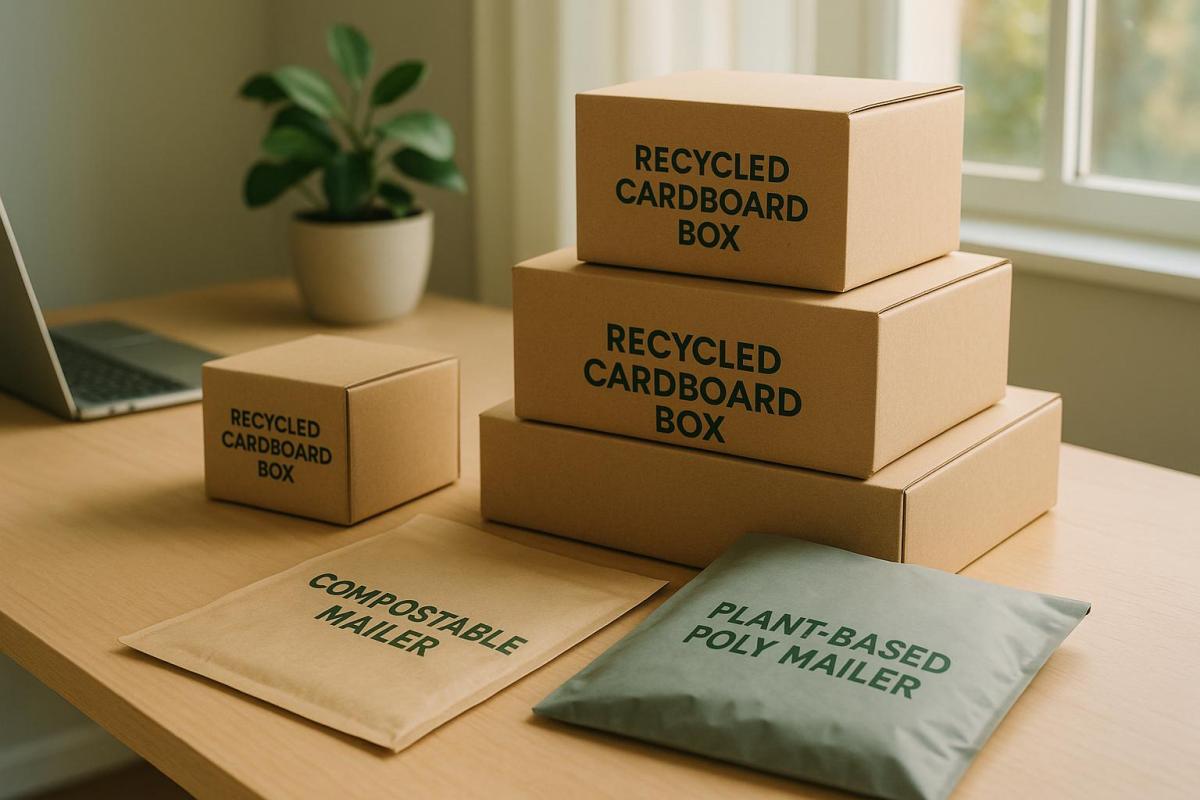
Eco-friendly mailing formats use materials like recycled paper, cardboard, compostable mailers, and recycled poly mailers to reduce waste and environmental impact. These formats are designed to decompose naturally or be recycled, offering businesses a way to lower their carbon footprint and meet consumer demand for greener packaging. Here’s what you need to know:

  • Recycled Paper/Cardboard: Made from up to 97% post-consumer waste, these are recyclable and compostable but not water-resistant.
  • Compostable Mailers: Plant-based materials like cornstarch or PLA decompose within 90–180 days in composting facilities.
  • Recycled Poly Mailers: Durable, water-resistant options made from up to 50% post-consumer recycled plastic; require drop-off recycling.

Key Tips for Businesses:

  • Use certified materials (e.g., FSC for paper, ASTM D6400 for compostable).
  • Optimize packaging size and weight to reduce waste and shipping costs.
  • Educate customers on proper disposal methods for eco-friendly materials.

Switching to these formats can save money, improve branding, and align with growing sustainability expectations. Partnering with experts like Miro Printing & Graphics Inc. can simplify the transition to greener mailing practices.

Sustainable product packaging & shipping supplies: eco-friendly tips for your small business

Eco-Friendly Mailing Material Types

Choosing sustainable mailing materials not only protects your products but also reinforces your brand’s commitment to eco-conscious practices. Below, we’ll explore some of the most effective sustainable materials and their uses.

Recycled Paper and Cardboard

Recycled paper and cardboard mailers are tried-and-true eco-friendly options. Made primarily from post-consumer waste – sometimes up to 97% – these materials breathe new life into products that might otherwise end up in landfills. For example, some recycled paper mailers are entirely crafted from post-consumer waste.

These materials are easily recyclable through curbside programs and compostable when free of plastic coatings. Certifications like FSC ensure that the paper is sourced responsibly. Recycled paper mailers are ideal for shipping items like apparel, books, and documents that don’t require water resistance. For fragile goods, padded mailers offer cushioning without relying on plastic bubble wrap. Some options, such as Eco‑Natural Lite® mailers, even feature resealable closures, making returns easier and supporting circular business practices.

While these mailers aren’t water-resistant and can be slightly heavier than plastic alternatives, their renewable nature and ability to be customized make them a strong choice for brands prioritizing sustainability.

Compostable and Biodegradable Mailers

For situations where paper isn’t suitable, plant-based compostable mailers offer a great alternative. These are made from materials like PLA, cornstarch, or mushroom mycelium, allowing them to naturally break down within 90–180 days under proper composting conditions – leaving no toxic residues.

To maximize their environmental benefits, these mailers should be composted at home or in industrial facilities rather than recycled. While many home composting setups can handle them, industrial facilities provide the ideal environment for decomposition. Companies like Keap have already adopted mushroom-based packaging, proving the practicality of these solutions. Compostable mailers are particularly effective for shipping clothing, subscription boxes, and food deliveries where moisture resistance isn’t a priority.

The biggest challenge is ensuring customers have access to appropriate composting facilities, as not all areas offer industrial composting. Clear labeling and customer education are essential to ensure these mailers are disposed of properly.

Recycled Poly Mailers

Recycled poly mailers strike a balance between durability and sustainability. Made from post-consumer recycled plastics, they often include up to 50% recycled content. For instance, EcoEnclose poly mailers are crafted entirely from recycled materials, half of which are post-consumer waste.

These mailers frequently feature dual adhesive strips, enabling multiple uses and reducing overall packaging waste. While they require drop-off recycling at designated locations, about 95% of Americans have access to facilities that accept thin film plastics.

Despite being plastic-based, recycled poly mailers can have a smaller carbon footprint than paper alternatives due to their lighter weight, which reduces transportation emissions. They are particularly suited for e-commerce, lightweight goods, and items that need water resistance during shipping. To optimize recycling, customers should remove labels or adhesives before disposal and be informed about proper recycling methods.

Material Type Recycled Content Best Applications Disposal Method Key Advantage
Recycled Paper/Cardboard Up to 97% post-consumer Apparel, books, documents Curbside recycling Renewable
Compostable/Biodegradable Plant-based materials Clothing, subscription boxes Composting facilities Breaks down naturally
Recycled Poly Mailers Up to 50% post-consumer Electronics, water-sensitive items Drop-off locations Waterproof and reusable

How to Design Sustainable Mailing Formats

Designing eco-conscious mailing formats is all about finding the sweet spot between minimizing environmental impact and meeting practical business demands. Thoughtful design choices can help reduce waste, lower costs, and keep customers happy – all while being kinder to the planet.

Reducing Weight to Save Money and Lower Emissions

Lighter packaging isn’t just good for the environment – it’s good for your bottom line. In the U.S., shipping carriers calculate costs based on weight and size, so trimming down packaging materials can save you 5–10% on shipping expenses while cutting carbon emissions during transport.

Flexible options like mailer bags are a game-changer. They use 70–80% less material than rigid packaging, which means lighter shipments and fewer emissions. Swapping bulky boxes for slim mailers not only reduces material use but also lowers fuel consumption, creating a ripple effect of savings across thousands of shipments.

Reducing weight naturally pairs well with optimizing packaging sizes for efficiency.

Right-Sizing Your Packaging

Custom-sized packaging is a simple yet impactful way to cut waste. By analyzing your product dimensions, you can create packaging that eliminates unnecessary filler, reduces material use, and optimizes shipping costs. For example, custom-sized mailer boxes made from recycled cardboard provide sturdy protection while keeping sustainability in focus. Plus, they can help you avoid dimensional weight charges from carriers.

Properly sized packages also make shipping more efficient. Delivery trucks can carry more parcels when they’re packed optimally, which reduces the number of trips needed and lowers transportation emissions. On top of that, customers appreciate packaging that fits their orders without leaving them with piles of waste – a clear signal that your brand cares about the environment.

Investing in a few custom size options can be surprisingly cost-effective. Many businesses find that three to four custom sizes cover about 90% of their shipping needs, significantly cutting down on waste.

Choosing Eco-Friendly Inks and Adhesives

Switching to water-based or soy-based inks is a small change with a big impact. These inks contain fewer volatile organic compounds (VOCs), making them safer for the environment and easier to recycle. Unlike petroleum-based inks, which can contaminate recycling streams and release harmful chemicals, eco-friendly inks naturally break down, integrating seamlessly into recycling systems.

And here’s the bonus: these inks don’t compromise on quality. They deliver vibrant colors and sharp text, with only a slight cost increase that’s often offset by better recyclability and fewer regulatory concerns.

The same goes for adhesives. Traditional adhesives can make recycling tricky, but water-based or plant-based alternatives simplify the process. They’re non-toxic, safer for workers and consumers, and easier to separate during recycling.

Using a single-material approach – like combining recycled paper, water-based inks, and plant-based adhesives – makes it easier for customers to recycle your packaging as one unit. This simplicity reduces contamination in recycling streams and boosts overall efficiency.

Design Element Traditional Option Eco-Friendly Alternative Environmental Benefit
Inks Petroleum-based Water-based/soy-based Fewer VOCs; easier recycling
Adhesives Synthetic polymers Water-based/plant-based Non-toxic; recyclable
Weight Standard materials Lightweight alternatives 5–10% shipping cost reduction
Sizing One-size-fits-all Custom-sized formats Up to 70–80% less material usage

Teaming up with knowledgeable suppliers can make the transition to sustainable design smoother. They can guide you through the technical details, ensure your packaging holds up during shipping, and keep you informed about the latest eco-friendly innovations.

sbb-itb-ce53437

How to Save Money on Eco-Friendly Mailing

Switching to eco-friendly mailing doesn’t have to break the bank. By making smart choices like buying in bulk, streamlining operations, and using certified materials, you can keep costs under control while staying sustainable.

Buying in Bulk and Partnering with Suppliers

One way to cut costs is by purchasing eco-friendly materials in bulk. Suppliers often provide discounts for larger orders, and materials like corrugated cardboard and kraft paper typically cost just 5–15% more than plastic alternatives – and may even cost less when bought in bulk. This approach not only reduces the per-unit price but also trims shipping expenses and avoids the high costs of last-minute purchases.

Building strong relationships with your suppliers can also lead to savings. Negotiating long-term contracts might get you perks like custom printing options or flexible minimum order quantities, helping you maintain your brand identity without overspending. This bulk-buying strategy naturally ties into integrating operations with mailing services for even more savings.

Combining Eco-Friendly Packaging with Mailing Services

Teaming up with a provider that offers both eco-friendly packaging and mailing services can simplify your processes and save money. By consolidating these services, you reduce handling time, cut administrative costs, and streamline your supply chain. Plus, providers can help optimize packaging designs to use fewer materials and lower shipping costs.

For instance, Miro Printing & Graphics Inc. offers integrated eco-friendly packaging and mailing services. This setup not only provides bundled discounts but also improves logistics. It leads to better communication, consistent quality control, and smarter inventory management – avoiding costly overstock or shortages. Using certified materials through these providers adds an extra layer of efficiency and trust.

Understanding Certification Standards

Using certified materials is a smart move for both quality and cost savings. In the U.S., two key certifications to know are FSC (Forest Stewardship Council) for paper products and ASTM D6400 for compostable materials. FSC certification ensures paper comes from responsibly managed forests, while ASTM D6400 guarantees compostable mailers will break down as advertised. These certifications protect you from accusations of "greenwashing" and help build customer trust by backing up your sustainability claims.

Certified materials also help you avoid hidden costs, like replacing subpar products or dealing with dissatisfied customers. Partnering with local suppliers who are familiar with these standards can guide you toward the most cost-effective, sustainable options that align with your goals.

Working with Miro Printing & Graphics Inc. for Eco-Friendly Solutions

Switching to sustainable mailing doesn’t have to be complicated. By teaming up with a skilled print shop like Miro Printing & Graphics Inc. in Hackensack, NJ, you can easily adopt eco-friendly practices. Their expertise and range of services make it simple to transition to greener mailing formats. Here’s how they do it.

Custom Eco-Friendly Mailing Formats

Miro specializes in creating packaging that reduces waste while meeting your branding and shipping needs. They work closely with clients to understand their product requirements and goals, offering tailored solutions that balance durability with sustainability.

One key advantage is their ability to craft custom-sized packaging. Instead of using oversized mailers that waste materials and drive up shipping costs, Miro can design recycled cardboard boxes or branded kraft paper envelopes that fit your products perfectly. This not only cuts down on waste but also saves money on shipping. By combining innovative design with sustainable materials, they help your business lower its environmental impact while maintaining a professional look.

Design and Fulfillment Services

Miro’s integrated design and fulfillment services ensure your packaging is both sustainable and visually appealing. Their design team collaborates with you to create packaging that aligns with your brand while using eco-friendly materials.

They focus on optimizing packaging size to minimize material use, selecting sustainable inks like soy- or water-based options, and ensuring all branding elements work seamlessly with recyclable or compostable materials. Their fulfillment services handle everything from printing and assembly to addressing and direct mail distribution. This streamlined approach not only simplifies logistics but also keeps sustainability at the forefront of your operations.

Helping Businesses Reach Sustainability Goals

Miro Printing & Graphics Inc. is committed to helping businesses meet their sustainability targets. By using certified sustainable materials, they help build trust with customers while meeting industry standards.

They also stay ahead of the curve by exploring new trends such as minimal packaging, plant-based materials, and recyclable plastics. Whether it’s mushroom-based packaging or water-based coatings, Miro advises clients on innovative solutions that align with regulatory changes and shifting consumer expectations. This ensures your mailing formats remain eco-friendly and future-proof.

For businesses ready to make the change, Miro offers consultations to evaluate your current mailing practices and sustainability goals. Their thorough process includes material selection, design development, prototyping, and full-service production and mailing – all tailored to meet U.S. standards and compliance requirements. By partnering with Miro, you’re not just improving your mailing practices – you’re making a meaningful step toward sustainability.

Conclusion

Eco-friendly mailing formats aren’t just good for the planet – they’re also a smart way to cut costs and enhance your brand’s image. With more consumers prioritizing sustainability, adopting greener practices can help your business stay relevant and responsible.

To get started, focus on a few key areas: choose materials that meet sustainability certifications, optimize your packaging size to reduce waste and shipping expenses, and collaborate with partners who understand both your business goals and environmental priorities. These efforts are backed by industry certifications and practical examples, proving their effectiveness.

Making the switch to sustainable packaging doesn’t just benefit the environment – it can also save you money. Reduced shipping costs and better material usage are immediate perks of these changes.

Begin by evaluating your current packaging practices and gradually integrating sustainable options that suit your products. Seek guidance from experts to make this transition smoother. Companies like Miro Printing & Graphics Inc. offer tailored solutions, combining custom packaging designs and certified materials to help businesses achieve their sustainability goals while staying cost-effective.

In today’s market, sustainable mailing isn’t optional – it’s a necessity for responsible and competitive business practices. By implementing these strategies and working with experienced partners, you can align your business with sustainability trends and set yourself up for long-term success.

FAQs

What steps can businesses take to help customers dispose of eco-friendly mailing materials properly?

Businesses can help customers handle eco-friendly mailing materials responsibly by providing clear disposal instructions right on the packaging. These instructions might include recycling symbols, composting tips, or straightforward guidance on how to separate materials for proper disposal.

Another smart approach is using materials that are easy to recycle or compost. By opting for sustainable options that customers can manage with minimal effort, companies not only promote proper disposal practices but also align with broader environmental objectives.

What are the main advantages of using custom-sized eco-friendly packaging for shipping?

Using custom-sized eco-friendly packaging comes with a range of advantages for both businesses and the planet. By creating packaging that fits your products precisely, you can cut down on material waste and potentially save on shipping costs since smaller, lighter packages are easier to transport. Plus, eco-friendly materials like biodegradable or recyclable options help reduce waste and attract customers who prioritize sustainability.

Custom sizing isn’t just about reducing waste – it also offers better protection for your products during shipping, lowering the chances of damage and the hassle of returns. Choosing sustainable packaging sends a clear message about your commitment to ethical practices, which can elevate your brand image and foster stronger customer loyalty.

How can Miro Printing & Graphics Inc. help make switching to eco-friendly mailing formats easier?

Miro Printing & Graphics Inc. makes it easier to transition to eco-friendly mailing formats by providing all your printing and mailing needs in one place. They specialize in creating high-quality materials while prioritizing sustainable practices.

With services like digital and offset printing, custom project solutions, and mailing services handled in-house, they simplify the process and save you time. Their team also offers advice on environmentally friendly materials and design options, ensuring you can make greener choices without compromising your brand’s message or impact.

Related Blog Posts

https://app.seobotai.com/banner/banner.js?id=68f2e08a1019c13c0b2f3106

5 Steps to Define Print Campaign Target Audience

Learn how to effectively define your target audience for a print campaign through five essential steps, ensuring your marketing efforts hit the mark.

Defining your target audience is the key to a successful print campaign. Without it, your efforts risk missing the mark and wasting your budget. Here’s a quick breakdown of the 5 steps you need to follow:

  1. Understand Your Product: Identify its features, benefits, and the problems it solves.
  2. Analyze Current Customers: Use data like demographics, buying habits, and surveys to learn who already engages with your brand.
  3. Research Competitors and Market: Study competitors’ campaigns and look for gaps in the market.
  4. Segment and Create Personas: Group your audience into segments and build detailed profiles to guide your campaign.
  5. Test and Refine: Rank your target segments and test your campaign ideas with focus groups or surveys.

How Effective Is Print Advertising As A Channel? – BusinessGuide360.com

Step 1: Know Your Product or Service

Before diving into creating print materials, it’s crucial to have a deep understanding of your product or service – what it offers, how it helps, and the problems it addresses. By clearly identifying your product’s features, benefits, and the challenges it solves, you can craft messages that resonate with the right audience.

List Features and Benefits

Start by breaking down your product into two key components: features and benefits. Features are the tangible elements – things like specifications, materials, design, or capabilities. Benefits, on the other hand, focus on the outcomes your customers experience, both practical and emotional, when using your product.

Take FIGS, for example, a brand known for its medical scrubs. They highlight features like durability, comfort, and reliability in their fabric and construction. But they don’t stop there – they connect these features to benefits by showing emergency medical providers in action, such as at a motorsport racing track. The durable fabric (feature) ensures freedom of movement in high-pressure, life-or-death situations (benefit).

When listing your product’s features and benefits, aim to be specific. For instance:

  • Instead of saying “high quality,” explain what makes it high quality (e.g., “crafted from 100% organic cotton for lasting softness”).
  • Instead of saying “saves time,” quantify it (e.g., “reduces prep time by 30 minutes for busy professionals”).

Another example is Cozy Earth, a brand that markets fabric quality, fit, and versatility. Their ads emphasize benefits like “maximum style, minimal effort,” appealing directly to busy women who want to look polished without spending hours on their appearance.

Features might include aspects like:

  • Comfort
  • Style
  • Durability
  • Size options
  • Color choices
  • Technical specifications

Benefits, in contrast, focus on results, such as:

  • Saving time
  • Improving efficiency
  • Enhancing appearance
  • Solving a specific problem
  • Providing enjoyment or convenience

Find the Problems Your Product Solves

Once you’ve nailed down the features and benefits, the next step is to identify the specific problems your product addresses. This is where you connect with your audience by solving their pain points.

Daniel Russell puts it perfectly:

"The best Marketing Strategies start with the customer first… if you can answer these questions you are halfway to a decent strategy: Who is your customer? What is their pain point? What problem am I solving for them?"

Think about the frustrations or unmet needs your customers face before discovering your product. These pain points should guide your messaging. For example, Wellnessliving, a software company for gyms and studios, targets yoga studio owners with Instagram Story ads. Their headline, “Grow your yoga studio revenue by 57%,” directly addresses a common problem – struggling to increase revenue – and offers their software as the solution.

When creating your print materials, focus on how your product solves specific problems while emphasizing the benefits it delivers. This customer-first approach ensures your message addresses what your audience cares about most, making your print campaigns more impactful.

Step 2: Review Your Current Customer Data

Once you’ve nailed down your product’s features and the problems it solves, it’s time to put your existing customer data to work. By analyzing who already engages with your brand, you can uncover the best prospects for your print campaign.

Check Demographics and Buying Patterns

Start by diving into the basics: age, gender, location, income, and occupation. These demographic details are key to understanding who values your product or service. Pair this with behavioral data, like purchase history, order frequency, and average order value, to build a clearer picture of your audience.

Next, look at purchasing trends. Are there seasonal spikes in sales? What’s the average order value? When do customers typically make purchases? Geographic data is especially helpful for print campaigns, as it allows you to target specific neighborhoods or zip codes where your ideal customers live or work.

These insights provide a strong starting point, which can be further enriched with tools like CRM systems and surveys.

Use CRM Systems and Surveys for More Data

Once you’ve identified demographic and behavioral trends, take it a step further with CRM systems and surveys. Customer Relationship Management (CRM) tools pull together data from across your customer interactions, offering a more complete view of their habits and preferences. This includes tracking website visits, email engagement, customer service interactions, and responses to past campaigns. Such information helps you pinpoint your most engaged customers and tailor messages to different segments.

For instance, Spotify used Mailchimp‘s CRM tools to reduce email bounce rates, ultimately boosting revenue by $2.3 million [Source: Mailchimp Case Studies, 2023].

Surveys and reviews add another layer by capturing customer opinions directly. CRM tools can even personalize surveys by pre-filling customer details based on past interactions. Research shows that 67% of customers are willing to share their data for perks like discounts, and 86% are open to paying more for a better experience. These insights are a goldmine for fine-tuning your print campaign strategy.

Step 3: Research Your Market and Competitors

Now that you’ve gathered customer data, it’s time to dig into your market and competitors. Understanding the competitive landscape and market trends helps you spot opportunities others might miss and ensures you’re not just following the crowd.

Study Local and National Competitors

Start by identifying both direct and indirect competitors. These include businesses offering similar products or services and those vying for the same customers’ dollars. For print campaigns, this means looking at companies using similar print advertising strategies, both locally and nationally.

Dive into their advertising strategies – study their messaging, channels, and tactics. Pay close attention to their print campaigns, examining ad designs, placements, and frequency. Use online tools to track their social media presence and website traffic, and complement this with offline methods like attending industry events, conducting surveys, or simply reviewing their print ads. Competitive tracking isn’t a one-and-done task; it’s an ongoing process that helps you stay agile and responsive to market shifts. By keeping tabs on competitors, you’ll uncover valuable insights to refine your own strategy.

A Chief Marketing Officer from a beverage brand shared this insight:

"By analyzing our competitors’ social media strategies, we pinpointed areas where we could innovate. This allowed us to take the lead in our category."

Look at their strengths, weaknesses, and areas where they’re falling short. For example, examine their SEO efforts – what keywords are they targeting? How does their content perform in search rankings? Are their audiences engaging with their content? This type of analysis reveals where you can stand out.

Find Market Gaps and Opportunities

The next step is to identify underserved segments and untapped opportunities where a print campaign could shine.

Tools like Google Trends, Social Mention, SEMrush, and Ahrefs can help you uncover emerging market trends and unmet needs. These tools offer insights into your audience, potential customers, and areas where competitors might be falling short.

Print advertising has unique advantages that can help you carve out a niche. Did you know that 56% of consumers trust print more than any other type of advertising? Plus, print marketing is 70–80% more memorable than digital ads. If competitors are pouring their budgets into digital channels, a well-executed print campaign could set you apart.

As one Marketing Director from an e-commerce company explained:

"Competitor analysis helped us uncover an underutilized channel that was perfect for our audience. We turned this into a key differentiator in our advertising strategy."

Look for areas where competitors aren’t active – this could be geographic regions, demographic groups, or even messaging approaches they’ve overlooked. For instance, in 2023, Airbnb adjusted its messaging after analyzing competitor campaigns, which significantly boosted its brand awareness.

By identifying these gaps, you can craft a print campaign that reaches untapped audiences with a message that truly resonates. This analysis will directly inform how you segment and target your audience in the next step, ensuring your campaign connects with the right people.

Pair your market research with high-quality print materials for maximum impact. If you’re looking for expert help in transforming your insights into standout print campaigns, check out the services offered by Miro Printing & Graphics Inc..

sbb-itb-ce53437

Step 4: Create Audience Segments and Profiles

Now that your market research is done, it’s time to turn all that data into actionable audience segments and customer personas. Think of this step as shaping raw information into clear, detailed profiles that will guide every part of your print campaign – from the design to the messaging.

Combine Demographics, Location, and Behavior Data

Don’t rely on just one type of data. Instead, blend demographics, geographic information, psychographics, and behavior data for a more complete picture of your audience.

Start by ensuring your segments meet these five key criteria: measurable, accessible, substantial, differentiable, and actionable. In other words, your segments should be large enough to justify the investment, reachable through cost-effective channels, and distinct enough to respond differently to your messaging.

Segmentation Type Definition Examples Difficulty
Demographic (B2C) Based on individual attributes Geography, Gender, Education Level, Income Level Simpler
Firmographic (B2B) Based on company attributes Industry, Location, Number of Employees, Revenue Simpler
Psychographic Based on lifestyle and values Personality Traits, Values, Opinions, Lifestyle More advanced
Behavioral Based on purchase behaviors Purchase History, Usage Patterns, Brand Loyalty More advanced

Here’s a real-world example: MX Player combines geographic data with language preferences and viewing habits to personalize content. Urban viewers see original-language Hollywood action films, while regional audiences enjoy dubbed romantic dramas in their native language. This strategy led to a 39% increase in viewership and a 70% boost in click-through rates.

Geographic segmentation can go beyond zip codes. Consider factors like climate, local culture, and regional habits. For instance, Whole Foods adjusts its product selection based on these insights. Stores in environmentally-conscious Boulder stock different items than those in suburban family-oriented areas, even when income levels in both locations are similar.

By integrating behavioral data – such as purchase frequency, campaign response rates, and engagement across touchpoints – you can pinpoint your most active prospects. Companies using automation tools to leverage segmentation insights report an 80% increase in leads.

The impact of segmentation is hard to ignore: 81% of executives consider it essential for profit growth, and businesses with effective segmentation strategies see 10% higher profits over five years compared to those that don’t invest in it.

Create Customer Personas

Once you’ve identified your segments, the next step is to build detailed customer personas. These fictional profiles represent the real people within your audience segments, helping you better understand their needs, preferences, and decision-making processes.

To create these personas, gather demographic data (like age, gender, income, education, and occupation) and behavioral insights (such as purchase habits, website activity, and responses to previous campaigns). Look for patterns and correlations between these data points.

Nike provides a great example here. The brand uses psychographic insights into urban running culture combined with demographic data like local income levels and age groups to influence inventory decisions, store layouts, and community events in its neighborhood-specific stores.

Make your personas detailed and relatable. Give them names, outline their challenges, and include specifics like their media habits, shopping preferences, and motivations for buying. For instance, what channels do they prefer? What’s their decision-making timeline? What pain points does your product or service address? Since 81% of customers expect a personalized experience, the more precise your personas, the stronger your print campaign will be.

Aim to create 3–5 primary personas that represent your most valuable segments. These personas will directly shape your messaging strategy, design choices, and media placements. When you can clearly picture who you’re speaking to, it becomes much easier to create print materials that resonate.

This detailed work on segmentation and persona-building lays the foundation for testing and refining your campaign strategy.

Step 5: Choose and Test Your Target Segments

With detailed personas ready, it’s time to prioritize your target segments and test your campaign strategy. This step can make the difference between a well-executed print campaign and a costly mistake.

Rank Your Target Segments

Not every segment is created equal, and budgets are always limited. Start by defining your campaign goals – are you looking to increase brand awareness, generate leads, or drive direct sales?. Then, evaluate each segment based on factors like size, potential value, and how well they align with your goals. Consider metrics such as growth rate, market share, competition, and profitability. Sometimes, a smaller but highly engaged segment can outperform a larger, less responsive one.

Create a ranking system tailored to your goals. For example, if you’re introducing a new product or service, focus on segments that value innovation and have the budget to invest. For brand awareness campaigns, larger groups with widespread reach might take priority.

"Advertisers who prioritize ad placements over audience targeting are likely to see weaker campaign results compared to those who know that targeting the right people is crucial." – SnapMe Creative Agency

To refine your rankings, calculate the cost per impression for each segment. Include print production, distribution costs, and expected response rates. Sometimes, a mid-tier segment with lower costs and steady engagement can generate a better return on investment than a pricier option.

Once you’ve ranked your segments, the next step is to test and confirm their responsiveness.

Test Your Campaign Ideas with Focus Groups

After ranking your segments, validate your decisions through targeted testing. Concept testing can help identify what resonates with your audience while minimizing wasted resources.

"Testing creative concepts helps identify the best way to meet campaign objectives. Understanding what works – or does not work – saves time and money." – The Compass for SBC

Focus groups are a powerful way to test print campaign ideas. Bring together 6–12 participants from your target segments to review and discuss your creative mockups. These sessions encourage open conversations, giving you insights into both the strengths and weaknesses of your campaign.

If budget is a concern, smaller focus groups can still provide valuable feedback. Building on the personas you developed in Step 4, these discussions ensure your campaign remains sharply targeted.

During these sessions, focus on key factors like attention, comprehension, motivation, personal relevance, and cultural fit. Use pre-designed questions to systematically gauge responses, and look for any confusing elements or styles that don’t connect with the audience.

For sensitive topics or audiences spread across a large area, consider in-depth interviews or self-administered surveys. These methods can capture individual reactions without the influence of group dynamics.

"Concept testing is used to understand if ideas have enough potential for further investment and growth." – Halsted Strategy Group

Analyze the feedback by categorizing responses into themes that can guide your creative adjustments. Document these insights carefully – they’ll not only improve this campaign but also inform future print marketing strategies.

Once you’ve gathered feedback, refine your concepts and apply the lessons learned to other elements of your campaign. Sometimes, testing reveals that a secondary segment is more enthusiastic than your primary target. Stay flexible and let the data lead your adjustments.

This thorough approach to segment selection and testing ensures your print campaign connects with the right audience before moving into full production. At Miro Printing & Graphics Inc., we use these strategies to create tailored, impactful print solutions.

Conclusion: Summary and Next Steps

Main Points from the 5-Step Process

Understanding your target audience is the cornerstone of successful print marketing. The five-step process outlined earlier helps you pinpoint, analyze, and connect with the right people.

It all begins with knowing your product or service – understanding the problems it solves and identifying who benefits most. Reviewing your current customer data uncovers patterns in demographics and behaviors that guide your targeting efforts. Researching your market and competitors highlights gaps and opportunities to explore. Creating audience segments and personas turns raw data into actionable insights, shaping your creative strategies. Lastly, choosing and testing your target segments ensures you’re focusing on the right groups before committing significant resources.

"When focusing on your target audience, be specific. And make sure your marketing materials are fulfilling the goals of your customers." – Metzgers

The power of print marketing is backed by impressive stats. Print and direct mail marketing achieve a 9% customer response rate, far outpacing digital channels, which average around 1%. Additionally, 80% of consumers act on direct print mail ads, compared to 45% for digital ads.

"Audience definition is an ongoing process, and regularly reassessing and refining your targeting efforts will lead to continuous improvements in your print media campaigns." – Commerce Press Inc.

Armed with this knowledge, you’re ready to bring your campaign to life.

How to Launch Your Campaign

To get started, craft a clear message and a strong call-to-action that speaks directly to your defined audience segments. Use the insights from your audience profiles to shape your messaging, design, and distribution strategies. Focus on customer-centric language, emphasizing how your product or service solves their problems.

Select materials that align with your brand image – considering paper quality, finishes, and budget. Keep your visual identity consistent across all materials, using your brand colors, fonts, and style to reinforce recognition. Research shows that over 90% of consumers find print ads easier to read than digital, and physical print ads require 21% less cognitive effort to process and remember.

Your distribution strategy should match the insights you’ve gathered about your audience. Think about timing, channels, and geographic targeting based on the personas you’ve created. For example, letter-sized direct mail achieves a 15.1% response rate, making it an effective format for lead generation.

Track your campaign’s performance and refine it as needed. Use tools like promo codes, QR codes, unique URLs, and dedicated phone numbers to measure success. Gather feedback from your audience to identify what resonated and what needs improvement, then apply these lessons to future efforts.

Combining print and digital strategies can increase campaign effectiveness by up to 400%. Integrate QR codes or personalized URLs into your print materials to connect them with digital platforms, enabling you to track engagement and gain deeper insights into your audience’s behavior.

At Miro Printing & Graphics Inc., we know that a successful print campaign begins with understanding your audience. Our end-to-end printing and design services ensure your message is delivered with precision and impact. From concept to distribution, we’re here to help you connect with your audience in the most effective way possible.

FAQs

How can I figure out the problems my product solves to better connect with my target audience?

To figure out the problems your product addresses, start by diving into customer interviews and conducting market research. These methods can help you uncover recurring pain points your audience experiences. Keep an ear out for phrases like "I wish" or "if only" during conversations – these often reveal unmet needs or frustrations.

You can also gather direct insights using surveys and feedback forms. Another smart move? Take a close look at your competitors. By analyzing their offerings, you might spot gaps in the market where your product can step in and make a difference. The key is to truly understand what’s bothering your customers and how your product can solve those issues in a meaningful way.

What are the best ways to collect customer data for effective audience segmentation?

To collect detailed customer data for audience segmentation, leverage tools like analytics platforms (such as Google Analytics), customer surveys, and feedback forms. You can also use website tracking tools and customer relationship management (CRM) software to gain deeper insights into customer behavior and preferences.

By combining these approaches, you can ensure you gather precise and useful data to clearly define your target audience for print marketing campaigns.

How can I make my print campaign stand out in a world dominated by digital advertising?

To make your print campaign stand out in today’s digital-focused world, aim to create a memorable, hands-on experience. Choose high-quality materials that showcase your brand’s style and professionalism. Pair these with striking visuals and a clear, persuasive message that communicates what sets your business apart.

You can also bridge the gap between print and digital by including interactive features like QR codes or augmented reality (AR). These elements not only boost engagement but also allow you to track responses effectively. By blending creative design with smart messaging, your print campaign can feel both fresh and relevant.

Related posts

https://app.seobotai.com/banner/banner.js?id=68881441ce3048a7f63a5ff2

Applications of Coated Synthetic Fabrics in Outdoor Advertising

Coated synthetic fabrics enhance outdoor advertising with durability, weather resistance, and vibrant print quality, outpacing traditional materials.

Coated synthetic fabrics are transforming outdoor advertising by offering durability, weather resistance, and superior print quality. These materials outperform traditional options, like paper and natural fabrics, which degrade quickly under harsh conditions. Key features include:

  • Weather Resistance: Withstand UV rays, rain, wind, and temperature shifts.
  • Durability: Long-lasting materials reduce replacement costs.
  • Print Quality: Sharp, vibrant designs that resist fading.
  • Cost Efficiency: Higher upfront costs but lower long-term expenses.
  • Versatility: Ideal for banners, billboards, flags, and building wraps.

These fabrics feature coatings like PVC, polyurethane, and silicone, each suited to specific applications. For example, PVC-coated fabrics are perfect for billboards, while silicone coatings excel in extreme conditions. By choosing the right material and printing techniques, businesses can ensure their advertising remains impactful and cost-effective in any environment.

Outdoor PVC Banner Printed with Waterproof ECO-Solvent Ink and Hung by Eyelet Holes

Properties of Coated Synthetic Fabrics

Coated synthetic fabrics are a blend of textile substrates and polymer coatings, designed to turn regular fabrics into materials that can withstand tough outdoor conditions. These coatings enhance resistance to corrosion, heat, and abrasion, while also offering waterproofing and controlled air permeability. These qualities make them a go-to choice for outdoor advertising applications.

Here’s a closer look at the features that make these fabrics ideal for demanding environments.

Weather Resistance and Durability

One of the standout qualities of coated synthetic fabrics is their ability to endure harsh weather. This resilience comes from specialized coatings that guard against UV damage, water infiltration, and chemical exposure, all of which can degrade materials over time. These fabrics also perform well across a wide temperature range, maintaining their structure and functionality. The coatings not only shield fibers from wear and tear but also significantly extend the material’s lifespan.

Enhanced Color Retention and Print Quality

Durability aside, coated synthetic fabrics also excel in visual performance. Materials like polyester are particularly good at holding dyes, ensuring colors remain vivid over time. The coating itself creates a smooth surface that enhances ink adhesion, resulting in sharper and more vibrant prints compared to uncoated fabrics.

Sublimation printing is especially effective on synthetic fabrics like polyester, producing long-lasting, fade-resistant designs. Additionally, modern pigment printing methods deposit color particles onto the fabric’s surface, delivering images with improved texture and durability. These techniques also offer better resistance to light exposure compared to traditional dyes.

Types of Coatings and Their Advantages

Different coatings bring unique benefits, depending on the intended use. For example:

  • Polyurethane (PU): Known for its cost-effectiveness and excellent water resistance, PU coatings are flexible and perform well under various weather conditions.
  • Silicone: This coating provides exceptional UV protection and increases tear strength, making it ideal for large-scale applications like billboards. However, it typically costs 10–30% more than PU.
  • Polyether Urethane (PE): With strong resistance to mold and hydrolytic degradation, PE coatings are well-suited for humid climates or areas with frequent rain.

Each coating type has its strengths and is suited for specific needs, as outlined below:

Coating Type Key Benefits Best Applications Cost Considerations
Polyurethane (PU) High water resistance, cost-effective General outdoor signage, banners Lower upfront cost
Silicone Superior UV resistance, increases tear strength Large outdoor displays, extreme weather 10–30% premium over PU
Polyether Urethane (PE) Mold resistance, hydrolytic stability Humid climates, long-term installations Higher cost, longer longevity

While PU and PE coatings may degrade under prolonged UV exposure, silicone coatings maintain their protective properties, making them a better choice for extreme conditions. Understanding these coating options allows advertisers to choose the right material based on environmental challenges and budget constraints.

As of 2021, synthetic fabrics dominate the global fiber market, making up 64% of it, with polyester alone accounting for 54%. This widespread use ensures a growing range of coated synthetic options for various applications.

Outdoor Advertising Uses for Coated Synthetic Fabrics

Coated synthetic fabrics are a go-to solution for outdoor advertising, offering durability and consistent print quality across various formats. Whether it’s banners, flags, or billboards, these materials shine in both temporary and long-term applications, standing up to weather challenges while maintaining vibrant visuals.

Banners and Building Wraps

When it comes to banners and building wraps, coated synthetic fabrics handle demanding outdoor applications with ease. For example, vinyl banners made from synthetic polyester can last up to five years when properly maintained.

In areas prone to strong winds, mesh banners are a smart choice. Their perforated design allows air to pass through, reducing strain on mounting hardware and preventing the banner from acting like a sail during storms. These lightweight yet tough materials are both waterproof and weather-resistant, making them a reliable option.

Building wraps, on the other hand, call for materials that can adapt to various architectural shapes while delivering sharp, clear prints. PVC-coated tarpaulin fabric fits the bill perfectly. It combines flexibility with strength, resists corrosion, and offers UV protection. This makes it easy to wrap around corners and irregular surfaces, ensuring vibrant graphics throughout the campaign’s duration.

Flags and Event Signage

The same durable qualities that make coated synthetic fabrics great for banners also make them ideal for event signage and mobile advertising. Event setups often require materials that are portable yet eye-catching, and fabric banners meet these needs exceptionally well. They’re lighter than vinyl options and can be displayed almost anywhere, making them a favorite for trade shows and temporary installations.

In 2023, SpeedPro highlighted the effectiveness of fabric displays at community events, trade shows, and outdoor fairs. Their case studies showed that flags, tents, and banners made from coated synthetic fabrics worked wonders for promoting brands and messages. Custom table covers and canopies also helped create cohesive, branded spaces [doc].

Polyester fabric is particularly well-suited for event signage. It has a substantial feel despite being lightweight, giving it a polished, premium look that’s perfect for high-end brand presentations. Additionally, dye sublimation printing pairs beautifully with polyester. This method embeds graphics deep into the fabric, making them a permanent part of the material rather than a surface-level coating.

For flags, the flexibility of coated synthetic fabrics not only helps them maintain their shape but also enhances visibility. The natural motion of the fabric catches the eye, drawing attention to the display.

Billboards and Roadside Advertising

Coated synthetic fabrics also excel in large-scale, fixed installations like billboards and roadside advertisements. These applications demand materials that can withstand years of exposure to harsh weather while maintaining their visual appeal. PVC-coated fabrics are a standout choice here, offering wind resistance and stability even in extreme conditions. Their excellent print clarity minimizes the need for frequent replacements, a key advantage for billboards in remote or hard-to-reach locations.

Unlike materials that require lamination – which can peel or bubble over time – coated synthetic fabrics integrate their protective features directly into the material. Testing by Kellogg Community College Print and Document Services confirmed the durability of synthetic media, even in demanding scenarios like ID badges and emergency guides.

Cost is another factor that makes PVC fabrics appealing for billboards. They’re more affordable than traditional options like canvas or natural fabrics, and their durability reduces maintenance and replacement expenses. For roadside advertising, maintaining vibrant colors and sharp images is crucial for catching attention. Coated synthetic fabrics deliver on this front, offering a smooth surface for high-quality printing and built-in UV protection to prevent fading over time.

sbb-itb-ce53437

Coated Synthetic Fabrics vs Traditional Materials

Coated synthetic fabrics are proving to be a game-changer in the outdoor fabric market, which is projected to hit $4.8 billion by 2033.

Traditional paper-based materials struggle to perform outdoors. They tear easily, lack durability in extreme conditions, and falter when exposed to temperature shifts. Similarly, natural fabrics face their own set of challenges. Their fiber structure makes it hard for printing inks to stick properly, leading to poor print durability.

Performance Comparison

Let’s dive deeper into how these materials stack up against each other.

Weather Resistance
Traditional paper and uncoated fabrics are no match for harsh weather – they degrade quickly. On the other hand, coated synthetic fabrics, like PVC vinyl, excel in strength, flexibility, and water resistance. This makes them ideal for outdoor use, reducing the need for frequent replacements and cutting costs in the long run.

Color Retention and Print Quality
Polyester-based synthetic fabrics hold onto dyes exceptionally well, delivering vibrant, long-lasting prints that resist fading. Their smooth surface ensures sharper, more detailed images. In contrast, natural fabrics like cotton and linen fade more quickly, especially when exposed to sunlight or varying weather conditions. This durability not only lowers maintenance needs but also keeps branding visible for longer periods.

The way inks bond with these materials further highlights the gap. Synthetic fabrics allow inks to penetrate deeply and adhere more effectively, resulting in brighter colors and sharper images compared to natural fabrics.

Feature Coated Synthetic Fabrics Traditional Materials
Weather Resistance Excellent Limited
Color Retention High Moderate
Durability Long-lasting Lower durability
Print Quality Vibrant and clear Fades quickly
Cost Moderate upfront Low upfront
Environmental Impact Recyclable options Often non-recyclable

This table highlights not only the performance edge of coated synthetic fabrics but also their long-term cost and environmental benefits.

Cost Considerations
Although traditional materials may seem cheaper at first glance, coated synthetic fabrics save money over time. Their durability means fewer replacements and less maintenance, making the initial investment well worth it.

Environmental Impact
Traditional materials contribute more waste due to frequent replacements. In contrast, many coated synthetic fabrics are recyclable, offering a more sustainable option despite not being biodegradable.

Thanks to their durability, coated synthetic fabrics outlast traditional materials by a wide margin. For outdoor advertising, where materials endure constant environmental stress, this durability is crucial. These advantages in performance, cost, and sustainability make coated synthetic fabrics the smart choice for long-lasting, effective campaigns.

How to Choose the Right Coated Synthetic Fabric

Picking the right coated synthetic fabric is essential to avoid issues like fading, material breakdown, or the need for expensive replacements.

What to Consider

When exploring coated synthetic fabrics for outdoor advertising, keep these critical factors in mind to ensure your material performs well in its intended environment.

Weather and UV Resistance
Outdoor materials face constant exposure to rain, wind, sun, and snow. Look for fabrics made with tough fibers designed to endure harsh weather conditions. UV resistance is especially important and should match your specific use case. For example:

  • 500–1,000 hours: Ideal for short-term signage.
  • 1,000–2,000 hours: Suitable for shade structures.
  • 2,000–3,000 hours: Works well for vehicle covers.
  • 3,000–5,000+ hours: Necessary for marine or extreme outdoor applications.

Water Protection Levels
Understanding the difference between water-resistant, water-repellent, and waterproof fabrics is key. Waterproof materials like vinyl completely block water, while water-repellent fabrics balance water protection with breathability. For most outdoor advertising, a waterproof or highly water-resistant fabric is a must.

Color and Heat Considerations
The color of your fabric can impact its performance. Lighter colors reflect sunlight, helping with heat resistance, while darker colors absorb more heat but may provide better UV protection. Additionally, colorfastness – rated on a scale from 1 to 5 – measures resistance to fading, with 5 being the best.

Installation and Budget Planning
Think about factors like installation requirements, fabric weight, flexibility, and overall budget when choosing your material. For example:

  • Tension fabric systems simplify the setup of flexible PVC banners.
  • Building wraps: Full wraps offer complete coverage for branding, mesh wraps work well in windy areas, and perforated wraps are ideal for windows and glass surfaces.
    While fabrics like solution-dyed acrylics may cost more upfront, they often outlast polyester and olefin in terms of color retention and water resistance.

Once you’ve narrowed down your options, professional printing services can help ensure your chosen material meets the demands of your campaign.

Why Use Professional Printing Services

Choosing the right fabric is only part of the equation – professional printing services can elevate your project by combining expert material selection with cutting-edge techniques and quality assurance.

Material Selection Expertise

"When buying PVC fabric for outdoor use, it’s important to consider factors like durability, UV resistance, water resistance, flexibility, and maintenance needs."

Professionals can guide you in selecting a fabric that aligns with your specific application, weather conditions, and budget.

Advanced Printing Techniques

"Our advanced printing techniques ensure precise, sharp, and vibrant prints that deliver superior durability."

With specialized tools and methods, professional printers deliver vibrant colors and prints that stand the test of time.

Quality Control and Testing
From digital mock-ups to strike-offs and testing under various lighting conditions, professional printers ensure your final product meets the highest standards.

Design and Technical Support
Experienced teams provide design assistance, handle multiple file formats, and offer advice to align your designs with branding and aesthetic goals.

Sustainable Practices
Many printing services now use eco-friendly inks and materials, ensuring sustainability without sacrificing performance.

Miro Printing & Graphics Inc. stands out with its comprehensive large-format printing services. From banners to custom projects, their in-house design capabilities ensure your coated synthetic fabric materials meet top-tier standards, from concept to installation.

Conclusion: Benefits of Coated Synthetic Fabrics for Outdoor Advertising

Coated synthetic fabrics have reshaped the landscape of outdoor advertising by addressing many of the challenges associated with traditional materials. Paper-based products, for example, often falter under harsh weather conditions and require frequent replacements. In contrast, coated synthetic fabrics stand out for their impressive durability, resistance to weather, and exceptional print quality – qualities that traditional materials simply can’t rival.

The benefits aren’t just theoretical; the data backs them up. Jeremy Underhill, Vice President of Sales at MGX, puts it succinctly:

"In general, synthetic papers provide superior durability versus traditional paper in the form of tear, water, and chemical resistance. This can extend the life of the end application, requiring less reprints and reducing costs over the life cycle of the piece."

Although these fabrics may come with a higher initial price tag, their waterproofing, UV resistance, and tear resistance ensure that outdoor advertisements retain their professional appearance for much longer, driving down overall costs over time.

Operationally, the advantages are just as compelling. Laura Slovensky, Senior Manager of Product Marketing at Nekoosa, underscores another critical point:

"Synthetic paper won’t wrinkle, delaminate, or fray along the edges, ensuring a clean, professional look over the lifetime of the printed application. It also improves operational efficiency by eliminating the time-consuming lamination step, allowing printers to streamline production. Additionally, printing on synthetic paper requires few consumables while delivering superior results."

These operational perks emphasize the importance of working with experts in the field. Choosing the right fabric, coating, and printing method can be a complex process that benefits from professional guidance.

Miro Printing & Graphics Inc. brings both expertise and advanced technology to the table. With their in-house design services and cutting-edge printing techniques, they ensure your coated synthetic fabric projects deliver vibrant colors, crisp images, and lasting performance. From banners and building wraps to custom signage, their professional printing services turn the unique properties of coated synthetic fabrics into advertising materials built to thrive in tough outdoor settings.

Coated synthetic fabrics are a game-changer for outdoor advertising, and with the right printing partner, you can unlock their full potential to create impactful, long-lasting campaigns.

FAQs

What makes coated synthetic fabrics a better choice for outdoor advertising compared to traditional materials?

Coated synthetic fabrics are built to last, offering impressive durability that makes them perfect for tough outdoor environments. These fabrics are crafted to handle rain, strong winds, and even extreme temperatures, ensuring they hold up over time. Plus, they include UV protection to keep colors bright and prevent fading, so your outdoor displays stay eye-catching.

On top of that, their tear-resistant nature helps banners, billboards, and other outdoor materials maintain their shape and quality, even in demanding conditions. This combination of features makes coated synthetic fabrics a dependable and budget-friendly choice for outdoor advertising.

How do coatings like PVC, polyurethane, and silicone impact the performance and cost of synthetic fabrics for outdoor advertising?

Coatings significantly impact both the performance and cost of synthetic fabrics used in outdoor advertising. PVC coatings are a cost-effective choice, offering durability, waterproofing, and resistance to tough weather conditions, making them perfect for large outdoor banners. On the other hand, polyurethane coatings are known for their flexibility and resistance to abrasion, making them ideal for uses that involve frequent handling, though they tend to come with a higher price tag. For those needing top-tier performance, silicone coatings excel with outstanding weather resistance, UV stability, and the ability to endure extreme temperatures, albeit at a premium cost.

Each type of coating brings its own advantages, allowing businesses to tailor their choice based on specific advertising demands and budgets. Picking the right coating ensures displays stay vibrant and reliable, no matter the environment.

What should businesses look for when selecting coated synthetic fabrics for outdoor advertising?

When selecting coated synthetic fabrics for outdoor advertising, businesses should focus on a few key qualities to ensure their displays remain effective and visually striking over time. Durability, weather resistance (including protection from rain, snow, and UV rays), and color retention are essential for maintaining vibrant and long-lasting advertisements.

Other important factors include printability, flexibility, and tensile strength, which contribute to creating visually appealing and sturdy ads. Since outdoor advertisements face constant exposure to harsh environmental conditions, ease of maintenance and the fabric’s overall lifespan are equally important. Prioritizing these features helps businesses choose materials that not only look great but also stand up to the challenges of the outdoors.

Related posts

https://app.seobotai.com/banner/banner.js?id=687eda980c233be3c8514345

10 Budget Mistakes in Direct Mail Campaigns

Avoid costly budget mistakes in direct mail campaigns with effective planning and targeted strategies for higher ROI.

Direct mail campaigns can be highly effective, with response rates of 4.9% for prospect lists and 9% for house lists, but poor budget planning can lead to costly mistakes. Here are the 10 most common budgeting errors to avoid:

  1. Not Defining Your Target Audience: Wasting resources by failing to segment and personalize mailings.
  2. Using Outdated Mailing Lists: Poor-quality data leads to undeliverable mail and wasted costs.
  3. Underestimating Postage Costs: Postage often accounts for the largest expense, and hidden fees can add up.
  4. Neglecting Design Costs: Skimping on design reduces response rates; quality creative work matters.
  5. Ignoring Personalization Costs: Personalization boosts engagement but requires upfront investment in data and printing.
  6. Skipping Testing and Tracking: Without testing, campaigns risk underperforming, wasting money on ineffective strategies.
  7. Overlooking Compliance Costs: Failing to follow regulations can result in hefty fines and damaged reputation.
  8. Not Accounting for Delays: Production and fulfillment delays disrupt timelines and increase costs.
  9. Compromising on Print Quality: Cheap materials hurt your brand image and reduce campaign effectiveness.
  10. Failing to Plan for Hidden Expenses: Unexpected costs like list cleaning, rush fees, or reprints can blow your budget.

Key Takeaway: Direct mail requires careful planning across audience targeting, data quality, postage, design, and testing. Avoid these mistakes to maximize ROI and ensure your campaign stays on budget.

Conquering Direct Mail Marketing Mistakes for Maximum Impact

1. Not Defining Your Target Audience

Trying to appeal to everyone is like shouting into the void – it wastes time, effort, and money on people who simply aren’t interested.

Here’s the reality: 68% of consumers expect personalized experiences, yet only 42% of marketers know basic demographic details about their audience. Even fewer – less than half – understand their audience’s interests and hobbies. This gap between what consumers expect and what marketers know leads directly to wasted resources and missed opportunities.

"While you can try and market a product to everyone, consumers have different needs and preferences. What appeals to one group of consumers may not appeal to another group." – Sunil Gupta, Harvard Business School Professor

Defining your audience is not just important – it’s profitable. Companies that effectively segment their audience can see revenue increases of up to 760% and generate 124% more leads.

Methods to Segment Your Audience

To target effectively, you need to break your audience into manageable groups. Here are some common segmentation methods:

Segmentation Method Categories Example
Demographic Age, Income, Religion, Ethnicity, Education, Marital status, Family size Excluding seniors or childless individuals from a childcare center’s mailing list
Geographic State, Region, Street, Neighborhood, Zip code Focusing on customers within a specific radius of a physical store
Behavioral Purchase frequency, Brand loyalty, Occasions for purchase Using RFM analysis to identify top customers based on purchase habits
Psychographic Lifestyle, Interests, Activities, Attitudes, Values Targeting outdoor enthusiasts for a sporting goods store

How to Start Defining Your Audience

Begin by analyzing your existing customer data. Look at demographics, buying patterns, and behaviors. Focus on real data rather than assumptions. For example, who is actually buying your product? What are their habits? These insights will help you refine your approach.

Another smart move? Keep an eye on your competitors. Study their audience and marketing tactics to see what’s working for them – and what isn’t. This can help you identify gaps or opportunities in your own strategy.

Don’t forget to prioritize your existing customers. With 76% of people engaging with brands they’ve purchased from before, your current customer base is a goldmine of insights. Use this data to fine-tune your messaging and focus your efforts on people who are already interested.

Lastly, clean up your mailing lists. Outdated or irrelevant contacts can drag down your campaign’s effectiveness. Every dollar spent on the wrong audience is a dollar that could’ve gone toward reaching someone who actually cares.

In short, a "scattershot approach" won’t cut it. Targeted direct mail and marketing efforts not only save money but also deliver better results.

2. Using Old or Poor-Quality Mailing Lists

Your mailing list is the backbone of any campaign, and outdated or inaccurate data can turn a promising effort into an expensive flop.

U.S. businesses lose approximately $20 billion every year due to undeliverable mail. On top of that, marketing and sales teams waste about 15% of their budgets because of poor data quality. In 2017 alone, over 6.1 billion pieces of mail in the U.S. were classified as undeliverable as-addressed (UAA). These numbers highlight just how critical it is to maintain the quality of your mailing lists – it’s just as important as any other campaign expense.

The Real Cost of Bad Data

Bad data doesn’t just hurt your campaign’s performance – it directly impacts your bottom line. Here’s a closer look at some of the costs associated with undeliverable mail:

  • Address research: $0.50–$1.00 per address
  • Reoccurring statements: $0.50–$1.00 each
  • Mail capture handling: $10–$15 per hour to process UAA mail
  • Data management: $10–$16 per hour for handling UAA mail
  • Returned transactional mail: Up to $3.00 per item to research, correct, and resend

When all these expenses are factored in, the total cost for a single undeliverable mail item can reach an eye-watering $50.80. These figures make it clear why poor-quality data can drain resources quickly.

Why Mailing Lists Deteriorate

Mailing lists can go bad faster than you might think. Contact details change constantly as people move, switch jobs, or update their information. Purchased business lists, for example, often have error rates of 20–30%. This outdated data leads to higher undeliverable rates, reduced response rates, and even compliance risks if you’re sending mail to individuals who haven’t opted in to receive it.

The Hidden Opportunity Cost

Every incorrect address isn’t just a waste of money – it’s a missed connection with a potential customer. With 4.56% of outbound mail going undelivered, nearly 1 in 20 potential customers never even receive your message. That’s a significant loss in opportunities to engage and convert.

How to Keep Your Mailing Lists Clean

To avoid the financial and operational headaches caused by poor-quality data, make list maintenance a priority. Start by performing regular data cleaning and validation. For example:

  • Update your lists quarterly using NCOA (National Change of Address) updates.
  • Use USPS-certified address verification software to ensure accuracy.
  • Follow USPS move update requirements to qualify for discounted postage rates.

Additionally, develop a structured process for managing your lists. Remove outdated or invalid addresses, add new ones, and segment your audience by demographics, engagement levels, or purchase history. Data verification services can also help reduce errors, duplicates, and inconsistencies.

It’s worth noting that 84% of CEOs are concerned about the quality of the data they rely on for decision-making. This underscores the importance of investing in reliable data management practices to protect both your budget and your campaign’s success.

3. Underestimating Postage Costs

Postage often takes the biggest bite out of a direct mail campaign’s budget, yet many fail to account for its full scope. With the USPS handling an estimated 112 billion pieces of mail in 2024, understanding postage pricing is a must for keeping campaigns on track financially.

It’s not just about knowing the base postage rates. Costs can quickly climb depending on factors like mail class, size, weight, shape, and preparation. Even a small misstep in these areas can derail your budget, making it essential to grasp the full picture when planning expenses.

The Hidden Complexity of Postage Pricing

Base rates only tell part of the story. For example, First-Class Mail starts at $0.73 for the first ounce, with an additional $0.24 per ounce. Large envelopes begin at $1.26. On the other hand, Standard Mail is more budget-friendly, starting at $0.197 per piece – approximately 32% cheaper than First-Class Mail. However, Standard Mail requires a minimum of 200 pieces and can take anywhere from 5 to 21 business days to deliver.

The weight and dimensions of your materials can also drive up costs. Using heavier or thicker paper stock might push your mail into a higher weight category, while non-optimized dimensions could result in unexpected surcharges.

Geographic and Volume Considerations

Your mailing strategy plays a big role in determining postage costs. USPS Every Door Direct Mail (EDDM) offers rates between $0.154 and $0.176 per piece but requires you to cover at least 90% of households within a ZIP code or 75% of total addresses, including PO boxes. Bulk Mail, which ranges from $0.255 to $0.539 per piece, allows for more precise targeting.

Presorting your mail can also help. For First-Class Mail, presorting can cut costs by up to 20%, and it’s a reliable way to secure bulk discounts for Standard Mail. Beyond physical mail prep, don’t forget to account for subscription fees and tech costs tied to automation tools.

Automation Platform Costs

Automation platforms streamline the process but come with subscription fees that affect your budget. Here’s a look at some popular platforms:

Platform Monthly Subscription Print & Postage Cost
Postpilot $499 Starting at $0.53/postcard
Poplar From $249 (annual) Starting at $0.60/postcard
Postgrid $0.60/mail (1M/year) Starting at $0.47/postcard
Postalytics $399/month Starting at $0.77/postcard
Lob From $260 Starting at $0.54/postcard

When using these platforms, it’s crucial to estimate your mailing volume accurately to prevent overspending.

Timing and Delivery Speed Trade-offs

Delivery speed and features vary by mailing option. First-Class Mail offers delivery within 1–5 business days and includes free forwarding and return services. Standard Mail, while cheaper, takes 5–21 business days and doesn’t include forwarding. EDDM, though cost-effective, may take 4–6 weeks to reach recipients, making it less suitable for campaigns with tight deadlines.

Regulatory Compliance Costs

Overlooking USPS regulations can lead to rejected mailings or extra fees. To avoid this, consult USPS quick service guides or work with a Mailpiece Design Analyst to ensure compliance. Keeping your mailing list updated is equally important. Undeliverable addresses waste postage and can disqualify you from bulk discounts.

Planning thoroughly is the best way to avoid surprises. Account for your timeline, target audience, mail piece details, and volume needs before setting your budget. By paying attention to all the variables – not just the base rates – you can keep your campaign on track financially.

4. Overlooking Design and Creative Costs

When planning direct mail campaigns, it’s easy to focus on postage and printing costs while neglecting the impact of design and creative work. But ignoring these elements can seriously undermine your campaign’s success. Well-thought-out creative content plays a huge role in driving consumer response, yet it often gets sidelined in the budget.

The stats are clear: 85% of people are more likely to trust a brand with well-designed ads, 74% are more likely to stay loyal to brands with high-quality creative content, and 57% say poor creative content has negatively affected their experience as customers.

Understanding the True Cost of Creative Services

Creative services can vary widely in cost, depending on the complexity of the project and who you hire. According to McCarthy and King, these costs can range from under $1,000 to more than $10,000.

If you’re handling creative work in-house, here’s a breakdown of typical salaries for key roles:

Role Entry Level Average Senior Level
Graphic Designer $36,000 $58,910 $100,000+
Copywriter $40,000 $66,500 $100,000+
Photographer $21,000 $52,500 $120,000+

Outsourcing is another option. Freelancers tend to be more affordable, while large agencies often charge premium rates for their expertise. For a middle-ground solution, local providers like Miro Printing & Graphics Inc. offer in-house design services that balance cost and quality (https://bergencountyprinters.com). If you’re managing design internally, don’t forget software costs – programs like Adobe Creative Cloud can run about $89.99 per month, per license.

The Impact of Format on Creative Costs

The format of your direct mail piece has a direct impact on creative expenses. Postcards, for instance, are simpler and cheaper to design, making them ideal for straightforward offers. On the other hand, multi-insert packages require more intricate designs to effectively communicate complex messages. Choosing the right format is about balancing your message’s complexity with your budget.

Smart Ways to Manage Design Costs

There are ways to keep creative costs in check without sacrificing quality:

  • Use pre-designed templates and customize them to reflect your brand.
  • Stick to fewer colors and standard typography to save on printing costs.
  • Personalize mailers with variable data printing to boost engagement without redesigning each piece.
  • Develop adaptable designs that can be reused across multiple campaigns.

Design Elements That Drive Results

Good design isn’t just about looking nice – it’s about influencing behavior. For example, color choices can evoke specific emotions: red creates urgency (great for limited-time offers), blue builds trust (perfect for financial services), and green appeals to themes like wellness and sustainability. Typography also matters: bold, larger fonts highlight key points, while contrasting fonts improve readability. Even layout patterns, like the Z-pattern reading flow, can guide recipients’ eyes to your most important messages.

Testing and Collaboration

A/B testing is a must for figuring out which designs perform best. Collaboration between designers and copywriters is also crucial for creating a cohesive and effective mailer. Regularly testing new design iterations can help you fine-tune your campaign for better results.

Direct mail continues to have a strong impact: consumers who respond to direct mail spend 28% more per order than those engaging with digital ads. Plus, 87% of marketers see higher conversion rates when their landing pages align with the direct mail message.

To get the most out of your budget, set clear campaign goals, plan for unexpected expenses, and choose a creative approach that resonates with your audience. Balancing quality and cost is key to achieving direct mail success.

5. Ignoring Personalization and Customization Costs

When it comes to direct mail, personalization is a game-changer. It turns a generic piece of mail into something that feels tailored, creating a stronger connection with the recipient. This approach can increase response rates by up to 30%, making it a powerful tool for driving engagement. However, many businesses underestimate the costs tied to personalization. Customized campaigns can boost conversion rates by as much as 50% compared to non-personalized ones. Plus, 84% of consumers are more likely to open mail that’s personalized, highlighting just how critical this element is for a successful campaign.

Understanding Variable Data Printing Costs

Personalized direct mail wouldn’t be possible without Variable Data Printing (VDP). This technology allows you to customize elements like text, images, and offers for each recipient. But this flexibility comes at a price – VDP can increase printing costs by 10–20%. On top of that, renting mailing lists adds to the expense, typically costing $50 per 1,000 consumer records or $60 per 1,000 business records. For large-scale campaigns, these costs can quickly add up.

Traditional vs. Modern Personalization Approaches

The method you choose for personalization plays a big role in your overall budget. Traditional methods, which often involve manual processes, tend to be more expensive. On the other hand, modern automation tools can integrate personalization with little to no extra cost. These tools make it easier to run efficient and cost-effective personalized campaigns.

Cost-Effective Personalization Tactics

Personalization doesn’t have to blow your budget. By segmenting your mailing lists based on shared traits, you can create targeted mail pieces without fully customizing each one. Even simple touches, like including a recipient’s name, can make a significant impact. For businesses seeking a streamlined approach, companies like Miro Printing & Graphics Inc. offer services that simplify personalization while keeping costs manageable.

Advanced Personalization Features and Their Costs

If you want to take personalization to the next level, features like pURLs (personalized URLs) and QR codes can bridge the gap between physical mail and digital engagement. While these advanced elements require additional setup and tracking systems, they can dramatically boost engagement. Response rates can increase by up to 135%, and in some cases, these features can deliver tenfold improvements. The challenge lies in identifying which enhancements align best with your audience and campaign goals to maximize ROI.

Budgeting for Data Quality and Accuracy

Personalization is only as good as the data behind it. Poor-quality data can lead to errors and wasted resources, so investing in data cleaning, verification, and maintenance is crucial. The payoff is significant: personalized campaigns have shown ROI gains of up to 120%, and 98% of marketers report better results from these efforts. When you weigh these benefits against the costs, the value of personalization becomes clear – it drives higher response rates and better conversions, making it a worthwhile investment.

Ultimately, balancing personalization costs with your campaign goals is key to achieving effective and efficient results.

6. Failing to Budget for Testing and Tracking

Testing and tracking are investments that can make or break your campaign’s success. Skipping these steps to save money upfront often backfires, as ineffective campaigns can end up costing far more than the modest expense of proper testing.

Why Testing Is a Game-Changer

Direct mail campaigns typically achieve response rates between 2.7% and 4.4%, which is far better than digital ads at around 0.3% or email at 0.6%. But without testing, you’re essentially flying blind. Testing different formats helps you connect with diverse consumer groups and fine-tune your approach based on real-world data like response rates and customer behavior. It also allows you to adapt quickly to shifts in market conditions, consumer preferences, and competitive pressures, while staying ahead with new trends and creative ideas. This kind of data-driven decision-making forms the backbone of effective testing strategies.

Testing Smart Without Overspending

You don’t need to test everything at once. Start small by focusing on one element at a time, such as your offer, format, mailing list, creative design, or call-to-action. For larger campaigns, a "cell" testing method works well. For instance, if you’re sending 20,000 mailers, you might allocate 5,000 for a new creative treatment (the "test") and keep the remaining 15,000 with your tried-and-true version (the "control"). Advanced marketers can even test multiple cells across different audience segments for deeper insights.

Simple Yet Effective Tracking Methods

Tracking doesn’t have to be complicated or expensive. Start with basic tools and scale up as needed. Some straightforward methods include:

  • Trackable URLs and QR codes: Link them to dedicated landing pages to measure engagement [75,76].
  • Coupon codes and special offers: Track performance by monitoring redemptions.
  • Dedicated phone numbers: Use call tracking to see which mail pieces generate the most inquiries.
  • Business reply cards: Prepaid, coded responses can help you collect leads and track response rates [75,76].

These methods not only provide valuable data but also help you allocate your resources more effectively.

The Cost of Skipping Testing

"Testing allows you to identify the key aspects or elements that resonate with your audience… A testing strategy can therefore help reduce the risk of any wasted budget on ineffective campaigns, as well as support the continued improvement of your direct mail strategies, as they will be based on data-driven results, rather than what you just ‘think’ might work." – Direct Mail Systems

On average, direct mail programs cost between $0.45 and $0.60 per piece, including postage. Sending thousands of mailers with poorly optimized messaging or targeting can be a costly mistake. A small investment in testing can save you from these pitfalls.

Budgeting for Testing and Tracking

The Small Business Association suggests allocating 7% to 10% of your revenue for marketing. Within that, setting aside 10–15% of your direct mail budget for testing and tracking ensures you can optimize performance without overspending. Define your key performance indicators (KPIs) upfront to align your marketing efforts with business goals. Also, train your team to track responses – like coupon redemptions or special offers – so every response is tied back to your campaign.

Getting the Most from Your Testing Budget

Effective testing goes beyond basic A/B comparisons. Segment your audience by value and behavior, test different approaches across channels, and regularly reassess your strategies. Use personalization where it matters most, focusing on high-impact audience segments.

"For DTC brands, every dollar spent needs to be tied to measurable impact. Smart allocation isn’t just about spending less – it’s about spending with precision and purpose. Too often, brands chase short-term gains without a clear view of long-term ROI. A data-driven approach helps ensure marketing dollars are working as hard as possible across every stage of the funnel." – Connor Woods, Senior Market Analyst, Taurex

By continuously testing, refining, and tracking results, you can improve future campaigns and maximize your ROI [79,80]. Measuring each campaign’s performance and adjusting your strategies accordingly ensures you’re always moving in the right direction.

For businesses looking to streamline the process, working with experts like Miro Printing & Graphics Inc. can simplify testing and tracking while keeping costs manageable.

sbb-itb-ce53437

7. Neglecting Compliance and Regulatory Costs

Overlooking compliance requirements in direct mail campaigns can lead to unexpected financial setbacks. While direct mail marketing is not prohibited at the state or national level in the U.S., several regulations are in place to safeguard consumer data and curb fraudulent practices. Ignoring these rules can result in hefty penalties, often far exceeding the cost of implementing proper compliance measures.

The Financial Risks of Non-Compliance

The financial toll of non-compliance is steep. On average, failing to adhere to regulations costs nearly three times more than compliance – $15 million compared to $5.5 million, plus additional losses in productivity. These numbers highlight the importance of prioritizing compliance from the outset.

Recent cases serve as stark reminders of these risks. In 2023, Meta faced a $1.3 billion fine for violating GDPR rules by transferring user data to the U.S. without proper safeguards. Similarly, JPMorgan was fined $200 million for recordkeeping violations. Although these examples involve digital platforms, they illustrate how regulatory breaches can lead to severe financial consequences that could have been avoided with upfront compliance investments.

Regulations That Impact Direct Mail Campaigns

Several key regulations directly affect direct mail marketing budgets. These include the DMPEA, the FTC Act, and data privacy laws like GDPR and CCPA. Compliance with these laws often requires resources for legal advice, compliance tools, and ongoing audits – all of which can influence your campaign’s overall costs.

Budgeting for Compliance

Incorporating compliance costs into your budget from the start is essential. This includes allocating funds for legal consultations, compliance software, staff training, and periodic audits. Transparent data collection practices and obtaining proper consent from recipients are also critical steps to address privacy concerns. While these measures require an upfront investment, they can save significant costs associated with regulatory violations in the long run.

Staying Ahead with Proactive Compliance

To keep your campaigns compliant without overspending, educate your team, conduct regular audits, and utilize automation tools to manage mailing lists and consent efficiently. Establish clear compliance policies and consult legal experts who specialize in marketing regulations. These steps not only help you stay compliant but also keep costs manageable.

Aspect Compliance Non-Compliance
Initial Investment Moderate – tools, training, audits Low – until violations occur
Long-Term Cost Predictable and controlled High – fines, lawsuits
Business Reputation Builds trust and credibility Damaged trust, negative press
Legal Standing Protected under regulations Exposed to penalties
Operational Impact Minimal with planning Major disruptions

Cost-Effective Compliance Solutions

Compliance doesn’t have to drain your resources. Staying updated on postal regulations through regular communication with service providers can help you avoid surprises. Many companies, like Miro Printing & Graphics Inc., offer fulfillment services that ensure your campaigns meet regulatory standards while keeping costs in check.

Investing in compliance upfront not only protects your business from steep penalties but also helps maintain customer trust and operational stability. By planning for these expenses early, you can safeguard your campaigns and focus on achieving long-term success.

8. Not Planning for Production and Fulfillment Delays

Overlooking the potential for production and fulfillment delays can seriously impact your campaign’s success. These delays don’t just disrupt timelines – they can harm your ROI and overall campaign outcomes. With 70% of consumers experiencing shipping delays in the past six months, these disruptions are becoming a costly norm. What starts as a minor hiccup can quickly snowball into missed deadlines, higher costs, and strained customer relationships.

Why Delays Are Costly

Delays come with more than just inconvenience – they carry financial consequences. When production schedules slip, businesses often face rush printing fees and expedited shipping costs. Missing key promotional windows can also lead to lost revenue and diminished impact. Predictable issues like rising costs, inventory shortages, and supply chain disruptions are common culprits. For example, 37% of organizations are grappling with labor shortages, while only 25% feel prepared to handle extreme weather impacts on their supply chains.

Common Causes of Fulfillment Delays

Several factors frequently derail production and fulfillment schedules:

  • Transportation problems and incorrect shipping details.
  • Shortages of paper, ink, or other essential materials.
  • Simple errors, like incorrect mailing addresses.
  • Weather-related disruptions, which can have a ripple effect across timelines.

One notable example involved a snowstorm that delayed mail delivery. However, by proactively communicating with clients and addressing the delays quickly, the company maintained strong customer engagement and even reinforced trust. This highlights how preparation and clear communication can turn challenges into opportunities.

The Importance of Strategic Timeline Planning

Detailed timeline planning is critical for avoiding these pitfalls. According to Accurate Mailing Services, a direct mail campaign typically requires 3–6 weeks from start to finish. This includes steps like mailing list research, creative development, printing, and mail processing. Skipping or underestimating any of these stages can lead to unrealistic deadlines and unexpected costs.

As Accurate Mailing Services explains:

"Planning allows you to account for the necessary lead times at each stage, ensuring your materials are ready to be delivered when needed."

How to Prevent Delays

To reduce the risk of delays, build extra time into your production schedule. Order inventory and campaign materials well in advance, and keep a detailed calendar of upcoming campaigns. Use real-time alerts to detect bottlenecks early and address them before they escalate.

Another key strategy is to involve your print and mail partner early in the process. This helps avoid delays caused by USPS specification issues or other compliance problems. For example, companies like Miro Printing & Graphics Inc. offer end-to-end mailing and fulfillment services to help ensure your campaign stays on track.

Building Resilient Operations

Diversifying your suppliers and carriers can also minimize disruptions. Relying on multiple carriers, warehouse locations, and suppliers provides flexibility if one source experiences delays. Additionally, having contingency plans in place can help you quickly address design changes, printing errors, or postal delays.

Flexible delivery windows are another smart move. They allow you to optimize logistics, take advantage of lower-cost shipping options, and reduce the risk of delays. By avoiding rigid deadlines, you can streamline your operations and save on costs.

Incorporating these strategies into your planning process ensures that your campaigns remain reliable and cost-effective. Acknowledging that delays are a possibility allows you to create budgets and timelines that can handle unexpected challenges without derailing your efforts.

9. Overlooking Print Quality and Material Choices

Cutting corners on print quality and materials might seem like a money-saver at first, but it often ends up costing more in the long run by harming your brand’s reputation. The materials you choose directly influence how customers view your business. A poorly printed piece can make even your best offer appear unprofessional, leaving a lasting negative impression.

Why Material Quality Shapes Perception

The quality of your print materials plays a huge role in how customers perceive your brand. When people receive a flimsy postcard or a brochure with lackluster printing, they may associate that with lower-quality products or services. According to the Data & Marketing Association, 96% of consumers engaged with direct mail in 2020, showing just how much of an impact these materials can have.

Details like paper weight and finish are particularly important. Heavier, sturdier paper not only feels better in hand but also communicates a sense of quality and importance. These subtle cues can make a big difference in how your message is received.

Aligning Materials with Your Brand Image

Your choice of materials should align with your brand’s identity. For instance, if you’re marketing luxury products, premium paper stock can reinforce that high-end image. Elements like texture, coating, weight, thickness, and even color all contribute to how your mail piece is perceived.

Here are some material options to consider based on your brand’s positioning:

  • Glossy paper: Perfect for showcasing vibrant colors and creating a polished, upscale look – ideal for luxury brands.
  • Matte paper: Offers a sleek, non-reflective finish that’s easy to read and lends an understated elegance.
  • Cardstock: Adds durability and a professional feel, making it a great choice for postcards and invitations.
  • Recycled paper: An environmentally friendly option that highlights your commitment to sustainability.

The colors you choose also matter. Deep hues like blue, dark green, or jewel tones can elevate your brand’s image, while lighter or neutral tones suggest simplicity and professionalism.

Balancing Cost with Quality

You don’t need to overspend to achieve professional results. One smart approach is to invest in premium materials for high-value prospects while using more budget-friendly options for broader outreach. By leveraging data-driven insights, you can focus on the audience segments most likely to respond to your campaign. A/B testing your designs is another way to refine your approach and ensure your materials resonate with your target audience.

Cost-Effective Personalization

Adding a personal touch doesn’t have to break the bank. Variable data printing allows you to personalize materials affordably. Research shows that simply including a recipient’s name can boost response rates by up to 135%.

Technical Tips for Durability

Your materials need to withstand the wear and tear of the mailing process. Using thick, sturdy paper is essential. For instance, a 100# cover stock is often the minimum standard for brochures and mailers, but many businesses opt for 120# for added durability. Damaged or torn mail pieces can leave a poor impression, so working with experienced printing professionals can help ensure your materials meet both quality and postal guidelines. For example, Miro Printing & Graphics Inc. offers services that cater to both high-volume and high-quality needs.

Investing in the right materials doesn’t just enhance your brand’s image – it can also improve the overall effectiveness and return on investment (ROI) of your campaign. Direct mail’s targeted nature often reduces waste compared to broader media channels, making it easier to justify spending a little more on quality.

The key is finding the sweet spot where your materials reflect your brand’s professionalism without overspending. A well-thought-out approach to print quality and materials can make your direct mail campaign truly stand out.

10. Failing to Plan for Hidden or Extra Expenses

Managing unexpected expenses is just as important as creating an accurate budget. Even the best-planned direct mail campaigns can encounter unforeseen costs, which can quickly turn a profitable venture into a financial strain. These hidden expenses often catch businesses off guard, particularly since they’re not always included in initial quotes. Direct mail costs can vary widely depending on numerous factors, and the less obvious costs of running modern campaigns can add up fast.

Common Hidden Costs That Can Add Up

Unexpected charges like returned mail fees, list cleaning services, and last-minute design changes can significantly inflate your budget. For instance, when mail pieces are undeliverable, you’re still on the hook for postage and any additional handling fees. Similarly, if your mailing list needs more work than anticipated, list cleaning fees may surface unexpectedly. Tight deadlines can also lead to rush fees for printing or mailing services, further escalating costs.

The Domino Effect of Poor Planning

When planning falls short, hidden costs tend to multiply. Campaign delays often lead to rushed printing, which comes at a premium. Compressed timelines may leave little room for thorough proofing, increasing the likelihood of errors – and costly reprints. These missteps not only drive up expenses but also reduce the effectiveness of the campaign itself.

"Smart mailers leverage efficiency for effectiveness. Every dollar saved is a dollar reinvested into more persuasive, timely communication." – Emily Garman, Direct Mail Expert

How to Account for Hidden Costs

To avoid surprises, include a contingency budget in your planning. Create a detailed timeline that allows enough time for creative development, proofing, and approvals, as well as potential delays. Starting early not only helps you avoid costly last-minute fixes but also gives you the flexibility to shop around for vendors and negotiate better rates. Opting for standard-sized mailers can also help you secure the best postage rates and lower printing costs – custom sizes often come with higher expenses.

Tips to Minimize Costly Surprises

  • Reuse templates and assets: Instead of designing each mailer from scratch, repurpose existing materials to save on design costs and reduce the risk of errors.
  • Clean your mailing lists: Ensure your lists are updated and accurate before printing to avoid undeliverable mail and wasted postage.
  • Test small batches: Sending out a small batch of mailers before the full run can help you catch issues early, keeping correction costs manageable.
  • Use digital proofs: Reviewing digital proofs can reduce the need for costly last-minute adjustments or reprints.

"The more you can standardize your formats and reuse creative, the more you’ll save – without sacrificing quality or results." – Ben Paris, Direct Mail Designer

Partnering with the Right Experts

Experienced printing and mailing partners can help you identify and avoid hidden costs. Companies like Miro Printing & Graphics Inc. offer comprehensive services that flag potential issues before they become budget-busting problems. Always request quotes from several vendors and negotiate terms. Building long-term relationships with reliable providers can lead to better pricing and proactive solutions. Regularly reviewing campaign expenses and comparing them to response rates can help you spot inefficiencies and control costs. Additionally, printing in bulk – like 10,000 postcards instead of 1,000 – often reduces the cost per piece.

Anticipating hidden costs is just as crucial as targeting the right audience or testing your campaign. By planning for these expenses upfront, you can better manage your budget, safeguard your ROI, and ensure your campaign runs smoothly – even when unexpected challenges arise. This foresight allows you to focus on refining your overall strategy while keeping costs in check.

Cost Comparison Tables

Understanding and comparing costs is key to planning direct mail campaigns that strike the perfect balance between impact and efficiency. Let’s break down the numbers to help you make informed decisions.

Direct Mail Format Cost Breakdown

The format you choose for your direct mail significantly affects printing, postage, response rates, and overall ROI. Here’s a quick comparison of the most common formats:

Mail Format Postage Cost Printing Cost Range Key Benefits Best Use Cases
Standard Postcards $0.36 per piece $0.05 – $0.15 per piece Quick visibility, budget-friendly Promotions, announcements, reminders
Standard Letters $0.55 per piece $0.10 – $0.25 per piece Personal touch, detailed content Customer acquisition, complex offers
Large Envelopes/Flats $0.58+ per piece $0.15 – $0.50 per piece Extra space, premium feel Catalogs, detailed product information
Dimensional Mailers $0.75+ per piece $0.50 – $2.00+ per piece High impact, memorable design VIP campaigns, product launches

Postcards are an affordable choice, often costing less than $0.51 per piece when combining postage and printing. They’re also highly effective, with 57% of recipients reportedly reading them. On the other hand, letters allow for more detailed messaging but come with higher costs. Dimensional mailers, while commanding attention, require a larger investment.

Postage Class Comparison

Your choice of postage class also affects overall costs. For instance:

  • First-class letters cost $0.58 retail, while first-class postcards are $0.40.
  • Standard mail starts at $0.31 per piece.
  • USPS Every Door Direct Mail (EDDM) ranges between $0.28 and $0.34 per piece.

Standard mail offers cost savings for bulk campaigns but may take longer to deliver. EDDM provides the lowest rates but targets broader geographic areas rather than specific audiences.

Personalization Cost Impact

Adding personalization through variable data printing (VDP) can increase costs but significantly improves engagement. VDP may raise printing costs by up to 30%, yet even small personal touches, like including the recipient’s name, can boost response rates by 135%. Personalized direct mail campaigns often achieve response rates about 30% higher than non-personalized ones. In fact, VDP can improve engagement by up to 70% and conversion rates by up to 50%.

"From a VDP perspective, being able to do anything customized is always going to be better." – Emily Lowe, VP of custom manufacturing at Firespring

Production Volume Impact

Printing in bulk can dramatically lower the cost per piece, making it a smart choice for larger campaigns:

Quantity Typical Cost Per Piece Total Campaign Cost (Example)
1,000 pieces $0.20 – $0.30 $200 – $300
5,000 pieces $0.15 – $0.22 $750 – $1,100
10,000 pieces $0.10 – $0.18 $1,000 – $1,800
25,000+ pieces $0.08 – $0.15 $2,000 – $3,750

Bulk printing often slashes per-piece costs by 50% or more compared to smaller runs. However, it’s important to balance these savings with your expected response rates to ensure a worthwhile investment.

Response Rate vs. Cost Analysis

Direct mail campaigns average a 3.7% response rate, significantly outpacing email’s 1%. Postcards, for example, deliver an impressive 85% ROI, while letter-size mail can achieve an average ROI of 112%. Combining direct mail with digital campaigns can further lift response rates by up to 63%.

Smart Format Selection Strategy

Choosing the right format depends on your campaign goals. Postcards are ideal for broad, cost-effective outreach, while personalized letters may justify their higher costs with better conversion rates. Working with professional printing services can help you navigate these options and maximize your campaign’s effectiveness. Direct mail remains a reliable advertising tool, often delivering returns that outweigh the investment.

Conclusion

Direct mail campaigns can deliver impressive returns when budgets are managed wisely, but steering clear of common mistakes is key to success.

The foundation of any successful campaign lies in setting clear goals, identifying a well-defined target audience, and maintaining clean, validated data. Campaigns without clear objectives tend to underperform by 40–60% compared to those with defined targets. Similarly, broad, untargeted mailings often struggle with response rates below 1%, while well-targeted campaigns can achieve rates between 3–8%. Regularly cleaning and validating your data not only improves response rates but also reduces the need for expensive third-party data. Experts emphasize the importance of keeping CRM data updated to maximize ROI.

The production phase is another critical piece of the puzzle. Choosing the right vendors and leveraging bulk printing discounts can significantly affect your overall costs. Since production expenses can vary greatly, partnering with vendors who balance quality and value is essential.

Testing and personalization are powerful tools that consistently lead to better results. Even small personal touches can elevate response rates, making the additional investment worthwhile.

Consistency across all customer touchpoints further amplifies the impact of your efforts. For instance, aligning landing pages with direct mail messages has been shown to boost conversion rates, with 87% of marketers reporting success using this approach. This alignment should extend to every interaction, from call centers to follow-up emails, ensuring a seamless customer experience.

Direct mail continues to prove its worth, with 84% of marketers stating it offers the best ROI. By avoiding these ten budget pitfalls and focusing on careful planning, you can maximize your campaign’s effectiveness. Thoughtful budgeting and execution lead to higher response rates, better conversions, and a stronger overall return on your investment.

FAQs

How can I segment my audience for a direct mail campaign to avoid overspending?

To keep your direct mail campaign within budget, it’s crucial to segment your audience thoughtfully. Focus on factors like demographics, purchasing habits, interests, and location. For instance, you might aim your campaign at particular age groups, specific regions, or customers who share similar buying patterns.

By customizing your message for each segment, you can boost response rates while getting the most out of your investment. Effective segmentation ensures your campaign reaches the right people, cutting down on unnecessary expenses and making your budget work harder.

How can I reduce postage costs for my direct mail campaigns?

Reducing postage expenses in direct mail campaigns can be achieved by taking a few smart steps. Start by taking advantage of bulk mailing discounts and presorted mail options, which can help lower the cost per piece significantly. Additionally, cleaning up your mailing list by removing invalid addresses and narrowing your focus to your target audience ensures you’re not wasting resources on undeliverable mail.

Another way to save is by optimizing your mail design. Stick to standard sizes and weights since non-standard mail often comes with higher fees. Partnering with a professional print and mailing service, such as Miro Printing & Graphics Inc., can also make a big difference. They can guide you through cost-effective strategies while maintaining the quality of your campaign materials.

Why should I invest in high-quality print materials for my direct mail campaign, and how does it affect results?

Investing in top-notch print materials is a smart way to make a professional and polished impression. Well-crafted, expertly printed pieces stand out, grab attention, and help build trust with your audience. This extra layer of quality can go a long way in boosting your brand’s credibility and encouraging stronger engagement.

High-quality printing delivers sharper images, bold and vibrant colors, and an overall more appealing presentation. These details not only reinforce your brand identity but also ensure your campaign leaves a lasting impression. The result? Better customer responses and a higher return on your investment. Focusing on quality isn’t just an extra step – it’s a direct path to improving the success of your direct mail campaigns.

Related posts

https://app.seobotai.com/banner/banner.js?id=6876f88fe44c84c37361d5e8

How to Align Print and Digital Marketing

Learn how to effectively combine print and digital marketing for enhanced brand consistency and measurable results.

Combining print and digital marketing can boost your brand’s reach and consistency. Print creates lasting impressions and builds trust, while digital offers real-time interaction and measurable results. To make both work together effectively:

  • Keep branding consistent: Use the same colors, fonts, and logos across platforms.
  • Connect channels: Add QR codes or custom URLs to print materials to drive traffic online.
  • Leverage data: Use customer insights to personalize print campaigns based on online behavior.
  • Time campaigns strategically: Sync print deliveries with digital follow-ups for maximum impact.
  • Track performance: Use QR code scans, custom URLs, and dedicated phone numbers to measure results.

Strengths of Print Marketing

Print marketing excels at:

  • Creating lasting impressions that convey quality and trustworthiness.
  • Offering personalized formats designed for specific audience segments.
  • Providing a tangible presence that reflects a brand’s commitment and investment.

Strengths of Digital Marketing

Digital marketing shines by:

  • Delivering instant performance insights and allowing for quick content updates.
  • Enabling precise targeting based on user behavior and real-time adjustments.
  • Incorporating interactive features and offering affordable A/B testing options.

Comparing Print and Digital Marketing

Here’s how the two approaches differ:

  • Engagement: Print encourages focused attention, while digital achieves rapid, broad reach.
  • Longevity: Print offers sustained visibility, whereas digital allows for frequent updates.
  • Targeting: Print often relies on geographic or demographic data, while digital uses behavior and interests.
  • Measurement: Print relies on traditional response metrics, while digital provides real-time analytics.
  • Trust: Print often carries an inherent sense of credibility, while digital requires ongoing validation.

The key is to align these strengths, ensuring consistent branding across both print and digital platforms.

Maximizing Impact with Print Marketing: Tips and Tricks for …

Keeping Your Brand Look Consistent

Once you’ve identified your channel strengths, it’s important to ensure your brand looks the same everywhere. Whether it’s online or in print, maintaining a unified visual identity helps your brand stand out and be instantly recognizable. When customers see your brand in different places, they should recognize it immediately through consistent visuals and messaging.

Using Brand Elements Correctly

Stick to the same colors, fonts, and logos across all platforms to strengthen brand recognition. Take advantage of Miro Printing & Graphics Inc.’s proofing services to make sure your colors, fonts, and logos appear accurately in both digital and physical drafts.

Checking Brand Guidelines

Carefully reviewing your materials ensures they meet your brand standards. Miro’s proofing services allow you to compare digital and printed drafts for consistency in color, lighting, and font. Always review physical proofs before full production runs, and compare them to digital versions. Document any necessary changes to streamline future projects.

Aligning your print and digital materials builds trust and strengthens your brand’s presence across all channels.

sbb-itb-ce53437

Ways to Connect Print and Digital

Combine three strategies – QR codes with custom URLs, customer data insights, and carefully planned timing – to create a smooth connection between print and digital channels. These methods help maintain a consistent brand experience across all platforms.

Adding QR Codes and Custom URLs

Include QR codes on your print materials that direct users to mobile-friendly landing pages. Make sure these pages offer clear benefits, strong calls to action, and easy navigation. Additionally, use custom, trackable URLs to monitor traffic and keep your messaging consistent with the campaign.

Using Customer Data

Use insights from website activity, email performance, social media interactions, purchase patterns, and location-based data to customize your print materials. You can also set up direct-mail campaigns triggered by specific online behaviors, ensuring a more personalized approach.

Timing Your Campaigns

Prepare digital teasers and finalize landing pages before your print materials are sent out. Schedule print deliveries to arrive 5-7 days before your campaign launch, then follow up digitally as the print pieces reach your audience to strengthen your message.

Tracking Results

Measure these key metrics to evaluate the success of your print and digital campaigns.

With your QR codes and custom URLs in place, it’s time to assess their performance.

Key Metrics to Monitor

Keep an eye on these numbers to understand how well your campaign is performing:

  • Response rates from direct mail
  • Increases in website traffic during print campaigns
  • Bounce rates and time spent on landing pages
  • Conversions, including form submissions and purchases
  • Overall cost per acquisition for combined print and digital efforts

Methods for Tracking Print-to-Digital Engagement

Here are a few ways to see how your print materials are driving online activity:

  • Custom URLs
    Create unique landing pages with UTM parameters to track traffic that comes directly from your print campaigns.
  • QR Code Analytics
    Use QR codes tied to analytics tools to track scans by location, time, device type, and follow-up actions.
  • Dedicated Phone Numbers
    Assign specific phone numbers to print campaigns to measure call response rates and resulting conversions.

Using Results to Improve Campaigns

Turn the data from your URLs, QR codes, and phone tracking into actionable insights:

  • Spot timing trends: Look for response peaks after your print materials are distributed.
  • Enhance landing pages: Update digital content based on user behavior.
  • Improve audience targeting: Use response data to fine-tune your future campaigns.
  • Reallocate budgets: Focus on the channels delivering the best results.

Check your metrics weekly to make quick digital updates, and conduct a more detailed review every month to fine-tune your strategy.

Working with Miro Printing & Graphics Inc.

Since 1994, Miro Printing & Graphics Inc. has been helping businesses bring their strategies to life with personalized service and a sharp eye for detail. Their full-service approach ensures your campaigns are executed on time across both print and digital platforms.

Miro offers a wide range of printing and finishing services, including:

  • Digital, offset, large-format, and custom printing options
  • In-house bindery services like booklet making, die cutting, plastic coil binding, folding, and collating
  • Mailing and fulfillment to streamline the process

Design and Proofing

Their on-site design team works to ensure your print materials align with your digital branding. Plus, their proofing workflows include video reviews to provide clarity before production begins.

Clients often highlight their outstanding service and attention to detail. With Miro’s comprehensive capabilities, you can keep your branding consistent, speed up approvals, and meet your campaign deadlines effortlessly.

Conclusion

You now know how to measure and fine-tune your campaigns, but the right print partner can make all the difference. By aligning print and digital marketing with consistent branding, well-timed strategies, and trackable results, you can maximize the impact of both.

Consider working with Miro Printing & Graphics Inc., a company with over 30 years of experience in personalized service and precision. Their proofing workflows and fulfillment services ensure your tracked URLs and QR codes provide accurate and actionable insights. As Julia I. shares:

Mike and his team completed a complex job in record time for a very reasonable price… Best service I’ve ever received from a printer; couldn’t recommend Miro more highly.

Take your print and digital campaigns to the next level – reach out to Miro today for smooth execution and measurable outcomes.

Related posts

https://app.seobotai.com/banner/banner.js?id=6808304cfe5cbf0502dd9330

How Fonts Impact Brand Identity

Explore how font choices shape brand identity, influence perceptions, and enhance visual consistency across all mediums.

Fonts play a crucial role in how people perceive your brand. They shape first impressions, communicate your values, and create a consistent visual identity. Here’s a quick breakdown:

  • Why Fonts Matter: Fonts influence emotions and help customers remember your brand.
  • Font Types:
    • Serif: Trust and tradition.
    • Sans-serif: Modern and clean.
    • Script: Elegant and personal.
    • Display: Bold and unique.
  • Key Considerations:
    • Legibility: Easy to read anywhere.
    • Consistency: Align with your brand’s tone.
    • Versatility: Works across digital and print.

The right font system, paired with professional help, ensures your brand looks polished and cohesive everywhere.

Brand Identity Design: How To Use Fonts In Your Brand

The Psychology Behind Fonts

Fonts do more than just display text – they influence emotions and shape how people perceive brands. Here’s a closer look at how different font types and styles impact customer impressions.

4 Main Font Types and Their Effects

  • Serif Fonts: These fonts give off a sense of trust, tradition, and authority. Think of brands that want to exude professionalism and heritage.
  • Sans-serif Fonts: Clean and modern, sans-serif fonts are often used to communicate efficiency and simplicity.
  • Script Fonts: Known for their elegant and flowing style, script fonts add a personal and sophisticated touch.
  • Display Fonts: These bold and attention-grabbing fonts are perfect for headlines that showcase a brand’s unique personality.

How Font Styles Influence Customer Perception

  • Weight and Size

    • Bold fonts radiate confidence and strength.
    • Light fonts feel refined and delicate.
    • Large fonts grab attention instantly.
    • Small fonts create a sense of intimacy and subtlety.
  • Spacing and Structure

    • Wide spacing suggests openness and approachability.
    • Tight spacing conveys urgency and focus.
    • Rounded shapes feel friendly and warm.
    • Angular designs reflect precision and professionalism.

To ensure your font choices align perfectly with your brand’s identity, work with professionals like Miro Printing & Graphics Inc. They can help maintain consistency across all mediums, from business cards to large-scale displays.

sbb-itb-ce53437

Matching Fonts to Your Brand

Define Your Brand’s Character

Start by defining your brand’s personality. Your fonts should reflect your core values and resonate with your audience. Think about these key aspects:

  • Professional vs. Casual: Is your brand more formal and polished, or laid-back and approachable?
  • Traditional vs. Modern: Does your brand focus on heritage and timelessness, or does it emphasize forward-thinking and new ideas?
  • Luxury vs. Accessible: Should your typography communicate exclusivity or make your brand feel welcoming and inclusive?

For example, a law firm might choose classic serif fonts to project trust and authority. In contrast, a tech startup might go for clean sans-serif fonts to highlight efficiency and forward-thinking. Once you’ve nailed down these traits, use them to shape your visual style and pick fonts that align with your brand.

Font Selection Checklist

When choosing fonts to represent your brand, evaluate them against these criteria:

Selection Criteria Key Considerations
Legibility Ensure the font is easy to read at any size or on any platform.
Versatility It should work well in both digital and print formats.
Brand Alignment The font must reflect your brand’s values and personality.
Technical Requirements Check for compatible file formats and licensing agreements.
Cross-platform Performance Make sure the font looks consistent across different devices.

Building a Complete Font System

Setting Up Font Rankings

Organizing your fonts with a clear hierarchy helps structure your content and guide readers effectively. Start by assigning roles to primary, secondary, and tertiary fonts:

Font Level Purpose Typical Uses
Primary Brand identity and focus Logos, headlines, main titles
Secondary Supporting content Body text, subheadings, brochures
Tertiary Accents and details Captions, footnotes, callouts

Decide on size ranges and weights for each level. For example, primary fonts might range from 24pt to 48pt, while body text is usually best between 10pt and 12pt. Keep consistent spacing ratios between text levels for a polished look.

Once your hierarchy is ready, make sure your fonts are optimized for different platforms and uses.

Making Fonts Work Everywhere

After setting up your font hierarchy, ensure they perform well across all mediums. For digital use, check readability on various devices and browsers. For print, test how fonts appear in offset printing and at smaller sizes. Save your fonts in multiple file formats (like TTF, OTF, and WOFF) to ensure they work on different platforms without issues.

Working with Print Experts

When your font system is ready, team up with print professionals to finalize everything. Companies like Miro Printing & Graphics Inc. specialize in delivering polished results for both print and design needs.

Share your font files, brand guidelines, color specifications, and examples of past materials to ensure your printed materials are consistent and high-quality.

Conclusion: The Power of Font Selection

Main Takeaways

Choosing the right font can shape how customers perceive your brand and helps reinforce its personality. Typography plays a key role in creating instant visual recognition and ensuring a strong, cohesive presence across all marketing materials.

Here are some important principles to keep in mind:

  • Brand Consistency: Maintain a clear font hierarchy across all touchpoints.
  • Visual Impact: Pick fonts that reflect your brand’s tone and style.
  • Technical Compatibility: Ensure your fonts perform well in both digital and print formats.

Next Steps for Better Typography

To put these principles into action, refine your approach to typography. As Miro Printing & Graphics Inc. puts it:

"Presentation is the first step to a successful, lasting relationship"

And as client Mike B. shares:

"Great customer service and attention to detail made the difference!"

Here’s how you can take your typography to the next level:

  • Share your brand guidelines with your printing partners.
  • Test fonts across various platforms to ensure they work seamlessly.
  • Confirm font file compatibility to maintain consistent quality.
  • Collaborate with design experts to fine-tune your typography choices.

Related Blog Posts

https://app.seobotai.com/banner/banner.js?id=67e0a53fa2808c1172f2c600

8 Metrics to Track Direct Mail Success

Learn how to measure the success of your direct mail campaigns through 8 essential metrics for optimizing engagement and profitability.

Direct mail is still a powerful way to reach customers, but tracking its success is essential. Here are 8 key metrics to measure and improve your campaigns:

  • Response Rate: Percentage of recipients who respond to your mail.
  • Conversion Rate: How many responses turn into actual sales.
  • ROI (Return on Investment): Revenue generated compared to campaign costs.
  • Cost Per Acquisition (CPA): The cost to acquire each new customer.
  • Customer Lifetime Value (CLV): Total revenue a customer generates over time.
  • Average Purchase Amount (APA): How much customers spend per order.
  • Customer Actions: Interactions like website visits, QR code scans, or offer redemptions.
  • Mail Response Tracking: Linking responses to sales for deeper insights.

Why These Metrics Matter:

  • Understand your audience and improve targeting.
  • Refine your design and offers for better engagement.
  • Measure profitability and long-term customer value.

Quick Formula Reference:

Metric Formula
Response Rate (Responses ÷ Total Mail Sent) × 100
Conversion Rate (Conversions ÷ Responses) × 100
ROI [(Revenue – Campaign Cost) ÷ Campaign Cost] × 100
CPA Campaign Cost ÷ New Customers Acquired
CLV Avg. Purchase Value × Purchase Frequency × Customer Lifespan
APA Total Revenue ÷ Number of Orders

Use these metrics to optimize your direct mail campaigns and drive measurable results.

1. Response Rate

Response rate shows how well your campaign is performing. It tells you the percentage of recipients who took a specific action after getting your mailer.

Formula:
Response Rate = (Number of Responses ÷ Total Pieces Mailed) × 100

For example, if you send out 10,000 mailers and get 300 responses, your response rate is 3%. Here are some industry averages to keep in mind:

Campaign Type Average Response Rate
House Lists 5.1% – 9%
Prospect Lists 1% – 4.4%
Letter-sized Envelopes 3.5% – 7.2%
Postcards 2.5% – 5%
Catalogs 3.9% – 6.1%

To improve your response rates, try these strategies:

  • Track responses by demographics, location, or customer type to spot trends.
  • Compare how different formats – like postcards or letters – perform.
  • Consider delivery timing and seasonal factors to maximize engagement.

You can also use tools like:

  • Personalized QR codes to make tracking easier.
  • Campaign-specific phone numbers for direct responses.
  • Custom landing page URLs to monitor web traffic.
  • Unique offer codes to tie responses to specific mailers.

Even if response rates seem low, they can still be profitable if you’re converting high-value customers. To really understand your campaign’s success, dig deeper into conversion rates.

2. Conversion Rate

While response rates measure engagement, conversion rates show how many responses actually turn into sales. This metric helps you understand the real business impact of your campaign.

Formula:
Conversion Rate = (Number of Conversions ÷ Number of Responses) × 100

For example, if you receive 300 responses and 75 of them result in purchases, your conversion rate is 25%. This data helps evaluate:

  • Offer appeal: How attractive your promotion is to recipients.
  • Call-to-action clarity: Whether your instructions effectively encourage action.
  • Audience targeting: If you’re reaching the right people with your message.

Here’s how average conversion rates vary across industries:

Industry Average Conversion Rate
Retail 3.5% – 5.2%
Financial Services 4.7% – 6.8%
Healthcare 3.2% – 4.9%
Real Estate 2.8% – 4.4%
Nonprofit 5.3% – 8.1%

How to Improve Conversion Rates:

  • Track the customer journey: Follow the path from receiving your mail to making a purchase.
  • Experiment with offers: Test different promotions to see which drive more sales.
  • Segment your audience: Use tailored messaging for specific groups.
  • Refine landing pages: Ensure your digital touchpoints encourage conversions.

Keep in mind, a higher conversion rate doesn’t always mean better profits. For instance, a 5% rate with high-value sales can be more profitable than a 15% rate with low-value transactions. Pair your conversion data with ROI and cost per acquisition to get the full picture.

3. ROI (Return on Investment)

ROI is a key metric for evaluating the financial success of your direct mail campaign. It shows how much revenue you generate for every dollar spent.

Formula:
ROI = [(Revenue – Campaign Cost) ÷ Campaign Cost] × 100

When calculating ROI, make sure to account for all campaign-related costs, such as:

  • Design and artwork creation
  • Printing expenses (Consider working with experienced providers like Miro Printing & Graphics Inc. in Hackensack, NJ for quality and cost efficiency)
  • Mailing list acquisition or rental
  • Postage and handling
  • Tracking system setup
  • Labor and management time

Example ROI Calculation:
Campaign Cost: $10,000

  • Printing and materials: $3,500
  • Design services: $1,200
  • Mailing list: $1,800
  • Postage (for 5,000 pieces): $2,750
  • Tracking setup: $750

Revenue Generated: $45,000

ROI:
[($45,000 – $10,000) ÷ $10,000] × 100 = 350% ROI

Average ROI by Industry:

Industry Average Direct Mail ROI
E-commerce 112% – 185%
B2B Services 165% – 240%
Local Services 95% – 140%
Subscription-based 180% – 265%

Tips to Improve ROI:

  • Experiment with formats like postcards, letters, or catalogs
  • Regularly clean and update your mailing lists
  • Schedule mailings during high-demand seasons
  • Track repeat customer revenue alongside immediate sales

Pro tip: Instead of focusing on a single campaign, monitor ROI across multiple mailings. This helps identify trends, such as seasonal performance, and ensures your strategy continues to improve over time. A clear understanding of ROI is essential for refining your direct mail campaigns.

4. Cost Per Acquisition

Cost Per Acquisition (CPA) measures how efficiently you’re bringing in new customers. It works hand-in-hand with ROI and gives you a clear picture of your campaign’s profitability, alongside response and conversion rates.

Formula:
CPA = Total Campaign Cost ÷ Number of New Customers Acquired

What to Include in Your CPA Calculation:

To get an accurate CPA, factor in these costs:

  • Design and printing
  • Mailing list expenses
  • Postage and handling
  • Labor
  • Tracking and analytics tools
  • Discounts or promotional offers

Average CPA Benchmarks for Direct Mail Campaigns

Knowing industry benchmarks can help you gauge your performance. Here’s a quick look:

Business Type Average CPA Range
Retail $39 – $98
Financial Services $225 – $425
Healthcare $125 – $300
Real Estate $175 – $350
Professional Services $150 – $275

Tips to Improve CPA

Efficient CPA management requires strategic adjustments. Here are some practical ways to optimize:

  • Refine Your Mailing List
    Remove duplicates, outdated addresses, and inactive contacts. A cleaner list means better targeting and less waste.
  • Experiment with Formats
    Different formats come with varying costs:

    • Postcards: $0.75–$1.25 each
    • Letter packages: $1.50–$3.00 each
    • Catalogs: $3.00–$5.00 each
  • Segment Your Audience
    Divide recipients into groups based on:

    • Purchase history
    • Location
    • Demographics
    • Interests
  • Track Seasonal Trends
    CPA can vary depending on the time of year. For instance, retail campaigns often perform better during Q4 holiday sales, while B2B campaigns may see stronger results in Q1 and Q2.

Managing and Monitoring CPA

  • Set CPA goals that align with your customer lifetime value.
  • Partner with reliable print services, like Miro Printing & Graphics Inc. (bergencountyprinters.com), to save on bulk printing while maintaining quality.
  • Use multi-channel tracking to ensure conversions are attributed correctly.
  • Review CPA data monthly to identify patterns and fine-tune your strategy.

A higher CPA isn’t always a bad thing if your customer lifetime value and retention rates make up for it. Focus on long-term profitability rather than just the upfront cost of acquiring a customer.

5. Customer Lifetime Value

Customer Lifetime Value (CLV) measures the long-term revenue potential of customers generated through direct mail campaigns.

How to Calculate CLV for Direct Mail Campaigns

The formula for CLV is straightforward:

CLV = Average Purchase Value × Average Purchase Frequency × Average Customer Lifespan

Component How to Calculate Example
Average Purchase Value Total Revenue ÷ Number of Orders $250 per order
Purchase Frequency Orders per Year 3.5 orders annually
Customer Lifespan Years of Active Purchasing 4.2 years

Breaking these components down helps you create more targeted and effective campaign strategies.

Using CLV to Shape Campaign Strategy

Customers with a higher CLV are often more engaged. They’re more likely to respond to personalized direct mail, make repeat purchases, interact with your brand across multiple channels, and even refer others.

Improving Direct Mail Campaigns with CLV Insights

Once you’ve calculated CLV, use the data to refine your direct mail approach and keep customers engaged over time.

Here’s how you can segment your mailings:

  • Purchase history: Tailor offers based on what they’ve bought before.
  • Location: Adjust messaging to suit regional preferences.
  • Demographics: Use age, income, or other factors to personalize content.
  • Response patterns: Focus on what has worked in the past.

To enhance the customer experience, consider adding:

  • Personalized offers: Make customers feel valued with tailored deals.
  • Exclusive discounts: Reward loyalty with special pricing.
  • Follow-up campaigns: Keep the conversation going with timely outreach.

Budgeting Around CLV

Use CLV to guide your spending. Focus your budget on segments with higher lifetime value to maximize returns, ensuring your cost per acquisition stays aligned with the revenue you expect over time.

Tips for Tracking and Analyzing CLV

To make the most of your CLV data, keep an eye on:

  • Trends over time: Are your campaigns driving higher CLV?
  • Format comparisons: Which types of direct mail perform best?
  • Acquisition channels: Where are your most valuable customers coming from?
  • Seasonal shifts: Does CLV change during specific times of the year?

Finally, consider working with a professional printing service to ensure your direct mail pieces are well-crafted and delivered on time. High-quality materials can leave a lasting impression on your audience.

sbb-itb-ce53437

6. Average Purchase Amount

The Average Purchase Amount (APA) tracks how much customers spend on direct mail orders. It’s a key metric for understanding purchasing behavior and refining marketing strategies.

Calculating Average Purchase Amount

The formula is simple:

Total Revenue ÷ Number of Orders = APA

Breaking down this data by specific categories can provide deeper insights. For example, you can analyze APA by:

  • Campaign type (e.g., promotional vs. non-promotional)
  • Customer segments (new vs. returning customers)
  • Seasonal trends
  • Geographic regions
  • Types of offers

Strategies to Boost Average Purchase Amount

Want to increase how much customers spend? Here are a few proven methods:

  • Strategic Pricing Tiers: Encourage higher spending with tactics like free shipping for orders over a certain amount, volume discounts, or tiered rewards.
  • Bundle Offers: Combine related products into bundles, offer discounts for bulk purchases, or create special bundles exclusively for direct mail campaigns.
  • Cross-Selling: Suggest related or complementary products and services during the purchase process to increase order value.

Keeping an eye on trends is essential for refining your approach. Here’s what to monitor:

Metric What to Track Why It Matters
Baseline APA Regular order values without promotions Establishes normal spending patterns
Promotional APA Order values during special offers Shows how effective promotions are
Seasonal APA Purchase amounts during different seasons Highlights peak spending periods
Segment APA Purchase amounts by customer type Identifies high-value customer segments

Impact on Campaign Design

These insights can directly influence your campaign strategies. For example, you can adjust:

  • Offer structures
  • Product placement in mailers
  • Minimum purchase requirements
  • Discount thresholds
  • Timing for follow-up campaigns

Focus your messaging on the value of the offer, rather than just the price. This helps maintain strong purchase amounts while also fostering customer loyalty.

Monitoring Tools

Accurate tracking ensures your strategies are working and helps fine-tune future campaigns. Use tools like:

  • Unique tracking codes for each campaign
  • Campaign-specific landing pages
  • Dedicated phone numbers
  • Custom order forms
  • POS system integration

These tools make it easier to measure success and adapt your approach for better results.

7. Customer Actions

Tracking customer actions provides a closer look at how recipients interact with your campaign. These actions, whether physical or digital, add depth to the response and conversion metrics, giving a clearer picture of overall performance.

Key Customer Actions to Watch

Physical Interactions

  • Opening rates
  • Time spent reviewing materials
  • Redeeming offers
  • Retention of materials
  • Sharing with others

Digital Actions

  • Visits to your website through unique URLs
  • Scans of QR codes
  • Phone calls tracked via specific numbers
  • Replies to emails
  • Engagement on social media platforms

How to Track These Actions

For Physical Interactions

  • Use unique codes and URLs to track responses.
  • Create personalized URLs (PURLs) for recipients.
  • Include return postcards for easier feedback tracking.

For Digital Engagement

  • Set up dedicated campaign landing pages.
  • Add UTM parameters to track online activity.
  • Use call tracking software to monitor phone responses.
  • Analyze digital engagement with analytics tools.
  • Integrate data into your CRM for a complete view.

Analyzing Response Channels

Channel Type Tracking Method Key Metrics
Phone Tracking Numbers Call volume, duration
Web Custom URLs Visits, conversions
In-Store Promo Codes Redemptions
Digital QR Codes Engagement levels

This breakdown helps pinpoint which channels are driving the most engagement.

What You Can Learn from Behavior Patterns

By studying customer actions, you can uncover:

  • When responses peak
  • The channels your audience prefers
  • Which calls-to-action work best
  • Geographic trends in engagement
  • Demographic insights

Ensuring Accurate Attribution

To link actions to your campaign effectively, you’ll need:

  • Clear tracking tools
  • Consistent data collection processes
  • Regular reviews of the data
  • Monitoring across all channels
  • Tracking response timing

Making the Most of Action Insights

Leverage what you learn from customer actions to:

  • Fine-tune where and how you place CTAs
  • Adjust how offers are presented
  • Streamline response mechanisms
  • Improve the timing of follow-ups
  • Better integrate efforts across multiple channels

Align these efforts with your campaign goals to keep improving over time.

8. Mail Response Tracking

Mail response tracking connects direct mail campaigns to sales, helping you measure how effective your efforts are. By analyzing responses, you gain insights that can improve messaging and targeting, allowing for quick adjustments to your strategy.

A good tracking system captures both immediate and delayed responses. This data helps marketers fine-tune their approach, improve design elements, and allocate resources more effectively. For example, Miro Printing & Graphics Inc. provides tracking tools that let businesses study response trends over time, enabling smarter, data-driven campaign improvements.

Measurement Tools and Support

To truly understand the impact of your direct mail campaigns, having the right measurement tools and expert guidance is crucial. Advanced tracking systems and professional support make it easier to assess performance and refine strategies. Miro Printing & Graphics Inc. offers mailing and fulfillment services that help businesses accurately track key metrics like response rates, conversion rates, and ROI.

Their customized approach ensures that every campaign’s goals are closely aligned with the data collected, transforming it into actionable insights for better decision-making.

Some standout features include:

  • Real-time performance tracking to stay updated on campaign progress.
  • Clear response attribution to understand what’s driving results.
  • Integration with existing business metrics for a unified view of performance.
  • Tailored reporting that focuses on the most relevant KPIs for your campaign.

Summary

Tracking 8 key metrics – from response rates to customer lifetime value – can help fine-tune your direct mail campaigns for measurable growth. Using data to guide decisions ensures smarter marketing investments and better outcomes.

Here’s how to make it happen:

  • Set clear benchmarks: Use industry standards and past performance to establish goals.
  • Monitor performance: Leverage integrated tracking systems for real-time updates.
  • Analyze trends: Look for patterns in your campaigns to pinpoint what works.
  • Adjust tactics: Use the insights from metrics to refine your strategies.

Working with experienced print providers can simplify tracking and provide actionable insights. Their knowledge can help you turn complex data into practical improvements for your campaigns.

By focusing on these metrics, you can:

  • Target the right audience more effectively
  • Improve how your messaging resonates
  • Boost your campaign ROI
  • Build stronger connections with your customers

Think of metrics as tools for ongoing improvement. They turn raw data into strategies that fuel smarter growth.

Related Blog Posts

https://app.seobotai.com/banner/banner.js?id=67db5e558d9574929cf1098f