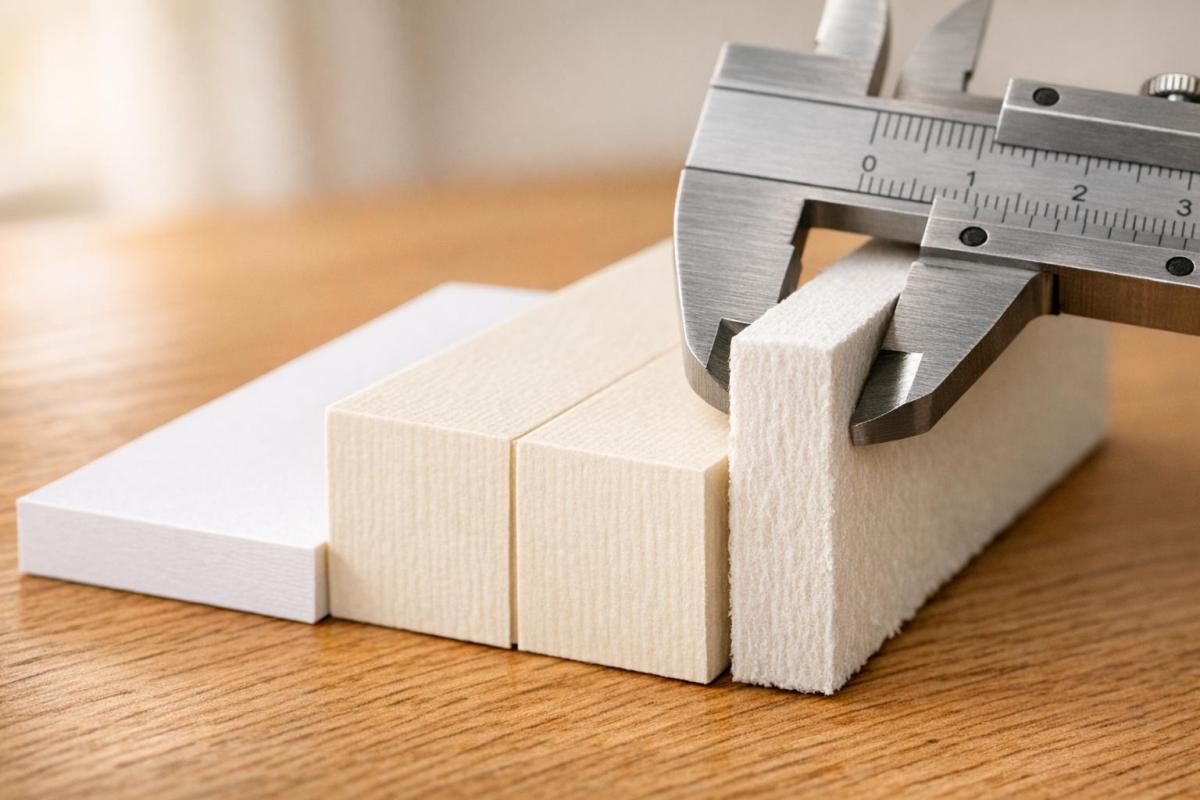
When choosing cardstock for greeting cards, the weight and thickness directly impact durability, appearance, and functionality. Here’s what you need to know:
- Lightweight (65-80 lb / 176-216 GSM): Flexible and easy to fold, ideal for standard cards or layered designs. Works with most home printers.
- Medium (80-100 lb / 216-270 GSM): Balanced sturdiness and foldability, perfect for everyday cards and DIY invitations. Scoring may be needed for clean folds.
- Heavyweight (100-130 lb / 270-350 GSM): Rigid and durable, great for premium cards like wedding invitations. Often requires professional printing.
Cardstock is measured in GSM (density), LB (weight), and PT (thickness). GSM is the most consistent globally, while PT measures thickness in thousandths of an inch. For best results, heavier cardstock often needs scoring to fold cleanly and may require professional printing for a polished finish.
Key takeaway: Match cardstock weight to your project’s needs – lighter for casual designs, heavier for formal or durable cards.
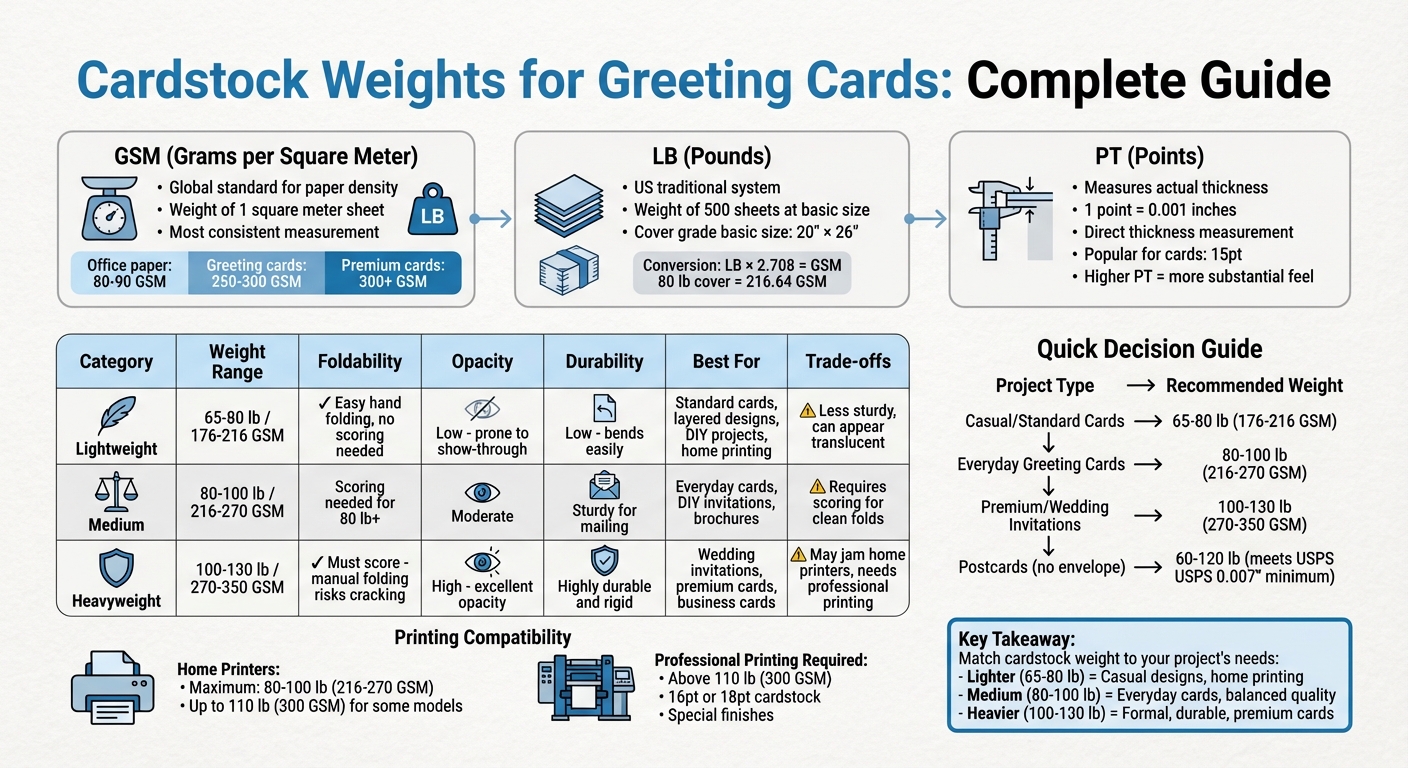
Cardstock Weight Guide for Greeting Cards: LB, GSM, and PT Comparison Chart
Confused by Cardstock Weight: GSM vs. LBS Explained!
sbb-itb-ce53437
Cardstock Measurement Systems Explained
When you’re picking cardstock, you’ll come across three main measurement systems: GSM, LB, and PT. Each one highlights a different aspect of the paper, and knowing how they work can help you make the best choice for your greeting cards.
GSM (Grams per Square Meter) is the global standard for measuring paper density. It tells you the weight of a one-square-meter sheet of paper. The great thing about GSM is its consistency – a 300 GSM sheet is always 300 GSM, no matter the type of paper. For reference, standard office copy paper usually ranges between 80–90 GSM, while greeting cards often use cardstock in the 250–300 GSM range. If you’re looking for something more premium, like wedding invitations or high-end cards, you’ll want cardstock that’s 300 GSM or higher. This measurement is key when balancing sturdiness with a polished look.
LB (Pounds) is the traditional US system, which measures the weight of 500 sheets of paper at a specific "basic size" before cutting. The catch? The basic size changes depending on the paper grade. For cardstock, also called "Cover" grade, the basic size is 20" × 26". This means that 80 lb cover paper is not the same as 80 lb text paper – they differ in thickness even though the weight number is identical. To convert Cover weight to GSM, multiply the pound value by 2.708 (e.g., 80 lb cover × 2.708 = 216.64 GSM).
PT (Points) measures the actual thickness of the paper in thousandths of an inch. Each point equals 0.001 inches. Unlike GSM and LB, which focus on weight and density, PT gives you a direct measurement of how thick the paper is. For greeting cards, 15pt is a popular choice – it strikes a nice balance between being sturdy yet foldable. Thicker paper with higher PT values feels more substantial, stands upright better, and resists bending during mailing or handling.
Although these systems measure different properties, they often align. Heavier paper (higher GSM or LB) generally means thicker paper (higher PT), although the material’s composition can influence this relationship. If you’re working with international printing services, GSM is the most precise and avoids confusion caused by the varying basis sizes in the US pound system. Understanding these systems will help you pick the perfect cardstock weight for your greeting cards.
How to Choose Cardstock Weight for Greeting Cards
Picking the right cardstock weight depends on the type of card you’re making and how it will be used. This decision ties directly to how cardstock density affects both the durability and the overall presentation of your card. The weight determines how well the card folds, its sturdiness, and even its tactile appeal. For example, consider whether the cardstock will be the main structure of the card or just a decorative layer. Also, think about how the card will be delivered – cards in envelopes are protected during mailing, but standalone mailers like postcards need to be tougher to survive transit. Here’s a breakdown of how different cardstock weights can impact your project.
Lightweight Cardstock (65-80 lb / 176-216 GSM)
Lightweight cardstock is flexible and easy to fold by hand, making it a great choice for standard greeting cards, detailed die-cut designs, or layered projects where smooth bending is key. Its pliability also reduces the risk of cracking in layered designs. If you’re working on bulk projects like holiday inserts or promotional flyers, lightweight cardstock is a budget-friendly option. Plus, most consumer-grade printers can handle this weight, typically up to 80 lb or sometimes 100 lb.
Medium Cardstock (80-100 lb / 216-270 GSM)
Medium cardstock is often considered the go-to choice for greeting cards. It strikes a balance between sturdiness and ease of use, offering a solid feel without being too difficult to fold. For cardstock that’s 80 lb or heavier, using a scoring tool ensures clean, precise creases. This weight range is perfect for everyday greeting cards, DIY invitations, and brochures. Just be sure to double-check your printer’s specifications to confirm compatibility with this weight.
Heavyweight Cardstock (100-130 lb / 270-350 GSM)
If you’re aiming for a premium, high-end look, heavyweight cardstock is the way to go. Its rigidity and durability make it ideal for wedding invitations, business cards, certificates, and even designs with structural elements like pop-ups. For formal invitations, 100 lb cardstock offers an elegant feel, but keep in mind that most home printers can’t handle weights above 80–100 lb. In these cases, a professional printing service is usually your best bet.
When mailing cards without envelopes, choosing cover paper between 60 lb and 120 lb ensures the card meets U.S. Postal Service thickness standards and holds up during transit. This ties back to the earlier discussion on how cardstock weight affects mailing durability.
For heavyweight projects, consider working with professionals like Miro Printing & Graphics Inc. in Hackensack, NJ, to achieve the best results. Upgrading your cardstock weight can make a big difference in how your cards are perceived, paving the way for discussions on how quality impacts the final product.
How Cardstock Weight Affects Greeting Card Quality
Cardstock weight plays a crucial role in determining the foldability, opacity, durability, and print performance of your greeting cards.
Foldability
The heavier the cardstock, the trickier it is to fold cleanly. Lightweight cardstock (around 60–70 lb) can be folded by hand with little effort. However, once you move to 80 lb or heavier cardstock, scoring the fold line becomes essential to avoid cracking and achieve a smooth crease. This is especially important for creating professional-looking cards.
Opacity and Show-Through
Heavier cardstock offers better opacity, which means it’s less likely to let images or text on the reverse side show through. For double-sided greeting cards, cardstock weighing 100 lb or more is ideal, as it resists warping and prevents ink from bleeding. On the other hand, lighter cardstock can sometimes allow unwanted transparency, which might affect the overall design quality.
Print Quality Considerations
While cardstock weight doesn’t directly control print quality, it does influence how well your printer handles the material. Most consumer-grade printers can handle up to 80–100 lb cardstock, but anything heavier could lead to paper jams or uneven ink application. The finish – whether glossy or matte – also plays a big role in how colors appear and how ink is absorbed. Heavier cardstock gives your design a solid foundation, but the right finish ensures the best visual results.
Durability
For cards that need to endure handling or transit, heavier cardstock is the better choice. For example, postcards sent without envelopes must meet the U.S. Postal Service’s minimum thickness requirement of 0.007 inches, which corresponds to cardstock in the 60–120 lb range. If your goal is to create a keepsake or a card that can withstand frequent handling, opting for a higher weight is a practical decision.
These considerations, combined with earlier guidelines on cardstock measurement systems, can help you select the perfect weight for your greeting cards.
Cardstock Weight Comparison Table
| Cardstock Category | Weight (LB / GSM) | Foldability | Opacity | Durability | Best For | Trade-offs |
|---|---|---|---|---|---|---|
| Lightweight | 60–70 lb / 100–140 GSM | Easy to fold by hand; no scoring required | Low; prone to show-through | Low; bends easily | Flyers, card inserts, DIY projects | Feels less sturdy; can appear translucent |
| Medium | 80–90 lb / 216–243 GSM | Easy to fold with scoring (for 80 lb and above) | Moderate | Sturdy enough for mailing | Standard greeting cards, brochures | Requires scoring for a polished fold |
| Heavyweight | 100–130 lb / 270–350 GSM | Scoring is a must; manual folding risks cracking | High; excellent opacity | Highly durable and rigid | Premium invitations, business cards | May jam home printers; professional equipment often needed |
Tips for Printing Greeting Cards on Cardstock
Preparing Cardstock Before Printing
If you’re working with cardstock over 80 lb, scoring is a must to avoid cracking or warping when folding. Scoring creates a ridge that allows the cardstock to bend smoothly without damaging the surface. For lighter cardstock (around 60–70 lb), you can often fold it by hand without any issues. But once you move into the heavier weights, a scoring tool becomes essential.
"Heavier (i.e. thicker) cardstock can fold, but it may require scoring for the fold to look attractive." – InvestGuiding
Keep in mind that glossy coatings make cardstock stiffer. For instance, an 80 lb glossy sheet will be harder to fold compared to an uncoated one. If you’re aiming for a polished look, professional scoring equipment can make a big difference. Once your cardstock is prepped, double-check that your printer can handle the weight you’ve chosen.
Testing Printer Compatibility
After scoring and preparing your cardstock, it’s time to test your printer. Start by reviewing your printer’s specifications – most home printers struggle with cardstock over 110 lb (300 GSM). If your printer allows it, switch to "Cardstock" or "Heavy Paper" mode and run a single test sheet to spot any potential issues like jams or alignment problems.
Printers with a straight-through paper path or a rear-feed tray are better suited for thicker cardstock because they don’t require the paper to bend as sharply. This feature can save you a lot of headaches when working with heavier materials.
Working with Professional Printing Services
For cardstock that exceeds 110 lb or has special finishes, professional printing services are the way to go. Home printers aren’t built to handle ultra-thick materials like 16pt or 18pt cardstock, and forcing them can result in mechanical damage or poor-quality prints.
A great example is Miro Printing & Graphics Inc. in Hackensack, NJ. They offer both digital and offset printing for greeting cards and provide in-house services like die-cutting, creasing, and folding. This means you can get precise, clean folds on heavyweight cardstock without worrying about cracking or uneven edges. They also offer custom finishes and premium options that most home setups can’t achieve. By using professional services like Miro Printing & Graphics Inc., you can ensure your greeting cards look polished and professional, regardless of the cardstock weight.
Conclusion
Choosing the right cardstock weight is about more than just numbers – it’s about ensuring your greeting cards strike the perfect balance between durability and elegance. As Investguiding.com puts it, "Generally speaking, heavier cardstock is good for two things: durability and elegance". The weight you select directly impacts how sturdy your card feels, how easily it folds, and the impression it leaves on the recipient.
For everyday cards, lighter cardstock (65–80 lb) is a practical choice, as it folds easily and works well with home printers. However, for premium or high-end designs, heavier cardstock (100 lb+) is ideal. Keep in mind, though, that thicker paper often requires scoring and professional printing, as most home printers can only handle up to 80–100 lb.
If you’re aiming for a polished, professional finish, services like Miro Printing & Graphics Inc. in Hackensack, NJ, offer advanced options like in-house creasing, die-cutting, and finishing. These services are perfect for projects that demand precision and a refined look.
Ultimately, selecting the appropriate cardstock weight ensures your greeting cards not only look great but also make the lasting impression you’re aiming for.
FAQs
What cardstock weight is best for my home printer?
For most home printers, cardstock in the range of 20 lb (75 GSM) to 24 lb (90 GSM) strikes a good balance between sturdiness and printer compatibility. If you’re aiming for thicker, more durable greeting cards, you can opt for 65 lb (176 GSM) or heavier cardstock. However, make sure to check your printer’s specifications to confirm it can handle the extra weight. For most home-printed greeting cards, sticking with 20-24 lb cardstock is typically the most reliable option.
How do I convert lb cover to GSM or pt?
To convert lb cover to GSM or points (pt), here’s a helpful reference: 80 lb cover paper is approximately 216 GSM or 16 pt in thickness.
For a quick calculation, you can multiply the lb cover value by 2.7 to estimate GSM. For example, 80 lb cover paper:
80 × 2.7 ≈ 216 GSM.
Thickness in points can also be estimated, with 80 lb cover being close to 16 pt.
Do I need to score cardstock before folding cards?
Scoring cardstock before folding isn’t always required, but it can make a big difference when working with thicker or heavier cardstock. It ensures a clean, crisp fold and helps prevent cracking along the crease. While this article focuses on how cardstock weights affect greeting cards, it’s worth noting that scoring is a good practice for achieving a professional-looking finish with heavier materials.
Related Blog Posts
- Ultimate Guide to Paper Types for Business Printing
- How to Choose the Right Paper for Custom Prints
- How to Choose Recycled Cardstock for Printing
- How to Print on Heavy Cardstock Digitally
https://app.seobotai.com/banner/banner.js?id=69def71209e6c77f4f7b0cb5

