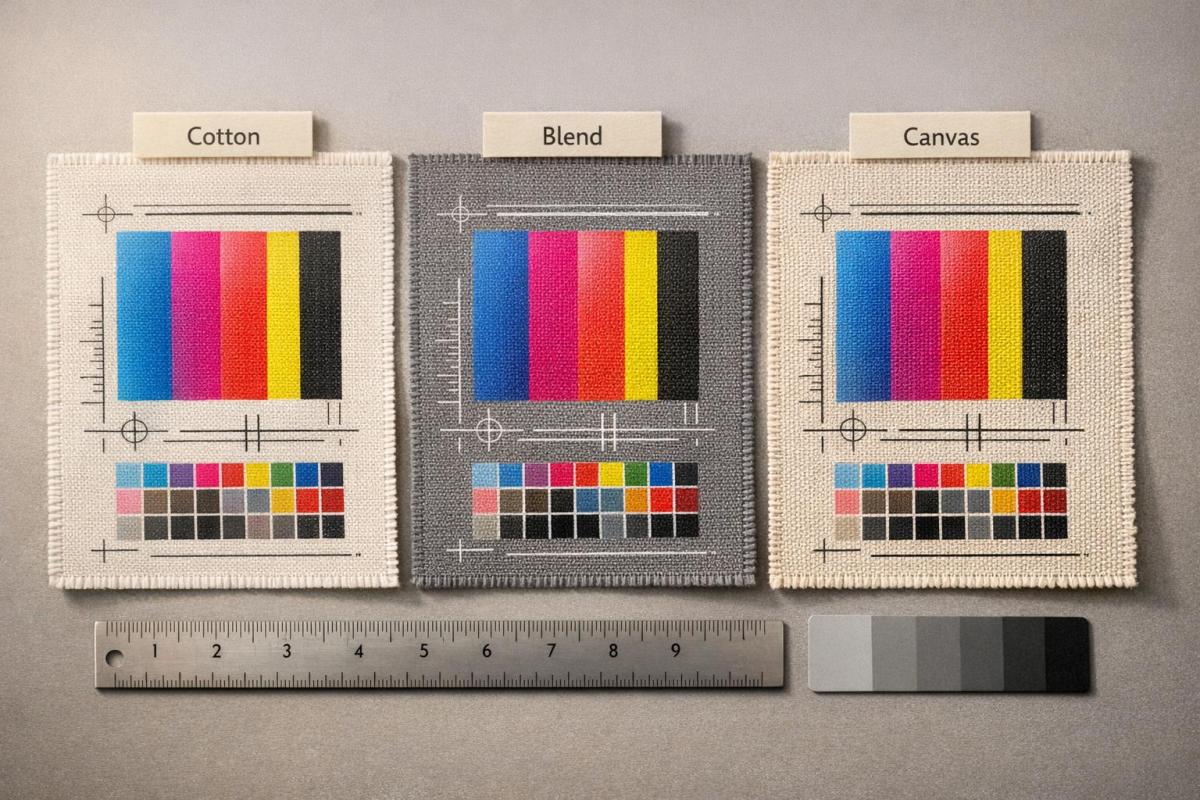
Choosing the right fabric for large-format printing affects your project’s quality, durability, and overall appearance. Here’s what you need to know:
- Cotton: Absorbs ink well for vibrant colors. Great for art prints and tote bags. Costs $25.08–$28.90 per meter.
- Cotton-Polyester Blends: Combines cotton’s print quality with polyester’s durability. Ideal for banners and outdoor displays.
- Canvas: Heavy-duty fabric for professional prints like gallery wraps and signage. Prices start at $26.35 per meter.
Key Factors to Consider:
- Printing Method: Match fabric to techniques like screen printing, DTG, or dye-sublimation.
- Durability: Choose thicker fabrics for outdoor or high-traffic use.
- Budget: Fabric printing costs around $4.00 per square foot.
Always test fabric samples to ensure compatibility with your printing method and confirm color accuracy, ink retention, and durability before scaling up production.
Fabric Print on Large Format Printer with ECO-Solvent Ink Test Print
sbb-itb-ce53437
Common Fabric Types for Large-Format Printing
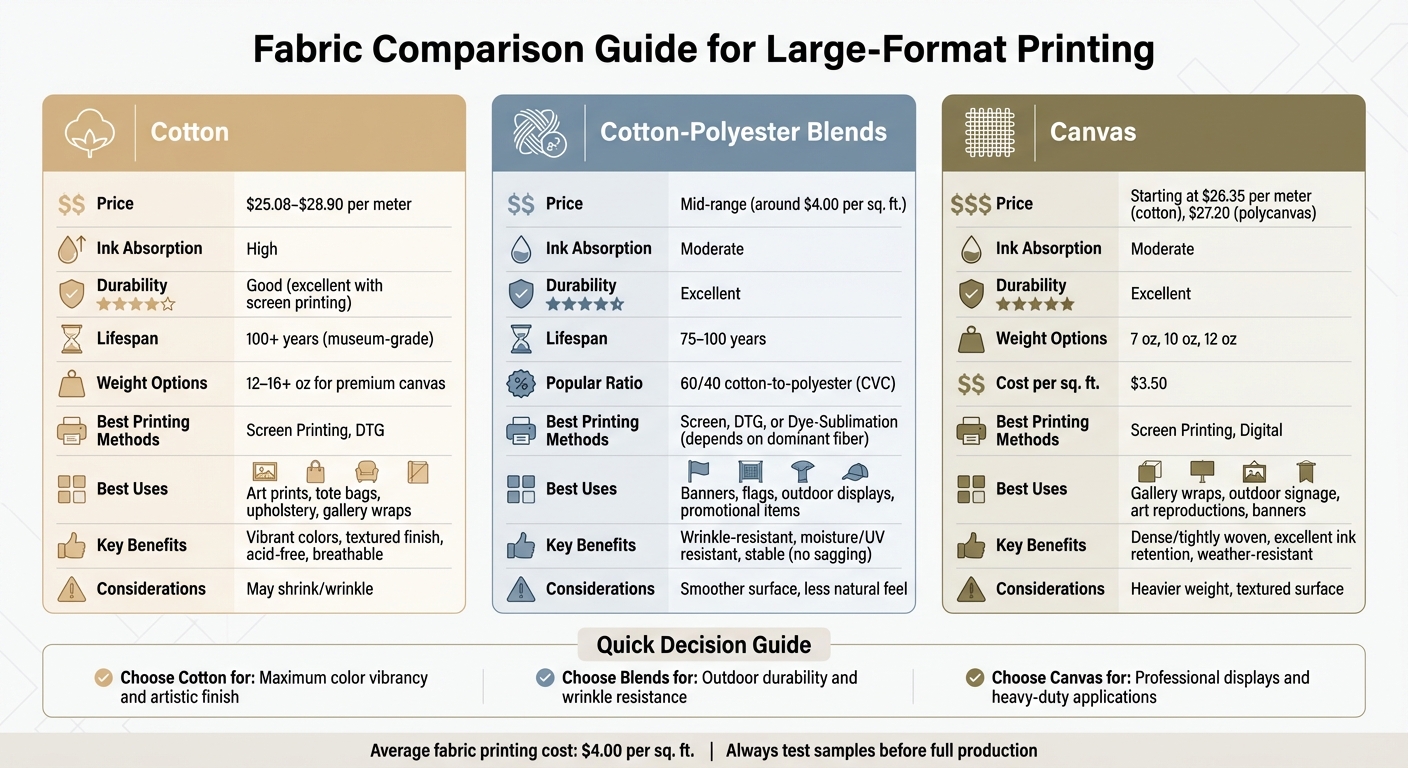
Fabric Comparison Guide for Large-Format Printing: Cotton vs Blends vs Canvas
Cotton: Properties and Advantages
Cotton is a standout choice for large-format printing, thanks to its ability to absorb ink deeply. This property results in vibrant colors and a textured, artistic finish that many artists and designers love. High-quality cotton canvas, especially museum-grade, can last over a century with proper care, retaining both its visual appeal and structural strength. Its acid-free composition and breathable, porous structure help wick away moisture and regulate heat, reducing the risk of mold. Over time, cotton also softens with washing while maintaining durability, making it ideal for items like tote bags and upholstery.
When planning a project on a budget, expect cotton fabric prices to range between $25.08 and $28.90 per meter, depending on the specific type. Premium canvas, often weighing 12–16+ oz, provides the strength needed for professional-grade gallery wraps and stretched displays.
For those seeking to address some of cotton’s limitations, blends offer a practical solution.
Cotton-Polyester Blends: Combining Durability with Print Quality
Cotton-polyester blends solve some of the challenges of pure cotton, such as shrinking and wrinkling, making them a popular choice for large-format printing. These blends are more stable, resisting sagging and stretching, which is particularly beneficial for large displays. Polyester fibers enhance the material’s resistance to moisture and UV exposure, making it suitable for humid or sunlit environments.
Blends also adapt well to various printing techniques, such as direct-to-film (DTF) and heat transfers, while preserving much of cotton’s natural feel. The smoother surface of these fabrics ensures a consistent, high-quality finish. Cotton-polyester blends have an archival lifespan of 75 to 100 years, with CVC (Chief Value Cotton) blends – typically a 60/40 cotton-to-polyester ratio – being especially favored for their balance of softness and wrinkle resistance.
Canvas: A Strong Choice for Professional Printing
For projects that demand exceptional durability, canvas is a reliable option. This dense, tightly woven fabric provides a stable surface for intricate designs and is available in various weights – such as 7 oz, 10 oz, and 12 oz – to meet professional printing needs. Its structure ensures excellent ink retention, making it perfect for banners, signs, and art reproductions that require frequent handling or exposure to the elements.
From a cost perspective, cotton canvas typically starts at $26.35 for 12 oz material, while polycanvas, designed for both indoor and outdoor use, begins at around $27.20. Heavier canvas options offer greater durability, making them ideal for stretched wall art or outdoor displays where tension and weather resistance are crucial.
Pairing Fabrics with Printing Methods
Matching the right printing method to your fabric is just as important as selecting the fabric itself. The way a fabric interacts with ink can make or break your large-format project. For example, cotton’s absorbent nature makes it a great candidate for screen printing and direct-to-garment (DTG) printing. These methods allow the ink to deeply penetrate the fibers, delivering vibrant colors and long-lasting results. Screen printing, in particular, uses thicker inks that either sit on the surface or soak into the cotton, offering durability – especially for items like clothing that endure frequent washing.
When working with cotton-polyester blends, the dominant fiber should guide your decision. If cotton is the primary component, screen printing or DTG will work well. However, if polyester takes the lead, dye-sublimation is the better option. Keep in mind that dye-sublimation isn’t compatible with 100% cotton because it relies on synthetic fibers to bond with the dye.
For canvas, its heavier weight and textured surface make it ideal for screen printing. This method ensures proper ink adhesion while enhancing the fabric’s tactile quality. Canvas is also a popular choice for digital art reproductions, especially when intricate details are required. That said, digital printing may not match screen printing in durability for items subjected to heavy wear and tear.
To avoid surprises, always test a 12×12-inch sample of your fabric with the chosen printing method. This step helps you assess ink retention, vibrancy, and overall performance after washing and abrasion.
Fabric Comparison Table
| Fabric Type | Printing Methods | Absorbency | Durability | Best Uses | Price Range (per sq. ft.) |
|---|---|---|---|---|---|
| Cotton | Screen Printing, DTG | High | Good (excellent with screen printing) | Tote bags, apparel, art prints | Mid-range ($4.00 average) |
| Cotton-Polyester Blends | Depends on dominant fiber (Screen, DTG, or Dye-Sublimation) | Moderate | Excellent | Banners, flags, promotional items | Mid-range |
| Canvas | Screen Printing, Digital | Moderate | Excellent | Gallery wraps, outdoor signage, art reproductions | $3.50 |
What to Consider When Selecting Fabrics
Fabric Weight and Strength
When choosing a fabric, thickness and durability are crucial, especially for high-traffic or outdoor uses. Thicker materials are less prone to tearing and creasing, making them ideal for areas exposed to frequent handling or harsh weather conditions. For outdoor settings, the fabric must withstand sun, moisture, and temperature fluctuations without breaking down. The installation method also matters – flexible fabrics are better suited for curved surfaces like vehicle wraps, while rigid materials work well for gallery displays and fine art reproductions. Cotton and natural blends stand out for their strength and ability to retain ink, making them a great option for long-lasting displays.
Samantha Hawrylack of Platon Graphics emphasizes the importance of durability:
"Durability is essential for high-traffic or outdoor displays. Material thickness and weather resistance are key."
Additionally, consider how the fabric interacts with ink absorption to ensure vibrant and lasting prints.
Ink Absorption and Color Brightness
The way a fabric absorbs ink directly impacts the vibrancy and clarity of prints. Cotton, for example, naturally absorbs ink effectively, which enhances detail and sharpness. On the other hand, synthetic fabrics like polyester often require dye sublimation to bond the color to the fibers. Using the wrong printing method for a particular fabric can lead to issues like cracking, fading, or blurry results. For large-scale projects, heavier fabrics are generally better at maintaining their shape, even under heavy ink coverage.
Budget and Cost Considerations
Cost is another key factor when selecting fabrics. Fabric printing typically costs around $4.00 per square foot, compared to $2.00 for standard vinyl. While the upfront cost might seem high, the right material can reduce the need for frequent replacements, saving money in the long run. As the Novatech Editorial Team explains:
"The material you print on is just as important as the printer itself… the right media determines how your message looks, feels, and lasts."
It’s important to match the material to your project’s purpose. For example, premium cotton canvas is perfect for high-quality gallery art but might be overkill for temporary engineering plans or internal drafts. If you work on recurring projects, buying fabric in bulk can cut costs. Keep in mind that ink compatibility also affects your budget – natural fabrics like cotton often require reactive inks, which can add to production expenses.
Testing Fabric Samples Before Full Production
After choosing your fabric and printing method, testing fabric samples is a critical step to ensure everything works as planned. This process helps confirm compatibility between the fabric, printer, and ink – whether you’re using latex, pigment-based, or dye-based inks. For instance, performing a scratch test can reveal how well the ink holds up during finishing processes like sewing or adding grommets. Even fabrics that print beautifully might scratch easily during handling, especially if they’re lightly coated.
Color accuracy is another area that requires close attention. Fabric textures and surfaces can alter how colors appear, meaning the vibrant hues on your screen might look dull or overly intense on the actual material. To address this, use tools like Pantone for color calibration and conduct UV resistance tests to ensure colors remain vibrant over time. This is particularly important for cotton or natural blends, where ink absorption and texture significantly influence the final look. Samantha Hawrylack of Platon Graphics emphasizes:
"Before finalizing your choice of materials, I suggest conducting UV resistance testing. This step will give you a better understanding of how well your prints will hold up against UV light."
You’ll also want to assess how the fabric handles trimming. Knit fabrics are usually easy to cut with standard scissors, while woven fabrics often require a hot knife to prevent fraying. For items like table throws or backdrops, test the material’s resistance to creasing to ensure it maintains a polished look after being folded or transported. Additionally, checking drying and curing times is essential to avoid smudging during high-volume production runs.
Other key tests include ink adhesion, edge stability, moisture resistance, and color consistency. Spending time on these preliminary checks can help you avoid costly mistakes and delays when moving into full-scale production.
Conclusion: Selecting the Right Fabric for Your Printing Project
Choosing the best fabric for large-format printing hinges on understanding its physical characteristics, compatibility with printing methods, and how it performs under real-world conditions. As discussed, each material comes with distinct benefits suited to specific uses. Aligning the fabric with your project’s needs helps avoid challenges like fading or unsatisfactory color results.
Pairing the right fabric with the proper printing technique also minimizes risks, such as material failure during installation. Budget considerations are equally important, with costs typically ranging from around $2.00 per square foot for vinyl to approximately $4.00 per square foot for premium fabric substrates. This balance ensures you maintain quality while staying within financial limits.
Testing fabric samples is a smart move to confirm performance and identify any potential issues early on. Even a small trial run can reveal concerns like fraying edges, unexpected color shifts, or poor moisture resistance – problems that could otherwise jeopardize your entire project.
For those in the Hackensack area, Miro Printing & Graphics Inc. (https://bergencountyprinters.com) provides expert support in fabric selection and large-format printing. Their team offers in-depth knowledge, sample testing, and guidance to ensure your final product meets both aesthetic and functional goals. With their help, you can simplify the process and achieve outstanding results.
FAQs
What fabric weight should I choose for my project?
When it comes to large-format printing, the weight of the fabric plays a key role in determining its suitability for different projects. Here’s a breakdown:
- Lightweight fabrics (under 170 GSM or 5 oz/yd²): These are ideal for banners, flags, or soft displays where flexibility and ease of handling are important.
- Midweight fabrics (170-340 GSM or 5-10 oz/yd²): Perfect for more structured applications like upholstery, wall coverings, or any use that demands a bit more durability.
For most projects, fabrics in the 150-300 GSM range strike the right balance. They offer enough sturdiness for durability while maintaining flexibility for portability, depending on your needs.
How do I know if my fabric works with my print method?
To determine if your fabric works with your printing method, focus on its physical characteristics and the specific needs of your printing technology. For example, fabrics like cotton or natural blends are popular choices for large-format printing. However, they need to meet certain criteria, such as fabric width, texture, and how well they absorb ink. Additionally, check that the material’s durability and surface smoothness are suitable for your printer type – whether it’s digital or latex printing – to achieve the best results.
What should I test on a fabric sample before printing full-size?
Before committing to full-size printing, it’s a good idea to test a fabric sample for important qualities such as texture, softness, stretch, and durability. Pay close attention to how the fabric interacts with ink or dye to prevent problems like bleeding or color distortion. A small swatch, about 3” x 3” or 4” x 4”, can help confirm that the material aligns with your expectations and is compatible with your chosen printing method.
Related Blog Posts
- Fire-Resistant Fabrics for Printing: Types and Uses
- Substrate Selection for Digital Printing
- Large Format Paper Types Explained
- Weather-Resistant Textiles for Large-Format Printing
https://app.seobotai.com/banner/banner.js?id=69ded94e09e6c77f4f7afe1e

