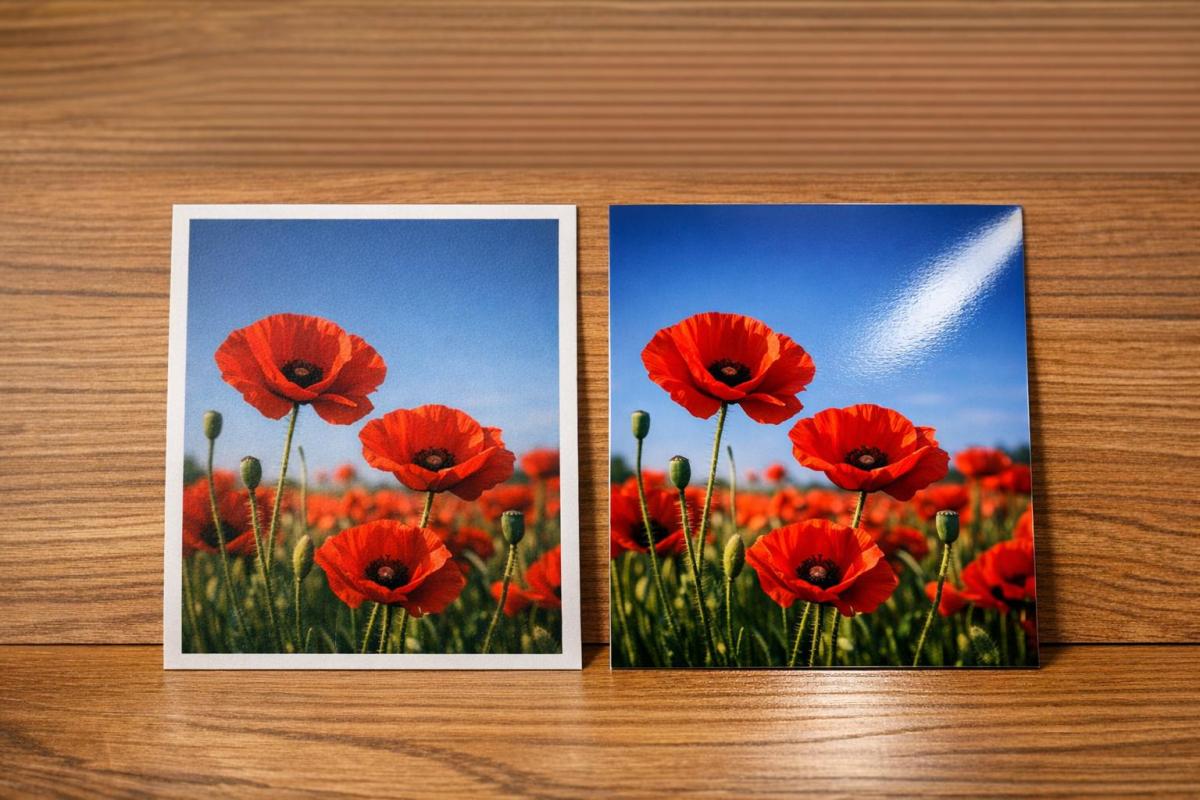
Matte and glossy paper differ in their finish, appearance, and usability. Matte paper has a non-reflective surface that absorbs ink, offering muted colors and excellent readability. It’s ideal for text-heavy materials, frequent handling, and writing. Glossy paper, with its shiny, reflective coating, enhances color vibrancy and detail, making it perfect for photos, marketing materials, and visual projects.
Key Points:
- Matte Paper: Low glare, easy to read, resists fingerprints, writable, but less vibrant colors.
- Glossy Paper: High shine, vibrant colors, great for visuals, but shows fingerprints and is harder to write on.
Quick Comparison:
| Feature | Matte Paper | Glossy Paper |
|---|---|---|
| Sheen | Minimal, non-reflective | High, reflective |
| Color Intensity | Soft, muted | Bold, vibrant |
| Readability | Excellent | Challenging under bright light |
| Fingerprint Visibility | Low | High |
| Writability | Easy for pens/pencils | Poor, prone to smudging |
| Best Uses | Text-heavy projects, writing | Photos, marketing visuals |
Choose matte for readability and frequent handling, and glossy for vibrant visuals and moisture resistance.
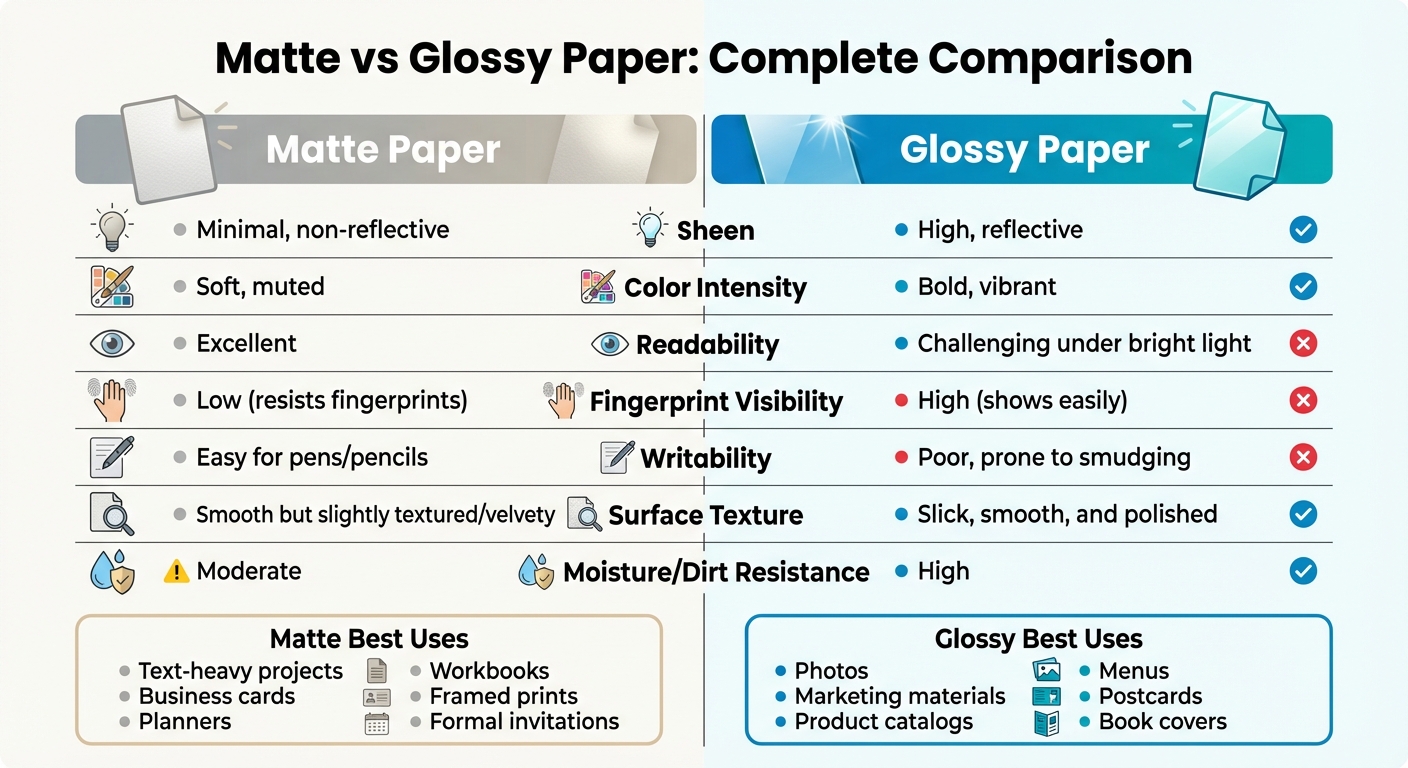
Matte vs Glossy Paper Comparison Chart
Matte vs Glossy Paper: Which is Best for You?
sbb-itb-ce53437
Visual Appearance Comparison
Matte finishes diffuse light, creating a flat, glare-free appearance, while glossy finishes reflect light, offering a sharp, high-shine effect that enhances color vibrancy.
This difference in light interaction directly impacts how colors appear and how readable the content is. Glossy finishes, with their heavy coating, keep ink on the surface, resulting in deeper color saturation and sharper details. In contrast, matte finishes, with their lighter coating and slightly textured surface, absorb more ink, producing softer, muted colors with an understated elegance.
The surface texture also plays a role in the overall look and feel. Matte paper retains some of the natural fiber texture, giving it a smooth yet velvety touch. Glossy paper, however, has a slick, polished surface due to its heavier coating. As Scott, a graphic designer, points out:
"Colors will be perceived as slightly more vibrant on gloss stock because ink isn’t absorbed as much into the substrate".
| Feature | Matte Finish | Glossy Finish |
|---|---|---|
| Sheen | Minimal shine; flat/muted | High shine; reflective |
| Color Intensity | Subdued, soft, and refined | Vibrant, bold, and high-contrast |
| Glare | Low to none; reduces eye strain | High; can cause distracting reflections |
| Surface Texture | Smooth but slightly textured/velvety | Slick, smooth, and polished |
| Readability | Excellent (ideal for text) | Challenging under bright light |
Matte: Non-Reflective and Subtle
Matte finishes are perfect for projects where reducing glare and ensuring readability are essential. Their non-reflective surface makes text easy to read from any angle, even under bright or direct lighting. This makes matte paper a go-to choice for text-heavy materials like reports, menus, and brochures, where distractions like reflections must be avoided. Its soft color tones also work beautifully for fine art prints and portraits, emphasizing subtle shading and natural hues. As VistaPrint explains:
"A matte finish offers a sophisticated, understated appearance that exudes professionalism, perfect for business cards, brochures and formal invitations".
Glossy: Reflective and Eye-Catching
Glossy finishes are ideal for creating a striking visual impact. Their reflective, high-shine surface brings out the best in high-resolution photos, product catalogs, and promotional materials meant to grab attention. However, the same reflectivity that enhances visuals can also cause glare, making content harder to view under strong lighting. Up next, we’ll explore how these visual traits affect handling and durability.
Durability and Handling Comparison
When selecting the right paper finish, it’s not just about how it looks – how it holds up to handling is just as important. Matte and glossy papers react differently to touch, writing, and environmental factors, which can influence their suitability for various uses.
One of the most noticeable contrasts lies in how they handle fingerprints. Glossy paper, with its shiny, reflective coating, tends to highlight fingerprints, making them highly visible. In comparison, matte paper’s textured surface resists fingerprints, making it ideal for items that are frequently touched, like books, brochures, or directories.
Writing performance is another area where these finishes differ significantly. Matte paper is easy to write on because its surface absorbs ink cleanly, making it perfect for pens or pencils. Glossy paper, however, struggles in this area. Its slick coating prevents proper ink absorption, often leading to smudges and incomplete writing. As Color Vision Printing explains:
"Being writable is a clear advantage over gloss paper as attempts to write on a gloss-coated stock will usually result in an incomplete transfer of the writing medium or an unsightly smear".
Handling also affects how these papers resist moisture and dirt. While glossy paper is prone to showing smudges, its coating creates a barrier that repels dirt and moisture, offering better protection against stains and environmental wear. Matte paper, on the other hand, absorbs moisture more easily due to its porous surface, making it less resistant to long-term exposure to damp conditions.
Here’s a quick breakdown of these differences:
| Feature | Matte Paper | Glossy Paper |
|---|---|---|
| Fingerprint Visibility | Low (Resists fingerprints) | High (Shows easily) |
| Smudge Resistance | High | Low |
| Writability | Excellent for pens and pencils | Poor, prone to smearing |
| Handling Suitability | Great for frequent handling | Best for minimal contact |
| Surface Feel | Textured and slightly grippy | Slick and smooth |
| Moisture/Dirt Resistance | Moderate | High |
Matte: Smudge-Resistant and Writable
Matte paper is a go-to choice for materials that require interaction, like filling out forms, annotating study guides, or flipping through workbooks. Its textured surface not only makes writing easier but also provides a slight grip, which is helpful for handling. Ink transfers cleanly and dries quickly on matte paper, avoiding smudging or bleeding.
However, matte paper’s porous nature means it absorbs moisture more easily, so it’s best stored in dry conditions to maintain its quality over time. This makes it ideal for calendars, greeting cards, and other items meant for frequent use but minimal exposure to damp environments.
Glossy: Durable but Shows Fingerprints
Glossy paper shines – literally – when it comes to protecting against environmental factors like dirt and fading. Its thick coating locks in vibrant colors and creates a surface that resists moisture and stains. That said, it’s not without drawbacks. The reflective finish shows fingerprints easily, and the smooth coating makes writing difficult, if not impossible.
Glossy finishes work best for materials that are meant to be admired rather than handled, such as posters, photo books, or high-end marketing materials. If handling is required, it’s a good idea to hold glossy items by the edges to keep them looking clean and polished.
When to Use Matte Paper
Matte paper shines in scenarios where readability and frequent interaction are top priorities. Its non-reflective surface makes it perfect for text-heavy materials like reports, manuals, and booklets. This enhanced readability and ease of handling make matte paper a practical choice in several key situations.
For business cards, matte paper is a standout option. Its surface allows for easy handwritten notes, which is especially useful during networking events. Plus, QR codes printed on matte finishes scan effortlessly since the lack of glare prevents interference with camera sensors.
Matte paper also works beautifully for planners, calendars, and workbooks. Its textured surface ensures smooth writing without ink smudging or bleeding, making it a favorite for daily-use items.
In addition to its functional benefits, matte paper offers a polished and professional appearance, making it a great fit for branding materials, fine art prints, and formal invitations. As VistaPrint notes:
"A matte finish offers a sophisticated, understated appearance that exudes professionalism, perfect for business cards, brochures and formal invitations".
Another ideal use is for framed prints and posters displayed behind glass. Matte paper prevents distracting double reflections caused by the combination of glass and glossy surfaces. This ensures images remain clear and easy to view from any angle, making it the go-to choice for gallery-quality art, black-and-white photography, and informational posters in bright spaces.
When to Use Glossy Paper
Glossy paper is the go-to choice when your project needs to make an instant visual impact with vibrant colors and sharp details. Thanks to its heavy coating, ink stays on the surface rather than soaking into the fibers, resulting in rich, saturated colors and crisp imagery.
Ideal Uses for Glossy Paper
Photo Prints:
Glossy paper is perfect for photos, enhancing their depth and making colors pop. Its reflective surface amplifies brightness and sharpness, giving images a polished, professional appearance. As Color Vision Printing notes:
"The reflective quality of gloss paper adds a sense of depth to printed images, helping them stand out and grab the viewer’s attention".
Marketing Materials:
Flyers, brochures, and catalogs benefit significantly from glossy finishes, which create a sleek, eye-catching look. Similarly, postcards, book covers, and product packaging shine – literally – when printed on glossy paper, as the vibrant color reproduction ensures your materials leave a lasting impression. However, keep in mind that glossy paper is better for items that won’t be handled excessively.
Menus and Food Photography:
Menus and food-related imagery also thrive on glossy paper. The shiny surface enhances the appeal of dishes, making them look more appetizing and visually engaging. Plus, glossy finishes are practical: they resist moisture, dirt, and stains, making them easier to clean and ideal for high-traffic uses.
Things to Consider
While glossy paper excels in making visuals pop, it does have some drawbacks. Fingerprints can be more noticeable on its surface, and glare from bright lighting might affect readability. This makes it better suited for items meant to be viewed rather than heavily handled.
Production and Cost Differences
Production processes play a key role in shaping the distinct characteristics of matte and glossy finishes.
Both finishes start with cellulose fibers, which naturally have a rough texture. The difference lies in the amount of coating applied. While both use similar blends of polymers, pigments, and clay to smooth the surface, glossy paper receives a thicker coating. This extra layer fills in most of the fiber texture, creating a smooth and reflective surface. In contrast, matte paper retains more of its natural roughness, which helps diffuse light .
This difference in production also affects how ink behaves. Matte paper’s porous surface takes longer to dry and is more prone to smudging. On the other hand, glossy paper keeps ink on the surface, resulting in sharper, more vibrant prints . Even when both finishes have the same gsm (grams per square meter), glossy paper feels denser and thinner due to the compressed fibers caused by its heavier coating.
Both finishes are compatible with professional printing methods and are available in various weights, such as text, cover, and cardstock. If you’re using matte paper, keep in mind its high ink absorption and longer drying times to avoid smudges. Additionally, secondary top coats – like varnishes, aqueous coatings, UV coatings, or laminates – can be applied after printing to enhance the final look.
When it comes to cost, the choice depends on your project. Glossy paper is typically less expensive than matte, though pricing varies based on paper quality and the printing service. For example, on platforms like Amazon’s KDP, there’s no price difference between matte and glossy finishes for paperback covers – the cost is calculated as $0.85 plus $0.012 per page. In commercial printing, matte paper is often considered a budget-friendly option for high-volume projects like brochures and flyers. However, specialized matte finishes can come at a higher price. Understanding these production and cost factors can help you decide which finish best suits your budget and project goals.
Conclusion
Choosing between matte and glossy finishes comes down to your project’s specific needs, both in terms of function and appearance.
Glossy paper, with its protective coating, excels at enhancing visual appeal and resisting moisture. It’s a great fit for photography, product catalogs, and promotional materials. However, it’s worth noting that glossy finishes can show fingerprints and create glare under bright lighting.
On the other hand, matte paper offers a sleek, non-reflective surface that reduces glare and resists smudging. This makes it ideal for text-heavy documents, business cards with QR codes, or materials that will be handled frequently or used in well-lit spaces. Plus, matte surfaces are pen- and pencil-friendly, allowing for easy writing without smearing.
Think about where and how your printed materials will be used. If they’ll be in bright environments or need to accommodate writing or scanning, matte is likely the better option. But if your project demands vibrant imagery or a striking, glossy finish – especially for outdoor use or in damp conditions – then glossy paper could be the way to go.
Cost is another factor. Glossy finishes are typically more budget-friendly for large print runs, while matte finishes may come with a slightly higher price tag. If you’re unsure which finish will work best, consider ordering sample prints to see how your design translates onto each surface before committing to a full production run.
Ultimately, the right finish ensures your materials not only look great but also function as intended – whether that means standing out visually, maintaining readability, or holding up under frequent use. For expert advice and top-notch printing services tailored to your needs, reach out to Miro Printing & Graphics Inc., your trusted print partner in Hackensack, NJ.
FAQs
Which finish is better for QR codes and scanning?
A matte finish is often the preferred choice for QR codes and scanning. This type of paper absorbs ink evenly, minimizes reflections, and provides sharp, well-defined edges for the code’s modules, ensuring scanners can read them without issues. In contrast, glossy paper may reflect light and produce glare under certain conditions, which can disrupt scanning. For reliable and consistent QR code readability, matte finishes are usually the better option.
Can I write on glossy paper without smearing?
Yes, you can write on glossy paper with a permanent marker or a CD/DVD pen. To prevent smudging, allow the ink to dry completely for a few minutes before touching or handling the surface.
How do I choose matte vs glossy for a brochure or menu?
When choosing between matte and glossy finishes for a brochure or menu, think about both appearance and functionality. A matte finish gives a smooth, glare-free surface that improves readability and hides fingerprints, making it ideal for items that will be handled often. On the other hand, a glossy finish delivers a shiny, eye-catching look that enhances color vibrancy and offers better protection against moisture. Go with matte for a refined, understated style or glossy if you want bold visuals and durability in damp environments.
Related Blog Posts
- Types of Paper Finishes for Printing
- Ultimate Guide to Paper Finishes and Textures
- Matte vs Gloss Lamination: Key Differences
- Paper Coatings Explained: Gloss, Matte, Satin
https://app.seobotai.com/banner/banner.js?id=69e02bbe09e6c77f4f7b1e79

