How to Adjust DPI for Large Format Prints

Learn how to adjust DPI settings for large format prints to achieve sharp, professional results tailored to viewing distance.

Want sharp, professional large format prints? Start by getting the DPI right. DPI (dots per inch) determines print clarity, and the right setting depends on viewing distance and print type. Here’s what you need to know:

  • Close Viewing (e.g., trade show displays): Use 150–300 DPI for crisp detail.
  • Moderate Viewing (e.g., indoor graphics): 100–150 DPI works well.
  • Distant Viewing (e.g., billboards): 20–100 DPI is sufficient for clear visuals.

Quick Tips:

  • File Prep: Use TIFF or PDF for high-quality results. Convert images to CMYK to match print colors.
  • Software Settings: Adjust DPI in Photoshop (Image > Image Size) or Illustrator (Effects > Document Raster Effects Settings).
  • Printer Settings: Check your printer’s resolution options for optimal output.

Balancing DPI ensures sharp prints without bloated file sizes. Need professional results? Test your settings on smaller prints before scaling up.

Viewing Distance and Resolution for Large Format Graphics

DPI Requirements for Large Format Printing

When it comes to large format printing, the ideal DPI (dots per inch) setting depends on the type of print and how far away it will be viewed. Unlike standard desktop printing – where 300 DPI is the norm – large format prints can maintain great visual quality even at lower resolutions, especially when viewed from a distance.

DPI Guidelines by Print Type

Different types of large format prints require specific DPI settings based on their purpose and viewing conditions:

  • Trade Show Displays and Retail Signage: For prints viewed up close, a resolution of 150–200 DPI typically ensures sharpness and clarity.
  • Outdoor Banners and Street-Level Signage: These are usually seen from several feet away, so a resolution of 100–120 DPI is enough to provide clear visuals while keeping file sizes manageable.
  • Architectural Drawings and Technical Displays: High detail is crucial for these, so a resolution of about 300 DPI is often necessary to capture fine lines and measurements.
  • Indoor Graphics (like Lobby Displays and Wall Graphics): For moderate viewing distances, 150–200 DPI works well.
  • Billboards: Because these are viewed from 50 feet or more away, resolutions as low as 20 DPI are sufficient without any noticeable loss in quality.

Here’s a quick reference table:

Print Type Recommended DPI Viewing Distance
Trade Show Displays 150–200 Close
Outdoor Banners 100–120 Distant
Architectural Drawings 300 Close
Indoor Graphics 150–200 Close

Understanding these DPI ranges helps ensure your print looks great while balancing file size and production efficiency.

How Viewing Distance Affects DPI Needs

The further away a print is viewed, the lower the resolution it needs to appear sharp. As ArtisanHD explains:

"The further away your print is, the lower its resolution can and should be."

For example, at 300 DPI, the recommended minimum viewing distance is about 11.46 inches. Lowering the resolution to 180 DPI increases the ideal viewing distance to roughly 19.1 inches.

Here are some general guidelines based on viewing distance:

  • Close Viewing (under 6 feet): Use 200–300 DPI for crisp detail.
  • Moderate Viewing (6 to 12 feet): A resolution of 100–150 DPI works well.
  • Distant Viewing (over 12 feet): Even 100 DPI or less can deliver good results.

For instance, a 20×30 inch print viewed from 54 to 72 inches only needs a resolution of about 64 DPI, which equates to a 2.5-megapixel image.

How to Adjust DPI for Large Format Prints

When preparing large format prints, understanding and adjusting DPI settings is key to achieving clear and sharp results. While the steps may differ depending on the tools you use, the basic principles remain consistent.

Setting DPI in Design Software

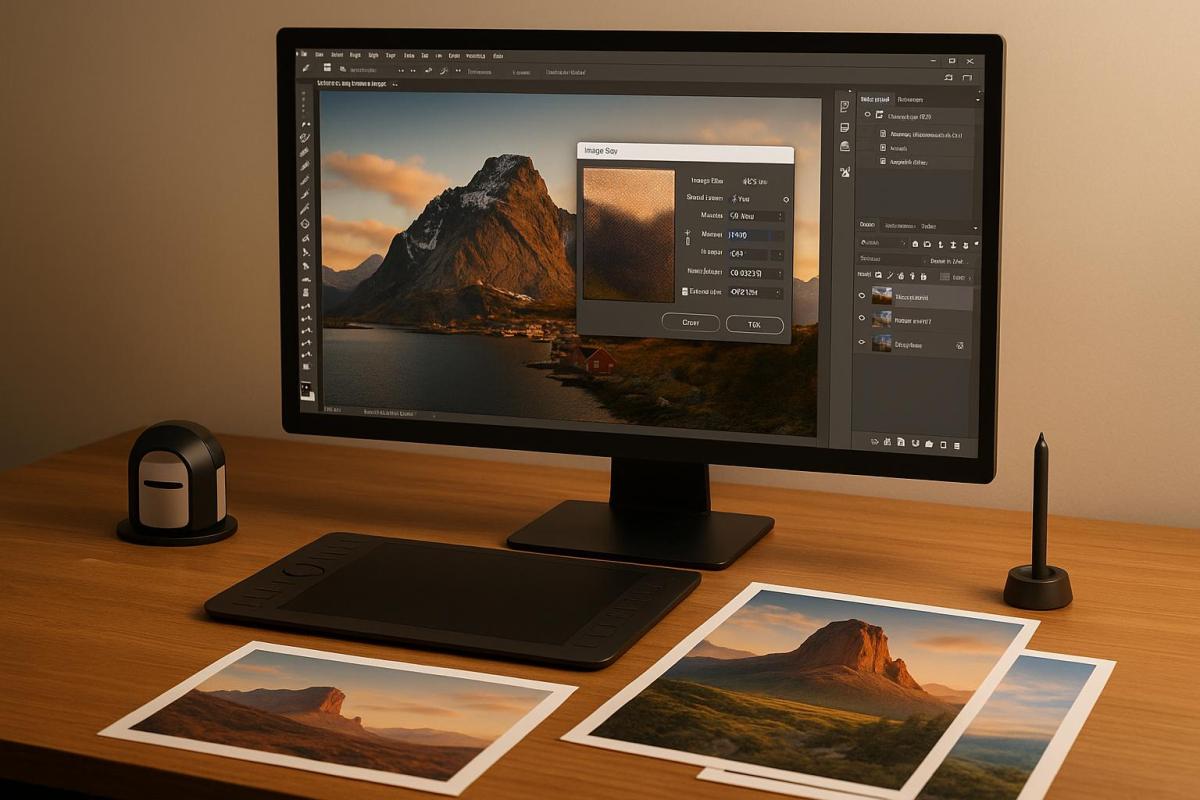
In Adobe Photoshop, you can modify the DPI of raster images by navigating to Image > Image Size. A dialog box will appear, showing fields for Resolution, Width, and Height. Before making changes, ensure you understand the relationship between pixel dimensions and print size. For most high-quality prints, a resolution of 300 DPI is recommended. However, for large format prints viewed from a distance, a lower DPI – like 150 or even 100 – can often suffice. To maintain the original pixel count, uncheck the "Resample" box. For example, if you’re printing a 10-inch by 10-inch image at 300 DPI, your file size should be 3,000px × 3,000px.

For Adobe Illustrator, which primarily handles vector graphics, DPI adjustments apply to raster effects within your design. Go to Effects > Document Raster Effects Settings to control the resolution. You can choose presets like "High Quality 300 DPI" or enter a custom value. This ensures that embedded images and filters render correctly during printing.

Once your design software is configured, move on to your printer’s DPI settings to ensure everything aligns.

Configuring Printer DPI Settings

Adjust your printer’s DPI settings through its control panel or driver software. Most large format printers include options under menus such as "Print Quality", "Resolution", or "DPI Settings." These settings directly affect how your design translates onto the print material.

It’s a good idea to print a test document to confirm your settings. Different materials – like vinyl, canvas, or specialty papers – may behave differently depending on the DPI. For instance, if you’re designing a banner at 10% of its final size, setting the file at 1,200 DPI will result in an effective resolution of 120 DPI when scaled to full size. Always check your printer’s manual for recommendations tailored to your material.

Once you’ve finalized your printer settings, focus on balancing file quality with manageable file sizes.

Managing Quality and File Size

Higher DPI settings provide more detail but can also result in significantly larger file sizes, which might slow down processing and transfer times. To manage this, consider using minimal-loss JPEG compression for raster images. This helps reduce file size while maintaining acceptable quality, especially for prints viewed from a distance. Cropping unnecessary portions of your design and optimizing color profiles can also help without sacrificing clarity.

For detailed or intricate graphics, TIFF files are often the best choice since they support high color depths and efficient compression. On the other hand, vector formats like EPS or SVG are ideal for designs with text and simple shapes, as they can be scaled indefinitely without quality loss. Remember, the ideal DPI depends on both the viewing distance and the material you’re printing on.

If you need professional advice or services for large format printing, consider reaching out to Miro Printing & Graphics Inc. in Hackensack, NJ. Their expertise in digital and large format printing can help ensure your project meets your expectations for quality and clarity.

sbb-itb-ce53437

File Format and Image Quality Tips

Picking the right file format can make or break your print quality. The wrong choice might lead to pixelation, color mismatches, or compression artifacts – issues that become glaringly obvious on large format prints.

Using Lossless File Formats

Beyond resolution, the file format plays a big role in preserving image details during printing.

  • TIFF files are ideal for large format printing. These lossless files ensure every detail is retained, making them a top choice for high-quality prints.
  • PDF files are incredibly versatile, handling both vector and raster elements with ease. To ensure top-notch results, export PDFs at 300 DPI and in CMYK mode to align with print standards.
  • For vector-based designs like logos or illustrations, EPS and AI formats are your go-to. These formats allow for scaling to any size without losing clarity. If you’re using Adobe Illustrator, export your work in AI or EPS to maintain the sharpness of vector graphics.
  • PSD files are great for designs that might need last-minute tweaks. They keep layers editable, which is especially useful for photo-heavy projects. However, PSD files tend to be quite large.

One crucial tip: always convert RGB images to CMYK before printing. While RGB colors pop on screens, they often look different in print, so this conversion helps avoid unpleasant surprises.

Pairing the right file format with the correct DPI settings ensures your images stay sharp and vibrant, even when scaled up.

Preventing Compression Problems

Once you’ve chosen the right file format, it’s essential to avoid common pitfalls that could degrade your image quality.

  • Steer clear of JPEG files for large format printing. JPEG’s lossy compression reduces quality every time you edit or save the file.
  • If you must work with JPEGs, start with the highest resolution available. Never try to upscale a low-resolution JPEG – it only amplifies compression artifacts and results in a blurry, unusable image.
  • Keep your resizing proportional to maintain the correct aspect ratio and avoid distortion.
  • Raster images should always be at least 300 DPI at the final print size for optimal results. If you’re designing at a smaller scale (like 25% of the final size), create your images at four times the target resolution to ensure clarity when enlarged.
  • Resist the temptation to compress files for easier handling. While smaller files might transfer faster, the loss in quality isn’t worth it when you’re aiming for professional-grade large format prints.

Here’s a quick summary of the key file formats, their best uses, and what makes them stand out:

File Format Best For Key Benefits Important Notes
TIFF Photos, detailed graphics Lossless compression, high-quality detail Large file sizes
PDF Mixed media, complex layouts Handles both vector and raster elements, preserves fonts Export at 300 DPI in CMYK mode
EPS Logos, line art Fully scalable, maintains sharpness Perfect for vector designs
PSD Layered designs, photo-heavy projects Editable layers for flexibility Large file sizes; not suited for vectors

Choosing the right file format and handling it correctly ensures your final prints look as polished and professional as you envision.

High DPI vs Low DPI Settings

Choosing the right DPI setting is all about balancing print quality with practical constraints. Each option comes with its own set of strengths and challenges that can significantly impact your large format printing project. Here’s a closer look at how these settings influence file size, processing time, and production costs.

High DPI: Benefits and Drawbacks

High DPI (200–300) is ideal for prints that need to look sharp and vibrant up close. This setting ensures detailed and colorful results, making it perfect for items like trade show displays or architectural drawings. High DPI preserves fine text clarity and keeps intricate graphics crisp, even when viewed from just a few feet away.

However, there’s a trade-off. High DPI generates larger file sizes, which can strain your storage and slow down processing. It also requires more power and resources, leading to longer production times and increased costs for labor and ink.

Low DPI: Benefits and Drawbacks

Low DPI, on the other hand, is best suited for prints meant to be viewed from a distance, such as billboards or outdoor banners. With smaller file sizes, this setting makes storage, sharing, and processing much more efficient, often speeding up turnaround times.

The downside? Low DPI can result in pixelation when viewed up close. Fine text may become unreadable, and detailed graphics may lose their sharpness if closely inspected. Additionally, outdoor conditions like sunlight or moisture can impact print quality, which might require adjustments in DPI or the use of specialized materials.

DPI Comparison Table

Here’s a quick breakdown of how high and low DPI settings stack up:

Feature High DPI (200–300) Low DPI (20–150)
Best Use Cases Trade show displays, architectural drawings, detailed indoor graphics Billboards, outdoor banners, distant viewing signage
Image Quality Sharp details, vibrant colors, professional appearance Adequate for distance viewing; may show pixelation up close
File Size Large files, storage intensive Smaller files, easier to manage and transfer
Processing Time Longer processing times Faster processing
Production Cost Higher ink consumption and labor costs Lower material costs and reduced printing time
Viewing Distance Optimized for close inspection (e.g., 3–10 feet) Designed for distant viewing (e.g., 50+ feet)
Material Compatibility Works well with rigid materials and premium substrates Suitable for vinyl, fabric banners, and cost-effective materials

When deciding on a DPI setting, think about your project’s specific needs. For large displays viewed from a distance, a minimum of 100 DPI is usually sufficient. For items that will be inspected closely, 300 DPI is often necessary. Balancing your budget, timeline, viewing conditions, and quality expectations will help you make the right choice for your large format print project.

Key Takeaways

When it comes to large prints, getting the DPI (dots per inch) right depends on a few key factors: how far the audience will be from the graphic, how you manage your files, and the material you’re printing on. The general rule? The farther away your audience is, the lower the required DPI can be without losing visual clarity.

For example, billboards meant for highway viewing typically need just 20 DPI, while trade show displays viewed up close require 150–300 DPI to achieve a sharp, professional appearance.

While higher DPI ensures more detail, it also leads to larger file sizes and increased costs. A smart approach is to design at a smaller scale with the maximum resolution and then scale up. This method helps maintain quality while keeping file sizes manageable.

File formats also play a crucial role in achieving the desired quality. Use EPS or SVG formats for vector graphics and TIFF for complex images. Running test prints on your selected material can help you spot any necessary DPI adjustments early, saving you from costly reprints.

Large-format printing generally starts at 100 DPI, but your specific project needs will determine the best choice. For professional insights and assistance, you can reach out to Miro Printing & Graphics Inc. at https://bergencountyprinters.com.

FAQs

What is the best DPI setting for large format prints?

When deciding on the right DPI (dots per inch) for large format printing, you need to think about how the print will be viewed and the level of detail it needs. For most projects, 100 to 150 DPI works well, especially for prints meant to be seen from a distance, like banners or billboards. However, for prints that will be viewed up close – such as posters or fine art – going with 150 to 300 DPI ensures sharper detail.

It’s worth noting that higher DPI settings lead to larger file sizes, which can slow down processing and printing. The trick is to find the sweet spot between resolution and practicality, ensuring your prints look clear and professional without creating oversized files. If you’re unsure about the best settings, reaching out to a professional print shop like Miro Printing & Graphics Inc. can provide the guidance you need for your specific project.

What file formats should I use for the best quality in large format printing?

When it comes to large format printing, choosing the right file format is key to preserving image sharpness and detail. The best options include TIFF, PDF, EPS, and PSD. These formats are designed to handle high-resolution images while keeping your design intact throughout the printing process.

To prepare your files properly, make sure they’re saved at a resolution of at least 300 DPI. Also, embed any fonts and images directly into the file to avoid any surprises during printing. Following these steps will help your large format prints stand out with crisp, professional quality.

How can I handle large file sizes when working with high DPI for large format printing?

To handle large file sizes for high DPI large-format prints, it’s best to create files at their actual size whenever possible. If the final dimensions exceed your software’s limits, work at a common scale like 1/2 or 1/10, and make sure to label the scale clearly in the file name to avoid any mix-ups. A resolution of 100–150 DPI works well for most large prints, but you can push it up to 300 DPI for projects that need extra detail or are meant to be viewed up close.

Stick to lossless file formats like TIFF to maintain image quality without adding unnecessary bulk to your files. You can also resize images directly in your RIP software to simplify the workflow. Staying organized is key – maintain a clear file structure, and double-check both dimensions and resolution before sending files to print.

Related posts

https://app.seobotai.com/banner/banner.js?id=685355d05559d477e75e276f

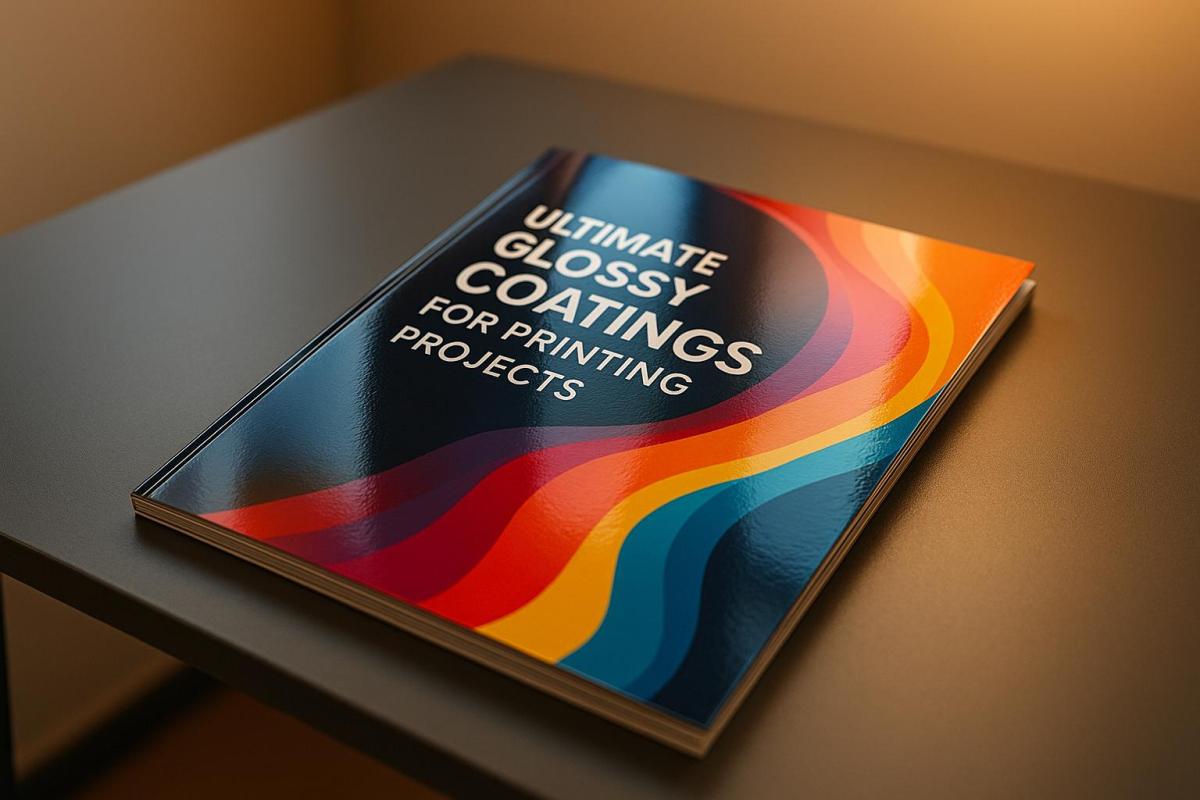
Ultimate Guide to Glossy Coatings for Printing Projects

Explore the types, benefits, and drawbacks of glossy coatings for printing to elevate your projects with vibrant, durable finishes.

Glossy coatings can make your printed materials look sharp, vibrant, and durable. They enhance colors, protect against smudges and scratches, and give a professional polish to everything from business cards to brochures. Here’s a quick breakdown:

  • Types of Glossy Coatings:

    • UV Coating: Maximum shine and durability but can crack when folded.
    • Aqueous Coating: Eco-friendly, fast-drying, and flexible.
    • Gloss Lamination: Superior protection and color depth, but more expensive.
  • Key Benefits:

    • Makes colors pop for high-impact visuals.
    • Protects against wear and tear.
    • Adds a sleek, professional finish.
  • Drawbacks:

    • Can show fingerprints and glare.
    • Not ideal for text-heavy designs.
  • Best Uses: Marketing materials, business cards, photos, catalogs, and product labels.
Coating Type Shine Durability Eco-Friendliness Flexibility
UV Coating High High Low Low
Aqueous Coating Moderate Moderate High High
Gloss Lamination High Very High Moderate High

Pro Tip: Work with a professional print shop to ensure the best results for your project. Whether you want bold, eye-catching visuals or durable, long-lasting prints, glossy coatings can help you achieve your goals.

How to Choose the Right Paper Coating: Matte, Gloss, High-Gloss

Types of Glossy Coatings

Choosing the right type of glossy coating can make a big difference in the outcome of your project. Each option has its own strengths and weaknesses, so understanding these can help you make an informed decision. Below, we’ll break down the main types of glossy coatings, their features, and the best ways to use them.

Gloss UV Coating

If you’re looking for a coating that delivers maximum shine, UV coating is the way to go. This finish creates a deep, high-gloss effect that can make your prints stand out. It’s applied and cured under UV light, which speeds up the process and fits seamlessly into many printing workflows.

UV coating is highly resistant to scratches and abrasions, making it a durable option. However, its rigidity can be a drawback – folding or bending may cause it to crack, so it’s not ideal for projects requiring flexibility. While it offers some resistance to minor spills, it’s not waterproof. For those aiming for ultra-glossy results, UV coating can achieve over 80 Gloss Units (GU), making it perfect for bold logos or accents. Additionally, UV coatings can be formulated with up to 100% solids, meaning they release no volatile compounds into the environment.

Aqueous Gloss Coating

Aqueous coating is a water-based solution that dries quickly and is a more eco-conscious choice. As Beaver Creek Printing explains:

"Aqueous coatings are fast drying, water-based, protective sealants particularly resistant to smudges and fingerprints."

This coating offers solid protection against fingerprints, rubs, and light scuffs, though it isn’t as tough as UV coating. One advantage is its flexibility – it resists cracking when folded, making it a go-to for brochures and other folded materials. Aqueous coating is typically applied as a flood coat, covering the entire surface.

The market for water-based coatings is growing, with projections estimating it will surpass $3.8 billion by 2032. While specialized drying equipment is needed for application, the benefits – like its environmental friendliness and adaptability to paper and cardboard – make it a worthwhile investment.

Gloss Lamination

Lamination involves adhering a glossy film over your prints, creating a polished finish that enhances color depth and vibrancy. Beyond aesthetics, it also provides excellent durability and protection.

"Lamination provides structure and the highest protection from moisture compared to other coating types." – NEWPRINT

Although lamination is slower to apply compared to coatings, its superior tear resistance and moisture protection make it a strong choice for high-value projects. While it is the most expensive option, its longevity and durability can offset the cost, especially for items that need to withstand wear and tear over time.

Spot Gloss vs. Full Gloss Applications

When deciding between spot gloss and full gloss, it comes down to the type of impact you want to create. Spot gloss is used to highlight specific elements, like logos or text, by applying shine selectively. This creates contrast and adds a tactile quality that works especially well on darker, matte backgrounds. It’s a favorite for business cards, luxury invitations, and packaging where subtle emphasis is key.

On the other hand, full gloss covers the entire surface, delivering a consistent shine and vibrant colors. This approach works well for materials like brochures, flyers, and promotional items that benefit from a polished, professional appearance. While spot gloss tends to be more expensive and requires precision during application, the added texture and focus it provides often justify the cost for premium projects.

Feature Aqueous Coating UV Coating
Material Water-based coating UV-reactive liquid coating
Application Method Flood coating only Flood or spot coating
Finish Soft, minimal glare Extremely shiny and reflective
Drying Process Dries via evaporation Cured under UV light
Durability Moderate High
Environmental Impact Eco-friendly Less eco-friendly
Flexibility Fold-friendly May crack when folded

Benefits and Drawbacks of Glossy Coatings

Glossy coatings can elevate the look and durability of printed materials, but they come with their own set of trade-offs. Understanding both the perks and the challenges can help you make the right choice for your project. Let’s break it down.

Advantages of Glossy Coatings

  • Enhanced Visual Impact
    Glossy coatings amplify colors, increase contrast, and bring out the finer details in high-resolution images, making visuals pop .
  • Polished, Professional Look
    The sleek, shiny surface gives printed materials a high-end, polished appearance, making them perfect for brochures, catalogs, and other marketing tools.
  • Improved Durability
    The glossy finish adds a layer of protection against scratches and moisture. This makes it a smart choice for items like product labels or stickers that might be exposed to humid or wet conditions.
  • Cost-Effective Options
    Depending on the quality and intended use, glossy finishes can be a budget-friendly way to add a premium touch to your project.

While these advantages make glossy coatings appealing, they’re not without their limitations.

Drawbacks of Glossy Coatings

  • Glare and Reflection
    Glossy surfaces reflect light, which can create glare, especially in well-lit environments. This can sometimes obscure details, depending on the viewing angle.
  • Fingerprint and Smudge Magnet
    The shiny surface tends to highlight fingerprints and smudges, which can be distracting.
  • Ink Adhesion Issues
    Writing on glossy surfaces can be tricky since the slick finish slows ink drying, increasing the risk of smudging.
  • Higher Costs for Premium Options
    While basic glossy finishes can be affordable, premium glossy papers and processes often come with a higher price tag. Additionally, some premium options may not align with eco-conscious goals .
  • Limited Suitability for Certain Projects
    Glossy finishes are not ideal for text-heavy documents or materials where readability is key, as glare and reflections can reduce legibility.
Aspect Advantages Drawbacks
Visual Appeal Vibrant colors and a sleek, eye-catching finish Glare can obscure details in bright settings
Durability Resists scratches and moisture Shows fingerprints and smudges easily
Usability Great for high-resolution images Not ideal for writing or interactive uses
Cost Affordable options available Premium choices can be pricier and less eco-friendly
Applications Perfect for photos, brochures, and catalogs Unsuitable for text-heavy or readability-focused work

Glossy coatings can be a game-changer for certain projects, but they’re not a one-size-fits-all solution. By weighing their strengths and weaknesses, you can decide if they’re the right fit for your needs.

sbb-itb-ce53437

Applications and Best Uses for Glossy Coatings

Glossy coatings are perfect when you want to create a bold visual impact. Here’s a closer look at where they shine the most.

Marketing Materials

Whether it’s flyers, brochures, or postcards, glossy coatings bring out the best in marketing materials. They amplify color vibrancy and lend a polished, professional look that grabs attention.

"The shiny surface created by a gloss coating enhances the depth and intensity of the underlying ink colors, making them appear even more vibrant and visually striking." – Color Vision Printing

Brochures stand out when paired with glossy coatings, especially those featuring high-quality photos or bold graphics. This finish enhances image depth and color intensity, making it a favorite in industries like retail and design where visual appeal is key. For example, restaurant menus with glossy finishes make food photography pop, enticing customers with vibrant, appetizing visuals.

Postcards and flyers benefit greatly, too. Their reflective surfaces catch the light, drawing attention whether they’re pinned to a bulletin board or pulled from a mailbox. Plus, the protective layer ensures your message stays sharp, even after multiple handlings.

But glossy coatings aren’t just for promotional materials; they also elevate business essentials and creative content.

Business Cards and Presentation Folders

Glossy coatings bring a premium touch to business materials, ensuring they leave a lasting impression. They enhance the visual appeal and durability of items like business cards and presentation folders, making them look sleek and professional.

Business cards with a glossy finish exude professionalism and attention to detail. The smooth, polished surface not only feels high-end but also sets your card apart from the standard matte options. Plus, the added durability ensures your contact information stays intact over time.

Presentation folders also benefit significantly. A glossy finish gives them a polished, high-quality appearance while protecting the documents inside. When presenting proposals or marketing materials, a sleek folder reinforces the quality and care you’ve put into your work.

Photographic Prints and Catalogs

Photography and glossy coatings are a natural match. The reflective surface enhances color saturation, brightness, and sharpness, making images leap off the page.

Photographic prints achieve stunning clarity and vibrant colors with a glossy finish. Whether it’s for portfolios, event photography, or art prints, this coating ensures sharp details and deep color saturation, making it the top choice for visually striking images.

Catalogs also thrive with glossy coatings. Since they often rely on product photography to drive sales, the finish helps showcase vibrant colors and maintain a crisp appearance, even after frequent handling. This is especially important in retail, where high-quality visuals can directly influence purchasing decisions.

Glossy finishes are also practical for product labels and stickers, especially in humid or wet conditions, where durability matters.

Application Primary Benefits Best For
Marketing Materials Vibrant colors, durability, professional look Brochures, flyers, postcards, restaurant menus
Business Materials Premium feel, strong first impression, durability Business cards, presentation folders
Visual Content Enhanced color saturation, sharp details, vibrancy Photographic prints, catalogs, product labels

When choosing glossy coatings, think about your target audience, budget, and competition. The coating is often the first thing people notice, so it should reflect your brand and the impression you want to leave.

Tips for Achieving the Best Results with Glossy Coatings

Creating a flawless glossy finish begins with careful preparation. From selecting the right materials to working with experienced professionals, every step plays a role in transforming your project from ordinary to extraordinary.

Preparing Artwork for Glossy Coatings

High-quality artwork is the foundation of a polished glossy finish. Use images and graphics with a resolution of at least 300 DPI to avoid pixelation, as the reflective nature of glossy coatings can make even small flaws more noticeable. Always work in CMYK color mode instead of RGB, and convert your files accordingly to minimize color discrepancies during printing. For clean edges, include a bleed of 0.125–0.25 inches and keep critical design elements at least 0.125 inches away from the trim line. Since glossy coatings can slightly tone down colors, adjust your artwork by increasing brightness, contrast, and saturation to ensure vibrant results. Before committing to production, conduct prepress checks and request a proof copy to confirm everything looks as intended.

Selecting Compatible Substrates

The choice of substrate significantly impacts the final look and durability of your print. Coated papers are often the best option for glossy finishes, as their smooth surface enhances clarity and shine. Paper weight, measured in GSM or pounds, also plays a role in how premium and sturdy the final product feels. Match the paper’s finish – such as glossy or satin – to the purpose of your project; for example, brochures and magazines often benefit from glossy or satin-coated papers. Don’t forget to consider environmental factors and ensure the substrate is compatible with your chosen printing method, whether it’s offset, digital, or screen printing. Keeping the substrate clean is equally important to avoid any defects during production.

Working with Expert Print Shops

Once your artwork and materials are ready, partnering with a skilled print shop can make all the difference. An experienced print shop will fine-tune your design and materials to achieve a professional glossy finish. Their expertise extends to formatting, paper selection, and printing techniques, ensuring high-resolution results with precise color reproduction.

"Your printer will discuss all of your project options with you, including whether or not your project will benefit from the creative elements and protection of coating or finishing."

Professional print shops also provide tailored solutions for unique projects, helping you decide between gloss, matte, or satin finishes depending on your design goals. Collaborating with experts early in the process can save time and money while ensuring your final product aligns with your vision.

At Miro Printing & Graphics Inc. in Hackensack, NJ, their seasoned team guides clients through every stage of glossy coating projects. Offering services like digital printing, offset printing, and comprehensive post-press finishing, they help bring your ideas to life with precision and care.

"Print shops help businesses share their products and messages in a noteworthy way, making them valuable partners for many industries."

It’s also essential to understand the distinction between coating and finishing. Coatings are applied during the printing process, while finishing is done afterward to protect the print and add creative elements. Knowing this difference allows you to make informed choices that best suit your project’s needs.

Conclusion

Glossy coatings can transform print projects into sleek, professional-looking materials. In this guide, we’ve covered the three main types – gloss UV coating, aqueous gloss coating, and gloss lamination – each suited to different needs and budgets.

These finishes bring several perks to the table: they boost color intensity, sharpen image quality, and create a polished, high-end feel. That said, they’re not without drawbacks. Glossy surfaces can produce glare and show fingerprints, making them less ideal for text-heavy or frequently handled items.

When used thoughtfully, glossy coatings can make a big difference in marketing materials, business cards, presentation folders, and photo prints. A common strategy is to mix finishes – for instance, pairing a glossy cover with matte interior pages – to achieve both eye-catching visuals and easy readability.

Achieving a flawless finish requires technical precision. Attention to details like paper choice and scoring techniques plays a key role in getting the best results. That’s why working with an experienced print shop is so important. A partner like Miro Printing & Graphics Inc., based in Hackensack, NJ, offers a full range of services, from digital and offset printing to in-house bindery and finishing, ensuring every detail is handled expertly.

Whether you’re designing a product catalog that showcases the vibrant depth of UV-coated colors or creating business cards with a smooth, refined texture, the right glossy finish can elevate your project. By understanding your options and collaborating with skilled professionals, you can achieve stunning, impactful results.

FAQs

What should I consider when choosing between UV coating, aqueous coating, and gloss lamination for my print project?

When choosing between UV coating, aqueous coating, and gloss lamination, it’s all about balancing durability, flexibility, and the finish you’re aiming for.

  • UV coating creates a striking, high-gloss finish that makes colors pop with a glass-like shine. While it’s tough and visually stunning, it’s not the best for projects that need to bend or fold, as it can crack under pressure.
  • Aqueous coating offers a more environmentally friendly option. This water-based finish resists cracking and provides a softer look with a moderate gloss level. It’s ideal for projects that need flexibility or a greener touch.
  • Gloss lamination adds a thin plastic layer, making it incredibly durable and resistant to wear and tear. Though it’s not as glossy as UV coating, it’s perfect for items that need to stand up to heavy handling over time.

Go for UV coating if you want bold, eye-catching shine, aqueous coating for flexible and eco-conscious designs, and gloss lamination when durability and protection are top priorities.

How can I reduce glare and fingerprints on glossy coatings for my printing projects?

To tackle glare and fingerprints on glossy surfaces, try using anti-fingerprint coatings. These specialized coatings are designed to resist oils and smudges, helping surfaces stay cleaner and maintain a polished, professional appearance. They’re a smart way to keep those visible marks to a minimum while also boosting the durability of your prints.

Another approach is to opt for low-reflective finishes. These finishes reduce glare without sacrificing the sleek, glossy look. By combining the right coating with the appropriate finish, you can create a high-quality result that not only looks great but also stays cleaner for longer.

How can I combine glossy and matte finishes to make my printed materials more visually appealing and easy to read?

Combining glossy and matte finishes can transform the appearance and functionality of your printed materials. A glossy finish is perfect for drawing attention to vibrant elements like images, logos, or titles, giving them a sharp, eye-catching brilliance. On the other hand, a matte finish works best for text-heavy areas or intricate designs, as it reduces glare and makes reading easier.

For a dynamic and polished look, try blending these finishes thoughtfully. For instance, using a matte background with glossy accents can create a bold contrast that naturally directs attention to specific elements. This approach not only enhances the design’s aesthetic appeal but also ensures that important details remain clear and engaging.

Related posts

https://app.seobotai.com/banner/banner.js?id=6852442b5559d477e75d04db

Prepress Checklist for Print-Ready Files

Follow this comprehensive prepress checklist to ensure your print files are error-free and ready for professional quality printing.

Printing errors like missing bleed or using RGB colors instead of CMYK can lead to expensive reprints. To save time and money, follow these essential prepress steps:

  • Use the Right File Formats: Stick to PDFs (PDF/X-1a or PDF/X-4) for best compatibility. Use EPS for vector graphics and TIFF for high-quality images.
  • Embed Fonts and Graphics: Ensure fonts are embedded and all images are linked or included in your file package.
  • Set Correct Page Size and Layout: Match the document size to the final print size and adjust margins for safe trimming.
  • Add Bleed and Crop Marks: Include a 1/8 inch (3 mm) bleed on all sides and use crop marks for precise cutting.
  • Optimize Image Resolution: Use 300 DPI for sharp prints and convert files to CMYK for accurate colors.
  • Proof and Finalize: Review text, layout, and branding, and always order a printed proof to catch errors before the final run.

InDesign: Packaging/Exporting to PDF (Prepress Essentials #6 of 6)

File Preparation Basics

Getting your files ready for print involves selecting the right format, embedding fonts and graphics, and ensuring your layouts are precise. A smooth printing process depends on these elements being handled correctly. Let’s break down the essentials for preparing your files.

File Formats and Compatibility

When it comes to file formats, PDF is the gold standard for retaining fonts, images, and layouts exactly as designed. For print jobs, stick to PDF/X-1a or PDF/X-4 standards. PDF/X-1a works well for traditional workflows, while PDF/X-4 is ideal if your project includes transparency or layered elements.

For vector graphics like logos or illustrations, use EPS files to maintain sharp edges, no matter the size. For high-resolution images, TIFF files are your best bet since they offer lossless compression and excellent quality. If you’re working with photographs, JPEGs can be an option, but only if saved at the highest quality setting. Always double-check with your print provider to confirm their specific file requirements. At Miro Printing & Graphics Inc., the team can guide you in selecting the right format for your project.

Embedding Fonts and Graphics

One of the most common issues in printing is missing fonts. To avoid this, embed your fonts to ensure your design looks exactly as intended. When exporting to PDF, use the "PDF for Print" preset, which automatically embeds fonts. After exporting, double-check your PDF in Adobe Acrobat by navigating to File > Properties > Fonts to confirm everything is embedded.

Graphics need attention too. Use the Links panel in design software like InDesign to manage your images. Linked files keep your project size smaller but require you to include the original files when sharing with your printer. Alternatively, embedding graphics creates a self-contained document. If you’re sending editable files, always package all linked fonts and images with your design to prevent anything from being left behind.

Page Size and Layout

Your document size must match the final print size – this is non-negotiable. As Mariah Althoff wisely advises:

"Make sure the document you’re sending to the printer is the correct size that you want it printed at."

Start your project by setting the correct paper size to avoid layout headaches later. For oversized projects that exceed your software’s maximum dimensions, design at a reduced scale (e.g., 25%, 50%, or 75% of the final size) and communicate this scale clearly to your printer. If scaling down, adjust image resolution to ensure quality when scaled back up.

For large-format prints, consider increasing your margins to 1.5–2 inches instead of the standard 0.5–1 inch used for smaller materials. This extra margin protects your content during production and installation, ensuring nothing important gets cut off or lost in the process.

Bleed, Margins, and Crop Marks

Getting the details right with bleed, margins, and crop marks can make a huge difference in the quality of your printed materials. These elements work together to ensure your design looks polished and professional after trimming, avoiding any unwanted white edges or cut-off content.

Setting Up Bleed

Bleed refers to the part of your design that extends beyond the final trim size, ensuring there are no white edges after cutting. In the U.S., the standard bleed size is 1/8 inch (3 mm) on all sides.

Here’s how to set it up in different design tools:

  • Adobe InDesign: When creating a new document, set your page size and margins, then enter a 3 mm bleed in the "Bleed and Slug" settings. To adjust an existing document, go to File > Document Setup and input the bleed value.
  • Adobe Illustrator: You can add bleed in the New Document dialog or later through File > Document Setup.
  • Adobe Photoshop: Increase the canvas size by 6 mm in both width and height, keeping the anchor point centered.
  • Canva: Canva also provides an easy way to add bleed directly within its interface.

Make sure all images, backgrounds, and color blocks extend into the bleed area to avoid white edges after trimming.

Safe Margins for Important Content

While bleed protects the edges, safe margins ensure none of your important content – like text, logos, or key design elements – gets trimmed off. A good rule of thumb is to keep these elements at least 0.25 inches inside the trim line, though specific projects may require more.

For book printing, margins vary depending on the binding method:

Book Type Binding Edge Margin Outer Edge Margin
Hardcover Books 0.25" (6 mm) 0.25" (6 mm)
Perfect Bound Softcover 0.6" (15 mm) 0.25" (6 mm)
Saddle-Stitched 0.25" (6 mm) 0.25" (6 mm)
Wire‑O/Spiral Bound 0.6" (15 mm) 0.25" (6 mm)

The binding edge often needs extra margin because pages can shift slightly during the binding process. Proper margin settings protect your critical content from being trimmed or lost in the binding.

It’s always a good idea to confirm margin requirements with your printer. For example, Miro Printing & Graphics Inc. provides detailed guidelines to ensure your content stays well within the printable area.

Adding Crop Marks

Crop marks are thin lines printed at the corners of your design, showing exactly where the paper needs to be trimmed. These are especially important when your design extends into the bleed area, as they ensure precise cutting.

Here’s how to add crop marks in popular design tools:

  • Adobe InDesign: Go to File > Export, choose "Adobe PDF (Print)", and in the Marks and Bleed section, check the "Crop Marks" box. Make sure your bleed is set to 3 mm on all sides.
  • Adobe Illustrator: Select File > Save As, choose Adobe PDF, and check "Trim Marks" under "Marks and Bleeds."
  • Microsoft Publisher: Go to File > Print > Advanced Output Settings, select "Marks and Bleeds", and check the "Crop marks" box.

Crop marks align with your trim lines and guide the printer for accurate cutting. Combined with proper bleed and margins, they ensure your final product looks clean, professional, and exactly as intended. Once these elements are in place, your file is ready for proofing and printing.

Image Resolution and Color Settings

Once your bleed and layout are sorted, the next step is to refine image resolution and color settings for a polished print. These adjustments are crucial – low resolution can lead to blurry, pixelated images, while incorrect color settings might result in colors that don’t match what you see on your screen.

Setting High Image Resolution

For crisp, professional-quality prints, set your images to 300 DPI at their final size. If your image includes text, consider bumping it up to 400 DPI for sharper results.

Here’s a quick reference for common print sizes and their pixel dimensions at 300 DPI:

Print Size 300 DPI Pixels 200 DPI Pixels
4×6 inches 1,200×1,800 800×1,200
8×10 inches 2,400×3,000 1,600×2,000
11×14 inches 3,300×4,200 2,200×2,800

Keep in mind that web images (typically 72–96 PPI) are not suitable for print. If you’re scanning images, scan at 300 DPI for originals that are already at their final size. For enlargements, scan at a proportionally higher resolution – for example, if you’re doubling the size of an image, scan at 600 DPI.

Once resolution is set, it’s time to focus on color settings.

Converting to CMYK Color Mode

Screens and printers interpret colors differently. While screens use RGB (Red, Green, Blue), printers rely on CMYK (Cyan, Magenta, Yellow, Black). To ensure your printed colors are accurate, convert your files to CMYK.

Since CMYK has a narrower color range than RGB, some vibrant screen colors may look less intense in print. Use your design software to make necessary adjustments during the conversion:

  • Adobe Photoshop: Go to Image > Mode > CMYK Color. Use soft proofing (View > Proof Setup > Custom) to preview how colors will appear in print.
  • Adobe InDesign: Start new projects with a "Print" intent or convert existing documents via Edit > Convert to Profile.
  • Adobe Illustrator: Navigate to File > Document Color Mode > CMYK Color and tweak any colors that shift during the process.
  • Canva Pro: When downloading, select "PDF Print" and enable the CMYK color profile option.

Before committing to a full print run, always order a printed proof. This step ensures that the final colors meet your expectations, as on-screen previews can be misleading.

Using Rich Black for Large Areas

For large black areas, like backgrounds or solid shapes, opt for rich black – a combination of 100% black (K) with small amounts of cyan, magenta, and yellow. This blend creates a deeper, more even tone. However, avoid using rich black for fine details like text, barcodes, or thin lines, as the extra ink can lead to smudging.

To prevent printing issues, keep your total ink coverage under 300%. Exceeding this limit can cause problems like bronzing, where ink doesn’t absorb properly, leading to longer drying times.

For the best results, check with your printer for their recommended rich black settings. For instance, Miro Printing & Graphics Inc. can provide specific values tailored to your project. Always ensure your design software is set to CMYK when creating rich black, and review proofs to confirm consistent saturation and tone before approving the final print run.

sbb-itb-ce53437

Proofing and Final Checks

After setting up your files and checking the layout, it’s time to wrap up your project with a detailed proofing process. A thorough review can help you catch any errors before submission, saving time and avoiding potential issues down the line. These final checks ensure your files are polished and maintain the quality established throughout the project.

Proofreading Text and Layout

Take a breather before diving into proofreading – it’s easier to spot mistakes with fresh eyes. Start by carefully reviewing grammar, punctuation, and spelling. Double-check proper nouns, numbers, and contact details to ensure accuracy. Reading the text aloud can help you notice awkward phrasing or inconsistencies. If possible, ask a colleague to give it a second look for an extra layer of review.

Be especially mindful of homophones like their, there, and they’re, as well as any auto-correct mishaps. Once you’ve made corrections, go over the text lightly again to make sure no new errors have crept in during the process.

Checking Image Placement and Branding

Use grid tools to ensure images are properly aligned and maintain consistency with brand guidelines. Confirm that all visuals are high-resolution (300 DPI) and have enough clear space around them. Also, check that no content is too close to edges or fold lines, which could affect the final print.

Verify that logos, colors, and imagery align with your brand’s standards. Many brands provide specific instructions for logo placement, color usage, and the overall style of imagery, so make sure to follow these guidelines closely.

Confirming Page Count and Design Elements

Compare your printed proof to the digital design to ensure the layout, order, and page numbering match perfectly. For multi-page projects, confirm the total page count is even, as each sheet typically includes two pages. If your project involves bound materials, remember to account for cover pages and adjust accordingly.

File Submission Guidelines

After ensuring your files are properly prepared, the next step is submitting them to your print provider. Correctly packaging and submitting your files can save time and avoid unnecessary delays. Following your printer’s specific submission guidelines is key to keeping your project on track.

Packaging Required Files

Start by organizing all the necessary design elements – fonts, images, and source files – into one package. Most design software includes a packaging feature that gathers these components for you.

For example, in Adobe Illustrator, you can create text outlines by selecting the text and navigating to Type > Create Outlines. To embed images, use the Links panel. These steps help eliminate common issues like missing fonts or broken image links when your files are sent to the printer.

Be sure to include your original design files in formats such as AI, EPS, or other native software formats, along with all linked images at their full resolution. This packaging process works hand-in-hand with the file setup techniques mentioned earlier.

Submitting Print-Ready PDFs

High-resolution PDFs are the gold standard for maintaining design accuracy. When exporting your PDF, make sure to:

  • Set the color mode to CMYK (not RGB).
  • Keep the resolution at 300 DPI for sharp, high-quality prints.

Your PDF should also include a 3mm bleed and ensure all critical content stays at least 5mm away from the page edges. For multi-page documents, arrange the pages as single pages in sequence, from the front cover to the back cover, and include any blank pages that are part of your design.

Additionally, verify that fonts are either embedded or converted to outlines. Avoid overprinting white elements, and double-check the placement of artwork if your project involves folds. Once your PDF is ready, follow your print provider’s specific submission rules to ensure final approval.

Following Submission Rules

Every print provider has unique requirements, so it’s essential to review their guidelines before submitting your files. Some printers may prefer specific file formats or have rules for naming files and size limits.

Use clear and descriptive file names to identify your project and version, such as BusinessCard_Smith_v3.pdf. For larger files, compress them into a ZIP folder or use a file-sharing service recommended by your printer.

Be sure to include detailed instructions with your submission, such as the desired quantity, paper type, finishing details, and deadlines. Sticking to these submission rules ensures your project maintains the quality established during the preparation phase.

At Miro Printing & Graphics Inc., we carefully review every file to confirm it meets our quality standards before starting production. If you have questions about file preparation or run into any issues, our team is always ready to assist!

Conclusion

Having a detailed prepress checklist is key to achieving print-ready, professional results. From preparing files and converting colors to setting up bleeds and proofing, every step helps avoid expensive mistakes and ensures your final prints meet the highest standards.

Proper file preparation not only saves money but also protects your brand’s reputation. Even small errors can distract readers and impact how your brand is perceived.

With the digital printing market expected to hit $47.1 billion by 2030, the importance of careful prepress work has never been greater. This growth underscores the need for precision and attention to detail, values we take seriously.

At Miro Printing & Graphics Inc., we bring over 30 years of expertise to ensure your files meet stringent quality requirements. Whether it’s digital, offset, or large format printing, we’re equipped to handle projects of all sizes with accuracy and care.

FAQs

What are the most common mistakes to avoid when preparing print-ready files, and how can you fix them?

When creating files for print, even small mistakes can affect the final product. One of the most common issues is missing bleed and safety margins. Without a proper bleed area – typically 0.125 inches – your design might end up with unwanted white edges. Similarly, if important elements aren’t kept within the safety zone, they risk being cut off during trimming. Including crop marks is also a must, as they guide the printer for precise cuts.

Another frequent mistake is using RGB instead of CMYK. While RGB works great for digital screens, it’s not ideal for print and can cause unexpected color shifts. Always convert your files to CMYK to ensure the colors print as intended. Also, low-resolution images (anything under 300 PPI) can lead to blurry or pixelated prints. To avoid this, verify that all images meet the resolution standard for sharp, clear results.

Lastly, don’t underestimate the importance of proofreading. Typos, missing elements, or layout errors can be expensive to fix once printing is done. Take time to double-check your files, embed or outline your fonts, and review a proof before sending your order to print. These steps go a long way in delivering a polished and professional final product.

Why is choosing the right file format important for high-quality printing?

Choosing the right file format is key to making your printed materials look polished and professional. High-resolution formats like TIFF and BMP are excellent for print because they retain all image details without any compression, ensuring sharp and clear results. In contrast, JPEG files use lossy compression, which can degrade image quality – especially if the file is edited multiple times.

For most print projects, PDF is the go-to format. It supports both vector and raster elements and works seamlessly with CMYK color settings, making it highly compatible with professional printing standards. Picking the correct format helps you sidestep issues like pixelation or color inconsistencies, ensuring your designs come out just as you envisioned.

Why do I need to convert colors from RGB to CMYK for printing, and what issues might occur during this conversion?

When it comes to printing, converting RGB to CMYK is a must. Why? Because RGB, designed for screens, covers a broader range of colors compared to CMYK, which is tailored for printing. Without this conversion, your design’s colors might look off or lose their vibrancy once printed, as CMYK simply can’t replicate every shade in the RGB spectrum.

This process isn’t always smooth sailing. Some colors can end up looking muted or less precise because of CMYK’s narrower range. To avoid surprises, it’s a good idea to manage colors carefully and preview your design in CMYK mode. This step can help you get as close as possible to the print results you’re aiming for.

Related posts

https://app.seobotai.com/banner/banner.js?id=685208105559d477e75c9b09

How Binding Choices Impact Print Durability

Explore how different binding methods affect the durability of printed materials and find the best option for your projects.

Want your printed materials to last? Start with the right binding method. Here’s what you need to know:

  • Sewn Binding: The most durable option. Ideal for textbooks, archival materials, and premium publications. Lasts decades but costs more.
  • Perfect Binding (PUR vs. EVA): PUR adhesives are stronger and more flexible, perfect for long-term use. EVA is cheaper but less durable.
  • Spiral and Wire-O Binding: Great for manuals and workbooks. Spiral allows flat-laying, while Wire-O adds a polished look.
  • Environmental Factors: Humidity and temperature affect durability – PUR and sewn bindings handle these best.
  • Paper Type Matters: Heavier paper adds durability but increases weight and cost.

Quick Comparison Table

Binding Method Durability Best For Limitations
Sewn Binding Highest Premium/archival books High cost, slower production
Perfect (PUR) High Long-lasting publications More expensive than EVA
Perfect (EVA) Moderate Magazines, short-term use Weakens over time, heat-sensitive
Spiral Binding Moderate Workbooks, manuals Coils can deform with heavy use
Wire-O Binding Very High Professional presentations Limited flexibility, higher cost

Key Takeaway: Match your binding method to your project’s durability needs, usage, and environment. For expert advice, consult professionals early in your design process.

Perfect Binding Strength

Common Binding Methods and Their Durability

When it comes to binding, the durability of each method plays a big role in determining the right choice for your project. Let’s break down how different binding techniques hold up over time and under various conditions.

Perfect Binding: EVA vs. PUR Adhesives

Perfect binding uses adhesive to hold pages together, but the type of adhesive makes a huge difference in durability. Two commonly used adhesives are EVA (Ethylene Vinyl Acetate) and PUR (Polyurethane Reactive), each with its own strengths.

EVA adhesive is a popular choice for short-term, high-volume projects. It cures quickly and is more affordable, making it ideal for items like magazines where longevity isn’t the top priority. However, EVA has its limits – it doesn’t handle extreme temperatures well and can be reactivated with heat, which might cause the adhesive to weaken.

"In short, EVA is still very effective and produces strong results. It is a slightly cheaper option when compared with PUR and is commonly used in the magazine industry, for example, where volume is a consideration and may not need to be as strong or withstand long term demanding use." – Print4UK

On the other hand, PUR adhesive offers exceptional durability, making it the go-to option for projects that need to last. PUR bonds are up to 50% stronger than EVA, and books bound with PUR glue resist page pulling by 60% more compared to EVA.

"As the strongest, most durable binding product available, PUR delivers a 50% stronger bind than traditional EVA glue." – Printivity

The main difference lies in how the adhesives cure. While EVA sets through cooling, PUR cures by absorbing moisture from the air, forming a flexible, heat-resistant bond that won’t weaken over time.

Spiral and Coil Binding

Spiral and coil binding are standout options for documents that will be handled frequently. Thanks to their continuous coil design, these bindings allow pages to open completely flat and fold back 360 degrees, making them perfect for manuals, workbooks, and reference materials.

The coils are designed to withstand stretching or compressing, so they remain intact even after rough handling. This makes them a reliable choice for items like training materials or classroom workbooks that are used daily. Compared to plastic comb binding, which can snap under pressure, coil binding is much more durable and forgiving.

Wire-O Binding

For a polished, professional look paired with durability, Wire-O binding is a solid option. Its double-loop wire structure holds pages securely, making it a great choice for presentations, reports, and other high-quality documents.

While Wire-O binding offers a sleek appearance and smooth page-turning, it’s not as flexible as coil binding. The wires can bend if handled roughly, unlike coils, which spring back into shape. Still, Wire-O is ideal for office settings or professional presentations where both durability and aesthetics are important.

This binding method is especially effective for documents with moderate page counts that need to lay flat, such as notebooks or reference materials. It strikes a balance between functionality and a polished finish.

Sewn Binding

If you’re looking for unmatched longevity, sewn binding is the gold standard. This method involves stitching the pages together before attaching the cover, creating a structure that can last for decades with proper care.

Section-sewn binding is particularly durable, making it the top choice for collector’s editions, textbooks, and archival materials. Unlike adhesive-only methods, sewn binding distributes stress evenly across the binding, ensuring it holds up even after years of use.

For materials that face frequent handling or need long-term preservation, sewn binding is hard to beat. Libraries often choose this method for books that will be opened thousands of times, as the stitching keeps pages intact while the cover adds extra protection. Though it comes with a higher upfront cost, the extended lifespan makes it a smart investment for projects that need to endure over time, such as hardcovers, archival books, and records.

What Affects How Long Bound Materials Last

Several factors influence the lifespan of bound materials, and understanding these can help you select the most suitable binding method for your needs.

Adhesive Strength and Flexibility

The type of adhesive used plays a key role in determining a book’s durability by balancing bond strength and flexibility. PUR glue chemically bonds with paper fibers, creating a stronger and more durable connection compared to EVA glue. In fact, PUR adhesives consistently exceed the industry standard for page-pull strength, which is 2.5 lbs per linear inch.

One major downside of EVA glue is that it tends to become brittle over time. In contrast, PUR retains its flexibility for years, allowing books to open wide or lie flat without placing undue stress on the spine. This flexibility is crucial because it enables the adhesive to absorb energy rather than transferring it directly to the paper, reducing wear and tear.

Of course, adhesive performance can also be influenced by external factors, such as environmental conditions.

Usage and Environmental Conditions

Environmental factors like temperature and humidity can have a significant impact on the longevity of bound materials. Fluctuations in humidity and temperature can cause paper to expand and contract, which may weaken bindings over time. For example, high heat can cause paper to yellow and become brittle, while warm, damp environments encourage mold growth that can stain and damage both paper and binding materials.

Temperature-sensitive adhesives like EVA are particularly vulnerable, as they can soften in high temperatures, weakening the bond. On the other hand, PUR adhesives maintain their strength and flexibility even under extreme conditions. To protect your bound materials, aim to store them in environments with stable temperatures below 65°F and humidity levels between 35–45%.

As Gregg Howard, Technical Manager II at H.B. Fuller, emphasizes:

"Humidity control is critical to product quality and process efficiency. Improved print quality, elimination of paper distortion, static prevention, and consistent adhesive application are all byproducts of effectively controlling humidity levels in your bindery."

It’s worth noting that PUR adhesives rely on moisture to cure properly, so excessively low humidity can slow the curing process and compromise bond strength. Binding materials also respond differently to environmental stress. For example, acrylic-coated cloth resists moisture, mold, and insects, while starch-filled cloth, though chemically stable, is more prone to insect damage and water spotting.

But adhesives and environment aren’t the only factors to consider – paper characteristics also play a vital role.

Page Count and Paper Type

The type and weight of paper you choose directly affect the durability and practicality of your binding. Heavier paper offers better tear resistance, which is particularly important for items that face frequent handling, like textbooks or reference materials. Thicker paper is also less likely to rip during everyday use.

For books with a high page count, lighter paper (70–90 GSM) can reduce bulk and make the book easier to handle. Conversely, heavier paper (150–170 GSM) is ideal for children’s books and art books, as it enhances image quality and ensures durability. The relationship between paper type and binding method is critical: perfect binding works best with sturdier stocks, while saddle stitching is more suitable for lighter papers.

Coated papers add another layer of complexity. EVA glue works well with standard and uncoated papers, but PUR adhesives are the better choice for heavily coated or hard-to-bind stocks.

Lauren Harpum, a writer, highlights the importance of paper selection:

"Choosing the right paper weight for your book is a crucial decision that impacts not only the feel and appearance of your book but also its durability and cost."

Shipping costs also come into play. Heavier books are more expensive to ship, so balancing durability with practicality is key. While perfect binding accommodates higher page counts, spiral and coil binding are versatile options that work well with medium-weight papers across a range of page counts.

sbb-itb-ce53437

How to Pick the Right Binding for Your Project

When selecting a binding method for your project, it’s essential to balance durability, functionality, appearance, and cost. Here’s a breakdown of how to make the best choice based on your specific needs.

Assessing Your Usage Requirements

Start by considering how the document will be used and the conditions it might face. Will it be handled frequently? Exposed to moisture or temperature changes? These factors determine the level of binding strength required.

For short-term projects like event programs, saddle stitching is a cost-effective option. On the other hand, long-lasting materials such as annual reports or employee handbooks benefit from perfect binding or PUR binding for added durability and a polished look.

If you’re creating manuals or cookbooks that need to lay flat, spiral, comb, or Wire-O binding are practical choices. For training materials that require frequent updates, ring binders make it easy to add or remove pages.

David Spillers, an expert in digital printing and corporate branding at Digiprint Corporation, puts it perfectly:

"Choosing the right type of binding is about matching the appeal, durability, and soul of your project."

Once you’ve identified the usage needs, it’s time to dive into the specifics of your project.

Matching Binding to Project Details

The details of your project – such as page count, trim size, paper type, and budget – play a significant role in determining the most suitable binding method.

For example, saddle stitching is ideal for documents up to 64–68 pages when using 150gsm paper, while perfect binding can handle much larger page counts. Heavier paper stocks are better suited for perfect binding, whereas lighter papers work well with saddle stitching.

Budget is another key factor. Saddle stitching is a budget-friendly choice for smaller projects, while perfect binding and premium methods like case binding cost more but provide added durability and a refined appearance.

The binding style should also align with your brand and the document’s purpose. For instance, perfect binding gives a magazine-like, polished feel that conveys quality and permanence, while spiral binding emphasizes practicality and ease of use.

Working with Print Professionals

Collaborating with print professionals early in the process can save time and ensure your binding choice fits your project’s requirements. Request samples that match your paper stock and specifications to get a clear idea of how the final product will look and function.

Print shops like Miro Printing & Graphics Inc. offer a wide range of in-house binding services, including comb binding, perfect binding, and plastic coil binding. These services ensure your printing and binding are seamlessly integrated.

Expert guidance is particularly valuable for projects with unique specifications, such as high page counts, nonstandard sizes, or specialized paper types. Professionals can help you avoid potential issues and ensure your final product not only looks polished but also stands up to regular use – echoing the durability principles discussed earlier.

Binding Method Comparison: Durability and Best Uses

Choosing the right binding method for your project can make a big difference in how long it lasts and how well it performs. Each binding technique comes with its own set of strengths and weaknesses, affecting durability, resistance to environmental conditions, and overall functionality. Here’s a closer look at how these methods compare.

Binding Methods Comparison Chart

The table below breaks down the durability, environmental resistance, and ideal uses for several popular binding methods, along with their key drawbacks.

Binding Method Durability Rating Resistance Best Uses Key Limitations
Sewn Binding (Case/Hardcover) Highest Excellent – handles temperature and humidity changes well Reference books, textbooks, archival materials, premium publications Higher cost, longer production time
Wire-O Binding Very High Good – metal elements resist bending and deformation Calendars, planners, presentations, cookbooks Limited page capacity, appearance may vary
Perfect Binding (PUR) High Good – significantly more durable than EVA adhesives Magazines, catalogs, annual reports, manuals Glue may become brittle over time; pages can separate
Perfect Binding (EVA) Moderate Fair – less resistant to extreme temperatures than PUR Short-term publications, promotional materials, event programs Lower durability; faster deterioration
Spiral Binding (Metal) Moderate-High Good – metal coils last longer than plastic versions Training manuals, workbooks, reference guides Coils may deform with heavy use; bulkier for storage
Spiral Binding (Plastic) Moderate Fair – plastic coils can become brittle in extreme conditions Notebooks, reports, student materials Less durable than metal coils; limited professional look

Key Takeaways on Binding Durability

From the chart, it’s clear that sewn binding is the gold standard for durability. The method involves stitching pages together in sections, gluing them to endpapers, and attaching them to the spine, creating a sturdy and long-lasting product. This makes it ideal for books or materials that need to endure heavy use over time.

Wire-O binding also stands out for its strength and ability to keep pages intact. Its design prevents bending and ensures pages don’t slip out, making it a more durable option than spiral binding.

Meanwhile, spiral binding offers the advantage of allowing pages to lay flat, which is especially useful for reference materials. However, the coils – whether metal or plastic – can wear down with frequent use. Metal coils tend to last longer than plastic ones, but both are more prone to deformation compared to sewn or Wire-O binding.

Environmental Considerations

Environmental factors, like humidity and temperature, can significantly impact the performance of certain binding methods. For example, polyurethane reactive adhesives (PUR) are highly effective in humid conditions. As noted by H.B. Fuller:

"Maintaining consistent humidity is especially important when using polyurethane reactive adhesives (PUR). These adhesives react with moisture to form a very strong bond after application."

In areas with high humidity (above 65%), mold growth and paper warping can become issues. To minimize these risks, the moisture content of the paper should ideally stay between 5–6%. For such conditions, sewn binding and Wire-O binding are excellent choices due to their resilience.

Balancing Cost and Durability

While premium options like sewn binding may come with a higher price tag, they often provide better value in the long run. For materials that will face frequent handling or challenging storage conditions, investing in a more durable binding method can save money and hassle over time.

Need help deciding the best binding method for your project? Reach out to the experts at Miro Printing & Graphics Inc. in Hackensack, NJ, for personalized advice.

Conclusion: Selecting Durable Binding for Long-Lasting Materials

The binding method you choose plays a crucial role in determining how well your printed materials hold up over time. Some binding techniques are more resilient than others, making them better suited for heavy use or specific purposes.

For unmatched durability, sewn and case binding are excellent options. These methods involve sewing pages into sections and securely attaching them to the cover, providing flexibility and resistance to damage that adhesive-only methods often struggle to match. While perfect binding offers greater strength compared to saddle stitching under frequent use, hardcover binding remains the gold standard when longevity is a top priority.

When deciding on a binding method, think about factors like how the material will be used, the number of pages, how often it will be handled, and the conditions it will face. For example, a corporate annual report may need a different binding approach than a university thesis. Heavier papers often pair well with robust options like perfect or comb binding, while lighter pages might be better suited for saddle stitching or spiral binding. Consulting with experts can help align these considerations with the best binding choice.

Miro Printing & Graphics Inc. specializes in providing tailored in-house bindery services to meet these needs. With professional bindery services, you gain access to skilled expertise, advanced tools, and a variety of options for paper stocks, cover materials, and finishes – all ensuring a polished and durable result.

Located in Hackensack, NJ, Miro Printing & Graphics Inc. offers a range of in-house binding solutions, including perfect binding, plastic coil binding, comb binding, and custom finishes. Our team is ready to assess your project’s unique requirements and recommend the most reliable binding method that fits your budget and timeline. Reach out to us early in your design process to ensure your materials are bound to last for years to come.

FAQs

How do humidity and temperature affect the durability of binding methods?

Environmental conditions, such as humidity and temperature, play a crucial role in how well bound printed materials hold up over time. When humidity levels are high, paper tends to absorb moisture, which can lead to warping or curling. This extra moisture can also weaken the adhesives, putting the binding at risk of failure. On the flip side, when humidity is too low, paper can become brittle and prone to static, increasing the chances of tearing or misalignment during the binding process.

Temperature shifts are another factor to watch out for. Variations in temperature can cause materials to expand and contract, which places stress on the binding and can lead to early wear and tear. To keep your printed materials in good shape, aim to store and handle them in environments with stable conditions, steering clear of extreme humidity or significant temperature swings.

What’s the difference between PUR and EVA adhesives in perfect binding, and how do they affect the durability of printed materials?

When it comes to perfect binding, PUR (Polyurethane Reactive) adhesive stands out for its durability and flexibility, making it a top choice for long-lasting materials. It forms a bond that’s up to 50% more resistant to common issues like page separation and environmental challenges, including heat, humidity, and cold. This makes PUR ideal for projects such as books, manuals, and catalogs that need to endure over time.

In contrast, EVA (Ethylene Vinyl Acetate) adhesive is better suited for short-term or less demanding applications. It’s easier to handle and cures more quickly, but it doesn’t hold up as well against wear and tear over time. If your project prioritizes durability and longevity, PUR is the clear winner.

When is sewn binding the best choice for my printed materials?

Sewn binding is a solid choice when strength and long-term use are essential. This method works particularly well for materials like textbooks, manuals, or any documents that will see frequent handling. It ensures the pages stay firmly attached and can endure heavy, regular use without falling apart.

One standout feature of sewn binding is its ability to let books lay completely flat when open. This makes reading and referencing much more convenient, especially for materials meant for study or quick lookups. If you want a polished and dependable finish that can handle the test of time, sewn binding is definitely worth considering for your project.

Related posts

https://app.seobotai.com/banner/banner.js?id=6850b2f45559d477e75aee6b

Print Project Timeline: Steps to Stay on Track

Learn essential steps to create a print project timeline that ensures timely completion and minimizes costly mistakes.

Want to finish your print projects on time and avoid costly mistakes? Here’s how:

  1. Plan Ahead: Define your goals, gather requirements, and document everything – like size, materials, and deadlines.
  2. Design Smart: Stick to brand guidelines, use online proofing tools, and request printed samples to avoid surprises.
  3. Prepare Files Properly: Use CMYK color mode, add bleed marks, and ensure images are 300 DPI.
  4. Choose the Right Printing Method: Digital for small runs, offset for large quantities, and large-format for oversized prints.
  5. Stay Organized: Set milestones, assign clear roles, and track progress with tools like Gantt charts or spreadsheets.
  6. Expect Delays: Build buffer time into your timeline to handle unexpected issues.
  7. Work with a Full-Service Print Shop: Streamline the process by handling design, printing, and delivery under one roof.

Pro Tip: Regular communication with your team and printing partner can prevent delays and ensure quality. A clear timeline isn’t just about deadlines – it saves money, avoids reprints, and delivers better results.

Critical Path, Dependencies & Printing – Planning With the Gantt Chart

How to Create a Print Project Timeline

Creating a successful print project timeline means breaking the process into clear phases, each with specific tasks and deadlines. This approach helps keep things on track, avoiding costly delays or miscommunication.

Planning and Gathering Requirements

Every print project starts with a solid plan. This phase is all about understanding exactly what your project needs from beginning to end.

Start by defining your goals and gathering detailed specifications. Consider the size, quantity, materials, budget, and delivery date. Document everything, from paper type to binding options, so nothing is overlooked.

"Requirements gathering is the process of identifying your project’s exact requirements from start to finish." – Team Asana

Meet with stakeholders to understand their expectations. Ask what success looks like to them and what adjustments might be necessary.

"Understanding what stakeholders want matters because they’re ultimately the ones you’re creating your deliverables for." – Team Asana

Keep track of all discussions and requests using a project management tool. Make sure your requirements are specific, measurable, and actionable by outlining clear timelines, resources, and responsibilities. Once finalized, compile these details into a formal document and get stakeholder approval to keep everyone on the same page and avoid scope creep.

Design and Proofing

This phase is where your ideas come to life, transforming requirements into visual designs ready for review.

Work with your design team to ensure concepts align with the project’s goals and specifications. Stick to brand guidelines and technical requirements to minimize revisions. Use digital proofs for quick feedback and printed samples to check color accuracy and material quality. Online proofing tools can simplify collaboration by allowing reviewers to annotate directly on digital files.

"A brief is everything. But I’ve found it’s very effective to maintain what I refer to as a ‘living brief.’" – Josh Adams, Pulitzer Prize-winning artist and art director

Set up a clear approval process to encourage actionable feedback. Regular check-ins can help resolve concerns early, and always request a physical printed sample for final approval to ensure the finished product meets expectations.

Prepress and File Preparation

Once designs are approved, it’s time to focus on the technical details to avoid production errors.

"Avoid prepress mistakes by ensuring proper setup translates perfectly from screen to print." – Julie Thysse, Preflight & Color Science Manager

First, confirm that all images are at least 300 DPI at their final print size and that the document is set to CMYK color mode. Add bleed and crop marks (at least 0.125 inches) to ensure clean edges.

Embed or outline fonts in your final files, and save a duplicate version with an "_OUTLINE" suffix for future edits. Use pre-flight tools to catch errors before production. If you’re working with gradients in Photoshop, add noise to reduce banding, and stick to CMYK values instead of Pantone colors for effects or transparencies to ensure consistent results.

Printing and Production

This is where your designs turn into finished products.

For smaller runs or tight deadlines, digital printing is often the best choice due to its quick turnaround. Offset printing, on the other hand, offers better color consistency for larger quantities. For oversized materials like banners or posters, large-format printing is the way to go.

Partner with a reliable print shop, such as Miro Printing & Graphics Inc., to choose the right production method for your timeline and project needs. Stay in regular contact with your printing partner to quickly address any technical issues that arise.

Finishing and Delivery

The finishing phase is all about adding those final touches and getting your materials ready for distribution.

Coordinate post-press services like binding, cutting, folding, and packaging to meet your deadlines. Binding options depend on the project and budget – saddle stitching works well for smaller booklets, while perfect binding suits thicker publications. Accurate cutting and folding ensure your materials meet the desired dimensions and presentation standards.

Plan delivery logistics early. Confirm addresses and delivery dates in advance to avoid last-minute delays. Using a full-service print shop can streamline this phase by handling everything under one roof, reducing handoff delays and maintaining quality control from start to finish.

Key Elements of an Effective Timeline

A solid timeline relies on clearly defined milestones, assigned responsibilities, and effective tracking. It’s the backbone of any successful print project. Without these elements, even the best-laid plans can fall apart, leading to missed deadlines or costly delays.

Setting Milestones and Deadlines

Milestones are the key checkpoints that help track progress and ensure each stage of your project meets expectations before moving forward. They act as guideposts, keeping the project on course and clarifying what needs to happen next. For print projects, typical milestones might include design approval, file finalization, proof approval, production start, and delivery completion.

When setting deadlines, it’s helpful to work backward from the final delivery date. For instance, if 500 brochures need to be delivered by March 15th, you might plan to start production on March 12th, approve proofs by March 8th, and finalize the design by March 5th.

Once milestones are set, assigning specific tasks to team members ensures everyone knows what they’re responsible for and when their work is due.

Assigning Responsibilities

Clear responsibilities are essential for keeping projects on track. When team members understand their roles, there’s less confusion, and deadlines are more likely to be met.

To streamline this process, create a responsibility assignment matrix at the start of the project. This document outlines who is responsible for each task, who makes final decisions, and who needs to stay informed. A popular tool for this is a RACI chart, which identifies who is Responsible for doing the work, Accountable for the outcome, Consulted for input, and Informed about progress.

For example, in a print project, a graphic designer might handle layout creation, while the project manager oversees the timeline. The client would be consulted on design decisions and kept informed about production milestones.

It’s a good idea to involve your team in defining these roles rather than assigning them unilaterally. When people have input into their responsibilities, they’re more likely to take ownership and deliver on time. Be sure to document everyone’s roles, deadlines, and communication protocols to avoid misunderstandings and ensure accountability.

Using Tools to Track Progress

Once responsibilities and milestones are in place, tracking tools help ensure everything stays on schedule. The right tools can turn your timeline into a dynamic, real-time project dashboard.

For simpler projects, a detailed spreadsheet can suffice. It should include task names, assigned team members, start dates, due dates, and current status. For more complex projects, project management software may be a better fit. These tools often include features like Gantt charts for visual timelines, Kanban boards for workflow management, and automated progress updates.

Establishing a baseline schedule allows you to compare planned progress with actual progress. This makes it easier to spot potential delays early and adjust resources or timelines as needed. Regular check-ins, such as weekly progress meetings, provide opportunities to address issues, update statuses, and make any necessary adjustments.

Keeping your tracking tools updated ensures real-time visibility into your project’s status, which is crucial for staying on track and avoiding surprises.

sbb-itb-ce53437

How to Stay on Track and Handle Delays

Even with clear milestones and well-defined responsibilities, print projects can encounter unexpected hurdles. The key to staying on track lies in proactive monitoring, thoughtful planning, and open communication. Together, these strategies can help you navigate challenges and keep your timeline intact.

Regular Progress Reviews

Frequent progress reviews are essential for catching potential issues early. Instead of waiting for problems to escalate, regular check-ins allow you to identify and address concerns before they disrupt your timeline.

Tailor the frequency of these reviews to match your project’s complexity. Use each check-in to measure progress against your baseline plan, and take time to record and analyze the data. This can help you spot patterns, such as recurring delays, and make informed adjustments.

Involve your entire team in these reviews – not just project managers. Team-wide participation can uncover valuable insights, like tasks that consistently take longer than expected or bottlenecks caused by task dependencies.

"Effective communication is the backbone of any successful print project." – RoyerComm

Building in Buffer Time

Experienced project managers know that unexpected delays are inevitable, so they build buffer time into their schedules. This extra time acts as a safety net, helping you address challenges without throwing the entire project off course.

For most projects, aim to add buffer time equal to at least 20% of the total duration. For example, you might allocate an extra 15 minutes for every hour of work. Apply this approach to both individual tasks and the overall schedule to give yourself room to maneuver.

In print projects, delays often occur at key stages like design revisions, where approvals from multiple stakeholders can take longer than anticipated. File preparation might also uncover technical issues requiring additional work, while production delays can arise from equipment maintenance or material shortages. Adding buffer time to these stages can help you stay prepared.

Track how buffer time is used across multiple projects to refine your scheduling in the future. Keeping all partners informed about schedule adjustments ensures everyone remains aligned and ready to adapt.

Communicating Effectively with Partners

Strong communication with your printing partner can be the difference between a smooth process and a last-minute scramble. Establishing clear communication protocols from the beginning helps prevent misunderstandings and keeps everyone working toward the same goals.

Engage with your printing partner early on to identify potential challenges. They may suggest practical solutions, such as splitting shipments or tweaking specifications, to help you meet critical deadlines. If delays arise, notify stakeholders immediately and work together to find alternatives.

Maintain open communication throughout the project. Regular updates keep everyone informed and provide opportunities to tackle small issues before they escalate. This collaborative approach often leads to creative solutions that might not emerge when team members work in isolation.

Flexibility in your communication plan is equally important. Set clear protocols for handling unexpected changes, such as urgent design modifications or delivery adjustments. When everyone understands how to manage these situations, your team can respond quickly without sacrificing quality or missing deadlines.

Benefits of Working with a Full-Service Print Shop

When you’re juggling multiple deadlines and trying to keep all the moving parts of a print project in sync, a full-service print shop can make life a lot easier. Instead of dealing with separate vendors for design, printing, and finishing, you get everything handled by one team. This streamlined approach ensures every stage of your project works together smoothly, saving you time and stress.

Complete Services Under One Roof

Coordinating between multiple vendors can be a headache, especially when delays or compatibility issues pop up. A full-service print shop like Miro Printing & Graphics Inc. eliminates this hassle by managing everything in-house. From computer layout and design to digital and offset printing, large format printing, and complete bindery services, your project moves seamlessly from start to finish. Services like perfect binding, comb binding, and custom die cutting are handled without the usual handoff delays.

For time-sensitive campaigns, mailing and fulfillment services are a game-changer. Instead of printing your materials and scrambling to find a mailing house, everything is coordinated internally. Your brochures, for example, can go straight from the bindery to the mailing department, shaving days off your timeline.

This efficiency can lead to real savings. Businesses can reduce their annual marketing budgets by as much as 20% by choosing quality printing services that minimize reprints and delays. It’s not just about better pricing – it’s about avoiding the costly errors that happen when multiple vendors don’t communicate effectively.

Expert Guidance for Complex Projects

Tight deadlines demand experience, and a full-service print shop brings plenty of it. They know how different printing methods, paper types, and finishing options affect both quality and turnaround time. This expertise is essential for delivering great results on time.

An experienced printer can recommend the best printing method based on your schedule and quantity needs. They’ll also catch potential issues early during the prepress phase, when fixes are quick and inexpensive. Services like proofing, color correction, and layout design ensure everything is accurate before printing begins, preventing costly mistakes.

For personalized marketing campaigns, variable data printing (VDP) allows for quick and efficient customization. Whether you’re creating personalized postcards or targeted direct mailers, this capability helps you meet tight deadlines without sacrificing quality. The result? Faster production and delivery of materials tailored to your audience.

Fast Fulfillment and Delivery

The final steps of a project – fulfillment and delivery – can make or break your timeline. Full-service print shops offer kitting and fulfillment services to manage inventory and shipping, so you don’t have to worry about coordinating pickup, storage, or distribution separately.

Planning your shipping needs early ensures your printer can arrange the best delivery method for your timeline. Many shops also offer online platforms for uploading designs and placing orders, which speeds up the entire process. For time-sensitive campaigns, direct mail services integrate printing and distribution, moving materials directly from production to the mail stream without delays.

Working with a single point of contact simplifies everything. Instead of managing multiple schedules and vendors, you have one partner who understands your entire project and can make adjustments as needed. This centralized approach ensures smoother coordination across all services.

"They understand our needs more thoroughly and that leads to them being able to suggest certain solutions that may work hand in hand or enhance your current equipment and work flow." – Rob Spindler, Print Director for UW-Stevens Point

Conclusion: Key Points for Print Project Timeline Success

Creating a smooth and successful print project timeline boils down to three essentials: thorough planning, consistent communication, and choosing the right printing partner. Every stage in the process – from brainstorming the concept to delivering the final product – demands careful attention to detail and proactive management to sidestep costly delays.

The cornerstone of success lies in realistic planning paired with clear milestones. Research reveals that 85% of customers value proactive communication from businesses. Setting clear deadlines, assigning responsibilities, and building in buffer time form a roadmap that keeps everyone aligned. This structure becomes even stronger when paired with regular updates to keep the project on track.

Frequent communication ensures potential issues are caught early. Weekly check-ins, for example, can make all the difference. In fact, 83% of customers expect companies to identify and address potential problems before they escalate.

"Communication is the linchpin that holds all components together… it’s a catalyst for success."

  • Nadege Minois, Project Management Communication Consultant

Another critical factor is finding the right print partner. Working with a skilled, full-service print shop – like Miro Printing & Graphics Inc. – can transform a chaotic process into a seamless one. A partner who offers everything from design and prepress to printing, binding, and mailing under one roof eliminates the stress of juggling multiple vendors. This not only enhances communication but also speeds up turnaround times. Plus, working with experts who excel at meeting tight deadlines and handling complex projects provides an unmatched sense of confidence.

"Professional printing services provide the quality, efficiency, and expertise needed to make a lasting impact in the competitive business landscape."

Consistency is key to building trust. Did you know it takes just seven seconds for customers to form an impression of your brand? And it often takes over five impressions for your branding to stick. When your print projects consistently arrive on time and meet high-quality standards, you’re not just delivering materials – you’re solidifying your brand’s reliability and paving the way for long-term success.

With the right approach – focused planning, open communication, and a dependable print partner – your next print project can be stress-free and deliver exceptional results.

FAQs

What are common mistakes to avoid when creating a print project timeline?

When organizing a timeline for a print project, there are a few pitfalls to watch out for that can derail your progress:

  • Unrealistic deadlines: Tight schedules often lead to rushed work, mistakes, and overlooked details. It’s better to allow adequate time for each phase.
  • Skipping a detailed review of requirements: Overlooking essential steps, materials, or dependencies can lead to unexpected hiccups along the way.
  • No contingency planning: Without a backup plan for potential delays – like design changes or supply chain disruptions – your timeline can easily fall apart.
  • Weak communication: Miscommunication between team members or vendors can create confusion and cause you to miss key milestones.

To keep things on track, build a timeline that’s clear, achievable, and includes extra time for any surprises. Strong communication and teamwork with everyone involved will also help ensure your project stays on schedule.

What’s the best way to communicate with my print partner to avoid delays?

To keep things moving smoothly, start by giving your print partner clear and detailed instructions. Be upfront about everything they need to know – paper type, ink choices, finishes, and any specific design requirements. This cuts down on unnecessary back-and-forth during production.

It’s also smart to set realistic deadlines and let your print partner know about any changes as soon as they happen. Regular check-ins can help everyone stay on the same page, and being open about your timeline and goals ensures expectations are aligned for a hassle-free process.

In short, strong communication and a sharp eye for details are key to finishing your print project on time and to your satisfaction.

Why should I choose a full-service print shop for complex printing projects?

Choosing a full-service print shop for complicated projects comes with some clear perks. These shops take care of everything under one roof – design, printing, finishing, and delivery – making the entire process smooth and ensuring consistent quality from start to finish. Their ability to handle all the little details helps minimize mistakes and keeps your project on schedule.

On top of that, full-service print shops save you both time and energy by simplifying the production process and delivering quicker results. They also provide expert advice to fine-tune your design and material choices, so you can get the best results without blowing your budget.

Related posts

https://app.seobotai.com/banner/banner.js?id=684feb985559d477e759c75d

Improving Resource Efficiency in Paper Substrates

Explore strategies to enhance resource efficiency in paper production, focusing on raw materials, recycling, and energy-saving methods.

Want to make paper production more efficient and eco-friendly? Here’s how:

  1. Raw Material Optimization: Use alternative fibers like bamboo, hemp, and agricultural waste to cut raw material costs (50% of mill expenses) and reduce deforestation. These materials are easier to process and eco-friendlier but may require equipment upgrades.
  2. Advanced Recycled Pulp Processing: Recycling paper uses 60–70% less energy and water than virgin production. Technologies like enzymatic treatments and optical sorting improve quality but depend on strong recycling systems.
  3. Energy-Efficient Production: Renewable energy (solar, wind) and waste heat recovery can cut energy use by 20% and emissions by 24%. While upfront costs are high, long-term savings and environmental benefits make it worthwhile.

Quick Comparison:

Method Cost Impact Environmental Benefits Scalability Challenges
Raw Material Optimization High savings Moderate High Equipment upgrades, material access
Advanced Recycled Pulp Medium savings High Medium Recycling system dependency
Energy-Efficient Production Long-term savings High High High initial investment

Pro Tip: Start with raw material optimization for quick results, then adopt advanced recycling and energy-efficient methods for long-term gains.

Sustainable solutions and services for paper production | ANDRITZ

ANDRITZ

1. Raw Material Optimization

Making better use of raw materials is a key step toward improving resource efficiency in paper production. This strategy focuses on sourcing materials wisely – balancing cost-effectiveness with environmental responsibility – to create a solid path toward more sustainable practices.

One major shift in the industry is the move toward alternative fibers, which help ease deforestation pressures and cut down on carbon emissions. Materials like bamboo, hemp, agricultural waste, and post-consumer recycled fibers are leading the way in this transformation. For instance, in India, agricultural residues make up roughly 28% of the total feedstock used in the pulp and paper industry.

"For us, sustainable production is quite simply about doing more and creating better with less. It is about manufacturing graphic papers which are the natural choice for our customers because they take less resources to produce and have less impact through their production." – UPM Communication Papers

Why Alternative Materials Work

Alternative materials often offer chemical advantages over traditional wood sources. Agricultural residues like hemp and sugarcane bagasse, for example, contain more cellulose and less lignin compared to typical wood biomass. This makes processing easier and more efficient – agricultural waste-based pulps require less chlorine during bleaching, which is better for both the environment and production costs.

Cost Savings

Switching to recycled paper and agricultural residues doesn’t just help the planet – it can also save money. These materials are often more affordable to acquire and process while still maintaining high quality.

Processing efficiency is another area where savings can add up. For example, using xylanase pretreatment can cut chlorine dioxide usage by as much as 20% without sacrificing pulp quality. However, it’s worth noting that transitioning to alternative materials often requires significant investment in new machinery or the modification of existing equipment. Additionally, production speeds for non-wood fibers are slower – up to three times slower – than those for wood fibers.

Environmental Gains

The environmental benefits of optimizing raw materials are hard to ignore. Alternative fibers help reduce deforestation and lower overall carbon footprints. Bamboo, for instance, regenerates from its roots, grows quickly, and doesn’t require pesticides. Straw-based paper uses reclaimed straw and wheat, cutting down on crop burning and agricultural waste.

Other innovative materials also bring unique benefits. Cotton-based paper recycles textile scraps, keeping them out of landfills. Stone paper, made from calcium carbonate, eliminates the need for water, chlorine, and acids during production – though it does rely on petroleum-based processes.

The Role of Technology

Processing alternative fibers requires advanced technology to handle their unique properties. Non-wood materials often need specialized methods due to their distinct chemical compositions. Techniques like advanced fiber separation and contaminant removal systems are crucial for producing high-quality recycled pulp.

That said, non-wood materials come with their own challenges. They tend to drain more slowly on paper machines, which can raise operational costs and impact texture, durability, and print quality compared to wood-based paper. Additionally, the supply chains for materials like bamboo, hemp, and agricultural residues are less developed than those for wood pulp, making careful planning and equipment adjustments essential.

Scaling Up

Scaling raw material optimization depends on building strong supply chains and refining processing capabilities. Currently, forest wood still accounts for over 40% of the raw materials used in paper production globally, while agricultural residues make up less than 30%. This gap highlights the challenges of implementing non-wood materials on a larger scale.

However, growing market demand is pushing the industry forward. For example, the sustainable packaging sector is expected to hit $117.3 billion by 2025, offering strong incentives to invest in better raw material strategies. While production costs for non-wood paper packaging are still higher, advancements in technology and economies of scale are making these materials increasingly viable for widespread use.

At Miro Printing & Graphics Inc., we’ve adopted these raw material strategies to improve both cost efficiency and environmental outcomes, staying true to our commitment to sustainability.

2. Advanced Recycled Pulp Processing

Advanced recycled pulp processing has changed the game when it comes to using waste materials. What was once considered low-grade feedstock is now being transformed into high-quality pulp that can rival – if not surpass – traditional virgin materials. This leap is thanks to cutting-edge technologies like enzymatic treatments, optical sorting, and precise contaminant removal. These methods ensure recycled pulp can meet the rigorous standards of wood-based materials. Additionally, processes like lignin-first and hemicellulose-first biorefining not only maintain the integrity of cellulose fibers but also enhance the overall strength of the pulp. These advancements even allow mills to reclaim valuable chemicals during production, which adds another layer of efficiency and cost-effectiveness.

Cost Savings

The economic advantages of advanced recycled pulp processing are hard to ignore. Producing recycled paper requires 22 million BTUs of energy per ton, compared to 32 million BTUs for virgin paper – a 31% energy reduction. Water usage is another area where costs are slashed. For instance, the Stora Enso Duluth Paper Mill saved over $700,000 in 2002 by implementing water reuse systems in its press section, cutting down on both freshwater use and wastewater treatment expenses. While the U.S. average water usage for pulp and paper mills is about 17,000 gallons per ton, leading kraft mills have reduced this to just 4,500 gallons per ton. Companies like Ecological Fibers have further trimmed operational costs by investing in advanced machinery and adopting renewable energy sources, such as hydroelectric and biomass power.

Environmental Impact

Recycled paper production is significantly more eco-friendly than its virgin counterpart. It generates 44% fewer greenhouse gases, produces 53% less wastewater, and creates 39% less solid waste. According to the EPA, recycling 46 million tons of paper in 2018 prevented over 155 million tons of CO₂ emissions. The use of biomass gasifiers provides another example of these environmental benefits. Metsä Fibre‘s Joutseno mill, for instance, began using producer gas in its lime kiln in 2013, cutting CO₂ emissions by 60,000 tons annually. Similarly, their Äänekoski mill uses an 85 MW gasifier to meet its lime kiln fuel demands, eliminating fossil CO₂ emissions altogether.

Water usage is another area where recycled fiber-based mills excel. While the pulp and paper industry typically uses 10 to 300 cubic meters of water per ton of production, advanced recycled processing systems – featuring closed-loop water systems and modern mechanical seals – operate at the lower end of this range.

Technology Requirements

The shift to advanced recycled pulp processing demands sophisticated equipment and expertise. Technologies like optical sorting and froth flotation are central to removing contaminants, while enzymatic treatments tackle impurities that older methods can’t address. The pulping process itself requires precise control over chemical concentrations, temperature, and timing to achieve both efficiency and high-quality output. Advanced water management systems are also essential. Closed-loop designs rely on meticulous filtration to manage impurities while minimizing freshwater consumption. The water management hierarchy prioritizes eliminating or reducing freshwater use, with direct reuse and recycling systems taking precedence before introducing new water.

Scalability

Scaling up advanced recycled pulp processing comes with its own set of challenges. One of the biggest hurdles is securing a steady supply of high-quality feedstock, especially as global paper consumption reached 500 million tons in 2021. With over half of that used for packaging, the demand for recycled materials often outpaces the capabilities of existing collection and sorting systems.

"The large variety in materials means robust sorting is required to enable advanced recycling processes with maximum recovery and value." – Dr. Thilo Becker, Senior Solution Manager, Tomra

Infrastructure is another sticking point. Many current initiatives are still in the pilot or demonstration phase rather than full-scale commercial production. Economic feasibility also varies by region. The U.S. and EU lead the way, thanks to supportive policies and well-established supply chains. Regulatory measures, like strict Extended Producer Responsibility (EPR) policies, are also driving manufacturers to adopt recycling and reuse practices. Automated sorting and pre-processing systems are increasingly becoming a necessity to achieve the scale required. Despite these obstacles, companies like Miro Printing & Graphics Inc. are already integrating advanced practices, reaping both cost and environmental rewards.

sbb-itb-ce53437

3. Energy-Efficient Production Methods

Energy-efficient production methods are transforming the way paper substrates are manufactured, cutting costs and emissions along the way. The pulp and paper industry ranks as the fourth-largest consumer of energy across all industries, accounting for nearly 6% of total industrial energy use and 2% of direct industrial CO₂ emissions. This makes improving energy efficiency a key focus for sustainable paper production.

Modern paper mills are increasingly turning to renewable energy as a core part of their strategy. Solar power and closed-loop recycling systems are now common features in many facilities. The economic case for renewables has strengthened dramatically – solar power costs dropped by 85% between 2010 and 2020, while onshore and offshore wind costs fell by 56% and 48%, respectively.

Thermal energy storage systems are playing a pivotal role in integrating renewable energy into production processes. These systems store excess electricity and waste heat, ensuring steady production while maximizing the use of renewable sources. For example, thermal storage systems support electrified steam production, significantly reducing reliance on fossil fuels.

Advanced manufacturing techniques are also making a difference. By focusing on waste heat recovery and process optimization, mills can achieve notable energy savings. Examples include using waste heat for pre-evaporating water in biomass, installing economizers to capture heat from flue gases, and employing thermocompressors to fine-tune steam conditions. This is crucial because equipment inefficiency alone accounts for 40% of energy loss in typical manufacturing facilities.

Cost Savings

The financial benefits of energy-efficient production are hard to ignore. Energy audits show that mills can cut energy use by about 20%, with up to half of these savings achievable without significant capital investment. Simple measures like insulating pipes, fixing leaks, and replacing outdated motors can yield quick returns. Notably, about 15% to 25% of energy in paper mills is lost to friction alone.

Additionally, renewable energy is proving to be a stable and cost-effective alternative. With 29% of global electricity already generated from renewables, projections suggest this could rise to 65% by 2030. Companies like Ecological Fibers showcase how refining production techniques to reduce waste and energy use can lead to significant cost savings while maintaining high product standards.

Boilers and electricity generation account for 32% of energy losses, while distribution contributes another 28%. Tackling these inefficiencies not only reduces costs but also positions mills for long-term financial stability, especially as renewable energy prices remain less volatile than fossil fuels.

Environmental Impact

The environmental benefits of energy-efficient production methods are equally compelling. By switching to renewable energy sources, paper mills drastically cut CO₂ emissions and reduce their dependence on fossil fuels. Since energy production is the largest contributor to greenhouse gas emissions in the pulp and paper industry, these changes have a profound impact.

These methods also align with circular economy principles, emphasizing waste reduction, material reuse, and improved recyclability. Considering that the pulp and paper industry consumes 33–40% of all industrial wood traded globally, such practices are essential.

Air quality improvements are another major advantage. Reduced air pollution from renewable energy use leads to better public health outcomes, creating benefits that extend far beyond the mills themselves.

"It’s time to stop burning our planet, and start investing in the abundant renewable energy all around us." – António Guterres, United Nations Secretary-General

Innovative approaches like converting waste materials, such as bark and sludge, into energy products further reduce fossil fuel reliance while adding value to what would otherwise be discarded.

Technology Requirements

Implementing energy-efficient production methods demands advanced technology and careful planning. For instance, AI-powered predictive maintenance systems help reduce machine downtime and material waste. High-efficiency drying processes are also critical for cutting energy use during production.

Digital tools are increasingly vital for optimizing energy use. Automation systems allow mills to monitor and adjust energy consumption in real time, identifying inefficiencies and ensuring optimal performance. These systems can work seamlessly with renewable energy sources, ensuring consistent production quality while maximizing efficiency.

Thermal management systems are another key component. Power-to-heat solutions with integrated thermal energy storage are essential for balancing the variable nature of renewable energy with the constant heat and steam demands of paper production. These systems require precise engineering to handle the complexities of renewable energy integration.

Comprehensive monitoring and control infrastructure is also crucial. From motor control systems to heat recovery networks, mills need technology that tracks energy use across all production stages, identifies inefficiencies, and automatically adjusts operations to improve performance.

Scalability

Scaling energy-efficient production methods depends on several factors, including regional conditions and mill size. The potential for widespread adoption is significant – greenhouse gas emissions could be reduced by 10% to 30% with minimal investment by addressing simple inefficiencies.

However, scaling requires substantial infrastructure development. While renewable energy could decarbonize 90% of the power sector by 2050, the paper industry needs specialized systems to integrate these sources effectively. The momentum is evident, with global clean energy investments projected to exceed $2 trillion in 2024.

Regional differences also play a role. Access to renewable energy, regulatory frameworks, and existing infrastructure vary widely. For example, geothermal plants operate with a capacity factor of 70–80%, while wind and solar plants range from 16–30%. Economic incentives further support the transition, as renewable energy investments generate three times more jobs than fossil fuel investments.

As technology costs continue to decline and efficiency improvements accumulate, mills that embrace energy-efficient practices will not only enhance their operational and environmental performance but also position themselves for future growth. These advancements are key to building a greener supply chain – an effort that aligns with the values upheld by Miro Printing & Graphics Inc.

Advantages and Disadvantages

Choosing the right paper substrate method involves weighing the costs, environmental impacts, and scalability of each option. This decision is crucial for mills and printing companies, such as Miro Printing & Graphics Inc. (website), as they work to balance financial goals with sustainability efforts.

Method Advantages Disadvantages Cost Impact Environmental Benefits Scalability
Raw Material Optimization • Cuts raw material costs, which make up about 50% of operating expenses
• Boosts productivity quickly
• Improves product quality control
• Requires precise raw material selection
• Relies on access to high-quality materials
• May need equipment upgrades
High – focusing on raw materials can lead to significant savings Moderate – reduces waste but still depends on virgin materials High – applicable to mills of various sizes
Advanced Recycled Pulp Processing • Uses 60–70% less energy than virgin production
• Reduces municipal solid waste challenges
• Consumes less water
• Quality can degrade through downcycling
• Susceptible to contamination
• Success depends on local recycling infrastructure
Medium – energy savings help offset costs High – addresses waste concerns, as paper accounts for 25% of municipal solid waste Medium – varies based on regional recycling systems
Energy-Efficient Production • Lowers energy use and greenhouse gas emissions
• Provides long-term cost stability through reduced energy expenses
• Requires significant initial investment
• Involves complex technology integration
• Relies on steady renewable energy supplies
Variable – upfront costs are offset by long-term savings High – reduces energy consumption and emissions significantly High – achievable with proper planning and investment

The table highlights the trade-offs of each method. Let’s look closer at how these approaches compare in terms of cost, environmental impact, and scalability. For instance, the PT. Aspex Kumbong mill’s 2023 grade conversion rebuild with Valmet‘s OptiFlo Layering Gap headbox and Papelera de Brandia’s planned 2025 investment in OptiFlo Fourdrinier headbox technology have both demonstrated improvements in production efficiency and product quality.

Environmental Impact

The environmental benefits vary significantly between these methods. Advanced recycled pulp processing excels in waste management, especially since paper products make up roughly 25% of municipal solid waste. On the other hand, energy-efficient production directly addresses energy consumption and emissions, though it requires substantial infrastructure changes. Recycling paper also conserves energy compared to virgin production, showcasing the broader lifecycle advantages of these methods.

Scalability and Implementation

Scalability depends on the method and the resources available. For example, raw material optimization can deliver fast results with minimal investment, making it a practical choice for many mills. Energy-efficient production, however, demands more planning and higher upfront costs but offers long-term benefits as renewable energy becomes more affordable. Advanced recycled pulp processing sits in the middle, requiring careful attention to feedstock quality and local recycling systems.

Conclusion

Bringing these strategies together creates a cycle of ongoing improvement, from sourcing raw materials to the final stages of production. By combining these efforts, paper substrate efficiency can be significantly boosted. Optimizing raw materials not only results in immediate cost savings but also scales effectively. Meanwhile, advanced recycled pulp processing reduces energy use compared to traditional methods reliant on virgin materials, all while cutting down on paper waste. Maintaining strict quality control further ensures minimal contamination risks.

Energy-efficient production methods also deliver lasting benefits. For example, since 2005, members of the AF&PA have reduced greenhouse gas emissions by over 24% and improved energy efficiency by 13%. As renewable energy becomes more accessible and affordable, these practices present a practical way to lower operational costs while minimizing environmental impact. Together, these advancements provide a strong foundation for businesses to gain a competitive edge in sustainable printing.

For companies like Miro Printing & Graphics Inc., adopting these strategies offers clear benefits. With 55% of consumers willing to pay more for eco-friendly brands and 84% avoiding businesses with poor environmental practices, implementing sustainable methods – like using recycled paper, default duplex printing, and energy-efficient multifunction devices – can help retain customers and improve market positioning.

A step-by-step approach works best for businesses looking to adopt these practices. Start with raw material optimization to achieve immediate cost savings. Then, incorporate advanced recycled pulp processing to enhance environmental credibility. Finally, invest in energy-efficient production methods to ensure long-term sustainability. This gradual strategy allows businesses to control costs while making measurable progress toward sustainability goals.

FAQs

What are the key challenges and factors to consider when switching to alternative fibers in paper production?

Switching to non-wood fibers for paper production isn’t without its challenges. One of the biggest obstacles is building a steady and dependable supply chain for these alternative fibers. This often means collaborating with agricultural industries and investing in specialized processing facilities, which can take time and resources to establish.

There are also technical hurdles to consider. Non-wood fibers can behave differently during production, leading to issues like slower drainage or reduced machine speeds. These factors can impact overall production efficiency and may require adjustments to existing workflows.

Energy and resource consumption is another key consideration. While some alternative fibers might use less water and fewer chemicals during manufacturing, they often demand changes to equipment or processes, such as grinding, breaking down fibers, or managing water systems. Finding the right balance between sustainability and cost-efficiency is crucial to making this transition work.

How do modern recycled pulp processing technologies help save costs and protect the environment?

Modern recycled pulp processing technologies are transforming the way industries handle paper waste, offering a smarter and more resource-conscious approach. By converting discarded paper into high-quality pulp, these methods significantly cut down the need for virgin fibers. This not only helps preserve natural resources but also slashes production costs – a win-win for businesses and the planet.

What’s more, these technologies use less energy and produce fewer carbon emissions compared to traditional virgin pulp production. This makes it easier for companies to achieve their sustainability targets while reducing their overall environmental footprint. By embracing these innovations, industries are contributing to a circular economy that prioritizes efficient resource use and minimizes waste, delivering both financial savings and ecological advantages.

What are the upfront costs for paper mills to adopt energy-efficient technologies, and how can these lead to long-term savings?

Upfront expenses for incorporating energy-efficient technologies in paper mills generally fall between $50,000 and $200,000. These costs often cover upgrades such as renewable energy installations, modernized equipment, and thorough energy audits. While the price tag might feel hefty at first glance, the long-term financial benefits can be substantial.

By cutting down on energy use and fine-tuning operations, paper mills can save up to $100,000 or more each year. For instance, switching to energy-efficient motors or implementing advanced pulping systems can significantly reduce utility bills while boosting operational efficiency. Over time, these investments not only lead to cost savings but also help lessen the environmental footprint, making them a practical and forward-thinking choice.

Related posts

https://app.seobotai.com/banner/banner.js?id=684f656c5559d477e7593930

Offset Printing Process: Step-by-Step Guide

Explore the offset printing process, its benefits, key materials, and equipment, along with a detailed step-by-step guide for high-quality results.

Offset printing is a popular method for producing high-quality prints in large quantities. It uses metal plates to transfer ink onto a rubber blanket, which then applies the ink to paper. Here’s a quick summary of the process and its benefits:

  • What It Is: A printing technique using CMYK inks for sharp, vibrant images.
  • Why Use It: Ideal for large runs (1,000+ copies) due to low cost per unit and consistent quality.
  • Key Materials: Aluminum plates, CMYK inks, dampening solutions, and various paper types.
  • Equipment: Offset presses with plate, blanket, and impression cylinders; inking and dampening systems.
  • Steps:
    1. Design and prepress preparation (color separation, proofing, plate creation).
    2. Plate mounting and press setup (alignment, calibration, ink density checks).
    3. Printing (layering colors, halftoning, drying).
    4. Post-press finishing (cutting, binding, coatings).

Offset printing is efficient for large-scale projects like brochures, catalogs, and packaging, offering high resolution (2,400+ DPI) and excellent color accuracy. However, it requires significant setup time and is less practical for small print runs or quick deadlines.

Aspect Advantages Disadvantages
Quality High resolution, consistent results Limited to CMYK; metallics need special inks
Cost Low per-unit cost for large runs High setup costs for small runs
Volume Efficient for 1,000+ copies Impractical for small jobs
Flexibility Works with various papers and finishes Design changes require new plates
Timeline Fast production after setup Long setup time

Offset printing is perfect for large-volume, high-quality projects when time and design changes are not critical factors.

How Does Offset Lithographic Printing Work?

Key Components and Materials in Offset Printing

To achieve professional results in offset printing, it’s essential to understand the materials and equipment involved. Each element plays a specific role in transferring images from the plate to the paper with precision and consistency.

Materials Needed

Printing plates are the foundation of the process. Most modern setups rely on aluminum plates, although polyester plates are sometimes used for specific needs. These plates are chemically treated to separate ink-attracting areas from water-repelling ones, ensuring sharp and accurate image reproduction.

CMYK inks – cyan, magenta, yellow, and black – are the core of offset printing. These inks have a viscosity range of 40–100 Pa·s, enabling smooth flow and transfer. Each color is applied separately, layering to create a full-color image. The ink is formulated to interact seamlessly with the dampening system, ensuring clean transfers at every stage.

Paper selection is another critical factor, as it influences both the quality and cost of the final product. Coated paper delivers sharper images and vibrant colors, making it ideal for brochures and marketing materials. On the other hand, uncoated paper has a natural texture and is often used for books, letterheads, and business forms. Paper weight, measured in pounds (lb) or grams per square meter (gsm), determines the thickness and durability of the printed piece.

Dampening solutions are water-based liquids that prevent ink from adhering to non-image areas of the plate. Maintaining the right balance of ink and water is vital – too much water can dilute the ink, while too little can cause unwanted ink spread.

"From compressibility to ink release properties, each feature of an offset blanket contributes to the overall outcome of the printed material."

Offset blankets act as the bridge between the printing plate and the paper. These rubber-coated cylinders must have the right compressibility, surface texture, and ink release properties. Smooth blankets are ideal for photographic prints, while textured ones are better suited for detailed designs.

By carefully selecting and combining these materials, offset printing achieves its hallmark precision and efficiency.

Offset Printing Equipment

At the core of any offset printing operation is the offset press, which relies on three key cylinders working in unison. The plate cylinder holds the printing plate and interacts with both the inking and dampening systems. The blanket cylinder transfers the image from the plate cylinder to the paper, while the impression cylinder applies pressure to ensure a clean transfer. Together, these components bring the printed image to life.

Modern sheet-fed offset presses can handle up to 10,000 sheets per hour, while rotary presses operate at speeds of 15,000 to 20,000 revolutions per hour. This efficiency makes offset printing a reliable choice for large-volume jobs without compromising quality.

The inking system uses a series of rollers to distribute ink evenly. The ductor roller manages the flow of ink from the fountain, while distributor rollers ensure uniform coverage by spinning against each other. Finally, form rollers transfer the ink directly to the plate cylinder’s image areas.

The dampening system mirrors the inking system’s complexity but focuses on applying the water-based fountain solution. The fountain roller picks up the solution from a water pan, metering rollers control the amount distributed, and specialized water rollers apply it to the non-image areas of the plate cylinder.

Plate setters, which use laser or LED technology, create printing plates directly from digital files. This eliminates the need for film negatives and significantly reduces setup time.

When all these components work together seamlessly, offset printing can achieve resolutions exceeding 2,400 DPI, delivering exceptional clarity and detail.

Step-by-Step Offset Printing Process

Offset printing turns digital designs into top-notch printed materials through a well-organized series of steps. Each stage is carefully executed to ensure precision and consistency throughout the process.

Design and Prepress Preparation

The journey begins with finalizing the artwork, which includes tasks like typesetting, proofreading, and breaking the design into CMYK color channels for plate creation. This prepress stage bridges the gap between the digital design and the physical printing process.

During color separation, the design is divided into four channels – cyan, magenta, yellow, and black – each requiring its own plate. Technicians use color calibration and carefully selected color profiles to ensure the printed colors closely match the digital design. A proofing stage follows, where the team checks for color accuracy, text alignment, and image quality. Adjustments, like tweaking ink density, are made as needed. Once approved, the design is transferred onto plates using specialized plate-setting equipment, speeding up the setup process.

With the plates ready, the next step is mounting them onto the press and preparing for production.

Plate Mounting and Press Setup

After the plates are created, they are mounted onto the press cylinders in a specific color sequence. Proper alignment and precise calibration – covering factors like ink density, dot gain, and screen angles – are critical to avoid misregistration and achieve accurate color reproduction. The press is thoroughly cleaned, and viscosity levels are checked to ensure no contaminants interfere with the printing process. Skilled technicians oversee these adjustments, addressing any potential issues before production begins.

Printing Process

Offset printing works on the principle that oil and water repel each other. During the process, dampening rollers apply a water-based fountain solution to the non-image areas of the plate, while ink rollers deposit ink onto the image areas. The plate cylinder transfers the inked design to a rubber blanket, which then presses it onto the paper. As the paper moves between the blanket and impression cylinders, consistent pressure ensures the ink is firmly applied.

Colors are printed one at a time in a specific sequence, usually starting with the lightest and moving to the darkest. Halftoning techniques create a range of tones and hues by applying ink as tiny dots. To avoid smudging, adequate drying time is given between each color application. Modern web-fed presses can produce over 3,000 sheets per minute – or about 80,000 sheets per hour – while sheet-fed presses typically handle between 12,000 and 24,000 sheets per hour.

Post-Press and Finishing

Once the printing is complete, the materials move into the post-press stage. Here, the sheets are cut to their final dimensions, brochures or booklets are folded, and binding methods are applied based on the project’s needs. Final quality checks ensure proper registration and consistent colors.

Finishing touches elevate both the look and functionality of the printed piece. Options like protective coatings, embossing for texture, foil stamping for metallic accents, or die-cutting for custom shapes require specialized tools and expertise. From start to finish, offset printing remains the go-to method for high-volume, high-quality projects, especially when printing runs exceed 1,000 copies.

sbb-itb-ce53437

Pros and Cons of Offset Printing

Offset printing is known for its ability to deliver high-quality results for large-scale projects, but it’s not always the best option for every situation.

This method is celebrated for its consistent, superior image quality and the ability to produce clean, uniform text across high-volume jobs. Unlike digital printing, which can sometimes show slight color variations in a single run, offset printing ensures consistency, even when producing thousands of copies.

"Offset printing is the cheapest method for producing high quality prints in commercial printing quantities", says Crown Connect.

While the initial setup costs can be steep, the per-unit cost decreases significantly once you exceed 1,000 copies, making it a cost-efficient choice for large-scale printing. Offset printing is also incredibly versatile when it comes to materials, accommodating a variety of paper types, textures, and finishes. Additionally, custom color ink mixing allows for more precise color reproduction compared to standard CMYK digital methods. The durability of the printing plates is another advantage – when properly developed and used with optimized inks, plates can handle over a million impressions.

However, offset printing isn’t without its challenges. The process involves a complex setup, requiring the creation of plates and meticulous adjustments to machinery. This makes it less practical for smaller print runs, where the setup costs can outweigh the benefits.

"Offset printing demands intricate setup involving plates and complex machinery adjustments. This frequently leads to higher initial costs and longer preparation times, making it less feasible for small print runs".

Another drawback is the limited flexibility during production. If you need to make design changes mid-run, new plates must be created, which adds both expense and delays. Additionally, while offset printing excels in CMYK color ranges, it struggles with metallic or fluorescent colors unless specialized processes are used. Longer lead times are another factor to consider, as the extensive setup process makes it unsuitable for tight deadlines.

Comparison Table of Pros and Cons

Here’s a quick look at the strengths and limitations of offset printing:

Aspect Advantages Disadvantages
Quality High-resolution images; consistent, clean text and visuals Limited to CMYK colors; requires special processes for metallics and fluorescents
Cost Low per-unit cost for large runs; ideal for commercial quantities High initial setup costs; not economical for runs under 1,000 copies
Volume Efficient for large-scale printing; plates can handle over 1 million impressions Requires high volumes to justify costs; unsuitable for small print jobs
Materials Works with a variety of paper stocks, textures, and finishes
Timeline Fast production once setup is complete Long setup times make it impractical for rush jobs
Flexibility Great for repeatable, consistent jobs Expensive and time-consuming to make changes mid-run; requires new plates for alterations

Offset printing is a go-to option when you need top-notch quality, consistent results, and cost efficiency for large quantities. However, it’s best suited for projects that can accommodate longer lead times and don’t require frequent design changes.

Offset Printing Services at Miro Printing & Graphics Inc.

Building on the principles of offset printing, Miro Printing & Graphics Inc. brings these techniques to life with an all-inclusive, in-house approach that ensures quality and efficiency at every step.

Based in Hackensack, NJ, Miro Printing & Graphics Inc. has over three decades of experience in offset printing. Combining technical expertise with a personal touch, they’re known for delivering high-quality results while prioritizing customer satisfaction.

Complete Offset Printing Solutions

Miro Printing & Graphics Inc. manages every stage of your offset printing project, from the initial concept to the final delivery. By keeping all services in-house, they eliminate the need for multiple vendors, speeding up timelines and maintaining consistent quality control.

Their pre-press services include design, color correction, layout work, and photo retouching, transforming your ideas into polished, print-ready designs. They also offer flexibility with production volumes, seamlessly switching between digital printing for smaller runs and offset printing for larger, cost-effective jobs.

Once printed, their in-house bindery takes care of the finishing touches – cutting, binding, and applying specialty finishes to ensure your materials are ready for distribution. Beyond printing and binding, Miro provides mailing and fulfillment services, managing the entire process from production to delivery.

Custom Projects and Local Service

Miro goes beyond standard printing services by tailoring each project to fit your unique needs. Their personalized approach ensures they understand your goals and deliver solutions that meet your expectations.

Whether you’re dealing with specialized materials, unusual formats, or intricate finishing requirements, Miro’s team works closely with you to overcome challenges and create standout results. Their ability to handle everything from simple business cards to complex marketing materials has earned them a loyal customer base.

The local advantage is especially valuable for projects with tight deadlines or multiple revisions. Located at 831 Main St in Hackensack, Miro’s facility allows clients to review proofs in person, make real-time adjustments, and avoid costly errors. This hands-on collaboration ensures your finished product aligns perfectly with your vision.

Customer feedback often highlights Miro’s reliability and attention to detail. LycoRed T., one of their clients, shared:

"Mike and his team at Miro have delivered stars, comet, and galaxy size projects for Lycored. No matter how little or large, no matter what the deadline, I sleep at night knowing Miro is on it. Truly, a gem printer shop and more in New Jersey."

Miro’s expertise doesn’t stop at printing – they guide clients through material selection, design refinement, and finishing options to ensure their offset printing projects make a lasting impression. Whether you’re a small business owner creating your first brochure or a large corporation managing a complex catalog, Miro’s commitment to quality and service remains the same.

If you’re looking for a dependable printing partner, Miro offers free estimates and consultations. Call them at 201-439-9686 or email mikem@miroprinting.com to discuss your project and learn how their services can help achieve your business goals.

Conclusion

Grasping the basics of offset printing can lead to smarter, more cost-effective decisions. By understanding how plates transfer ink with precision and consistency, it’s easy to see why this method produces such sharp images and vibrant colors. This knowledge allows you to make informed choices about materials, finishes, and production volumes to achieve the best results.

For smaller orders – typically under 1,000 units – digital printing might be the better option. However, once you exceed that threshold, offset printing often provides greater value. This volume-based distinction can also guide other production decisions, ensuring you get the most out of your investment.

This understanding influences everything from file formatting to selecting materials and finishes. Knowing the production speeds and turnaround times associated with offset printing enables you to better plan your marketing campaigns and ensure timely delivery of your materials.

Working with an experienced printing partner is key to achieving professional results. The offset printing process demands technical expertise at every stage, from prepress preparation to final finishing. Combining your understanding of the process with the skills of a trusted partner ensures superior color reproduction and consistent quality that will make your printed materials stand out.

Whether you’re preparing for your first large-scale print run or looking to refine an existing campaign, knowing the ins and outs of offset printing helps you make decisions about volume, complexity, and materials that provide the best return on your investment.

FAQs

What is the difference between offset printing and digital printing, and when should you choose each?

Offset printing works best for large-scale projects such as magazines, books, or packaging. It delivers high-quality images and becomes more economical as the order size increases since the cost per unit drops with larger quantities. That said, it involves more setup time, making it less suitable for smaller or time-sensitive tasks.

On the flip side, digital printing shines for short runs, customized prints, or projects requiring a quick turnaround. It has lower upfront costs and supports flexible options like variable data printing. While it may not achieve the same image quality as offset printing for large-scale production, it’s a go-to choice for smaller orders and faster delivery times.

Ultimately, offset printing is your best bet for high-volume, premium-quality jobs, while digital printing is ideal for smaller, quicker, or personalized projects.

How does the type of paper affect the quality and cost of offset printing?

The type of paper you select has a big impact on both the overall print quality and the cost of offset printing. Premium papers, like those with coated or smooth finishes, can produce sharper details, richer colors, and a sleek, professional appearance. But keep in mind, these high-end options often come with a higher price tag because of the quality of materials and finishes involved.

If you’re looking to save on costs, more economical choices like uncoated or lower-grade paper might be worth considering. However, these options may lead to less vibrant colors and slightly reduced image clarity. The key is finding the right balance between the level of quality you’re aiming for and your budget to ensure the final result aligns with your expectations.

What are common challenges in offset printing, and how can they be resolved?

Offset printing isn’t without its hurdles. Common issues like ink density inconsistencies, color misregistration, ghosting, and slow ink drying can all affect the quality of the final product. However, with the right approach, these challenges can be effectively managed.

For starters, keeping a close eye on ink density and making adjustments as needed ensures uniformity across prints. Accurate color alignment is another critical step – misregistration can ruin the visual appeal of your work. Maintaining the right ink-water balance is equally important to avoid smudging or uneven finishes. To tackle slow drying, allow sufficient time between layers, and for ghosting, regular equipment checks and maintenance are essential. By focusing on these details and troubleshooting proactively, you can consistently produce high-quality prints with offset printing.

Related posts

https://app.seobotai.com/banner/banner.js?id=684e10515559d477e7581de8

Ultimate Guide to Custom Binding Options

Explore various custom binding methods to enhance the appearance and durability of your documents, ensuring they leave a lasting impression.

Want your documents to stand out and last? Choosing the right binding method is key. Whether you’re creating a sleek catalog, a durable manual, or a professional report, the binding style you select impacts both appearance and usability.

Here’s a quick breakdown of popular binding methods:

  • Perfect Binding: Sleek, book-like finish; ideal for 24+ pages (e.g., catalogs, reports).
  • Saddle Stitching: Budget-friendly, lays flat; perfect for up to 64 pages (e.g., brochures, newsletters).
  • Spiral/Coil Binding: 360° rotation, durable; great for manuals and workbooks.
  • Wire-O Binding: Polished, lay-flat design; preferred for business documents.
  • Hardcover Binding: Premium, long-lasting; best for portfolios and coffee table books.

Quick Tip: Think about page count, durability, budget, and how the document will be used when selecting a binding style. Partnering with a professional print service can simplify the process and ensure top-quality results.

For more details on binding methods, materials, and finishing options, keep reading!

Binding Styles Explained: Quick Guide for Professionals

Common Binding Methods Explained

Each binding method serves different purposes and is suited to specific types of projects. Knowing how these methods work can help you choose the best option for your needs. Below, we break down the most popular binding techniques and their ideal uses.

Perfect Binding

Perfect binding uses adhesive along the spine to create a clean, flat edge, giving documents a polished, book-like appearance that’s perfect for printing titles along the spine.

This method is ideal for documents with at least 24 pages and works well for medium to large page counts. It’s also one of the quickest binding methods, making it a go-to choice for projects with tight deadlines. While cost-efficient for larger volumes, perfect-bound documents don’t lay completely flat when opened, and excessive force can wear down the spine over time.

This binding style is commonly used for annual reports, product catalogs, training manuals, and any document requiring a professional, bookstore-ready look.

Saddle Stitch Binding

Saddle stitch binding involves folding sheets in half and stapling them along the spine, creating an affordable and fast solution for smaller projects.

It’s the most budget-friendly option and works best for documents with fewer pages, typically up to 64, depending on the paper thickness. However, the total page count must be divisible by four, which sometimes means adding blank pages to meet this requirement.

A standout benefit is that saddle-stitched documents lay completely flat when opened, making them great for easy reading and note-taking. The process may involve staples or sewing, and trimming is often needed to ensure clean edges, as inner pages can stick out slightly.

This method is a popular choice for event programs, company newsletters, slim instruction manuals, and product brochures. Its quick production time makes it especially useful for materials with tight deadlines.

Spiral and Coil Binding

Spiral and coil binding involves threading a continuous plastic or metal coil through punched holes, allowing pages to lay completely flat and even rotate 360 degrees. This makes it a highly functional option for many types of documents.

Training companies often prefer spiral binding for workbooks because participants can fold pages back, take notes easily, and reference multiple sections at once. While durable under frequent use, pages cannot be added or removed once the coil is in place.

This method is particularly suited for manuals, planners, cookbooks, and educational workbooks, where the lay-flat design is essential for ease of use.

Wire-O Binding

Wire-O binding takes the concept of spiral binding a step further by using rigid metal wire loops to create a professional and polished finish, while still offering the practicality of a lay-flat design.

This method is known for its durability and upscale appearance, making it a favorite for business materials. Wire-O spines are available in various sizes and finishes, including metallic options.

It’s a popular choice for law firms and businesses that need to present client-facing documents like proposals and high-quality reports. Other applications include workbooks, manuals, and presentations, where the combination of functionality and sophistication is highly valued.

Hardcover Binding

Hardcover binding, also known as case binding, secures pages to a rigid cover, offering unmatched durability and a premium, elegant look.

This method is the most durable option, protecting pages from wear and tear and making it ideal for archival materials or documents meant to last for years. While it requires a significant investment in materials and labor, the result conveys a sense of permanence and quality.

High-end publishers often use hardcover binding for limited edition art books or commemorative publications. It’s also a go-to choice for coffee table books, professional portfolios, and archival documents where durability and a lasting impression are key priorities.

Binding Method Best Applications Advantages Page Capacity Cost Level
Perfect Binding Catalogs, reports, books Professional appearance, fast production 24+ pages Moderate
Saddle Stitch Brochures, newsletters, booklets Affordable, lays flat, quick turnaround Up to 64 pages Low
Spiral/Coil Binding Manuals, workbooks, planners 360° rotation, durable, lay-flat Variable Low-Moderate
Wire-O Binding Presentations, business documents Sophisticated look, customizable finishes Variable Moderate
Hardcover Binding Coffee table books, portfolios Premium look, maximum durability High capacity High

Materials and Finishing Options

The materials and finishing touches you choose can transform ordinary documents into polished, professional pieces. These choices not only enhance durability and presentation but also help reinforce your brand’s identity.

Cover Material Choices

The cover material sets the tone for your document, influencing its appearance, durability, and overall cost.

Poly covers are a go-to option for their durability, versatility, and easy maintenance. Mallory Morsa, Content and UX Design Manager at Binding101, shares:

"By far the most popular kind of custom cover, poly covers are made of a plastic material that is durable and easily wiped clean. Many clients feel they offer a more expensive look, while the cost remains reasonable, offering a higher value over many other options."

Vinyl covers bring a refined, leather-like texture that gives documents an upscale look without the high price tag of genuine leather. Their sturdy design makes them ideal for materials that will see frequent handling.

Linen covers deliver a soft, timeless aesthetic often favored by financial institutions. Their natural texture conveys a sense of quality and tradition, making them a great fit for annual reports, client presentations, and other formal documents.

Embossed grain covers mimic the look of leather with their textured surface, providing a professional and trustworthy appearance. This option is often chosen by professional service firms looking to balance cost-effectiveness with a premium feel.

Chipboard covers have gained traction as an eco-friendly choice made from 100% recycled materials. Their rustic, natural appeal is perfect for creative projects, sustainability-focused reports, or any presentation where environmental consciousness is key.

Finishing Methods

Finishing techniques can elevate the final look and feel of your bound materials.

Lamination adds a protective layer to covers, making them more durable, easier to clean, and giving them a polished, professional sheen.

Embossing adds raised designs or text, creating a tactile element that can highlight logos, company names, or decorative features. It’s a subtle way to add a premium touch.

Foil stamping uses metallic or colored foil to create eye-catching accents like borders or titles. While gold, silver, and copper remain classic choices, modern foil stamping offers a variety of colors to match your design.

With die cutting, you can create custom shapes, windows, or cutouts in your covers. This technique allows for creative designs that make your materials stand out and engage your audience.

Specialty coatings, such as spot UV for glossy highlights or soft-touch finishes for a velvety feel, add a layer of sophistication that sets your documents apart from standard printed materials.

Next, let’s look at how custom tabs and inserts can enhance both organization and branding.

Custom Tabs and Inserts

Custom tabs and inserts make it easier to navigate documents while reinforcing your brand.

Index tabs are an effective way to simplify navigation. Paper tabs can be customized with printing and Mylar coatings, while poly tabs offer added durability and are easy to clean – ideal for environments where hygiene is a priority.

Using a color-coding system with Mylar or colored paper can improve organization, helping users quickly locate specific sections in training manuals or reference guides.

Adding custom printing to tabs allows you to incorporate logos, brand colors, and tailored messaging, seamlessly integrating branding into the document’s structure.

Fileback dividers are designed for large file folders, often used in industries like healthcare. These dividers include fasteners, making it easy to add or remove pages – perfect for documents that require frequent updates.

Ordering custom tabs is now more convenient, with minimum orders typically starting at 50 sets for paper tabs and 100 sets for poly tabs.

When planning your custom binding project, think about how these materials and finishing options can work together to create a cohesive and professional result. For tailored guidance, Miro Printing & Graphics Inc. offers a full range of custom binding services to help you achieve the perfect finish.

sbb-itb-ce53437

How to Select the Right Binding Method

Picking the right binding method is a critical step in ensuring your project not only functions well but also leaves a lasting impression. By carefully evaluating your project’s specific needs – ranging from practical usability to visual appeal – you can choose a binding method that aligns perfectly with your goals.

Assessing Your Project’s Needs

The first step is to take a close look at the unique requirements of your project. For instance, page count plays a major role. Projects with fewer pages are often best suited for saddle stitching, while thicker documents may require perfect binding.

Think about how the document will be used. If it’s something like a training manual, workbook, or reference guide, it might need to lay flat for easy use. In such cases, binding methods like saddle stitching, coil binding, or Wire-O binding are ideal options.

The weight of the paper and the total page count also affect durability and handling. Heavier paper stocks may call for sturdier binding methods. Additionally, consider environmental factors – if the document will face frequent handling or exposure to moisture and sunlight, durability becomes even more important.

If your project includes two-page spreads with images crossing the spine, you’ll want a binding method that keeps everything aligned. Saddle stitching, perfect binding, or case binding can help maintain this alignment. Once you’ve addressed these practical needs, you can focus on balancing costs and aesthetics.

Balancing Budget and Appearance

When it comes to cost and appearance, understanding the price range of different binding methods is key. Binding options typically range in cost from saddle stitching (the most affordable) to case binding (the most premium). For projects with tighter budgets and fewer pages, saddle stitching is a great choice. Perfect binding, on the other hand, offers a polished look and the option for spine printing, making it an appealing middle-ground solution.

Spiral binding is generally less expensive than Wire-O binding, but Wire-O binding provides a more sophisticated appearance and higher perceived value.

"Choosing the right type of binding is about matching the appeal, durability, and soul of your project".

For long-term documents like annual reports, product catalogs, or reference materials, investing in a higher-quality binding method can pay off by ensuring durability and a professional finish. Striking the right balance between function and aesthetics is essential, and working with professionals can help you achieve this seamlessly.

Partnering with Professional Print Services

Collaborating with a professional print service can save you time, money, and effort while ensuring the best results. Experienced printers are well-versed in the nuances of various binding methods and can guide you toward the best choice for your project. Keep in mind that some binding options, such as case binding, may require longer production times – something to consider if your deadline is tight.

It’s a good idea to request samples to see how your chosen binding method works with your paper and design. Discussing binding options early in the design process allows for adjustments that can optimize the final product.

Companies like Miro Printing & Graphics Inc. offer a range of in-house bindery services, including perfect binding, plastic coil binding, and comb binding. Their team can assess your project’s needs and recommend the best binding method based on your budget, timeline, and specific requirements.

Professional print services also conduct compatibility checks to ensure your paper and printing method work smoothly with the chosen binding option. This proactive approach can help identify potential issues before production begins, avoiding costly reprints or binding failures. Their expertise is especially valuable for custom projects that require specialized techniques or materials, ensuring your finished product delivers the impact you’re aiming for.

Conclusion: Improving Your Print Projects with Custom Binding

Custom binding transforms printed materials into polished, professional pieces that showcase your brand’s commitment to quality. The success of your project hinges on understanding its unique requirements – such as page count, usage patterns, budget, and design goals.

Each binding method serves a distinct purpose. For example, saddle stitching is ideal for smaller projects, perfect binding creates a sleek, finished spine for items like catalogs, and Wire-O or coil binding allows for easy, lay-flat usability. Your choice should align with the project’s functionality and desired aesthetic.

Material selection and finishes play a crucial role in both durability and visual appeal, directly influencing how your audience perceives your brand. These choices should be made in tandem with the selection of a skilled printing partner who can bring your vision to life.

When evaluating printing services, look beyond price. Seek out a partner with a wide range of binding options, proven expertise, and a dedication to excellent customer service. A team that communicates clearly and delivers on time can make all the difference. Many top-tier providers also offer added benefits like design assistance, mailing services, and quality guarantees. Don’t hesitate to request samples of their work to ensure their quality meets your standards.

Miro Printing & Graphics Inc. is a great example of a service provider offering this level of support. With in-house expertise in binding methods such as perfect binding, plastic coil binding, and comb binding, their team works closely with clients to recommend the best options based on project timelines, budgets, and quality needs.

To avoid costly errors, start considering binding options early in the design phase. Professional printers often perform compatibility checks to ensure that your paper, printing method, and binding choice work seamlessly together. This proactive approach helps you avoid production issues and ensures your final product delivers the professional impact you’re aiming for.

At its core, custom binding isn’t just about holding pages together – it’s about enhancing durability, usability, and the impression your materials leave behind. By choosing the right binding method, you’re communicating professionalism and care, leaving a lasting mark on your audience.

FAQs

How can I choose the right binding method for my document?

Choosing the right binding method comes down to the purpose of your document, how it will be used, and the look you’re aiming for. For high-end projects like portfolios or professional presentations, hardcover (case) binding delivers a sleek, durable finish that exudes quality.

If you’re putting together shorter materials like brochures or event programs, saddle stitching is a budget-friendly choice that keeps things simple and stylish.

For documents that need to lie flat or withstand heavy use – think manuals or workbooks – spiral or wire-o binding is a practical option, offering both durability and ease of handling. Keep in mind the document’s length, its intended use, and the impression you want to leave when selecting the perfect binding style.

What should I consider when selecting materials and finishes for bound documents?

When selecting materials and finishes for bound documents, it’s essential to consider durability, appearance, and the intended purpose of your project. For example, hardcover bindings made with premium cardstock or leather-like materials are ideal for creating long-lasting, polished presentations or portfolios.

Finishing choices like matte and gloss coatings can elevate the overall look and feel of your documents. Matte finishes offer a smooth, non-reflective surface for a subtle, elegant touch, while gloss finishes bring out vibrant colors with a shiny, eye-catching effect. You’ll also want to weigh factors such as cost, sustainability, and whether the materials fit within your budget and eco-friendly objectives.

For personalized guidance and expert recommendations, a professional print service like Miro Printing & Graphics Inc. can help you find the perfect combination for your project.

Why should I choose a professional print service for custom binding projects?

Choosing a professional print service for custom binding ensures high-quality results and careful attention to detail, essential for creating printed materials that are both durable and visually striking. With their expertise and advanced equipment, professionals can guide you toward the best binding options suited to your specific project – whether you’re working on reports, booklets, or promotional materials.

By relying on experts, you reduce the risk of mistakes and ensure consistent, reliable outcomes, which can save you both time and hassle. For projects where every detail counts, professional binding can elevate the final product, giving it a polished and refined look that stands out.

Related posts

https://app.seobotai.com/banner/banner.js?id=684cbf935559d477e756dc0c

Energy Star Certification for Printers: What It Means

Explore the energy-saving benefits and environmental impact of Energy Star certified printers for businesses and sustainability goals.

Energy Star certified printers are designed to save energy, reduce costs, and minimize environmental impact. These printers use up to 35% less energy than standard models, thanks to features like automatic duplexing (double-sided printing), advanced sleep modes, and power management systems. Here’s why they matter:

  • Energy Savings: Cut electricity use by 35% and save businesses up to $32 million annually in energy costs across the U.S.
  • Environmental Benefits: Reduces greenhouse gas emissions – equivalent to removing 57,000 cars from the road.
  • Cost Efficiency: Lower operational expenses and qualify for rebates, tax credits, or discounts from utility providers and governments.
  • Rigorous Testing: Certified by the EPA after third-party lab evaluations, with ongoing compliance audits.

Quick Fact: In 2023, 87% of HP printers sold in the U.S. were Energy Star certified.

For businesses, choosing Energy Star certified printers aligns with sustainability goals, reduces energy bills, and supports eco-friendly practices without compromising performance.

Key Features of Energy Star Certified Printers

Energy Star

Energy-Saving Design

Energy Star printers are built with features designed to minimize energy use, both during active printing and idle periods. A standout feature is automatic duplexing, which supports double-sided printing as a standard option rather than an add-on. This not only reduces paper waste but also cuts energy consumption.

Their power management systems are engineered to deliver up to 35% energy savings. Some models incorporate a base allowance system, which sets a limit on energy usage – even when the printer is equipped with advanced functionalities. This ensures that even high-performance models maintain energy efficiency.

Independent Testing and Verification

The energy-saving claims of Energy Star printers are backed by independent testing. Certified models undergo rigorous laboratory evaluations overseen by the EPA. These tests follow strict standards, conducted across more than 20 certification bodies and over 500 recognized labs.

"Third-party certification ensures products are properly tested and reviewed prior to being labeled. It also eliminates the competitive advantage associated with possible cheating and preserves the label’s value in the marketplace." – ENERGY STAR

The certification process doesn’t stop at initial approval. Post-market testing ensures that certified printers continue to meet performance standards. Every year, the EPA tests at least 10% of Energy Star certified basic models through third-party bodies. Printers that fail to meet ongoing requirements lose their Energy Star label. Additionally, the Department of Energy updates testing procedures regularly to reflect advancements in technology.

Advanced Sleep and Wake Modes

Energy Star certified printers take efficiency a step further with advanced sleep and wake modes. These systems automatically shift the printer into a low-power sleep mode after a set period of inactivity. In this state, the printer uses minimal energy but remains ready to spring back to action. A simple press of a button wakes the printer instantly, eliminating the long warm-up times typically seen in older models.

Since printers often spend more time in standby than actively printing, these quick sleep and wake functions significantly enhance energy savings without sacrificing productivity. This thoughtful balance ensures that users get the best of both efficiency and performance.

Benefits of Energy Star Certification for Businesses

Cost Savings and Efficiency

Energy Star certified printers are not just about energy efficiency – they’re a smart financial move for businesses. These printers consume up to 35% less energy compared to standard models, which means lower electricity bills. For businesses with high printing demands or multiple devices running daily, the savings can add up quickly.

The potential financial impact goes beyond individual printers. If all imaging equipment in the U.S. were Energy Star certified, businesses could save over $32 million annually on electricity costs. Additionally, Energy Star certified office buildings operate at $0.50 less per square foot compared to traditional buildings. For companies, choosing certified printers can significantly cut operational costs without compromising performance.

To further maximize savings, businesses can configure printers to enter sleep mode when idle and use draft mode for internal documents.

Environmental Impact Reduction

Energy Star certified printers also play a crucial role in reducing a business’s environmental impact. By consuming less energy, these printers help lower greenhouse gas emissions. If all imaging equipment in the U.S. were Energy Star certified, it could prevent the release of 596 million pounds of greenhouse gases annually.

The Energy Star program, since its launch in 1992, has achieved remarkable results, preventing 4 billion metric tons of greenhouse gas emissions. In 2020 alone, its emissions reductions accounted for over 5% of total U.S. greenhouse gas emissions. Using less energy also helps cut air pollution from fossil fuel-based power plants, contributing to cleaner air and a healthier environment.

For businesses, this means aligning with sustainability goals while benefiting from cleaner energy use. The environmental advantages, paired with available financial incentives, make Energy Star certification a well-rounded option.

Eligibility for Incentives

Investing in Energy Star certified printers can unlock valuable financial incentives. Many Energy Star partners offer rebates and special discounts on certified products, making the initial purchase more affordable.

In addition, local utility companies and state governments often provide rebates, tax credits, or sales tax exemptions for Energy Star certified equipment. To find current offers, businesses can visit the Energy Star website or contact their local utility providers and government offices for region-specific programs.

When combined with long-term energy savings, these upfront incentives make Energy Star certified printers a cost-effective and environmentally responsible choice for businesses.

How to Choose and Identify Energy Star Certified Printers

Finding the Energy Star Label

The Energy Star Certification Mark is your go-to sign for a printer’s energy efficiency. This label is awarded to products that meet strict performance standards through third-party certification. You’ll typically find the Energy Star mark displayed prominently on the product itself, its packaging, or even on the startup screen (where it must appear at a minimum size of 76 × 78 pixels for at least 10 seconds).

When shopping for a printer, check the manufacturer’s website or the product specifications to confirm its Energy Star certification. The Environmental Protection Agency (EPA) oversees this certification process and provides a searchable database of approved products through the Energy Star Product Finder.

Evaluating Printer Features for Your Needs

Once you’ve confirmed the Energy Star label, it’s time to match the printer’s features to your specific needs. Beyond energy efficiency, consider technical details like power consumption and sleep mode performance to ensure the device aligns with your operational requirements.

Think about your typical printing volume and the features you need – whether it’s color printing, scanning, or duplex functionality. Key specifications such as print speed, resolution, paper capacity, and ink usage are also important factors to evaluate. Energy Star certified printers often come equipped with energy-saving features like automatic duplex printing, sleep mode, and auto shut-off, which can significantly reduce power usage.

For context, Energy Star certified imaging equipment can use 30–75% less electricity compared to standard models. On average, a printer used for just one hour a day consumes around 100 kWh annually. Choosing a model with the right features can help you strike a balance between performance and energy efficiency.

Energy Management Best Practices

To make the most of your Energy Star printer, take advantage of its energy-saving features. Ensure that sleep mode is enabled so the device enters a low-power state when idle. These printers are designed to wake up quickly and revert back to sleep mode just as efficiently.

Adjust your printer settings to match your actual needs. For example, using draft mode for internal documents can save ink and toner, while enabling secure-print features can cut down on waste by preventing unclaimed printouts.

"Energy efficient devices are about more than just peak power consumption. Buyers need to look at standby and sleep mode power usage, where devices spend most of their time. Eco-friendly printing modes reduce power usage even further on some printing products."

Other tips include setting double-sided printing as the default, using energy-saving apps or widgets to reduce paper use, and questioning whether a print job is necessary before hitting the print button. Regular cleaning and maintenance are also essential for keeping your printer running efficiently.

Lastly, only operate your printer when needed. While many facilities have advanced energy management systems, they’re often underutilized. Preventive or predictive maintenance not only extends the lifespan of your printer but also optimizes energy consumption and reduces overall costs.

For personalized guidance on choosing the right Energy Star certified printer, reach out to the experts at Miro Printing & Graphics Inc.

sbb-itb-ce53437

Why Energy Star Certification Matters

Key Takeaways

Energy Star certification isn’t just a badge – it’s a real opportunity to save money and make environmentally conscious choices. For households, the impact is tangible, with average energy bill savings of about $450 per year when using Energy Star products.

"When you see the Energy Star logo, it’s not just a marketing ploy; it’s a promise. This certification, awarded by the U.S. Environmental Protection Agency (EPA) and the Department of Energy (DOE), signifies that a product meets strict energy efficiency standards." – Star Micronics

Since its launch in 1992, the Energy Star program has helped prevent approximately 4 billion metric tons of greenhouse gas emissions from being released into the atmosphere. Just in 2020, the program’s efforts reduced emissions equivalent to over 5% of the total U.S. greenhouse gas emissions that year. On top of that, every dollar the EPA has invested in Energy Star has returned nearly $350 in energy cost savings for households and businesses across the country.

These savings and environmental benefits are particularly impactful in industries like commercial printing, where efficiency and sustainability go hand in hand.

Energy Efficiency in Commercial Printing

The commercial printing industry faces growing expectations to balance profitability with environmental responsibility. Choosing Energy Star certified printers is one way to meet these demands – they use up to 35% less energy compared to traditional equipment, all while maintaining high performance.

For businesses like Miro Printing & Graphics Inc., adopting Energy Star certified devices not only boosts operational efficiency but also aligns with customer expectations for sustainability. Clients increasingly prefer working with vendors who prioritize eco-friendly practices, making Energy Star certification a competitive advantage.

There are also financial perks tied to Energy Star certification. For instance, in Colorado, builders can receive an extra $2,000 rebate for constructing Energy Star-certified facilities. Certified properties often enjoy added benefits like higher property values and better occupancy rates.

For commercial printers managing multiple high-energy devices, the potential savings are significant. Energy Star certification can reduce energy bills by up to 30% through smarter energy use. Over time, these savings can translate into substantial reductions in operating costs, reinforcing both environmental and financial success.

What Does ENERGY STAR Certified Mean? – CountyOffice.org

FAQs

How does Energy Star certification help businesses save on operational costs?

Energy Star certification is a smart way for businesses to trim operational costs while embracing energy efficiency. By using certified equipment, such as printers, companies can significantly cut electricity consumption – potentially slashing utility bills by up to 30% each year. Over time, this translates to thousands of dollars in savings, along with a smaller carbon footprint.

Take Miro Printing & Graphics Inc. as an example. Their choice to use Energy Star-certified printers not only helps them reduce energy expenses but also aligns with sustainable practices. This approach boosts both their bottom line and their commitment to responsible business operations.

How do ENERGY STAR certified printers maintain their energy efficiency over time?

ENERGY STAR certified printers achieve their energy efficiency through third-party verification and regular recertification. Every year, these products are independently tested to confirm they still meet ENERGY STAR’s stringent energy-saving criteria. This ensures they consistently align with the program’s standards.

Similarly, ENERGY STAR certified buildings, which often house such equipment, must renew their certification annually. This process includes a thorough evaluation by licensed professionals to verify that the buildings continue to deliver top-tier performance and maintain their energy efficiency.

What features should businesses look for in an Energy Star certified printer to save the most energy?

Businesses aiming to maximize energy savings with an Energy Star certified printer should prioritize models that include automatic duplexing (double-sided printing) and sleep mode features. These options can significantly cut down on paper waste and reduce energy usage when the printer isn’t actively in use.

Another key feature to consider is power management settings. These settings allow the printer to automatically scale back energy consumption after being idle for a certain period. Beyond supporting environmental goals, such features can help trim operating expenses over time, making them a practical choice for businesses mindful of energy efficiency.

Related posts

https://app.seobotai.com/banner/banner.js?id=684cb10a5559d477e756c412

Fogra Standards for Consistent Print Results

Learn how Fogra standards enhance print quality, ensuring color accuracy and consistency for digital and offset printing in today’s competitive market.

Want perfect print quality every time? Fogra standards ensure reliable color accuracy and consistency across different printing methods. Here’s what you need to know:

  • What is Fogra? A German research institute specializing in graphic technology for over 75 years, offering globally recognized certifications.
  • Why it matters: Fogra standards help print shops reduce errors, streamline workflows, and earn client trust with consistent, high-quality results.
  • Key standards:
    • Fogra39: Ensures color accuracy in offset printing.
    • ProcessStandard Digital (PSD): Tailored for digital printing, focusing on color matching and workflow management.
  • Benefits of certification: Improved print quality, fewer errors, cost savings, and stronger client relationships.
  • Certification costs: Start at $2,753 for members, with options for smaller certifications like PrintCheck or PSD Colour Data for lower budgets.

Quick Tip: Temperature, humidity, and equipment calibration are as crucial as following Fogra guidelines for maintaining consistent print results.

Fogra certification isn’t just about meeting standards – it’s a smart way to improve efficiency, reduce waste, and gain a competitive edge in the printing industry. Ready to dive deeper? Keep reading for more details!

de FOGRA 39 a FOGRA 51. APRENDE, CONVIERTE y MIGRA a la nueva ISO 12647 de IMPRESIÓN

FOGRA

Main Fogra Color Standards

Fogra has developed key color standards that help ensure consistent print quality, no matter the substrate, equipment, or environment. Two of the most prominent standards in the printing world are Fogra39 for offset printing and ProcessStandard Digital (PSD) for digital printing. Each serves specific needs while maintaining the overarching aim of achieving reliable color reproduction and process control.

Fogra39 and ICC Profiles

Fogra39 is one of the most widely used standards in commercial offset printing, especially in Europe. Introduced by Fogra in 2006, it defines expected color reproduction for offset lithographic printing on gloss or matte coated paper, adhering to ISO 12647-2:2004 guidelines.

What makes Fogra39 so effective is its use of smoothed data from multiple print runs to establish a dependable color reproduction target. ICC profiles, such as the popular ISOcoated_v2_300_eci.icc, are built on this data, ensuring consistent results across various printing environments.

Fogra39 plays a critical role throughout the print workflow. It’s used to:

  • Convert RGB files to CMYK.
  • Set output intents for PDF/X files.
  • Calibrate soft proofing displays and hard copy proofing systems.

One standout feature of Fogra39 is its ink coverage allowance of 330%, which is higher than the 300% limit found in some other profiles. This flexibility allows printers to achieve richer, more saturated colors while maintaining quality standards.

Updates like Fogra51 and Fogra52 address modern printing needs, incorporating optical brighteners and ISO 13655:2009 M1 measurement conditions. While Fogra39 is the go-to for offset printing, digital printing demands a more customized solution, which is where PSD comes in.

ProcessStandard Digital (PSD)

Digital printing has brought unique challenges, requiring a dedicated quality standard. Fogra’s ProcessStandard Digital (PSD) was created to address these needs, focusing on output control, color accuracy, and workflow management.

PSD is tailored to the nuances of digital printing, such as differences in substrate handling, toner or ink application, and the absence of traditional printing plates. It provides a framework for maintaining consistent quality, even across mixed production runs or reprints where precise color matching is essential.

Achieving PSD certification demonstrates a print shop’s ability to control its digital processes and create accurate ICC profiles for various substrates. Certification costs as of 2025 are $2,753 for members and $3,933 for non-members, with recertification every two years at $2,118 for members and $3,025 for non-members.

The benefits of PSD certification extend beyond quality assurance. Veit Rudolph, Managing Director of Rudolph Printing, shared his thoughts:

"I am very pleased with our PSD certification. Not only are we protected, but there are also practical benefits. For reprints, but also for mixed productions, even experts can see no difference in colour reproduction and quality. We can only recommend certification to everyone."

To maintain PSD compliance, print shops must keep their equipment calibrated, regularly update ICC profiles, and use handheld measurement tools. Proper lighting, conforming to ISO 3664 standards, is also required. Additionally, the use of M1 measurement conditions ensures accurate color evaluation by simulating D50 lighting with UV content. This is especially important given the variety of materials used in digital printing.

In the United States, companies like Miro Printing & Graphics Inc. in Hackensack, NJ, rely on Fogra standards to deliver consistent, predictable results across different printing methods and substrates. These standards have become essential tools for ensuring quality in today’s competitive printing landscape.

Fogra Certification Requirements

Fogra’s certification programs build upon their core color standards to ensure top-notch process quality. These certifications provide independent validation that digital production processes meet the highest industry benchmarks. For print providers, this not only offers a competitive edge but also reassures clients of consistent output quality. These certifications are recognized globally, covering various areas such as prepress, offset and digital printing, packaging, finishing, materials, environmental factors, and security. Below, we’ll dive into two key certification options that highlight both overall process control and specific aspects of print quality.

PrintCheck Certification

PrintCheck certification is a straightforward way to confirm color accuracy and production stability in digital printing, whether for small- or large-format projects. It’s essentially a simplified version of the full PSD certification, focusing on the quality of digital print sheets rather than analyzing the entire workflow.

For small-format (cut sheet) printing, companies are required to produce 200 copies of the PrintCheck test forms using the Fogra MediaWedge CMYK. From these, 20 samples are randomly selected, with one designated as the OK sheet. Large-format printing requirements depend on the print width, requiring 9, 18, or 27 test forms that are then cut into A3 format. Starting June 1, 2025, the print run requirement for small-format operations will drop from 500 to 200 prints.

The evaluation focuses on key factors like color accuracy, print consistency, uniformity, and resolution. Companies must also prepare a quality report aligned with PSD standards and submit an order sheet for each printing combination.

PrintCheck certification costs vary based on Fogra membership status:

Certification Type Fogra Member Regular Price
PrintCheck Digital & LFP (one system) $430.25 $615.00
Additional system combination $210.00 $300.00
Spot Color Check (up to 3 colors) +$42.00 +$60.00

In 2024, Canon’s ProStream 1800 became the first digital printing system to achieve FOGRA59 Certification. This system operates at speeds of up to 133 meters per minute and can reproduce 93% of Pantone colors, depending on the paper type. Similarly, Konica Minolta’s AccurioPress C14000 and C4080 Series earned FograCert Validation Printing System (VPS) certification by meeting PDF/X conformance and demonstrating exceptional color accuracy.

PSD Colour Data Certification

PSD Colour Data Certification is designed for print service providers who want to automate the verification of color accuracy using the Fogra MediaWedge. Unlike full PSD certification, this program focuses solely on validating color data.

To qualify, participants need either a Fogra-qualified inline measurement device or a calibrated handheld measurement tool. The process involves printing and measuring the Fogra MediaWedge, then saving the measurement data along with details like the date, device model, serial number, and method used. Once completed, this data, along with an order sheet for each printing combination, is submitted to PSDColourData@remove-this.fogra.org. Fogra evaluates the data using a specialized Matlab routine and assigns a quality rating of A, B, or C.

PSD Colour Data certification pricing is more affordable than full PSD certification:

  • $80.50 for Fogra members
  • $115.00 for non-members

This cost-effective option appeals to companies looking to validate color accuracy without undergoing a full audit. It also highlights a print shop’s ability to maintain automated quality control – essential for managing mixed production runs or ensuring precise color matching for reprints.

Helen Kennett, Managing Director at Henry Ling, a UK-based book and journal specialist, shared how Fogra certification has benefited their operations:

"Having the Fogra certification gives us confidence in the predictability of the print quality."

Their certification covers workflows involving systems like the ProStream 1000 and Canon’s PRISMA ColorSuite software, emphasizing how certification can validate an entire production process.

For companies like Miro Printing & Graphics Inc. in Hackensack, NJ, Fogra certifications offer clear business advantages. They establish objective quality benchmarks, demonstrate a commitment to excellence, and build client trust in consistent results. Additionally, these certifications help reduce waste and reprints caused by color mismatches, enhancing overall efficiency.

sbb-itb-ce53437

How to Maintain Print Consistency with Fogra Guidelines

Fogra guidelines emphasize the importance of integrating color verification and automated quality control into daily operations to achieve consistent print quality. Let’s delve into how these processes can ensure precision and reliability in your printing workflow.

Color Verification and Tolerances

Color verification relies on spectrophotometric measurements to keep colors within predefined tolerances. This involves printing color patches or test charts and using a spectrophotometer to confirm that the colors match the intended results within acceptable limits. By doing so, it removes the guesswork from ensuring color accuracy.

Harvey Block, a technical sales representative at INX International Ink Co., highlights the value of this method:

"Color verification provides a scientific approach to color accuracy, something manual checks simply can’t match. It minimizes errors, reduces waste, and boosts client confidence."

Advancements in measurement standards have significantly improved visual acceptance rates – from 75% under DE76 to 95% with the current DE2000 standard. This makes modern measurement protocols indispensable for today’s print shops.

To ensure success, establish clear, project-specific color targets before printing begins. These targets should align with client requirements or industry standards. Setting acceptable dE tolerance margins ahead of production is critical, and tools like the Fogra MediaWedge are invaluable for automating color accuracy checks.

Incorporate regular color checks at various stages of the workflow to catch potential issues early. As Harvey Block explains, this approach creates "a shared language using spectral data and standardized color models like Gracol or Fogra".

Finally, standardize your workflow from design to final output. This ensures everyone follows the same protocols and uses calibrated equipment, which is especially important when managing mixed production runs or reprints where precise color matching is essential.

While color verification ensures initial accuracy, automated quality control ensures this precision is maintained throughout production.

Automated Quality Control

Automated quality control systems take quality assurance to the next level by streamlining processes, reducing errors, and ensuring consistent results in digital printing. Inline measurement devices, qualified by Fogra, validate color in real time during printing. This proactive approach allows companies to catch deviations instantly, cutting down on operational costs.

Ulrich Schätzl, CEO of Schätzl Druck & Medien GmbH & Co. KG, explains the practical advantages of this system:

"We are very satisfied. The Fogra PSD certification is more and more a requirement of our customers. Our employees have a clear work quality standard and we have a clear criterion towards our customers."

The ProcessStandard Digital (PSD) certification provides a structured framework for implementing internal quality management systems. It defines clear procedures that improve products, processes, and services. By establishing objective benchmarks and eliminating guesswork, PSD certification ensures consistent quality.

Automation also simplifies record-keeping for processes, equipment calibration, and quality checks. These detailed records not only demonstrate compliance during audits but also help identify trends that could indicate equipment issues. Additionally, they provide essential documentation to meet client quality assurance demands.

For companies like Miro Printing & Graphics Inc., adopting automated quality control systems aligned with Fogra guidelines delivers clear competitive advantages. The combination of real-time monitoring, standardized workflows, and objective measurements builds a reliable foundation for consistent results, ultimately earning client trust.

As production volumes grow, manual quality checks quickly become impractical. Automated systems ensure precision remains consistent, whether you’re handling small custom projects or large-scale commercial runs. This scalability supports businesses in maintaining high-quality standards regardless of throughput demands.

How Environment Affects Print Consistency

Even with automated quality control systems in place, environmental factors play a critical role in maintaining print consistency. Without stable conditions, even the most advanced systems can falter.

Temperature and Humidity Control

Temperature and humidity are two of the biggest environmental variables that can disrupt printing. Temperature fluctuations can cause paper to expand or shrink, leading to misaligned colors and distorted designs. On the other hand, humidity impacts how ink dries and how paper behaves, often resulting in issues like curling, wrinkling, or uneven prints. Industry research shows that maintaining temperatures between 65°F and 75°F (18°C to 24°C) and humidity levels between 45% and 55% is ideal for most printing processes. These ranges help prevent problems like ink bleeding and smudging.

Steve Freeman, Jet Press Solutions Manager at Fujifilm, highlights the importance of these conditions:

"Humidity control is important for paper handling consistency when running lighter weight stock on the Jet Press 720S in both the feeder and jetting area. We aim to maintain an RH of between 40% and 60%. Below this could potentially cause an increase in paper handling issues on light weight paper."

Low humidity can cause inkjet printers to dry out prematurely, while materials like cardboard and fabric absorb moisture, further complicating the process. Paper is especially sensitive – under low humidity, it can undergo dimensional changes of 1–2% in just 10 minutes.

Proper paper storage is also crucial. Storage areas should be kept at temperatures between 68°F and 76°F (20°C to 24.4°C) with humidity levels between 35% and 55%. Paper should remain in its original packaging and stored flat to avoid warping.

Jan Thidex Kristensen, Maintenance & Engineering Manager at Elopak, shares how proper humidity control transformed their operations:

"We can clearly see a difference in our production after we got the new humidification system. We experience less variation in our production, which means we can ensure a uniform and stable quality for our customers."

To maintain these optimal conditions, consider investing in temperature-controlled environments, dehumidifiers, or humidifiers. Smart sensors can provide real-time updates, allowing for quick adjustments. Monitoring air quality can further safeguard print quality.

However, controlling the environment is only part of the equation. Regular equipment calibration is just as important to ensure consistent results.

Equipment Calibration and Measurement

Once environmental conditions are stabilized, equipment calibration becomes the next step in maintaining high-quality prints. Calibration ensures that environmental changes don’t disrupt measurement accuracy, ink performance, or color reproduction.

Automated calibration systems are particularly helpful, as they can adapt to environmental shifts in real-time, ensuring consistent inspection standards across production batches. Without proper calibration, up to 30% of print jobs fail due to environmental influences on uncalibrated equipment.

Chris Fyfe, Quality Assurance Manager at John Watson & Co, explains:

"When paper loses moisture, ink will not adhere properly, which could cause a problem for our printing company whose reputation for quality is high. Not only has the JetSpray been proven in our industry, it is also uncomplicated, energy efficient and extremely hygienic in operation."

Companies like Miro Printing & Graphics Inc. have found that combining environmental monitoring with regular calibration significantly improves print consistency. Monitoring temperature and humidity daily and adjusting equipment settings accordingly can prevent issues like smudging or fading caused by environmental fluctuations. Establishing a structured quality control process that includes prepress, in-process, and post-printing inspections ensures that all steps are aligned with current conditions.

The most effective calibration routines are dynamic, adjusting to real-time environmental data rather than sticking to rigid schedules. Immediate recalibration when conditions deviate from the optimal range can prevent waste, improve efficiency, and save costs over time.

Conclusion

Fogra standards lay the groundwork for achieving precise color accuracy and consistent results in every print job. By removing the uncertainty from the printing process, these standards offer a dependable framework that benefits both print providers and their clients.

Fogra certification goes beyond meeting technical requirements – it delivers measurable business advantages. Take Miro Printing & Graphics Inc., for example. By adhering to Fogra guidelines, they’ve gained a competitive edge that directly contributes to their success. With global recognition across the industry, Fogra certification signals a dedication to quality that clients notice and appreciate.

This commitment also leads to cost savings. Standardized processes minimize errors and waste, cutting down on both time and expenses. Businesses that implement Fogra-certified workflows often see notable reductions in costs while boosting client satisfaction. For instance, a digital book publisher that transitioned to smaller print runs using Fogra-certified digital printing processes reported less waste and lower costs, which allowed them to offer more competitive pricing to their clients.

Fogra standards also improve communication and transparency throughout the printing process. By using standardized terminology and workflows, print providers and their clients can avoid misunderstandings, leading to smoother operations and stronger professional relationships. This clarity, along with consistent quality, fosters trust and encourages repeat business.

Additionally, Fogra standards align with eco-conscious practices, which resonate with today’s environmentally aware market. For example, a marketing agency that opted for Fogra-certified recycled paper and eco-friendly inks successfully positioned itself as a green brand, attracting like-minded clients and boosting customer satisfaction.

As the printing industry evolves, Fogra standards offer the reliability and consistency businesses need to succeed. Whether it’s digital printing, offset printing, or large-format projects, these standards ensure consistent quality across all methods and equipment. For print providers, Fogra certification isn’t just a technical achievement – it’s a strategic move toward long-term quality and success in a competitive market.

FAQs

How do Fogra standards ensure consistent and high-quality printing results?

Fogra standards are essential for achieving consistent and reliable print quality. They establish clear guidelines for color accuracy, print stability, and overall performance, which are validated through certification programs. These certifications ensure that both digital and offset printing align with industry expectations.

Following Fogra standards allows printers to deliver predictable results across different projects and settings. This not only minimizes inconsistencies but also strengthens brand consistency and ensures customers are pleased with the final product every time.

What does it cost for a print shop to obtain Fogra certification, and are there budget-friendly alternatives?

The cost of securing Fogra certification depends on several factors, such as the size of your print shop, the type of certification you’re aiming for, and any upgrades or changes needed to meet the required standards. While achieving certification guarantees consistent, high-quality printing, the process can represent a notable expense for some businesses.

For a more budget-friendly alternative, you might focus on adopting best practices in color management and utilizing Fogra-compliant tools and workflows without committing to the full certification. This can still elevate your print quality while managing expenses effectively.

How do temperature and humidity affect print quality, and what can be done to ensure consistent results?

Temperature and humidity are key factors in preserving print quality. When temperatures rise or fluctuate, paper can expand or shrink, leading to misalignment or uneven colors. Likewise, shifts in humidity can impact how ink dries and may cause paper to curl, wrinkle, or behave unpredictably.

To achieve consistent printing results, aim to keep the temperature steady between 68°F and 70°F and maintain relative humidity levels within 30% to 55%. Tools like dehumidifiers, humidifiers, and hygrometers can help you monitor and regulate these conditions effectively. It’s also a good idea to store your printing materials in climate-controlled environments to shield them from environmental shifts. By taking these precautions, you can produce reliable, high-quality prints every time.

Related posts

https://app.seobotai.com/banner/banner.js?id=684ca7e65559d477e756be27